Mzungu Zanzibar guide
Off the Sun Lounger: Zanzibar's Adventures
Skydiving onto the beach, kitesurfing the lagoons, diving Mnemba, galloping across sandbanks and swimming in a cave — Zanzibar's adventures, and who to do them with.
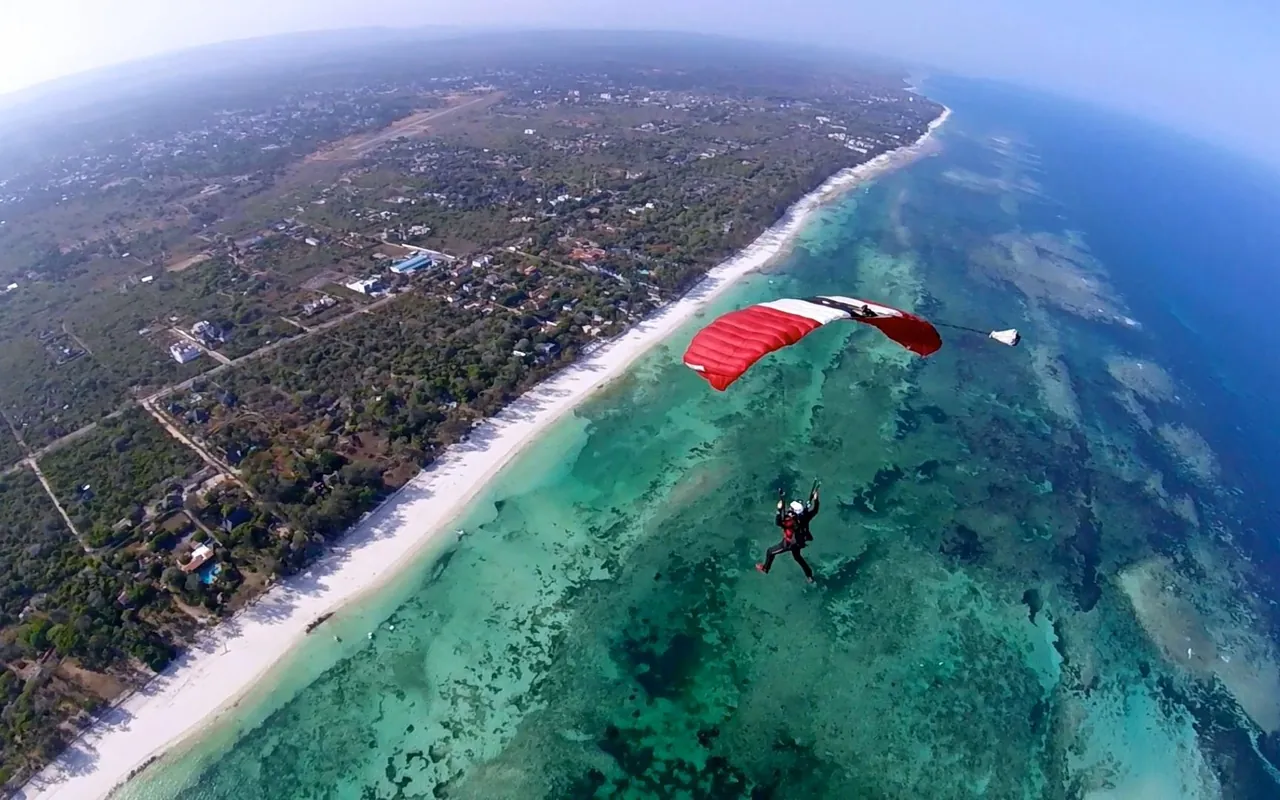
A skydiver under canopy above the north-west coast — the long white beach and lagoon of the Kendwa–Nungwi shore. Photo: Google Maps contributor (via Wanderlog), Shared with credit
Last reviewed by our editors on 24 October 2026
What do you fancy?
Pick a kind of adventure, or tap Near me to see what's closest to you.
Zanzibar isn't only for lying on the sand.
Under the surface there are coral walls, turtles and the atoll of Mnemba; on top of it, steady trade winds have made the east-coast lagoons one of the best places on earth to learn to kitesurf. You can jump from 10,000 feet onto the beach at Kendwa, gallop a horse across a sandbank at low tide, swim in a cave pool in Jambiani, or hike into the island's only national park after red colobus monkeys.
This guide covers the island's adventures, in the sea, on the water, on land and in the air — what each is really like, who it suits, when to go, who runs it and what to check before you hand over your money.
Join Mzungu Zanzibar to share the operators you trust, review them in the directory and ask locals for advice. The guide itself is free to read.
How to read this guide
- Our picks, checked practicalities
- Why an adventure is here is the editors' judgement. Operators, seasons, age and weight limits were checked against the operators' own sites, their current listings and recent reviews on the date shown. Safety and welfare claims are the operators' own, and we say so. Nothing here is a first-hand account.
- Price bands, never prices
- $ is a small entry fee or rental, $$ a typical half-day activity, $$$ a course or full-day trip, and $$$$ a once-in-a-lifetime splurge. Prices and park fees change, so check before you book.
About the photographs. They come from the operators' own websites, from Google Maps contributors and from photographers on Flickr and Wikimedia Commons, each credited beneath the picture and linked to where it came from. Underwater shots we couldn't tie to the exact site are marked UNVERIFIED. They're shared here to celebrate these places. If one is yours and you'd like it removed or credited differently, we'll gladly do it — contact Mzungu Zanzibar.
Find your spot
Groupings are our suggestions to help you choose, not a ranking — the adventures are listed by type: in the air, under the sea, on the water and on land.
Pure adrenaline
For when lying on the beach has lost its charm.
- Tandem skydiving over Kendwa · Kendwa
- Diving the north coast and Leven Bank · Nungwi & Kendwa
- Reef surfing off Dongwe and Jambiani · Paje, Dongwe & Jambiani
- Parasailing, jet skis and waterskiing at Kendwa · Kendwa & Nungwi
- Quad biking through the villages · Nungwi, Kiwengwa & Jambiani
- Zipline over Masingini forest · Masingini
Learn something new
Courses that leave you with a new skill.
- Kitesurfing in Paje · Paje
- Kitesurfing in Jambiani · Jambiani
- Kitesurfing and windsurfing in Kiwengwa · Kiwengwa
- Wing foiling · Paje & Kiwengwa
- Scuba diving at Mnemba Atoll · Matemwe & Muyuni
- Stand-up paddling in the Chukwani mangroves · Chukwani
With children
Adventures that work for younger travellers.
- Safari Blue in Menai Bay · Fumba
- Snorkelling Tumbatu with Zanzibar Watersports · Kendwa
- Catamaran cruises with Zanzibar Watersports · Kendwa
- Stand-up paddling in the Chukwani mangroves · Chukwani
- Kayaking the mangroves at Michamvi · Michamvi
- Jozani forest and the mangrove boardwalk · Jozani
- Snorkelling at Mnemba · Matemwe
- Dhow sailing from Kendwa · Kendwa
- Horse riding in Nungwi and Kendwa · Nungwi, Kendwa & Kidoti
For non-swimmers
Get close to the sea without needing to swim.
- Sea walking at Nungwi · Nungwi
- Dhow sailing from Kendwa · Kendwa
- Catamaran cruises with Zanzibar Watersports · Kendwa
- Kayaking the mangroves at Michamvi · Michamvi
- Scenic helicopter flights · Airport & Kiwengwa
- Parasailing, jet skis and waterskiing at Kendwa · Kendwa & Nungwi
Wildlife
Reef fish, turtles, monkeys and, gently, dolphins.
- Scuba diving at Mnemba Atoll · Matemwe & Muyuni
- Snorkelling Chumbe Island Coral Park · Chumbe Island
- Snorkelling Tumbatu with Zanzibar Watersports · Kendwa
- Jozani forest and the mangrove boardwalk · Jozani
- Wrecks and reefs off Stone Town · Stone Town
- Dolphins at Kizimkazi · Kizimkazi
Easy from Stone Town
Within half an hour of the old town.
- Wrecks and reefs off Stone Town · Stone Town
- Snorkelling Chumbe Island Coral Park · Chumbe Island
- Stand-up paddling in the Chukwani mangroves · Chukwani
- Bike tours from Stone Town and bike hire in Paje · Stone Town & Paje
- Mangapwani coral cavern and slave chamber · Mangapwani
- Zipline over Masingini forest · Masingini
- Safari Blue in Menai Bay · Fumba
Adventures on a budget
Big experiences that don't cost much.
- Swimming in Kuza Cave · Jambiani
- Jozani forest and the mangrove boardwalk · Jozani
- Mangapwani coral cavern and slave chamber · Mangapwani
- Kayaking the mangroves at Michamvi · Michamvi
- Bike tours from Stone Town and bike hire in Paje · Stone Town & Paje
Once in a lifetime
Worth saving for.
- Tandem skydiving over Kendwa · Kendwa
- Scenic helicopter flights · Airport & Kiwengwa
- Catamaran cruises with Zanzibar Watersports · Kendwa
- Deep-sea fishing from Nungwi · Nungwi & Kendwa
- Scuba diving at Mnemba Atoll · Matemwe & Muyuni
The adventures
Thirty adventures, by type: in the air, under the sea, on the water and on land. Tap any photo to see them all.
- 1. Tandem skydiving over Kendwa · Adventure
- 2. Scenic helicopter flights · Adventure
- 3. Scuba diving at Mnemba Atoll · Adventure
- 4. Diving the north coast and Leven Bank · Adventure
- 5. Wrecks and reefs off Stone Town · Adventure
- 6. Snorkelling at Mnemba · Adventure
- 7. Snorkelling Tumbatu with Zanzibar Watersports · Adventure
- 8. Snorkelling Chumbe Island Coral Park · Adventure
- 9. Safari Blue in Menai Bay · Adventure
- 10. Dolphins at Kizimkazi · Adventure
- 11. Turtle pools at Nungwi · Adventure
- 12. Sea walking at Nungwi · Adventure
- 13. Deep-sea fishing from Nungwi · Adventure
- 14. Kitesurfing in Paje · Adventure
- 15. Kitesurfing in Jambiani · Adventure
- 16. Kitesurfing and windsurfing in Kiwengwa · Adventure
- 17. Wing foiling · Adventure
- 18. Reef surfing off Dongwe and Jambiani · Adventure
- 19. Stand-up paddling in the Chukwani mangroves · Adventure
- 20. Kayaking the mangroves at Michamvi · Adventure
- 21. Dhow sailing from Kendwa · Adventure
- 22. Catamaran cruises with Zanzibar Watersports · Adventure
- 23. Parasailing, jet skis and waterskiing at Kendwa · Adventure
- 24. Horse riding in Nungwi and Kendwa · Adventure
- 25. Quad biking through the villages · Adventure
- 26. Bike tours from Stone Town and bike hire in Paje · Adventure
- 27. Jozani forest and the mangrove boardwalk · Adventure
- 28. Swimming in Kuza Cave · Adventure
- 29. Mangapwani coral cavern and slave chamber · Adventure
- 30. Zipline over Masingini forest · Adventure
1. Kendwa · North-west coast
Tandem skydiving over Kendwa
Ten thousand feet over the reef, landing on the beach by the bar.
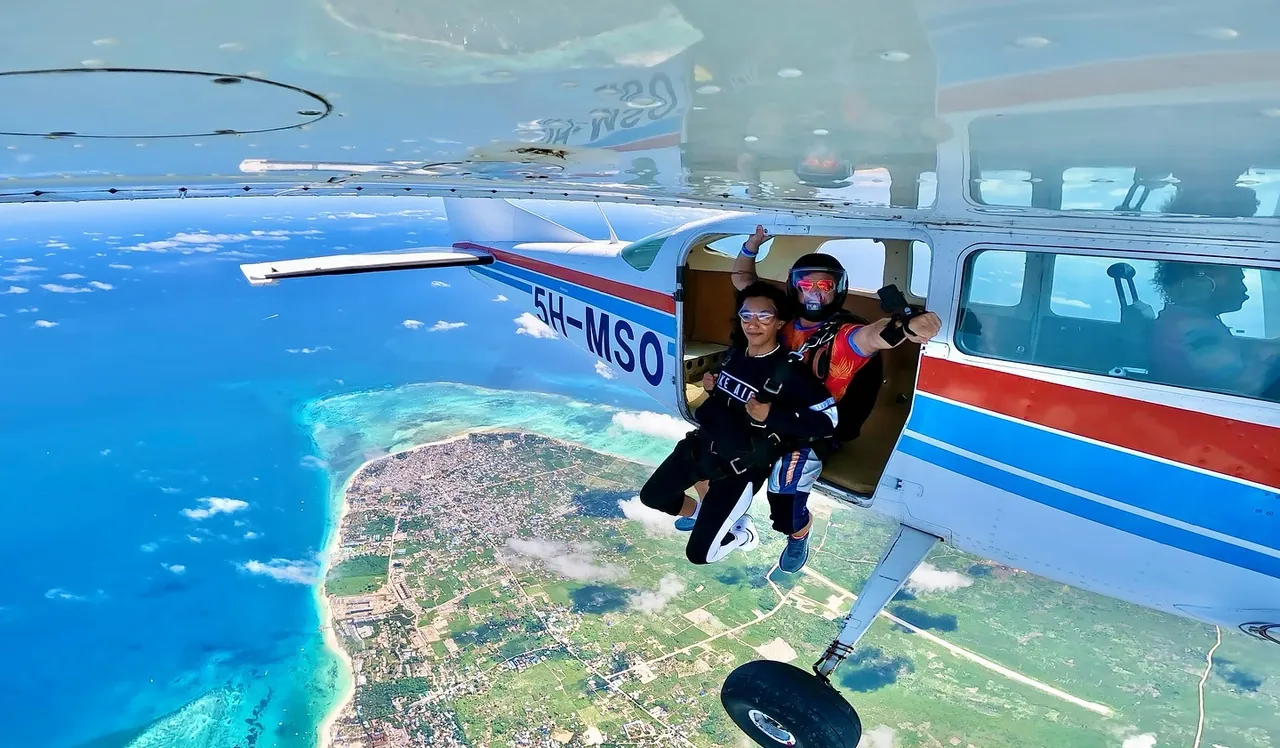
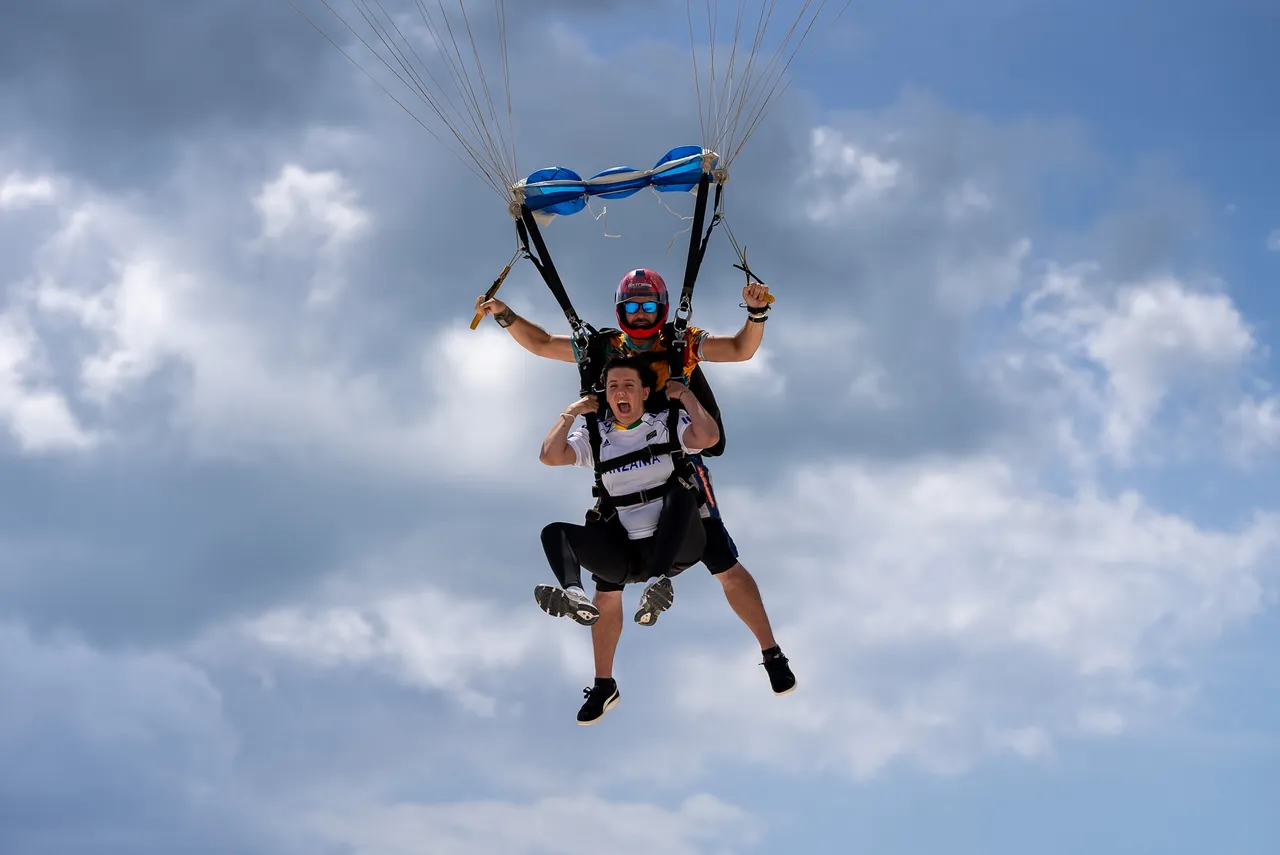
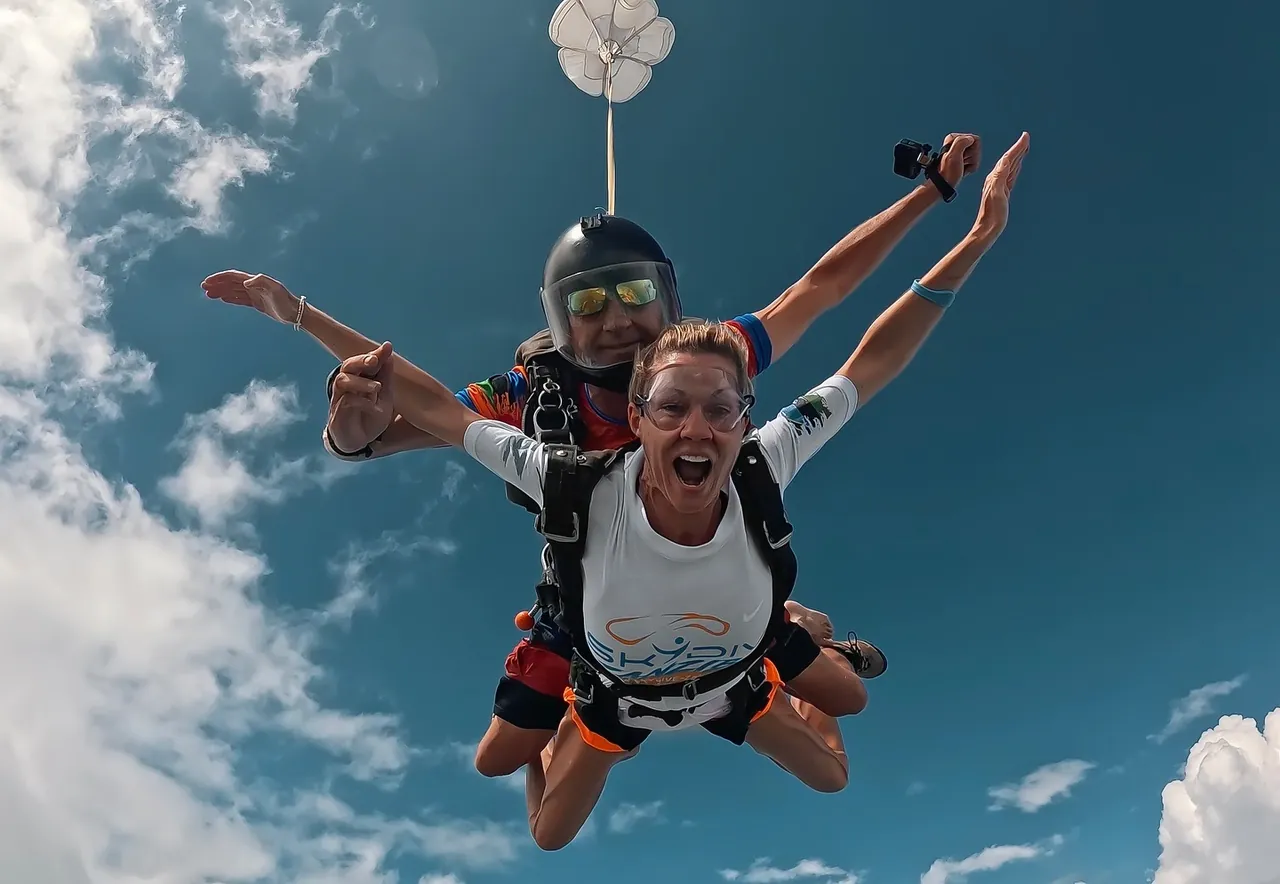
Skydive Zanzibar, the island's only skydive centre, flies you up from the Nungwi airstrip on a twenty-minute climb over the northern reefs to 10,000 feet. Then come thirty to forty seconds of freefall strapped to an instructor, and five to ten minutes under the canopy drifting down to Kendwa beach.
Its founder is an ex-British Army parachute instructor, and the centre says it follows US Parachute Association rules and works with Tanzania's civil aviation authority. Photos and video are optional extras, emailed to you the same day.
Why it's in this guide
The biggest rush on the island — and the most spectacular view of Zanzibar's turquoise north coast you'll ever get.
When to go
It jumps all year when the weather allows; June–October and December–February are the most reliable months, and early slots often have the clearest skies. Book early in your stay so a cloudy day can be rescheduled.
Who runs it and how to book
Book direct with Skydive Zanzibar on WhatsApp or through its website; reseller prices vary. Allow about two hours from check-in to landing. Kendwa is about 1–1½ hours' drive from Stone Town.
Safety: what to check
Send your height and weight before you book — the limit is about 105 kg and can vary with conditions. Check that your travel insurance covers skydiving (the centre doesn't provide medical cover), wear closed lace-up shoes and skip alcohol the night before.
Worth knowing
- Generally over-18s only; younger jumpers only in some cases, with written parental consent.
- Serious heart conditions, high blood pressure, recent surgery, back or neck injuries and pregnancy can rule you out.
- Weather can delay or cancel a jump.
2. Airport & Kiwengwa · Island-wide
Scenic helicopter flights
Reef channels, sandbanks and Mnemba atoll from the air.
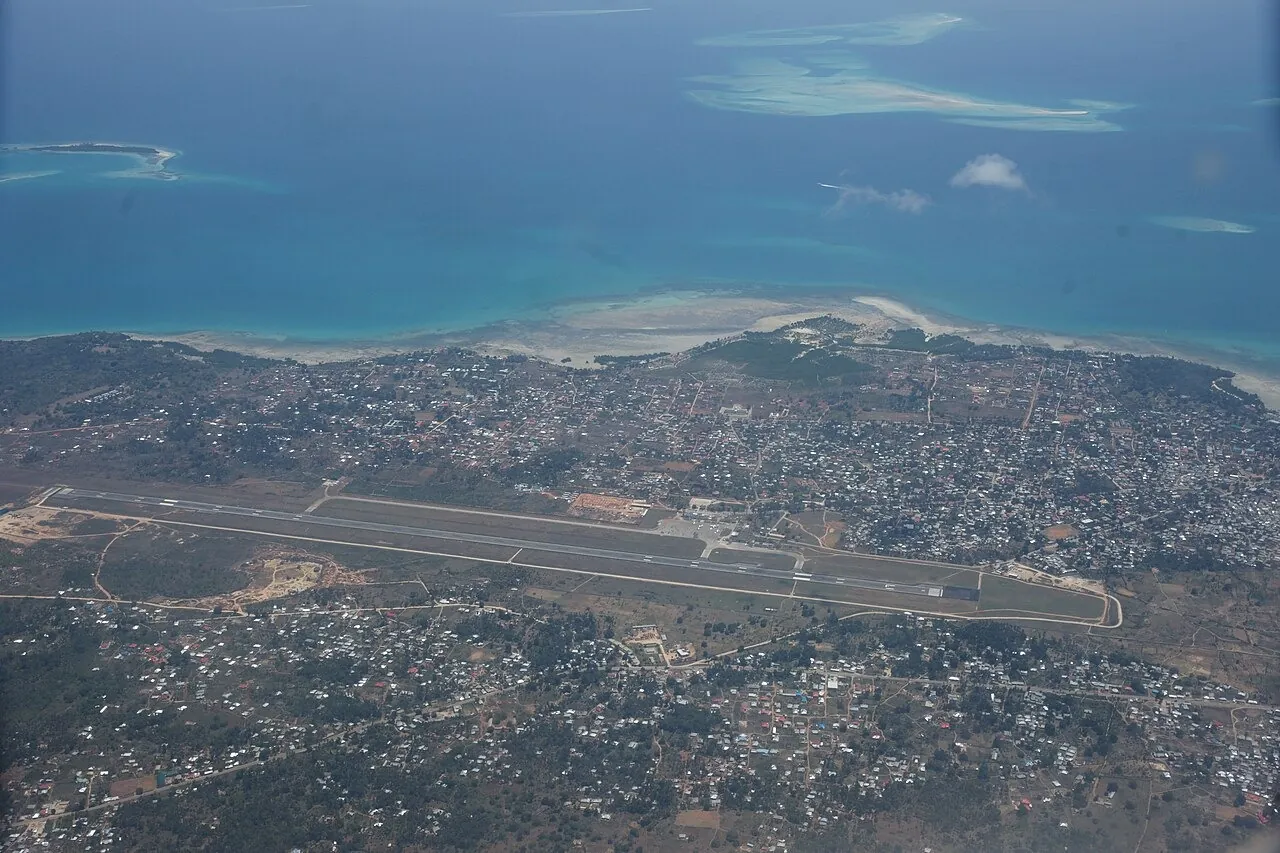
Since June 2026, Tropic Helicopters has had two Airbus H120s based permanently on the island, flying scenic loops, island hops and resort transfers. Low over the reef channels, sandbanks and Mnemba atoll, it's the only way to take in the whole sweep of the coast.
Hotels sell private 30- or 60-minute flights — Tulia Zanzibar in Pongwe offers them for up to four or six passengers — from the airport or a landing area at Kiwengwa.
Why it's in this guide
A view of Zanzibar's reefs and lagoons you simply can't get any other way — new to the island this year.
When to go
All year, on clear dry days; flights depend on the weather.
Tide: Fly at low tide to see the sandbanks and reef patterns at their most dramatic.
Who runs it and how to book
Book through your hotel or a tour planner (Tulia Zanzibar sells flights directly); there's no Zanzibar-specific booking site yet. Priced per aircraft, so it suits groups of three to six sharing.
Safety: what to check
Ask about the operator's air operator certificate, flotation gear and life jackets over water, and passenger weight limits. The H120 and H125 are single-engine helicopters.
Worth knowing
- Expensive, and new to Zanzibar, with little public review history yet.
- Low flights disturb villages and Mnemba's marine reserve; the operator says it uses managed routes.
3. Matemwe & Muyuni · North-east coast
Scuba diving at Mnemba Atoll
Coral walls, turtles, white-tip reef sharks and twenty-metre visibility.
Tap any photo to see all 6.
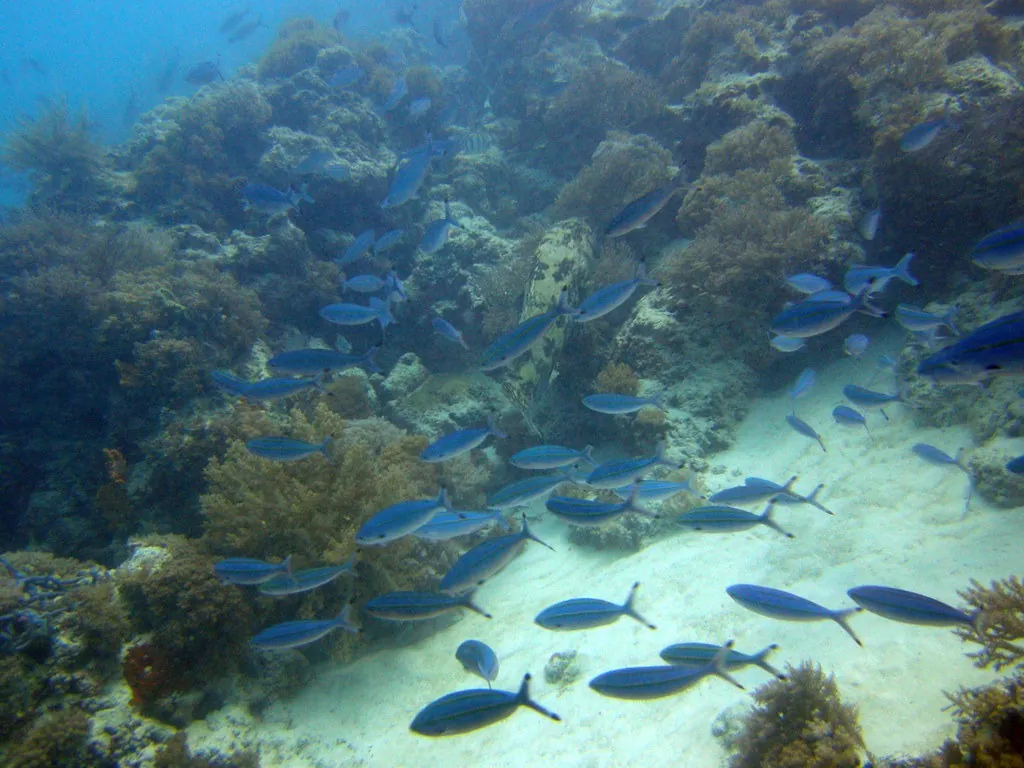
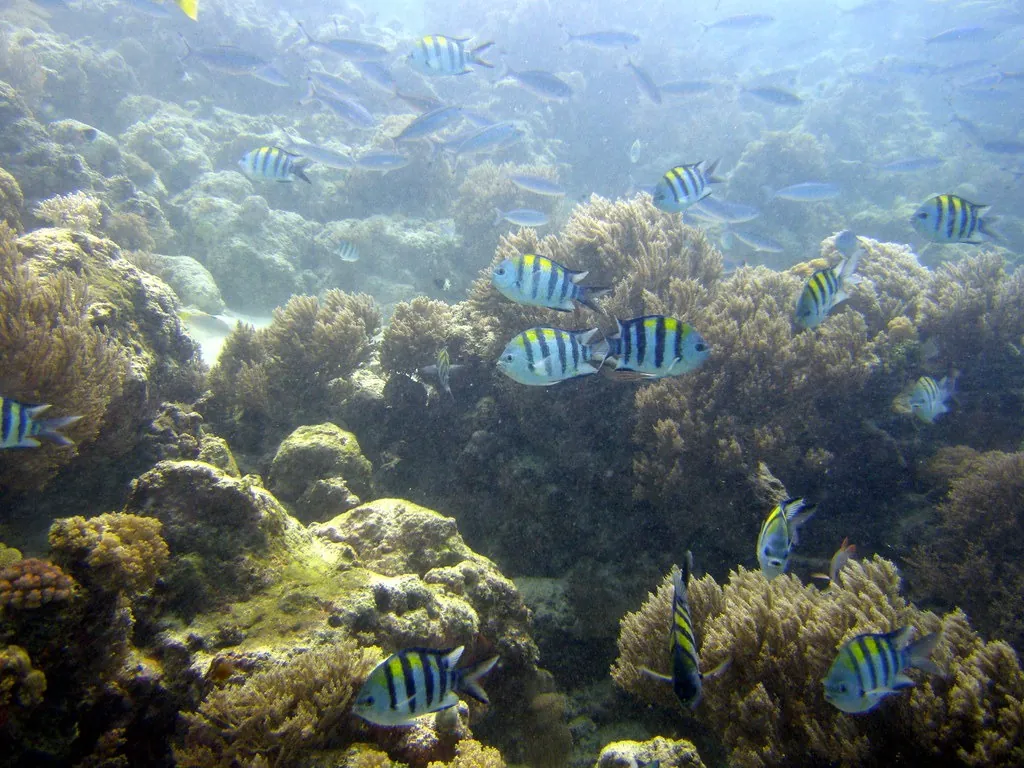
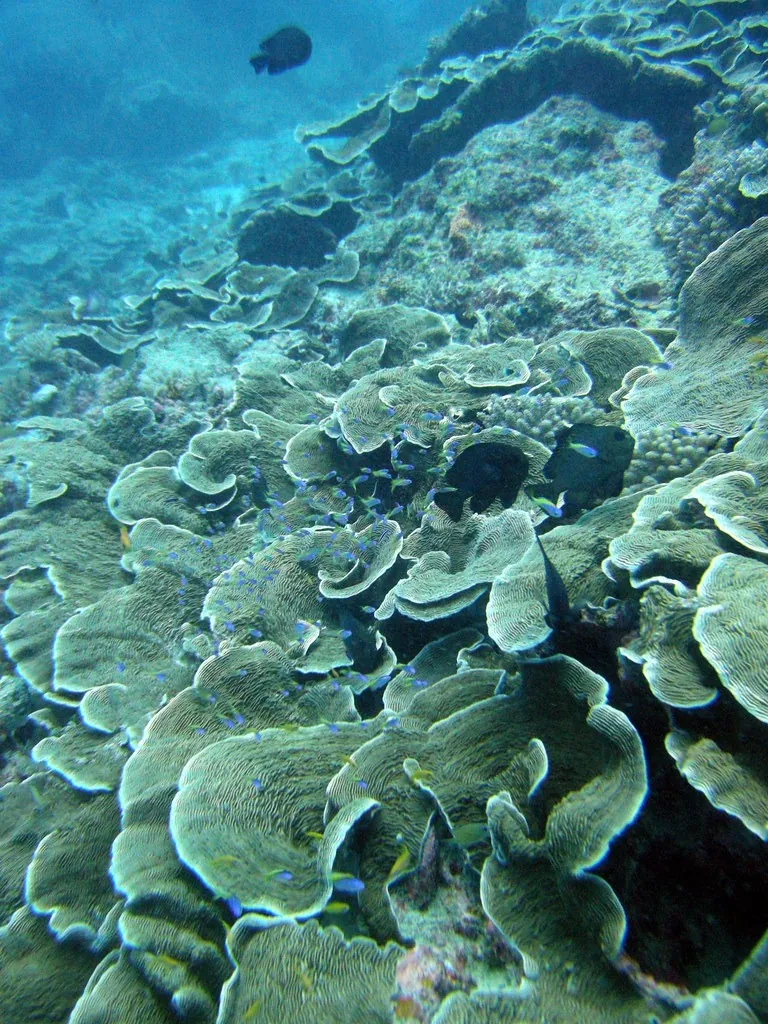
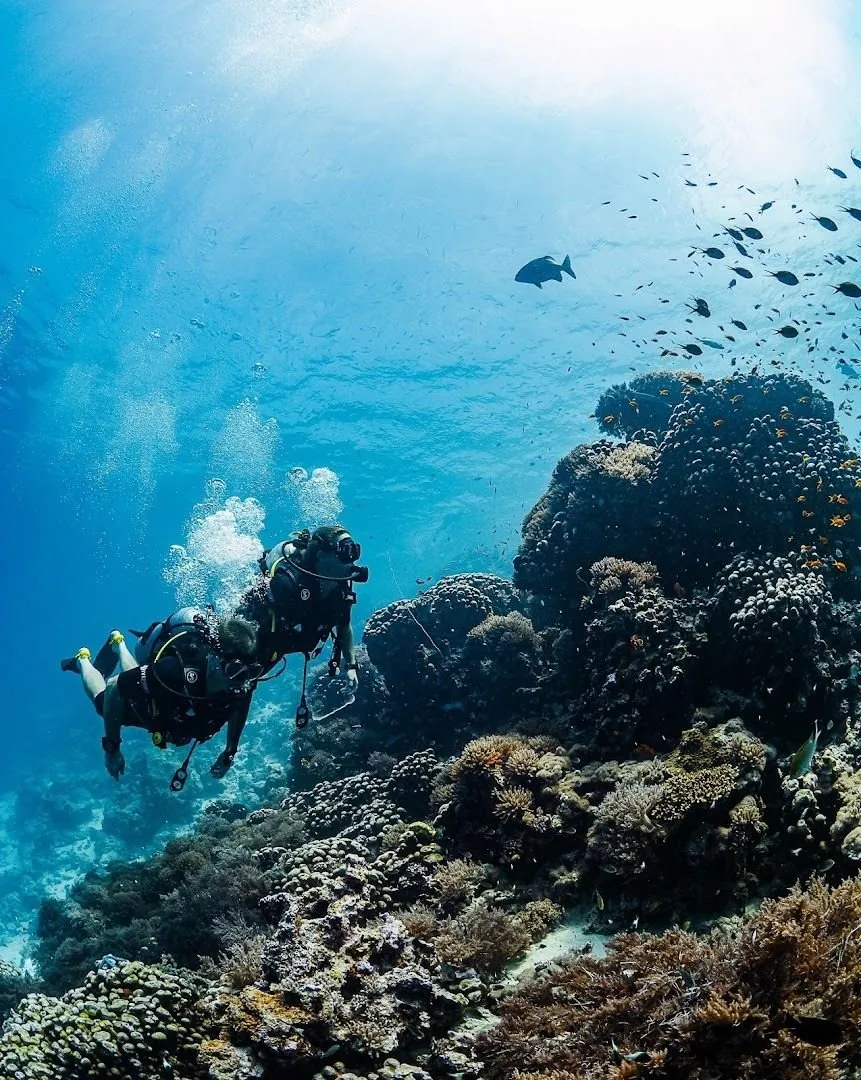
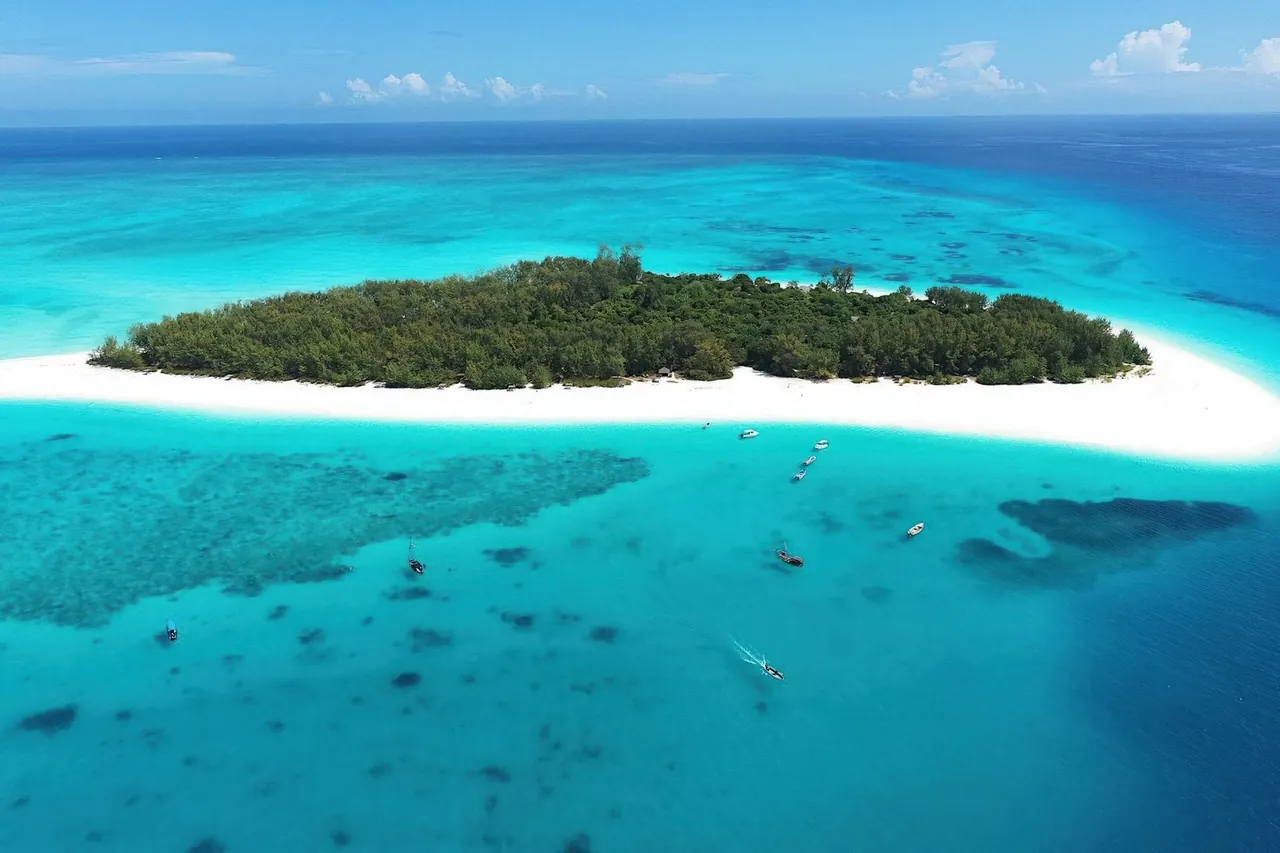
Mnemba's oval reef, seven kilometres by four in a protected conservation area off Matemwe, is Zanzibar's best-known dive: walls dropping from two to forty metres, coral blocks full of frogfish and morays, schooling snappers and fusiliers, Napoleon wrasse, white-tip reef sharks and green turtles, which have nested on the island since monitoring began in 1996. Dolphins often join the boat ride out.
Matemwe and Muyuni are minutes away by boat. One Ocean (Zanzibar's first PADI five-star centre, since 2001), Dive Point and Scubafish all run two-dive morning trips, with try-dives for complete beginners and four-day Open Water courses.
Why it's in this guide
The island's signature dive — and the best way to escape the snorkelling crowds at Mnemba.
When to go
March and October–November, when the wind has dropped and visibility is at its best. It's diveable all year, but trips are cancelled on the windiest days (August, December–January). Humpback whales pass July–October.
Tide: Dives are planned around the tide, so times shift daily; at low tide you may be driven to a deeper launch point.
Who runs it and how to book
Book with One Ocean (zanzibaroneocean.com) in Matemwe or Kiwengwa, Dive Point (divepointzanzibar.com) in Muyuni or Scubafish (scubafishzanzibar.com) in Matemwe. Trips leave around 08:00 and are back by early afternoon. From Nungwi and Kendwa it's a long boat ride.
Safety: what to check
Ask how many divers each guide takes, how dives are planned around the tide, whether the boat carries oxygen and a first-aid kit, and when the equipment was last serviced. Bring your card or logbook and dive insurance that covers evacuation. Don't fly within 12 hours of a single dive, or 18 hours after several days of diving. If you haven't dived for a year, expect to do a refresher.
Worth knowing
- It's the busiest reef in Tanzania — divers escape the crowds better than snorkellers.
- Boats never land on Mnemba Island, a private lodge with an exclusion zone around it.
- A conservation fee is charged; some operators include it and some collect it in cash.
4. Nungwi & Kendwa · Northern tip
Diving the north coast and Leven Bank
Frogfish and seahorses close in; sharks and big currents at Leven Bank.
Tap any photo to see all 6.
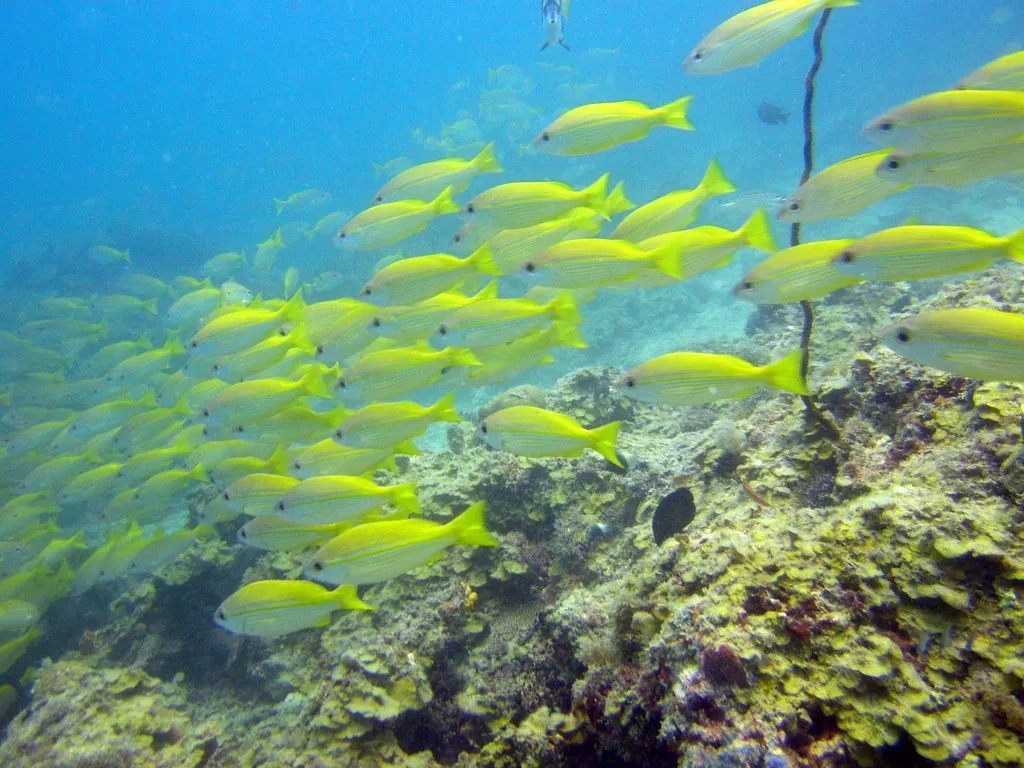
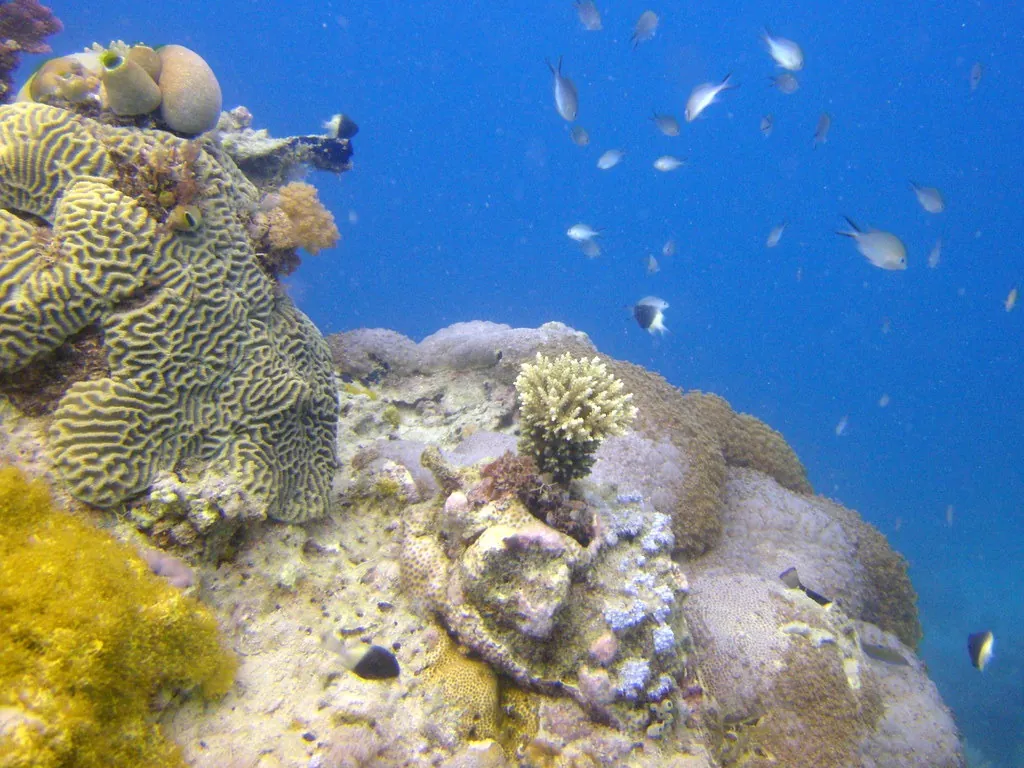
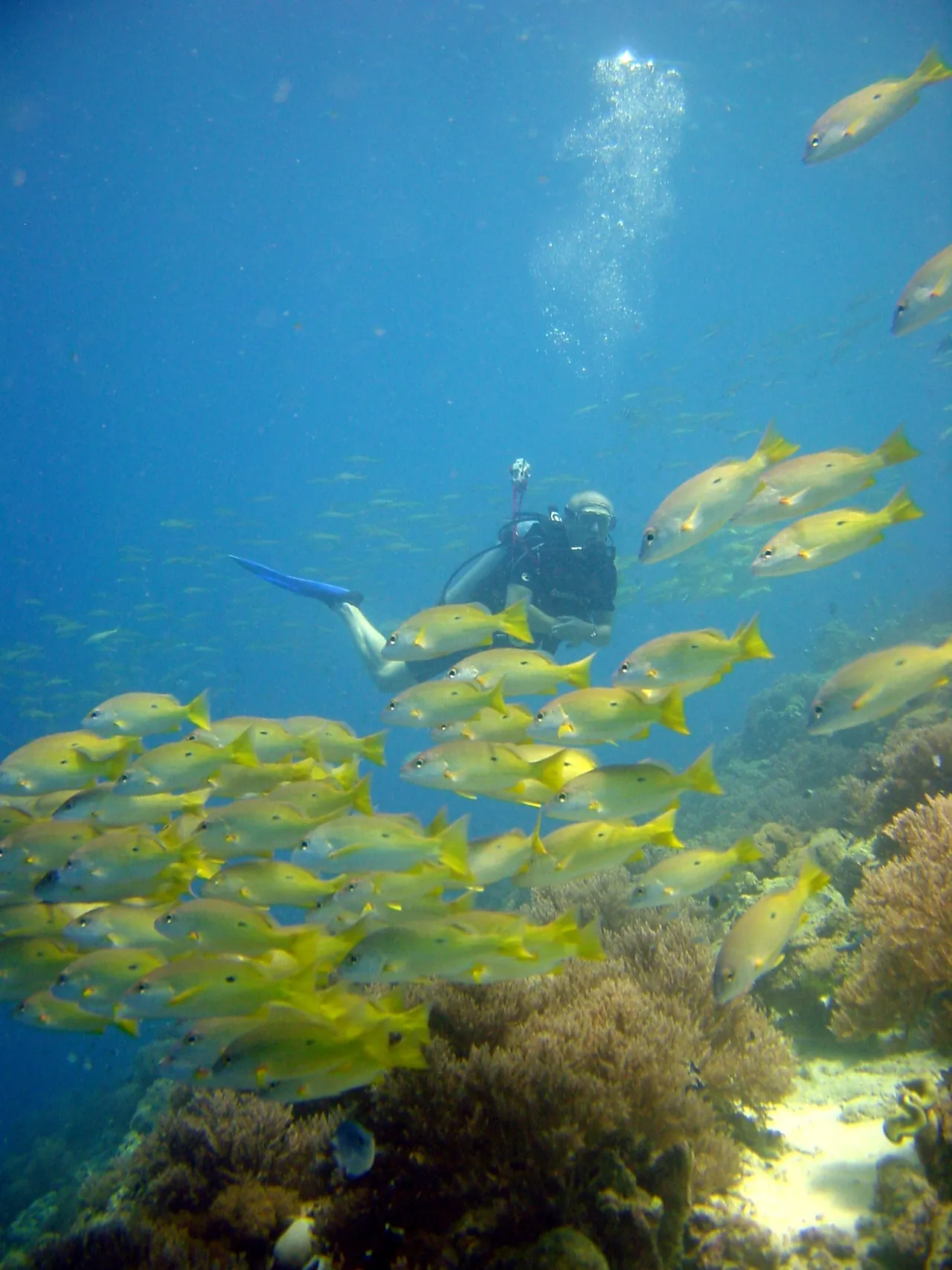
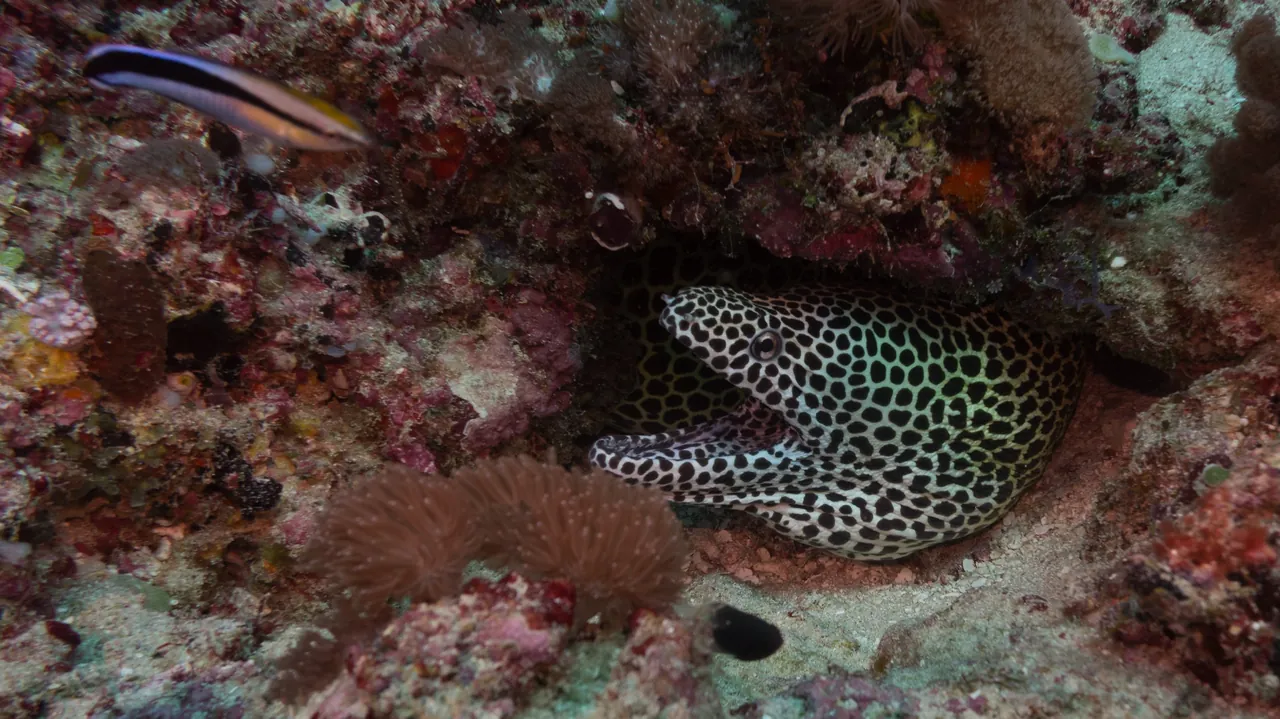
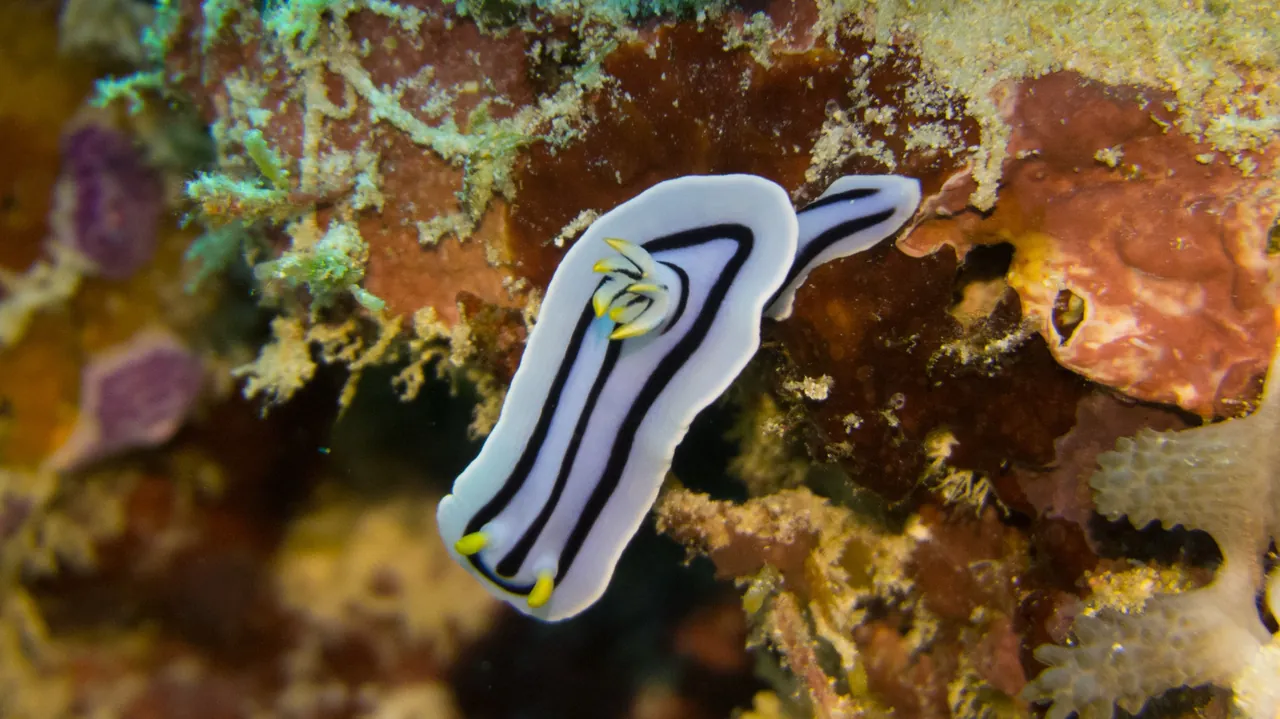
Off Nungwi, Kendwa and Tumbatu Island, the shallow, sheltered reefs are some of the best places on the island to learn and to look for small things: frogfish, seahorses, ghost pipefish, leaf fish and nudibranchs. Further out, Hunga and Nankivell are patch reefs with schooling snappers and rays, dived on slack tide.
Leven Bank, a pinnacle in the Pemba Channel with walls dropping past 160 metres, is the island's big-animal dive — sharks, rays and big game fish in strong current, for experienced divers only.
Why it's in this guide
The calmest place on the island to learn, and the wildest drift dive for those who already know how.
When to go
March and October–November are best; diveable all year. Kendwa is the least tide-affected beach on the island.
Tide: Hunga, Nankivell and Leven Bank are dived only on slack tide, so trips depend on the tide table.
Who runs it and how to book
Zanzibar Watersports in Kendwa runs dives from dhows and a speedboat; One Ocean has a Kendwa base. Spanish Dancer Divers in Nungwi is well reviewed, but its website is currently down — confirm it's trading before you book.
Safety: what to check
Ask how many divers each guide takes, how dives are planned around the tide, whether the boat carries oxygen and a first-aid kit, and when the equipment was last serviced. Bring your card or logbook and dive insurance that covers evacuation. Don't fly within 12 hours of a single dive, or 18 hours after several days of diving. For Leven Bank, ask about the certification needed, a surface marker buoy for every diver and the current plan.
Worth knowing
- Coral on some inshore reefs is patchy, and some shows fishing-net damage.
- The big-animal sites depend on tide and weather and can be cancelled.
- Some listed dive centres have dormant websites — pick a centre you can confirm is trading.
5. Stone Town · West coast
Wrecks and reefs off Stone Town
A Victorian cable ship at 4–12 metres, and turtles at Bawe.
Tap any photo to see all 6.
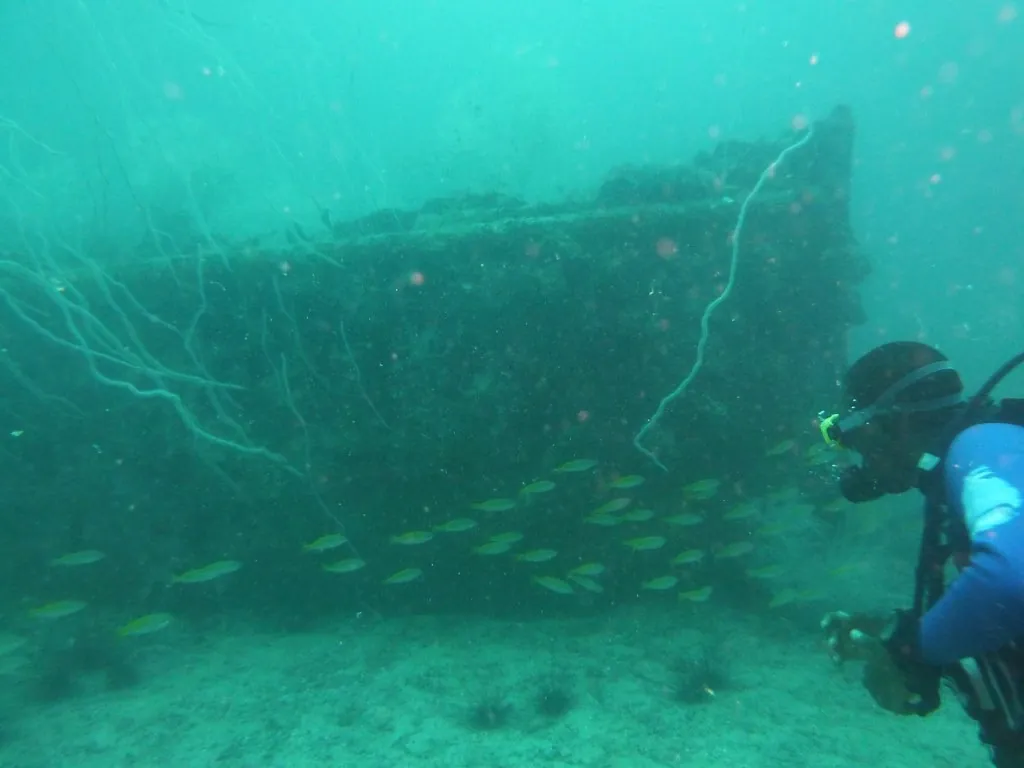
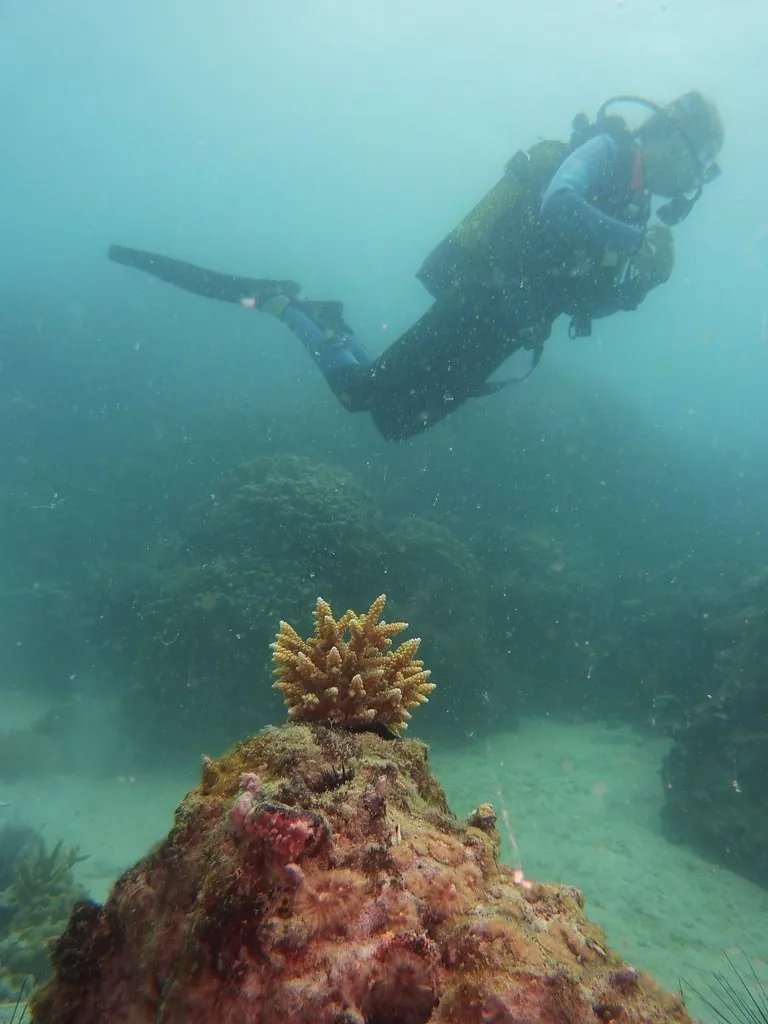
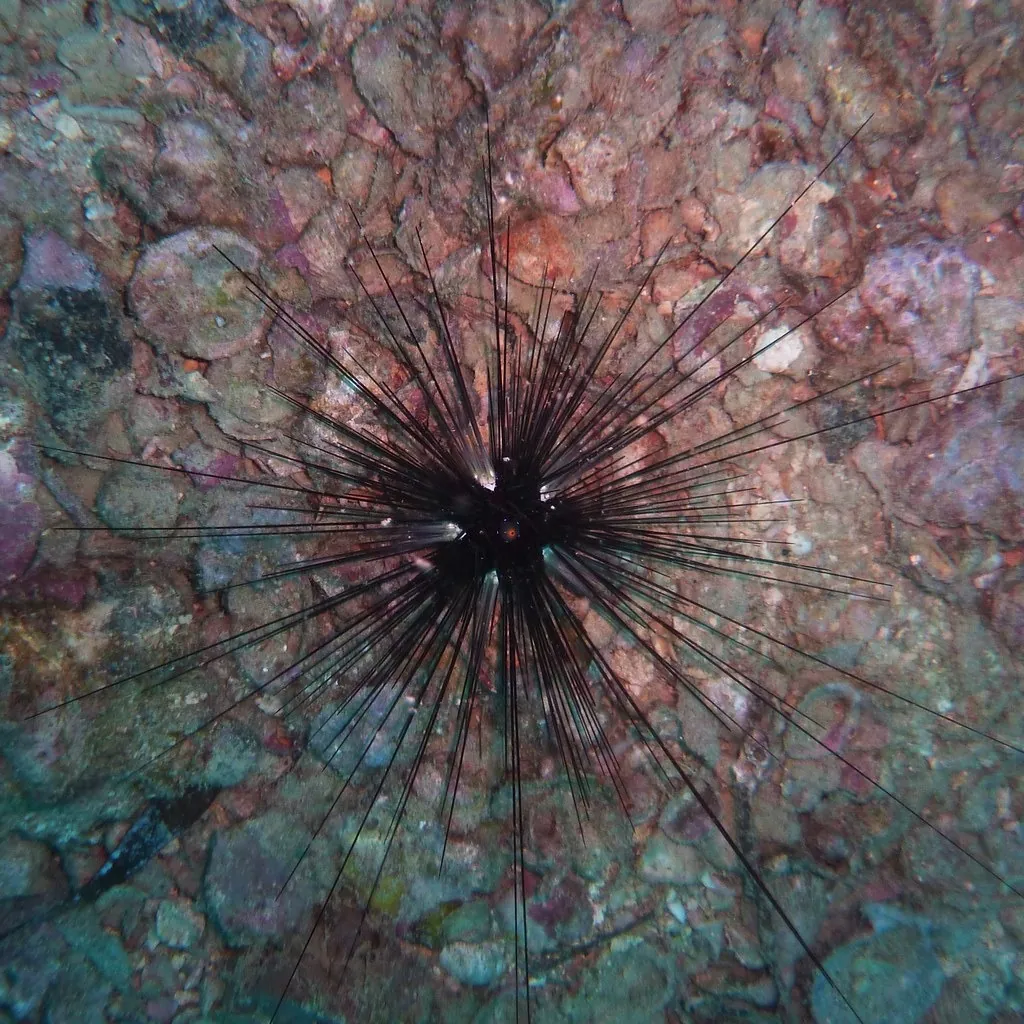
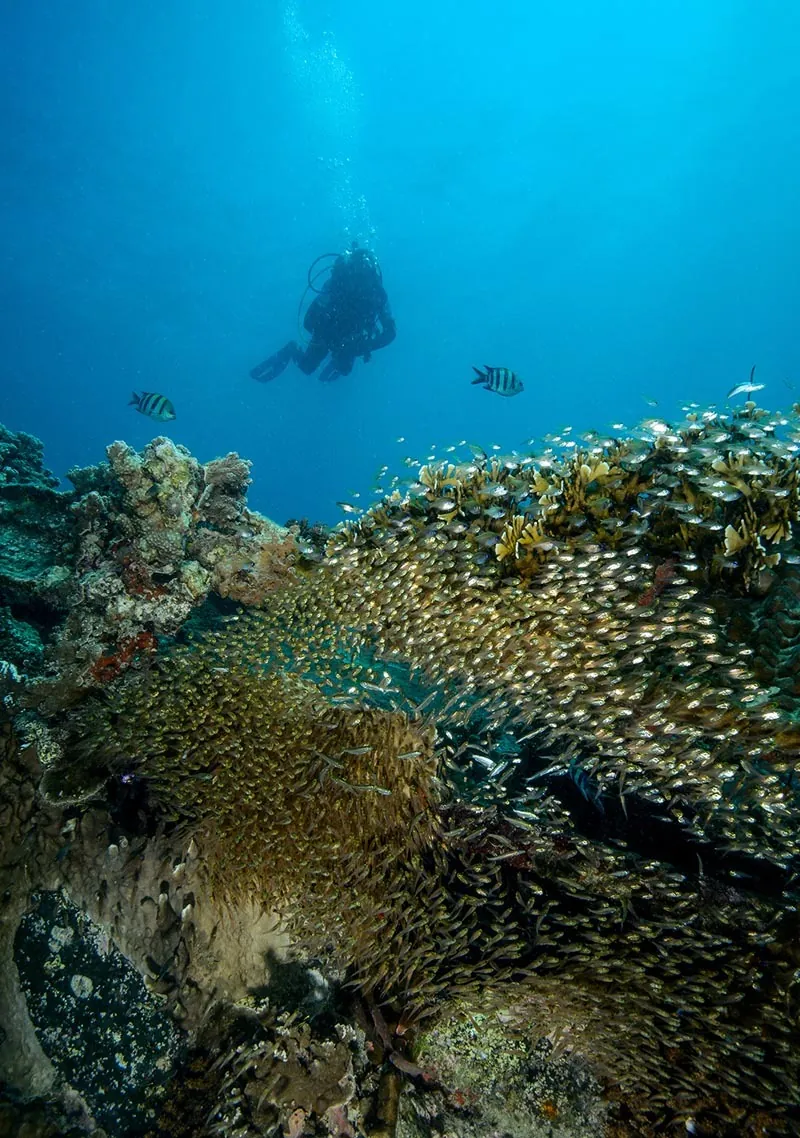
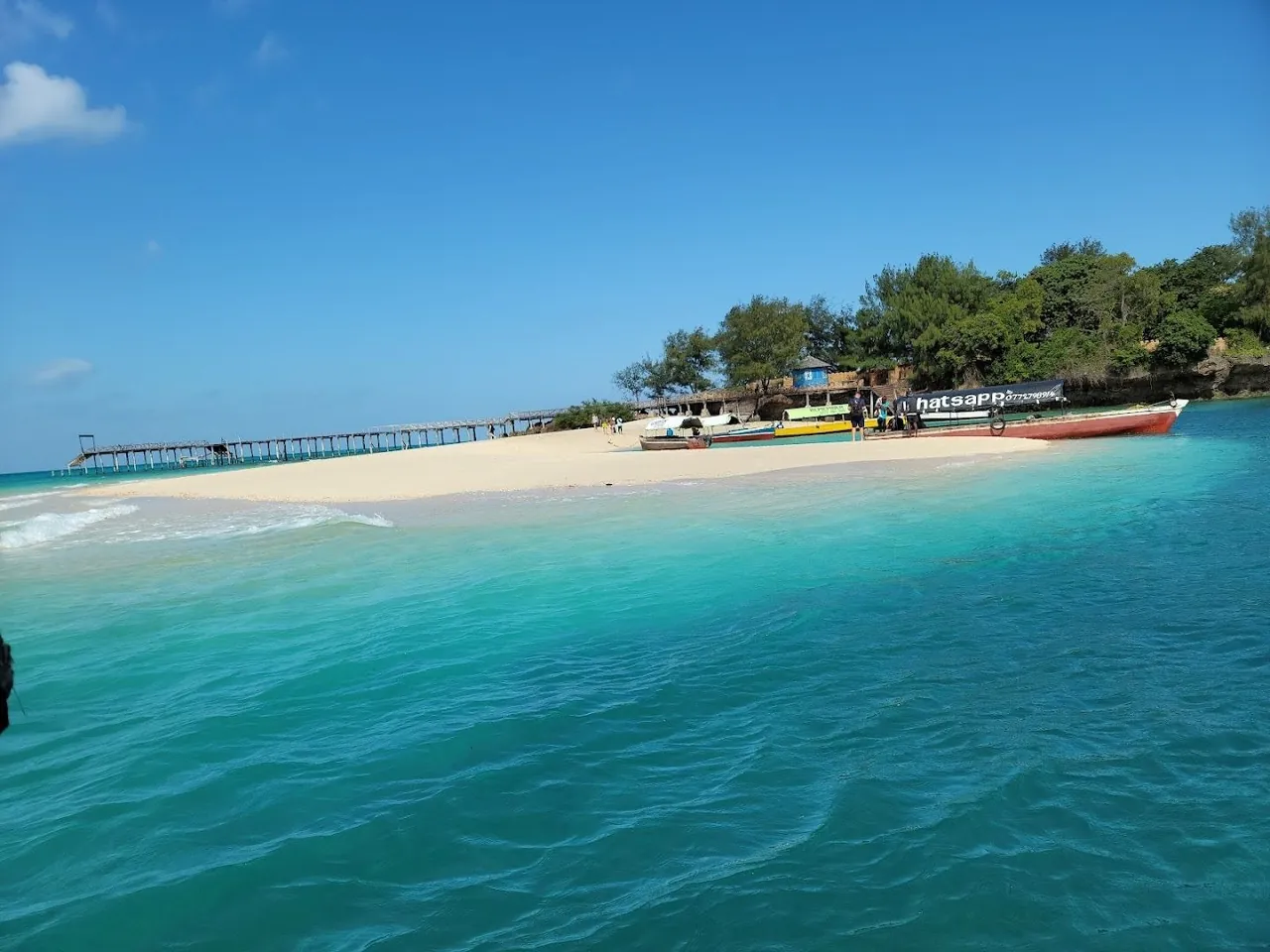
A few kilometres off Stone Town, the Great Northern — a British cable-laying ship built in 1870 and sunk on New Year's Eve 1902 — lies at four to twelve metres, shallow enough for snorkellers to see. Bawe Island has a coral wall with cuttlefish, seahorses and batfish on one side and a long shallow reef with green and hawksbill turtles on the other.
One Ocean's Stone Town centre runs reef, wreck and night dives; half-day snorkel trips to Bawe, Changuu (Prison Island) and the Nyange sandbank leave from the seafront.
Why it's in this guide
Proper diving and a historic wreck without leaving Stone Town.
When to go
The west coast is sheltered in the December–March winds. Visibility near town is lower than on the east coast.
Who runs it and how to book
Dive with One Ocean, Stone Town (boats leave Kenyatta Road around 09:00, back by 13:30). Snorkel trips are sold widely along the seafront — ask about group size and gear before you pay.
Safety: what to check
Ask how many divers each guide takes, how dives are planned around the tide, whether the boat carries oxygen and a first-aid kit, and when the equipment was last serviced. Bring your card or logbook and dive insurance that covers evacuation. Don't fly within 12 hours of a single dive, or 18 hours after several days of diving. The harbour is busy, so use a proper dive boat with a dive flag.
Worth knowing
- Prison Island is more a history and giant-tortoise stop than a snorkelling highlight.
- Don't take shells or coral; don't feed the tortoises outside the rules.
6. Matemwe · North-east coast
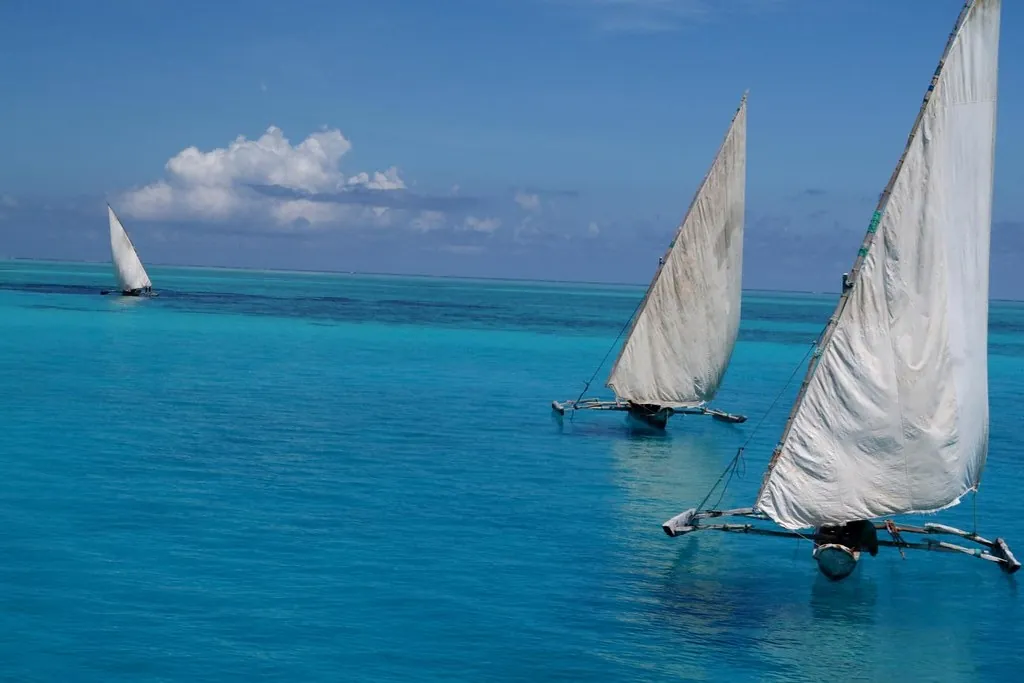
Snorkelling at Mnemba
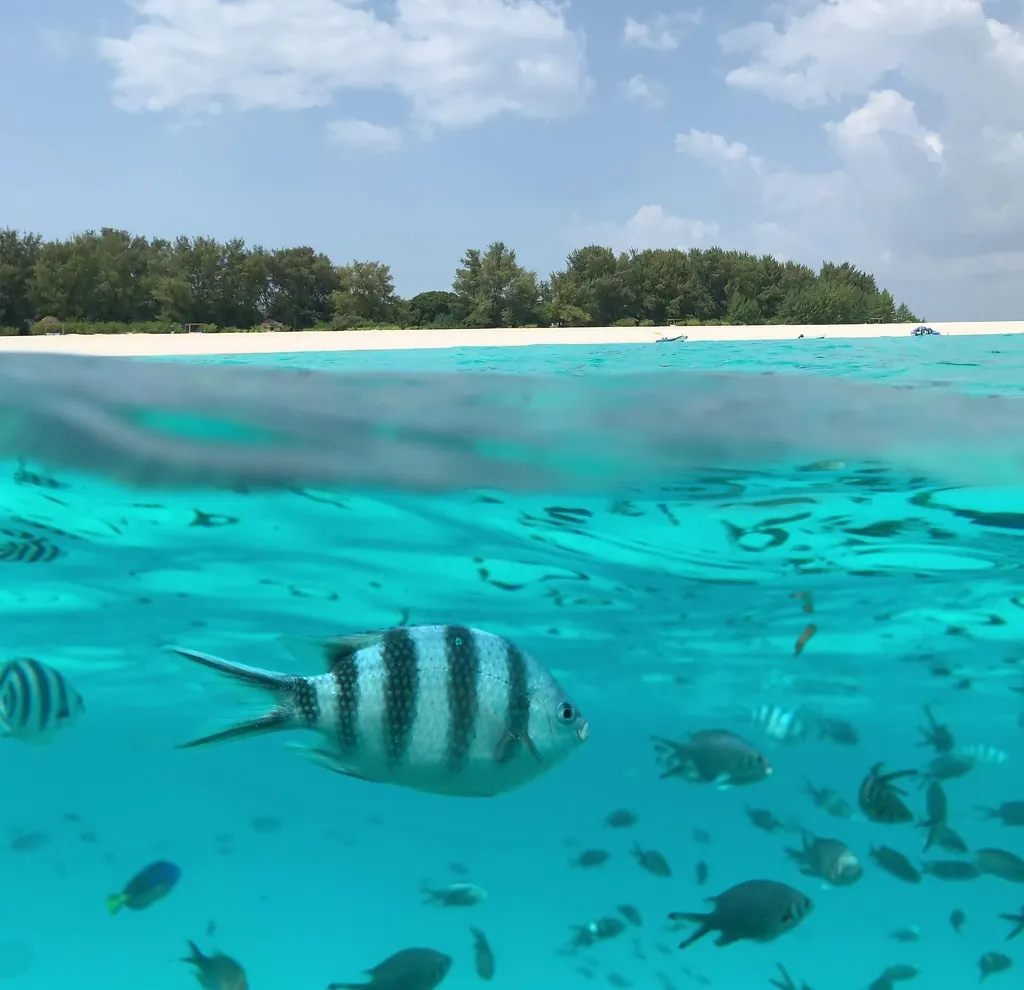
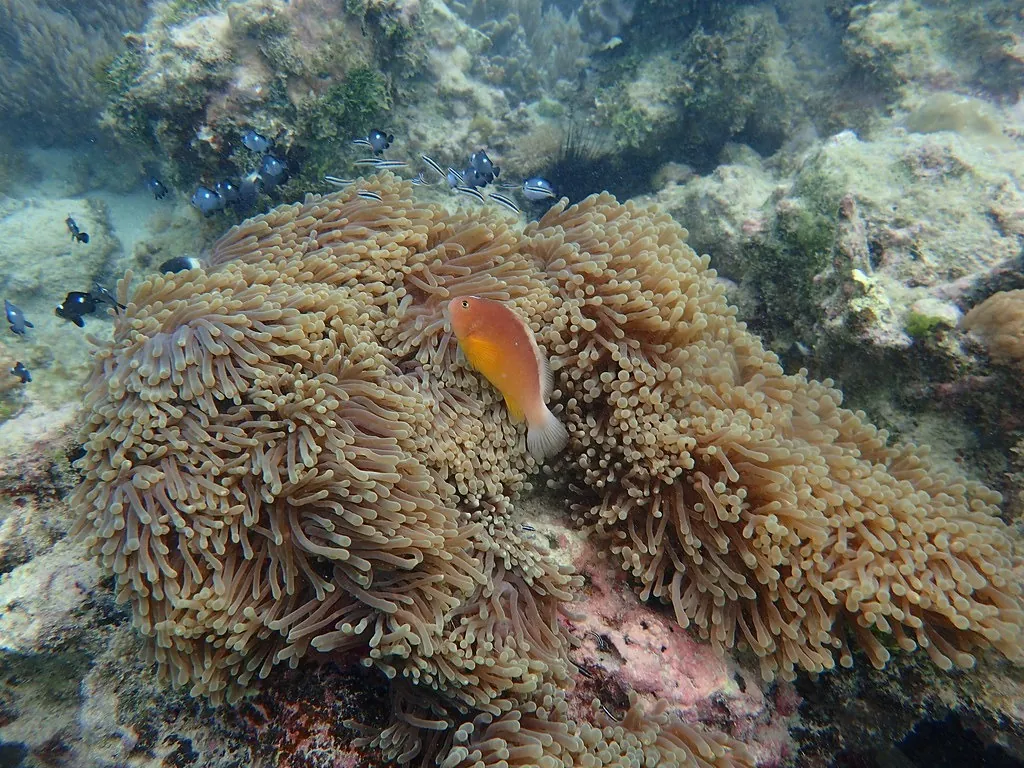
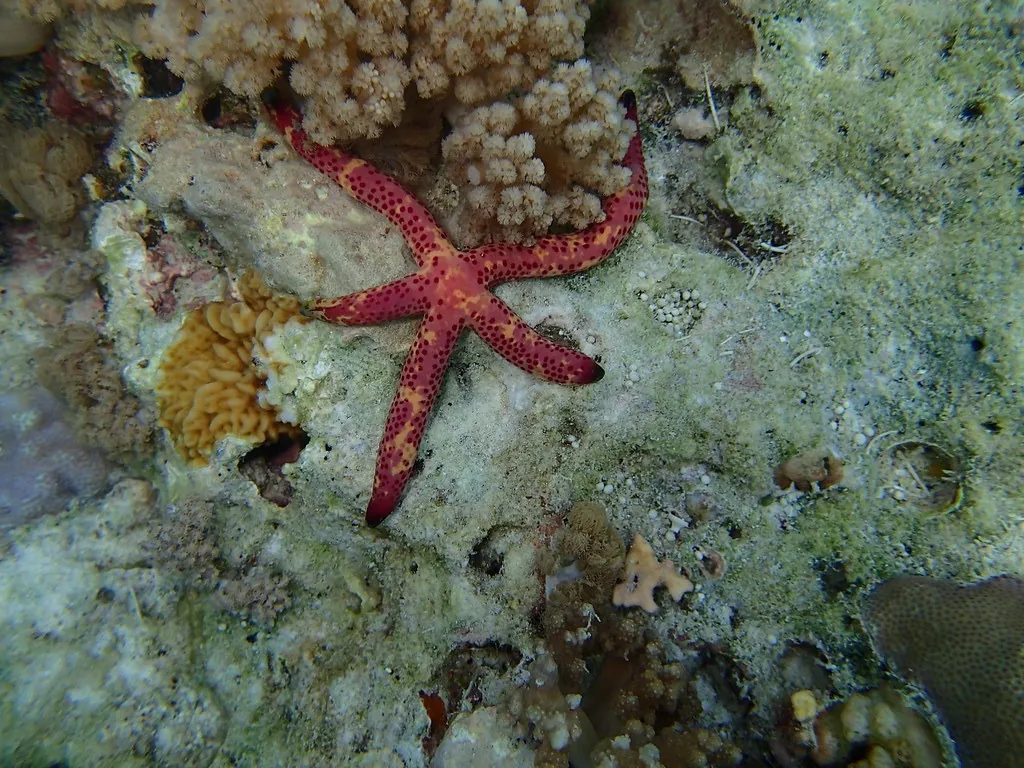
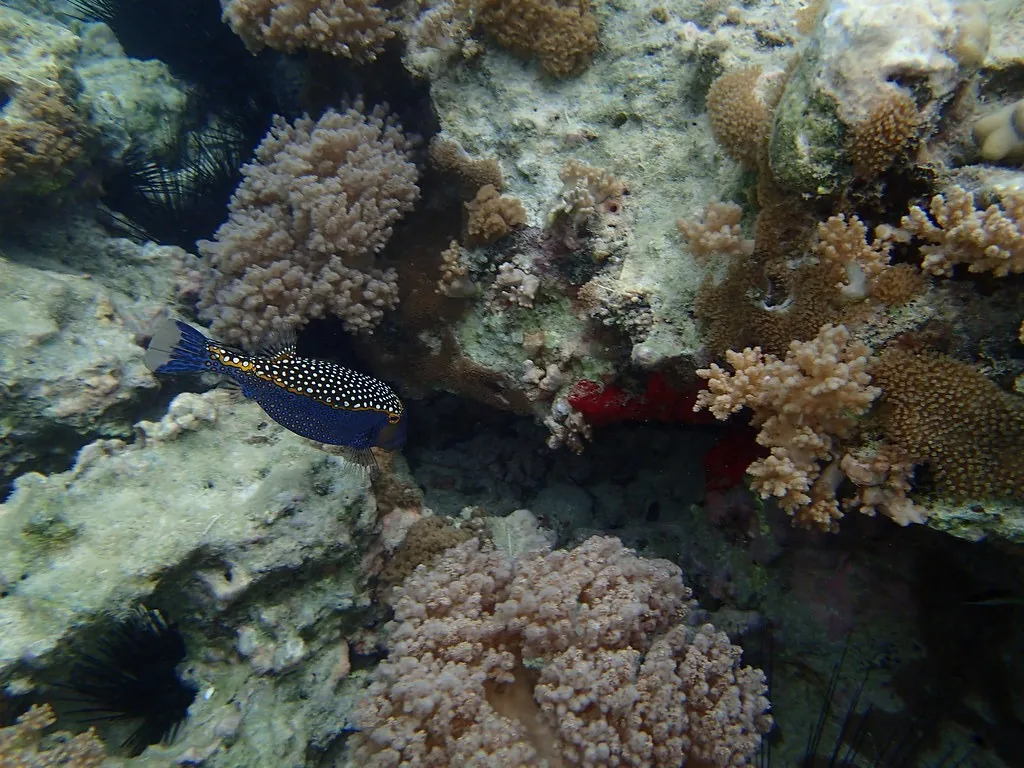
Turtles, anemonefish and coral heads in two to six metres of clear water.
Tap any photo to see all 6.
Mnemba's shallow reef, two to six metres over coral heads, is where most visitors first put their faces in the Indian Ocean: anemonefish, boxfish, sergeant majors, starfish, turtles, and often dolphins on the way out.
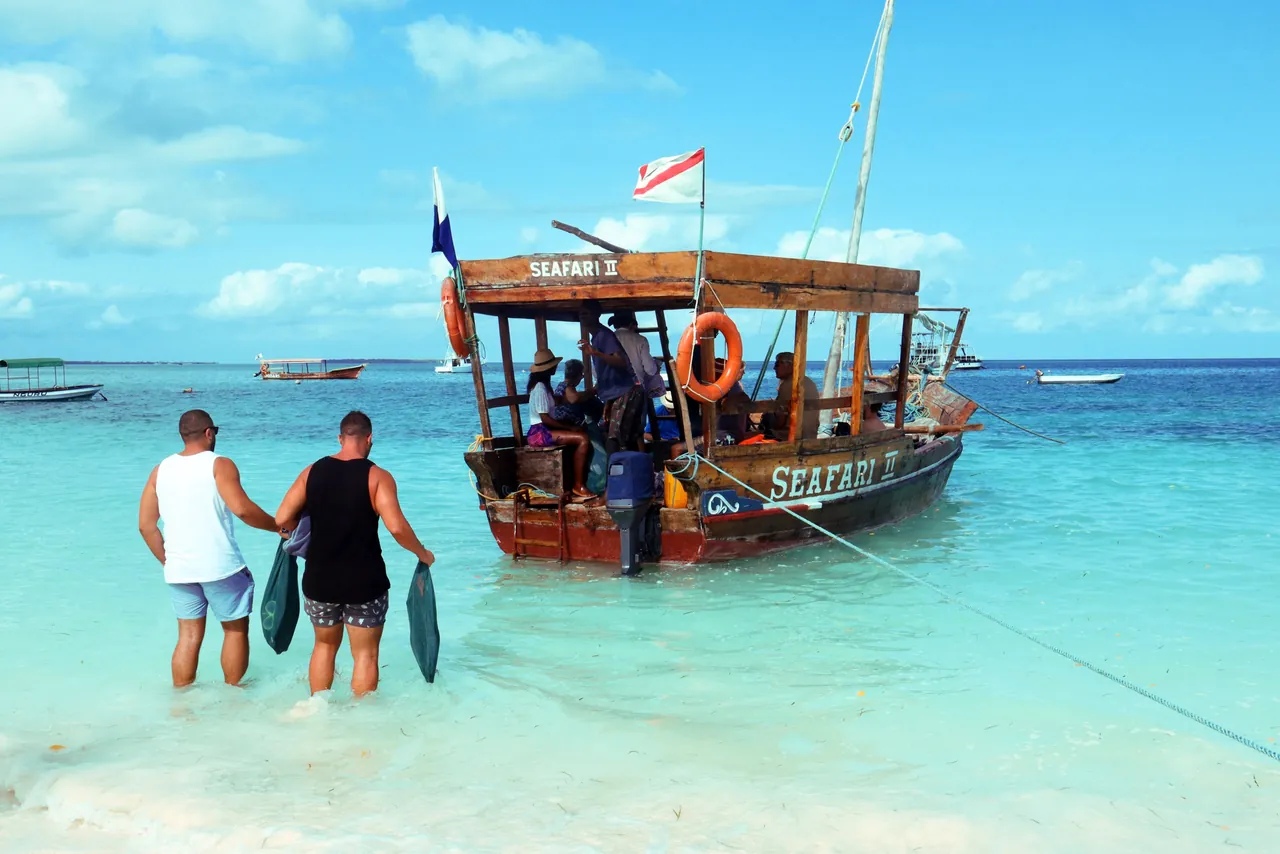
Boats leave Matemwe and Muyuni for a short ride. From Kendwa, Zanzibar Watersports runs a full day to Mnemba with a guide and a vegetarian lunch on board, and on Saturdays its "Seafari" goes by dhow, with a seafood lunch and the marine-park fee included.
Why it's in this guide
The easiest way to see Zanzibar's reef life — if you beat the crowds.
When to go
First thing in the morning, before the boats arrive; October–March is calmest.
Who runs it and how to book
Go with a dive centre's snorkel boat — One Ocean and Scubafish in Matemwe — or from Kendwa with Zanzibar Watersports (daily Mnemba trips leave at 09:15 and return by about 16:00; the Seafari dhow runs on Saturdays only). Make sure the boat has life jackets and a dedicated snorkel guide.
Safety: what to check
Stay close to your guide — boat traffic is the main hazard — and watch for current on the outer edge. Wear a rash vest for the sun. Non-swimmers need a life jacket and a guide alongside them.
Worth knowing
- By mid-morning dozens of boats can be on the same patch; some reviewers found the area small.
- Don't stand on coral, feed the fish or chase turtles.
- A conservation fee is charged.
7. Kendwa · North-west coast
Snorkelling Tumbatu with Zanzibar Watersports
Shallow, wonderfully preserved reefs off a quiet island, a morning's sail from Kendwa.
Tap any photo to see all 6.
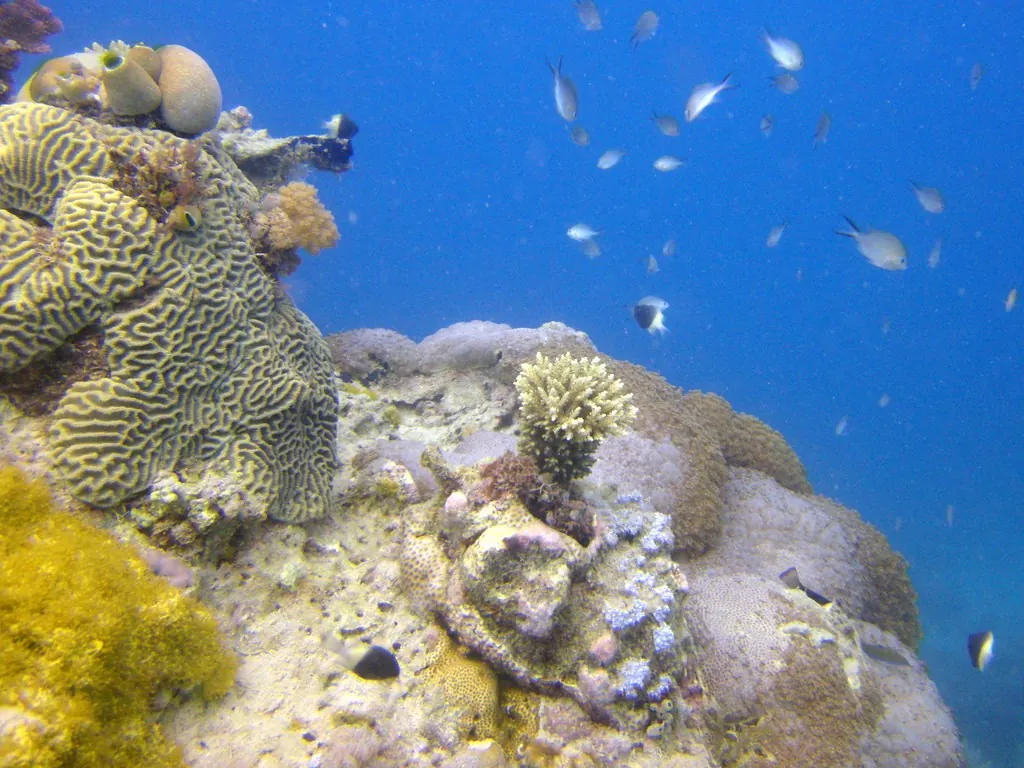
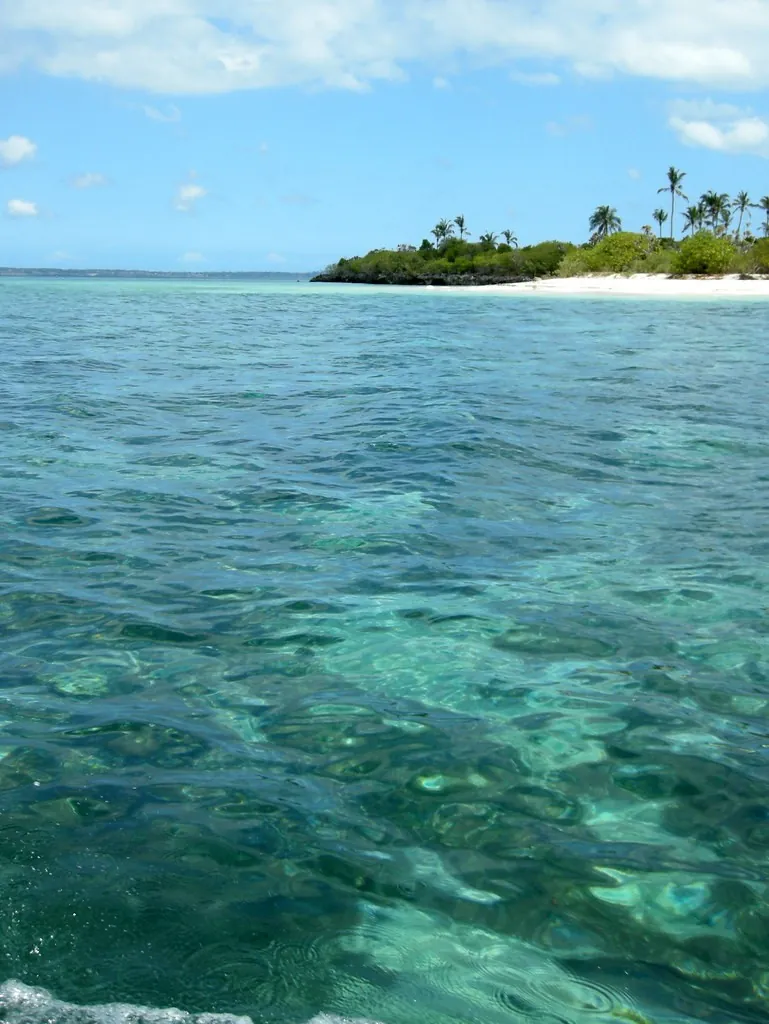
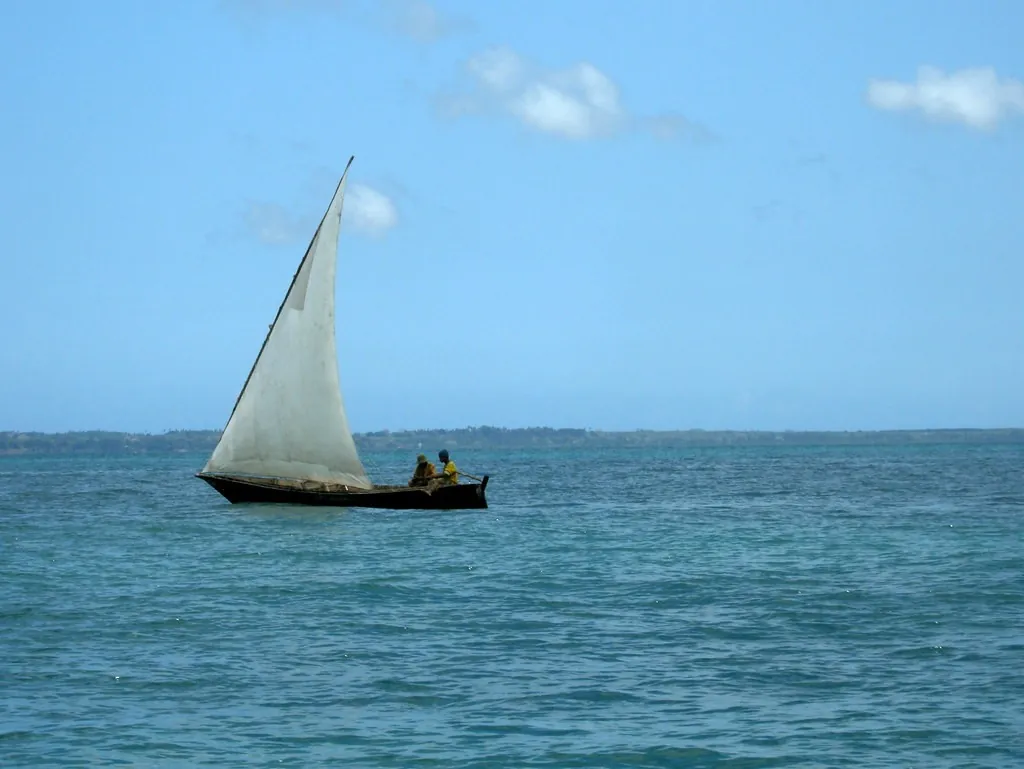
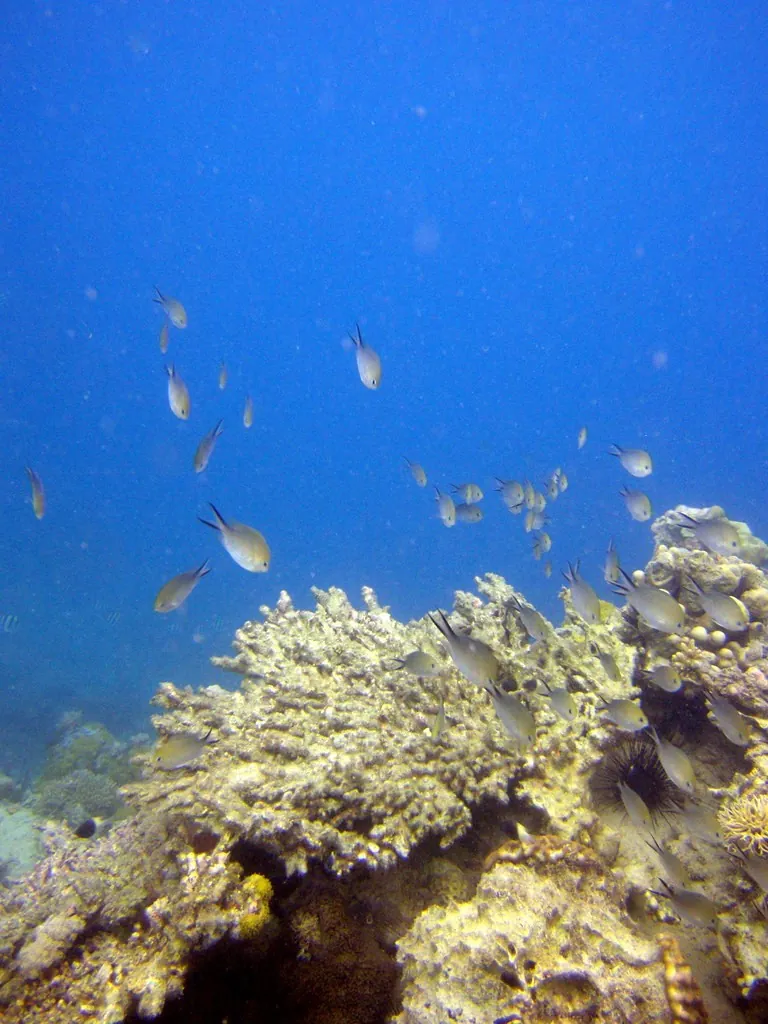
Off Tumbatu, the island across the channel from Kendwa, the reefs come almost to the surface and are some of the best preserved on Zanzibar: thousands of fish, ribbon eels and whip gobies, with the action close enough to touch — though you shouldn't.
Zanzibar Watersports runs the trip as a half-day from Kendwa, past a hundred-year-old lighthouse, with a guide in the water carrying a life ring, all the gear and free buoyancy aids for anyone less confident. The same team runs a full day to Mnemba, with a vegetarian lunch on board.
Why it's in this guide
Reefs that rival Mnemba's, without Mnemba's crowds — and an easy morning from the north-coast beaches.
When to go
Calm mornings; the boat leaves Kendwa at 09:15 and is back by about 13:30–14:00. October–March is usually calmest on this coast.
Who runs it and how to book
Book the day before with Zanzibar Watersports (zanzibarwatersports.com) and be at Kendwa beach 15 minutes before the 09:15 departure. Water and fresh fruit are included.
Safety: what to check
Every trip has a guide in the water, and buoyancy aids are free for less confident swimmers. Bring high-factor, reef-safe sunscreen, a hat and a cover-up for the boat — you're out for most of the morning.
Worth knowing
- Don't touch the coral or stand on the reef, however close it comes to the surface.
- Tumbatu is a traditional island community; trips snorkel the reefs rather than landing.
8. Chumbe Island · West coast
Snorkelling Chumbe Island Coral Park
Tanzania's first marine park: rangers, 500 reef fish and no fishing since 1992.
Tap any photo to see all 6.
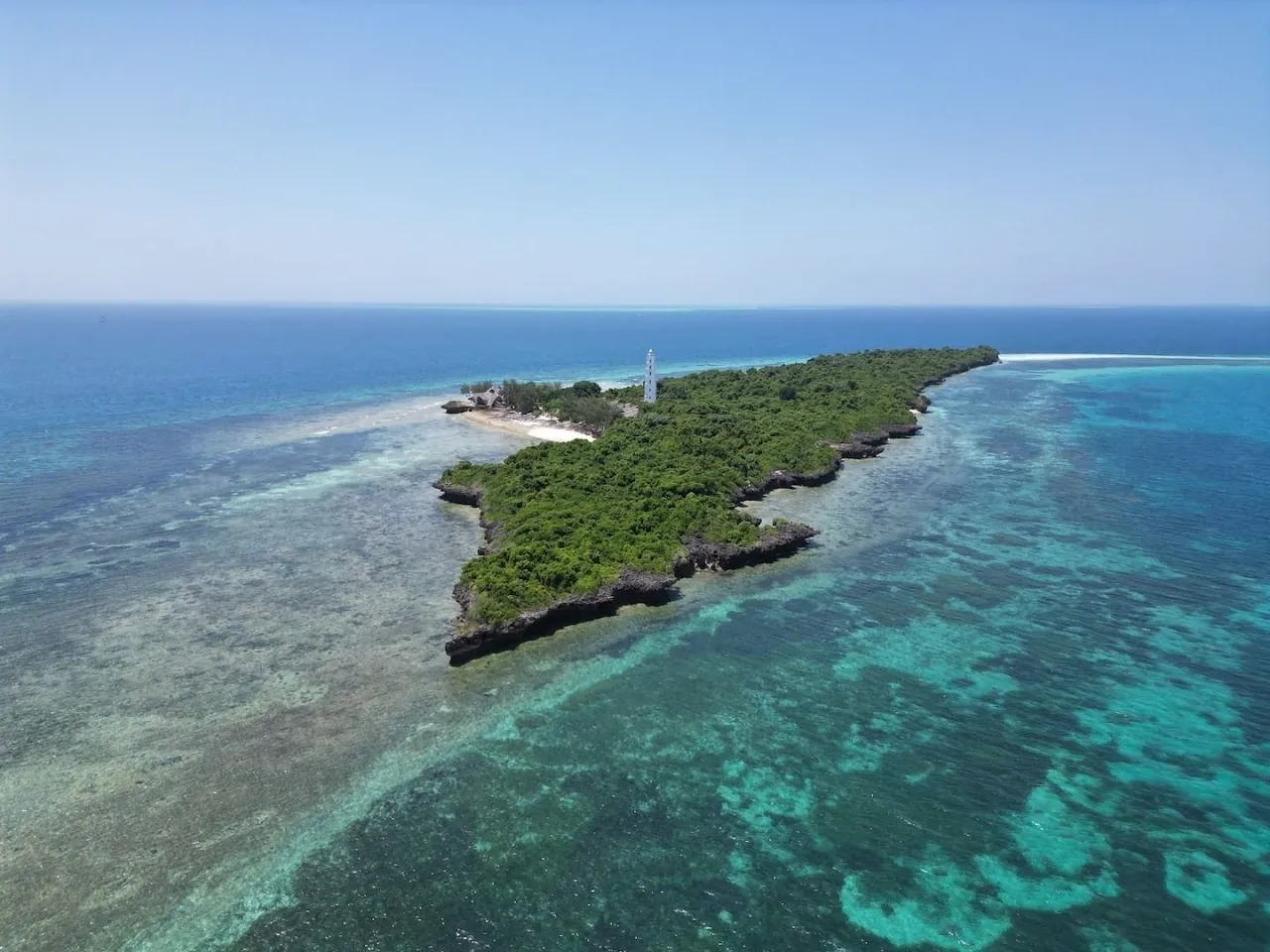
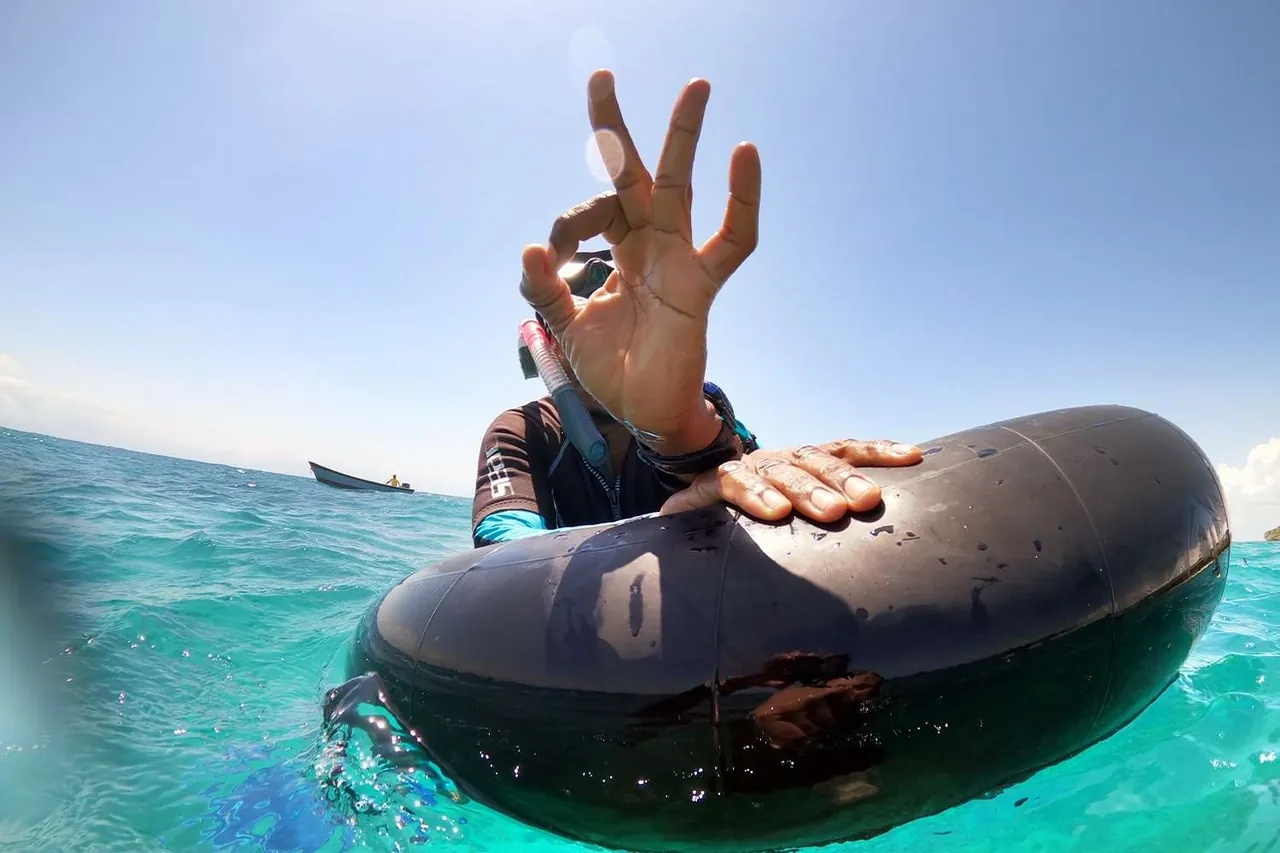
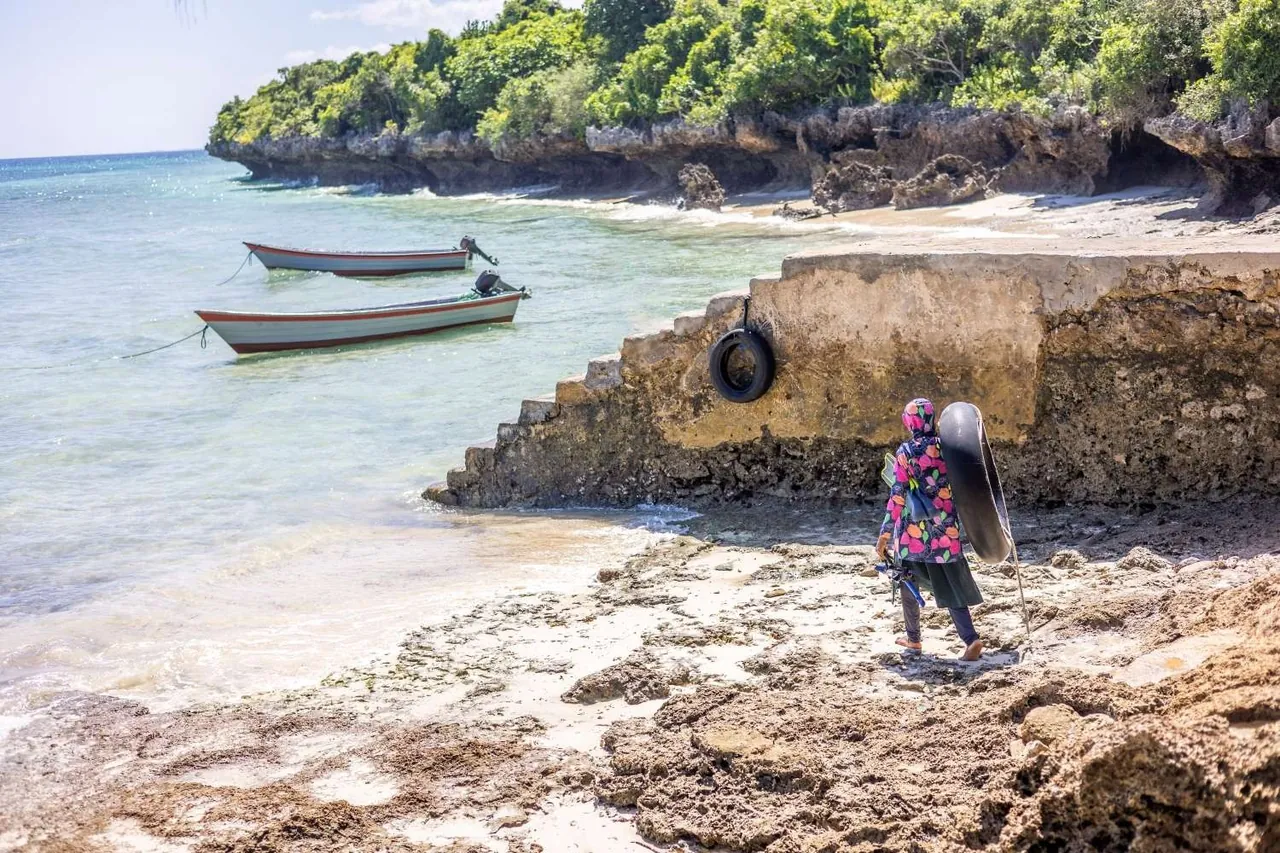
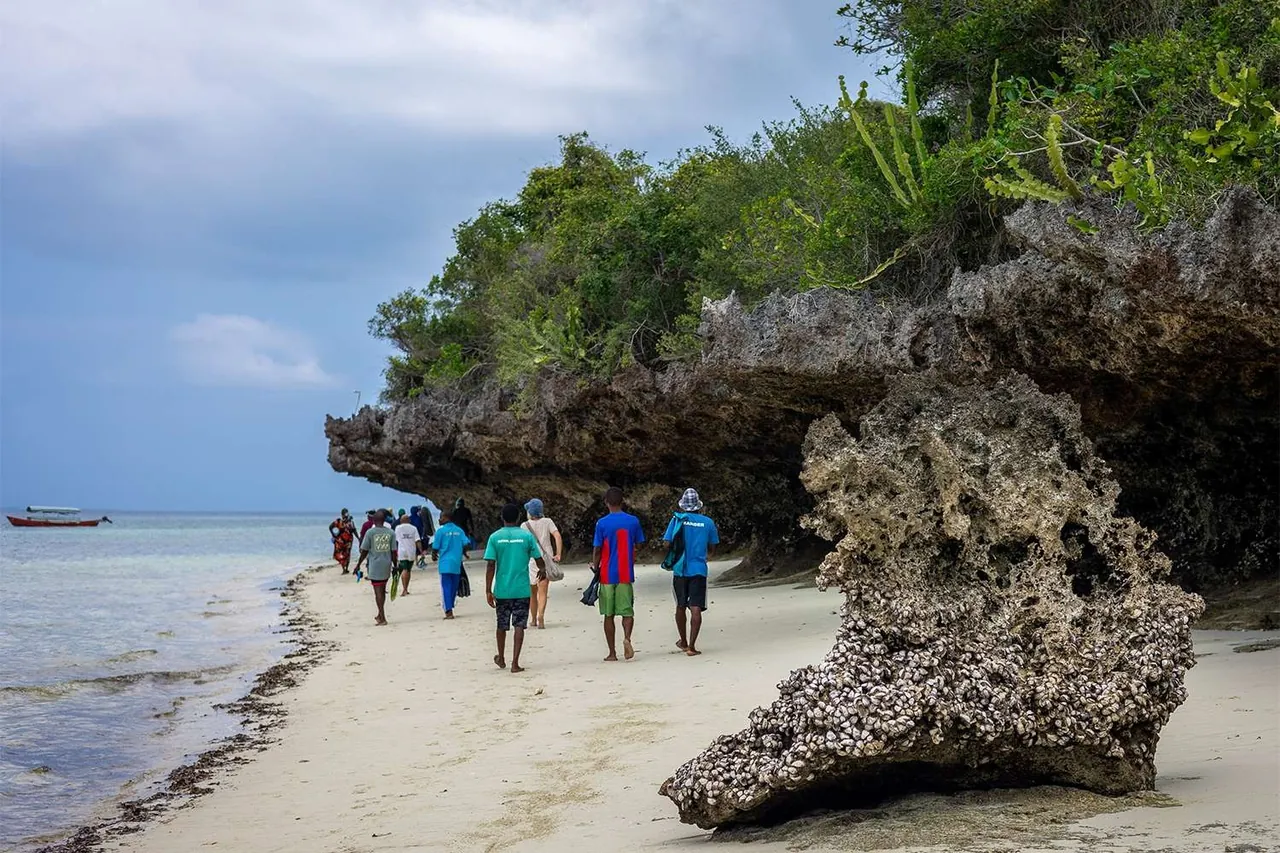
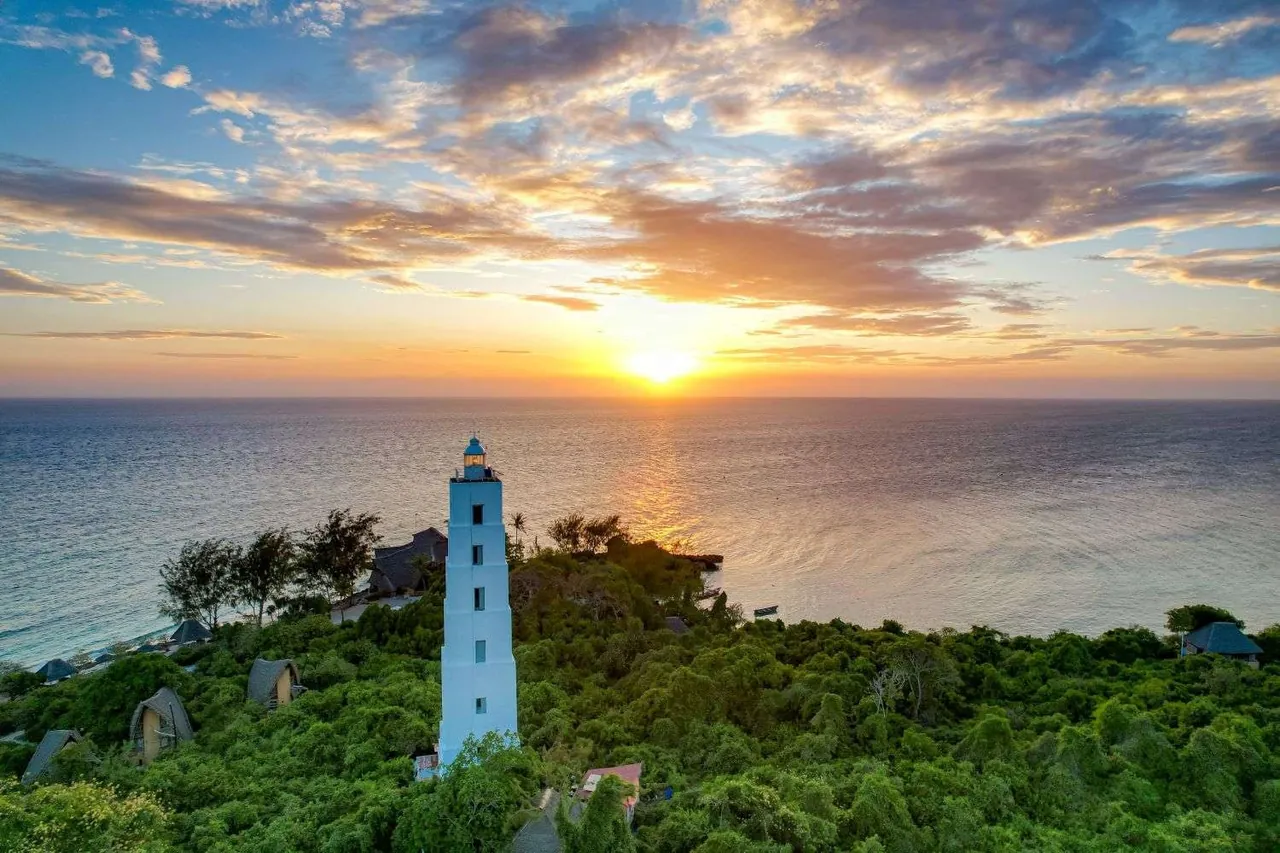
Chumbe's fringing reef has been closed to fishing since 1992 and became Tanzania's first marine park in 1994, run by a non-profit. More than 500 reef fish species and almost 60 kinds of hard coral have been recorded. Rangers lead about an hour of snorkelling, with all the gear and floats provided, then a forest walk, an intertidal walk and the old lighthouse.
Scuba diving is banned, numbers are capped, and day visits are taken only when the eco-lodge has space.
Why it's in this guide
The healthiest reef most visitors will see in Zanzibar, protected for more than thirty years.
When to go
November (excellent visibility), then January–March. June–August can be rough. The island closes for maintenance in April–May.
Tide: Snorkelling depends on the tide, and rangers decide each day; at low tide you wade out to the boat.
Who runs it and how to book
Book direct (chumbeisland.com) — bookings open just four days ahead and are capped at about 14 visitors. Check in at 09:30 at Jungle Paradise Resort, about 10 minutes south of Stone Town, for the 10:00 boat. Staying overnight gets better reviews than the day trip.
Safety: what to check
Rangers teach first-timers and every visitor follows the reef code of conduct. Reef shoes are provided for the wade to the boat.
Worth knowing
- Reviews are mixed: some found the day slow between activities, and there are bleached patches after warming events.
- The visitor rate and a Zanzibar Blue Economy levy apply.
9. Fumba · South-west coast
Safari Blue in Menai Bay
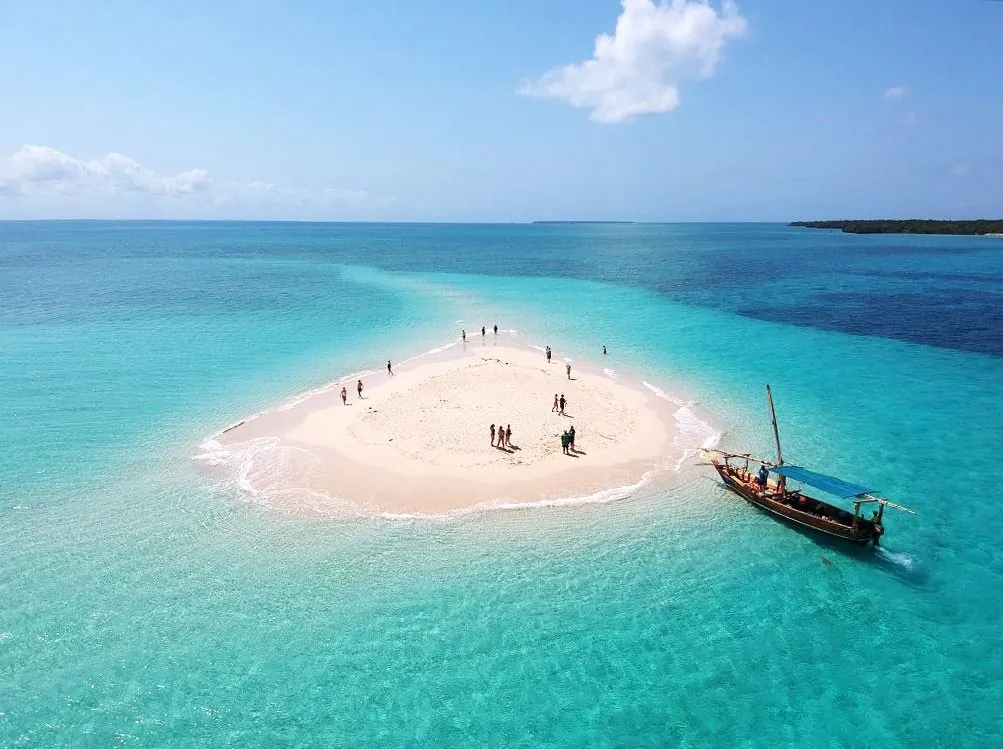
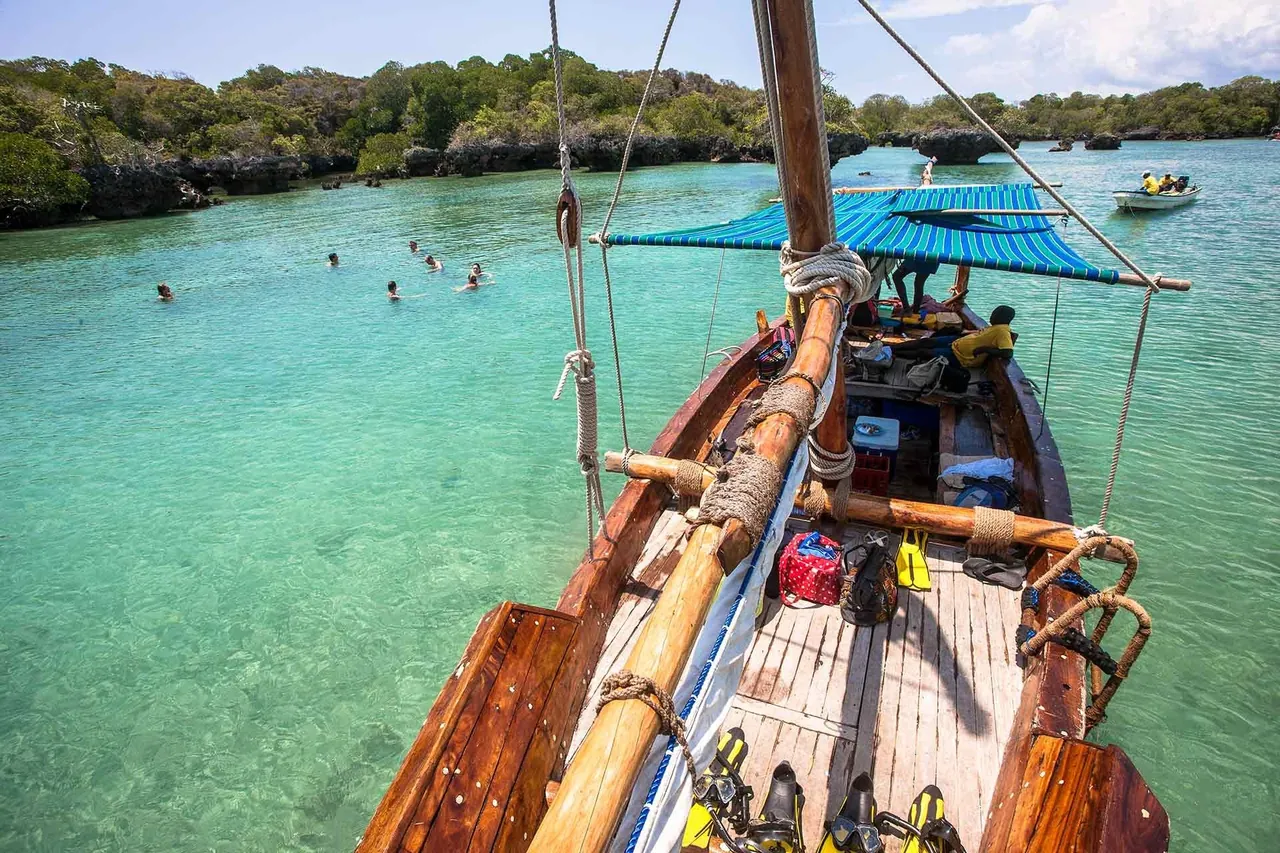
A day by dhow: sandbanks, a reef, a lagoon and lunch under a baobab.
Tap any photo to see all 6.
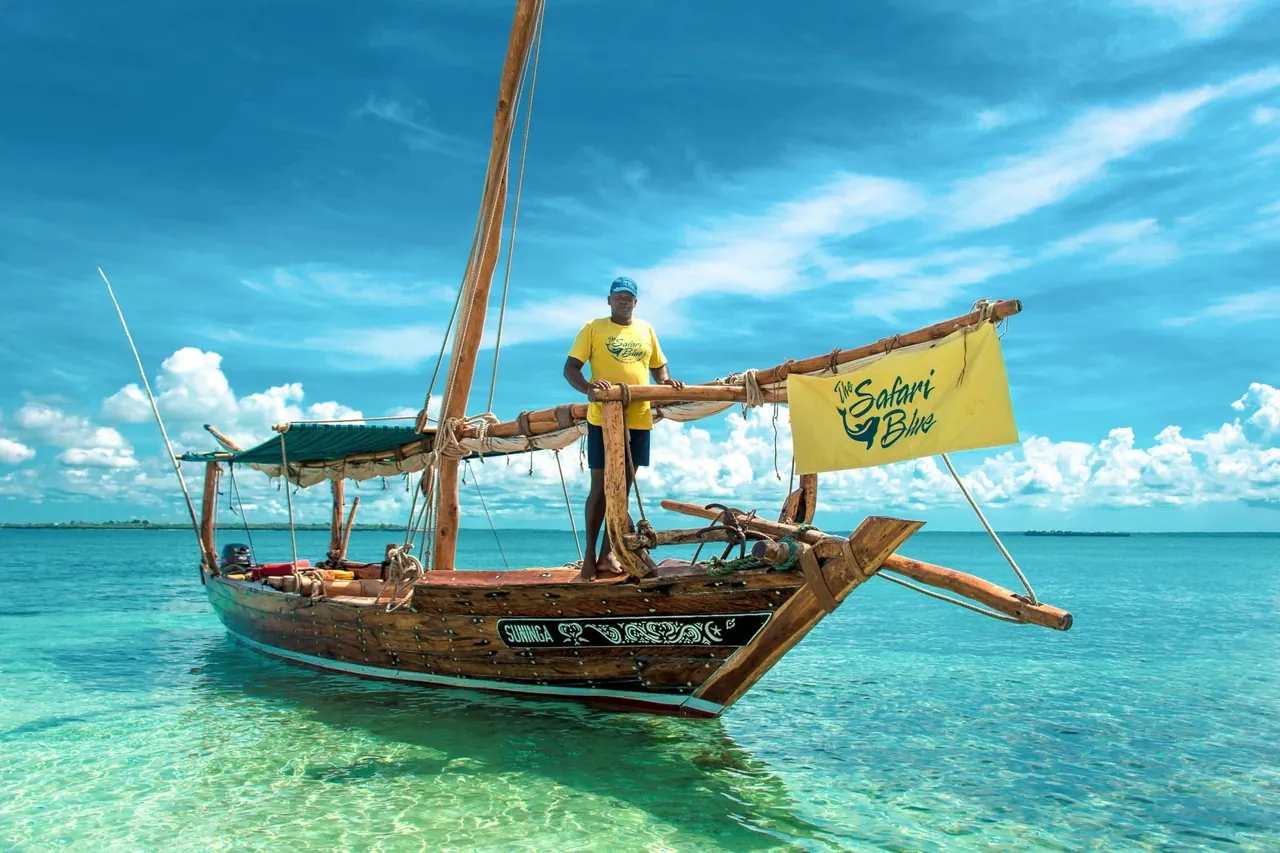
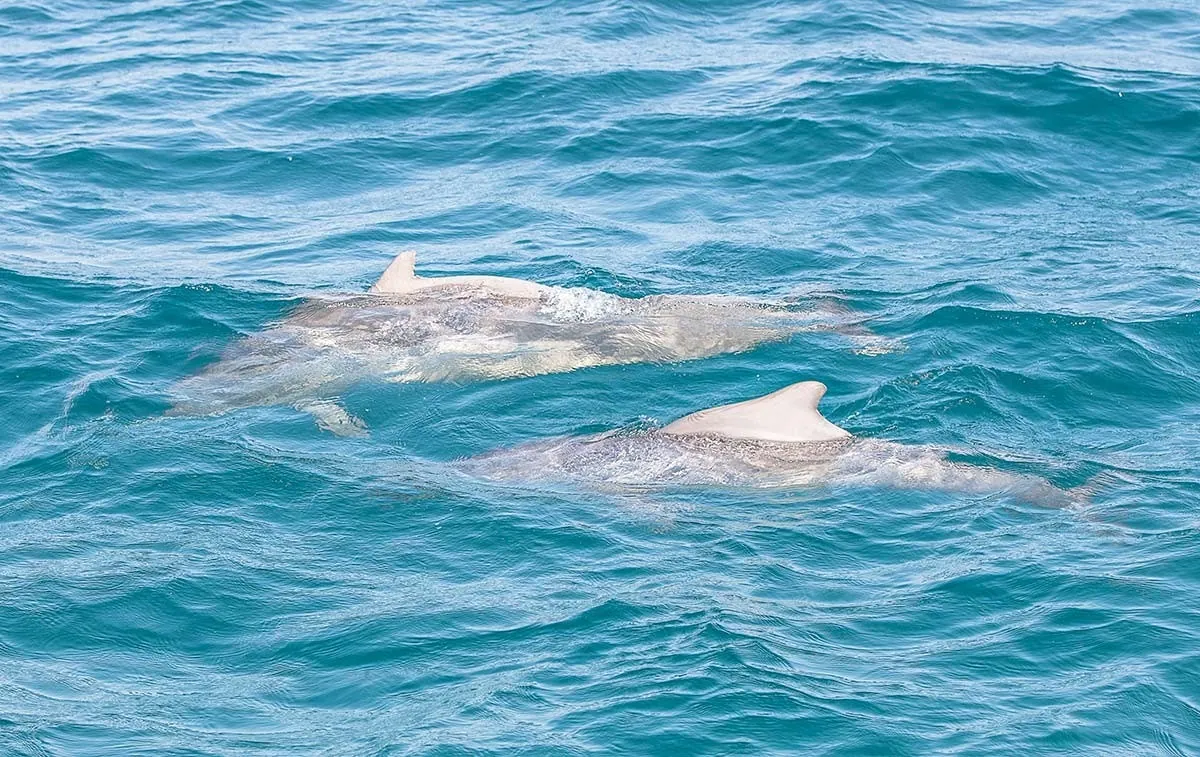
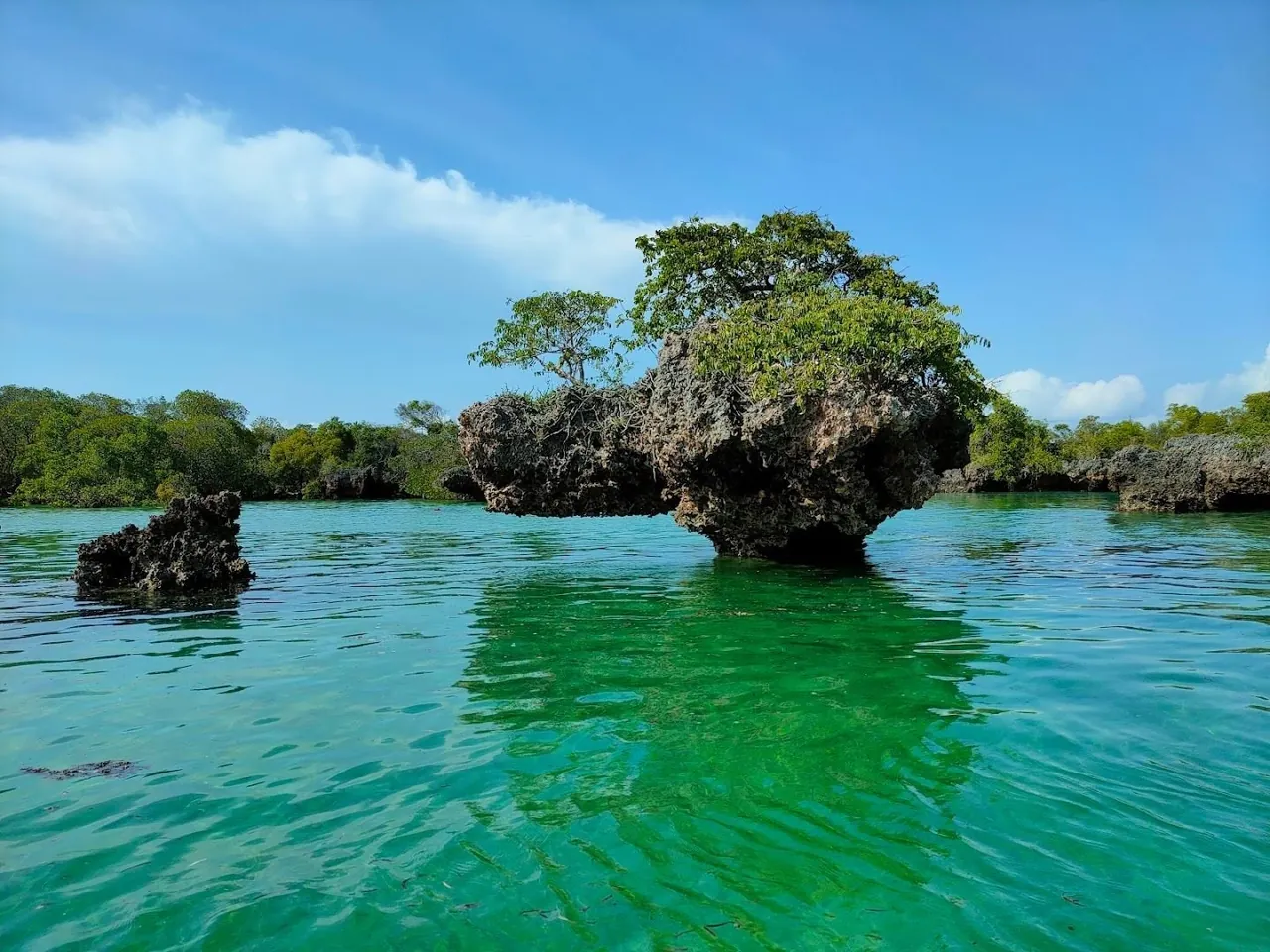
From Fumba village, mahogany dhows cross the Menai Bay Conservation Area to sandbanks, a reef snorkel stop and Kwale Island, with its tidal lagoon, its giant baobab and a seafood lunch. Bottlenose and humpback dolphins are often seen on the crossing.
The Original Safari Blue has run the trip since 1995 and says it uses no single-use plastic. Many cheaper trips copy the name — check the company on your booking.
Why it's in this guide
A whole day at sea that suits everyone, from grandparents to toddlers.
When to go
All year; the June–October trade winds can make it choppy.
Tide: Sandbank stops depend on the tide.
Who runs it and how to book
Book The Original Safari Blue (safariblue.net) a day or two ahead; it's a full day with food and drinks included. Fumba is about 30 minutes from Stone Town.
Safety: what to check
Life jackets are carried — ask for one if you're not a strong swimmer. Ask how the crew approaches dolphins, and don't pick up starfish or shells.
Worth knowing
- Very popular; the sandbanks can be busy.
- Quality varies widely between the original and the copies.
- A Menai Bay conservation fee applies.
10. Kizimkazi · South coast
Dolphins at Kizimkazi
Resident bottlenose and humpback dolphins — and a real problem with how they're watched.
Tap any photo to see all 6.
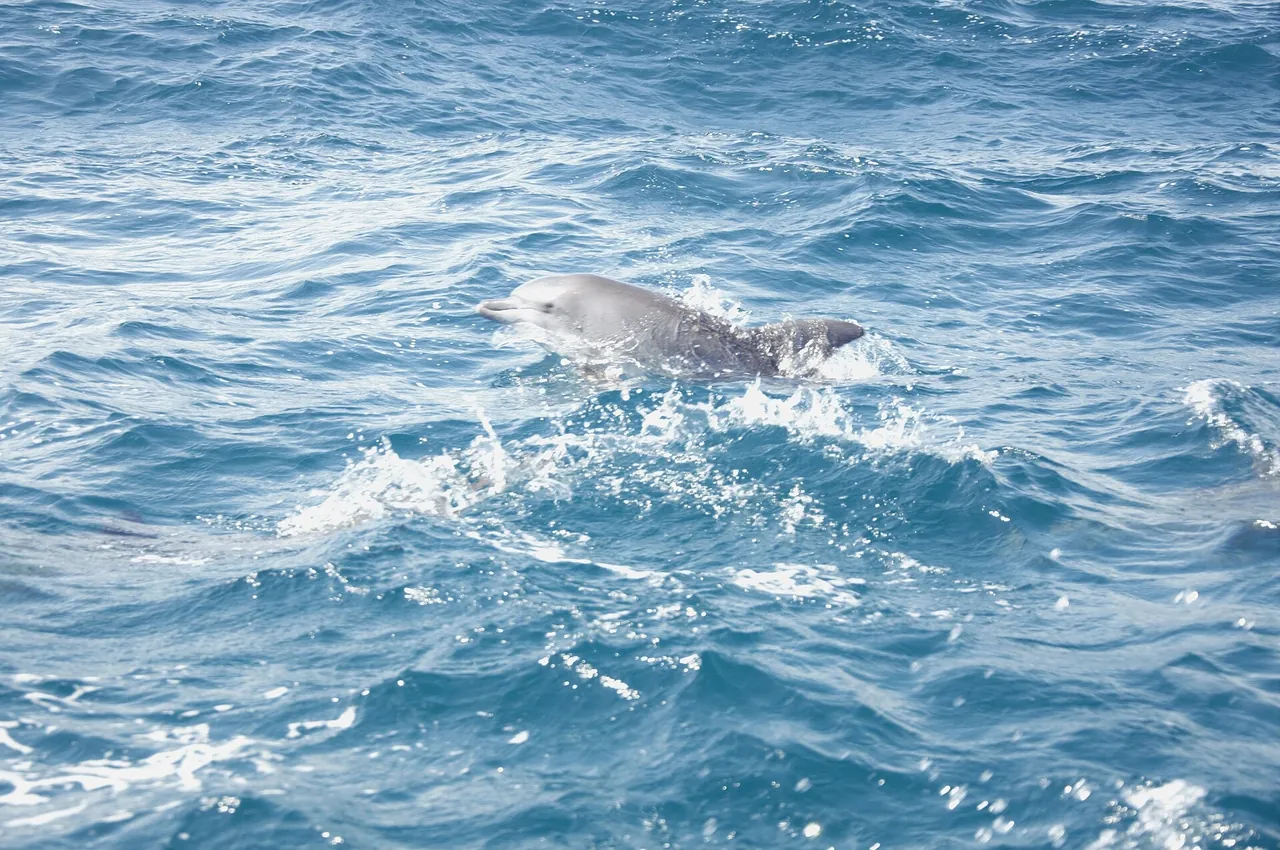
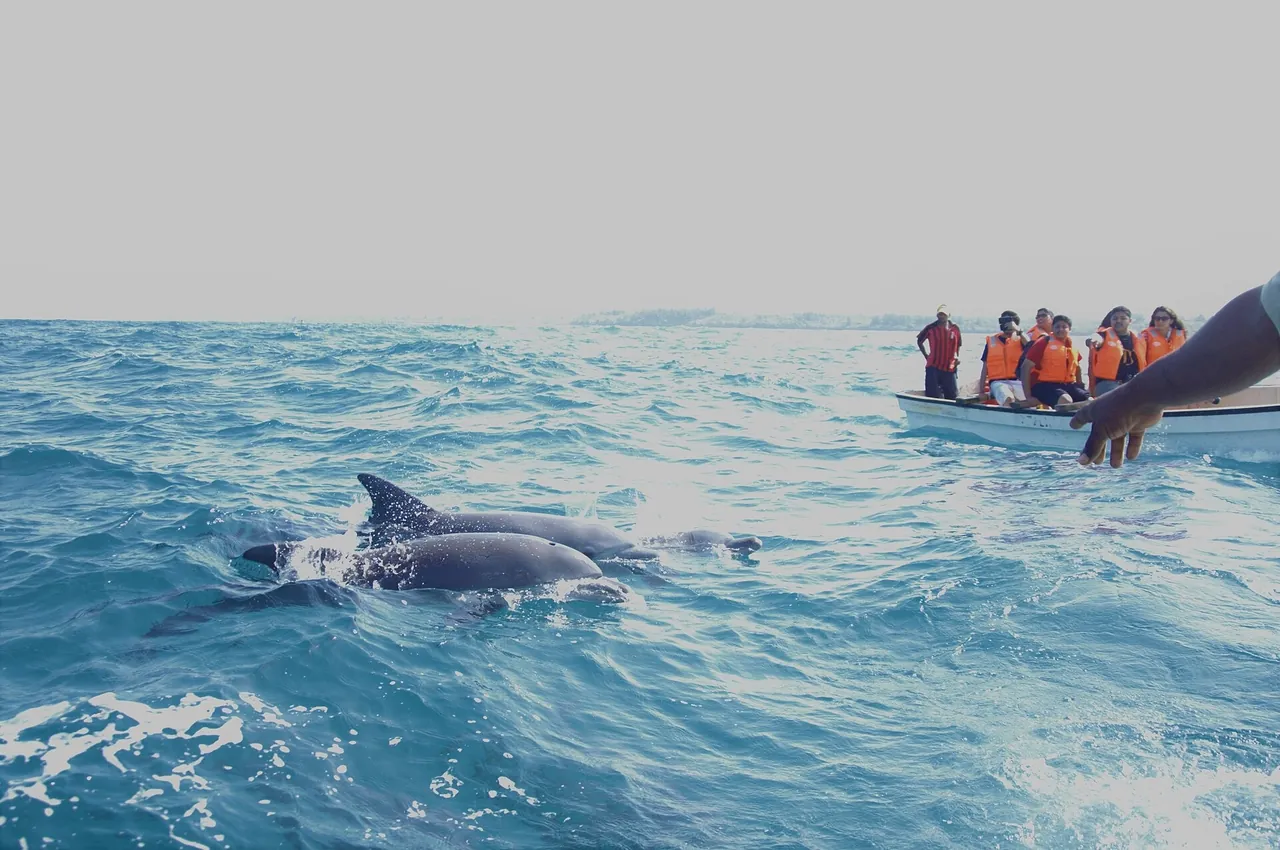
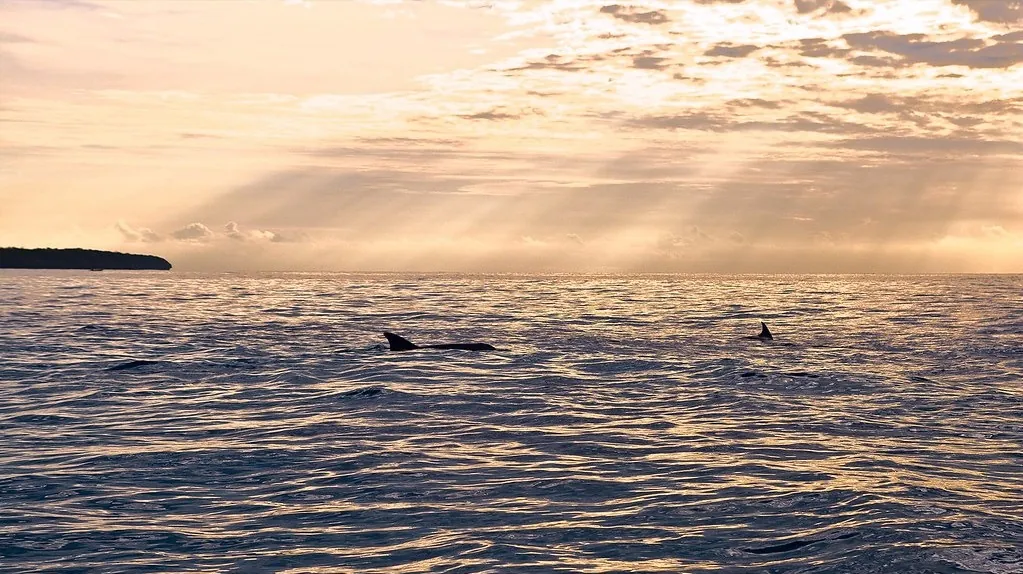
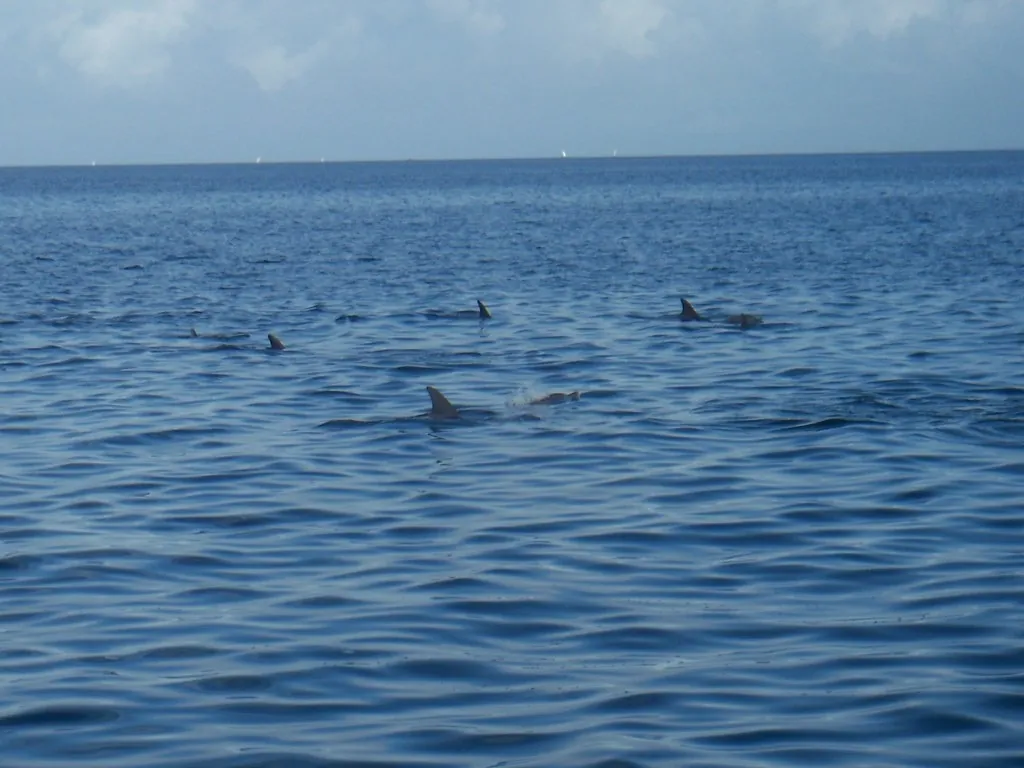
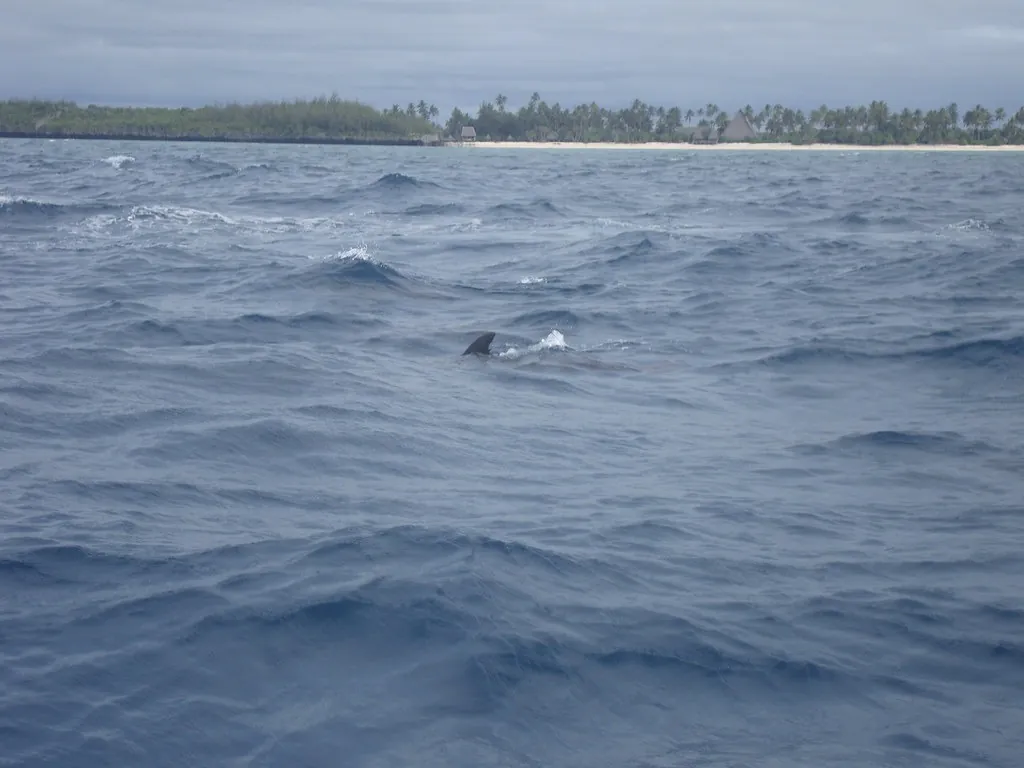
Indo-Pacific bottlenose and Indian Ocean humpback dolphins live year-round in the Menai Bay Conservation Area off Kizimkazi, and small boats leave the beach at dawn to find them.
We have to be honest: research off Kizimkazi has found that tourist boats cut into the dolphins' resting, feeding and socialising, and recent reviews describe twenty or thirty boats chasing a handful of dolphins. Guidelines exist but are weakly enforced, and we couldn't verify any operator as consistently not chasing, so we don't recommend one.
Why it's in this guide
Seeing wild dolphins in the early light can be magical — if it's done gently, from the boat.
When to go
First light, before the crowds; calmer October–March. Humpback whales are sometimes seen offshore July–October.
Who runs it and how to book
If you go, choose a small operator and ask before you pay how close they approach, whether they chase or surround a pod, and how many boats will be there. Agree the price in advance. Kizimkazi is about 1–1½ hours from Stone Town or 45 minutes from Paje.
Safety: what to check
Watching from the boat is the responsible default. Stay aboard if the dolphins are travelling; never jump in on top of them — if swimming is allowed at all, slip in quietly to the side and let them choose. Ask the skipper to leave if several boats converge.
Worth knowing
- If the trip turns into a chase, it's fine to ask to turn back — or to skip it altogether.
- Small open boats on a sea that can be rough; bring a towel, as it's cool at dawn.
- Reef snorkel stops are crowded after about 09:30.
11. Nungwi · Northern tip
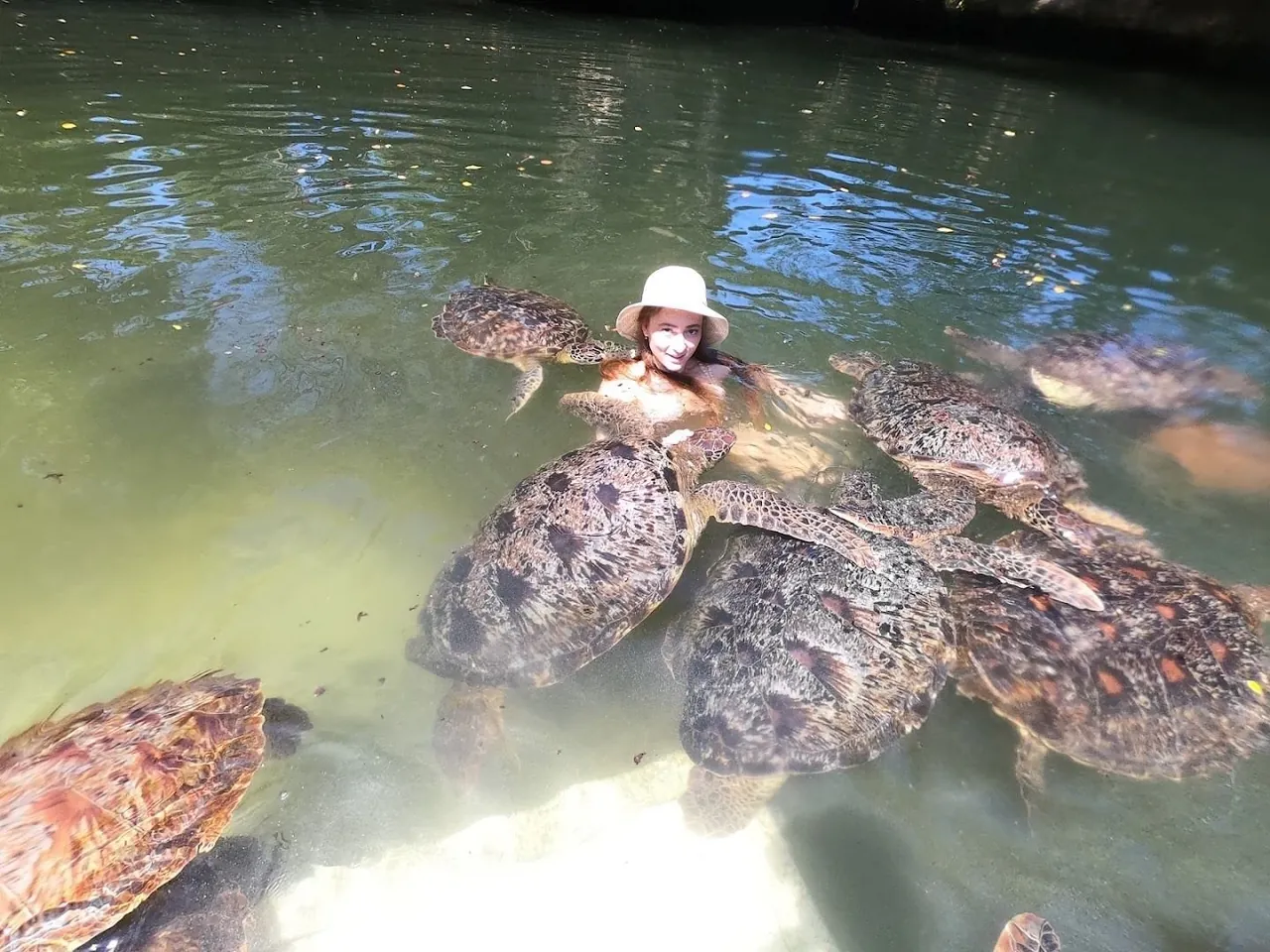
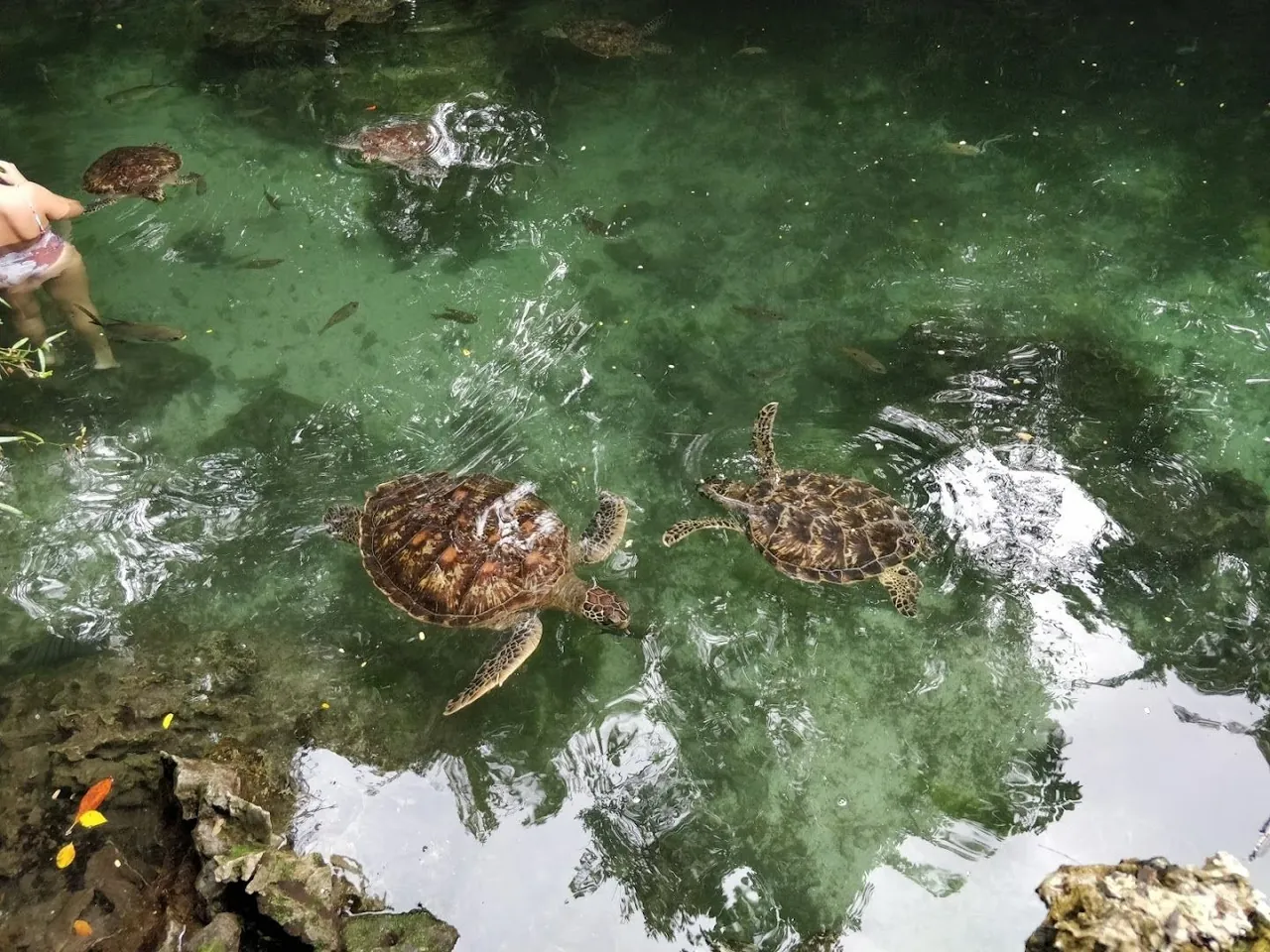
Turtle pools at Nungwi
Swimming with turtles in a tidal pool — captive, not wild.
Tap any photo to see all 6.
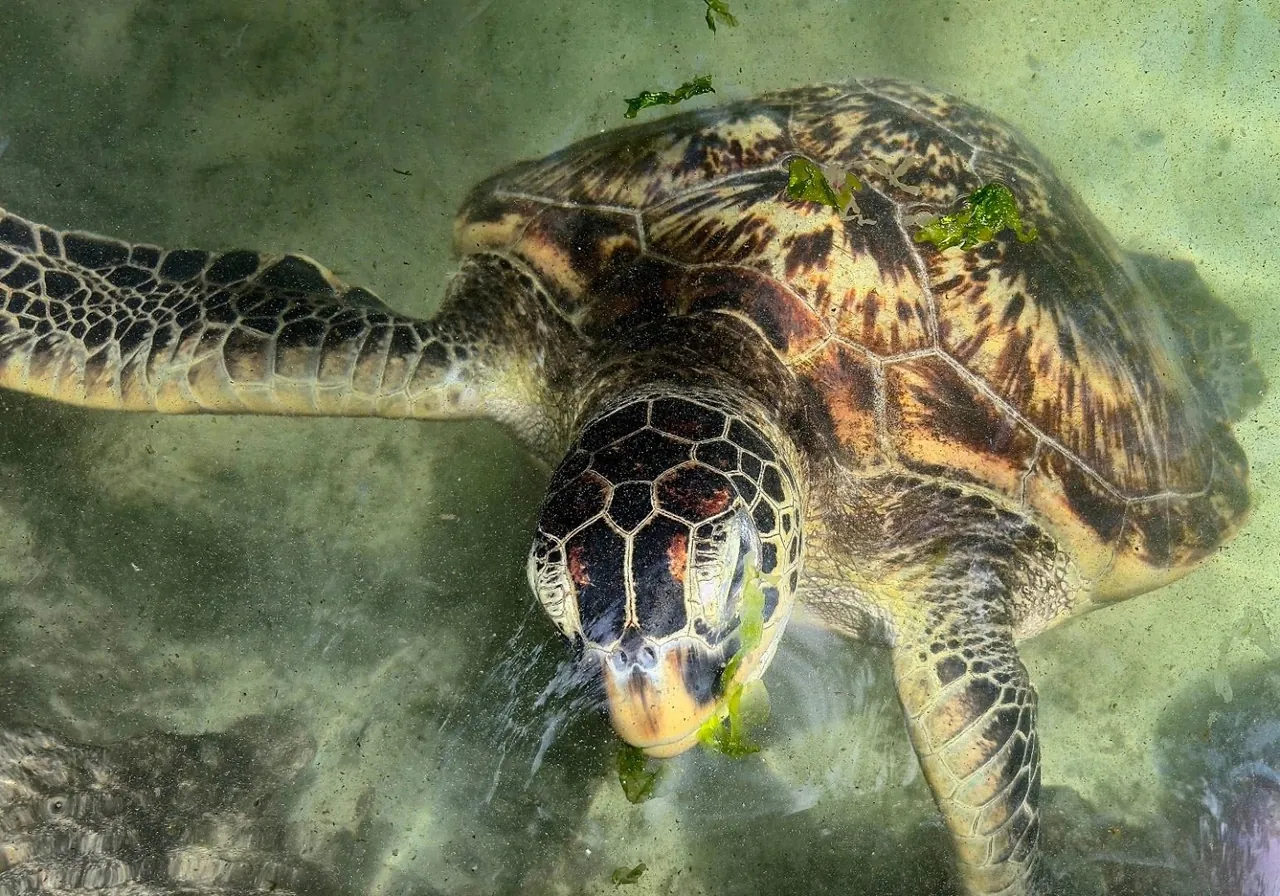
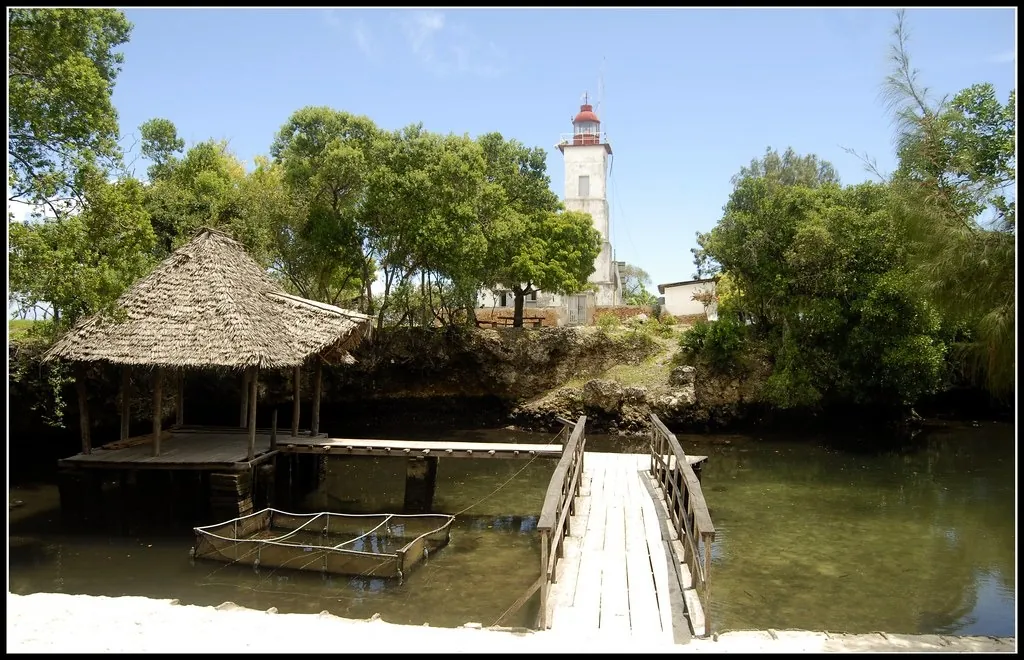
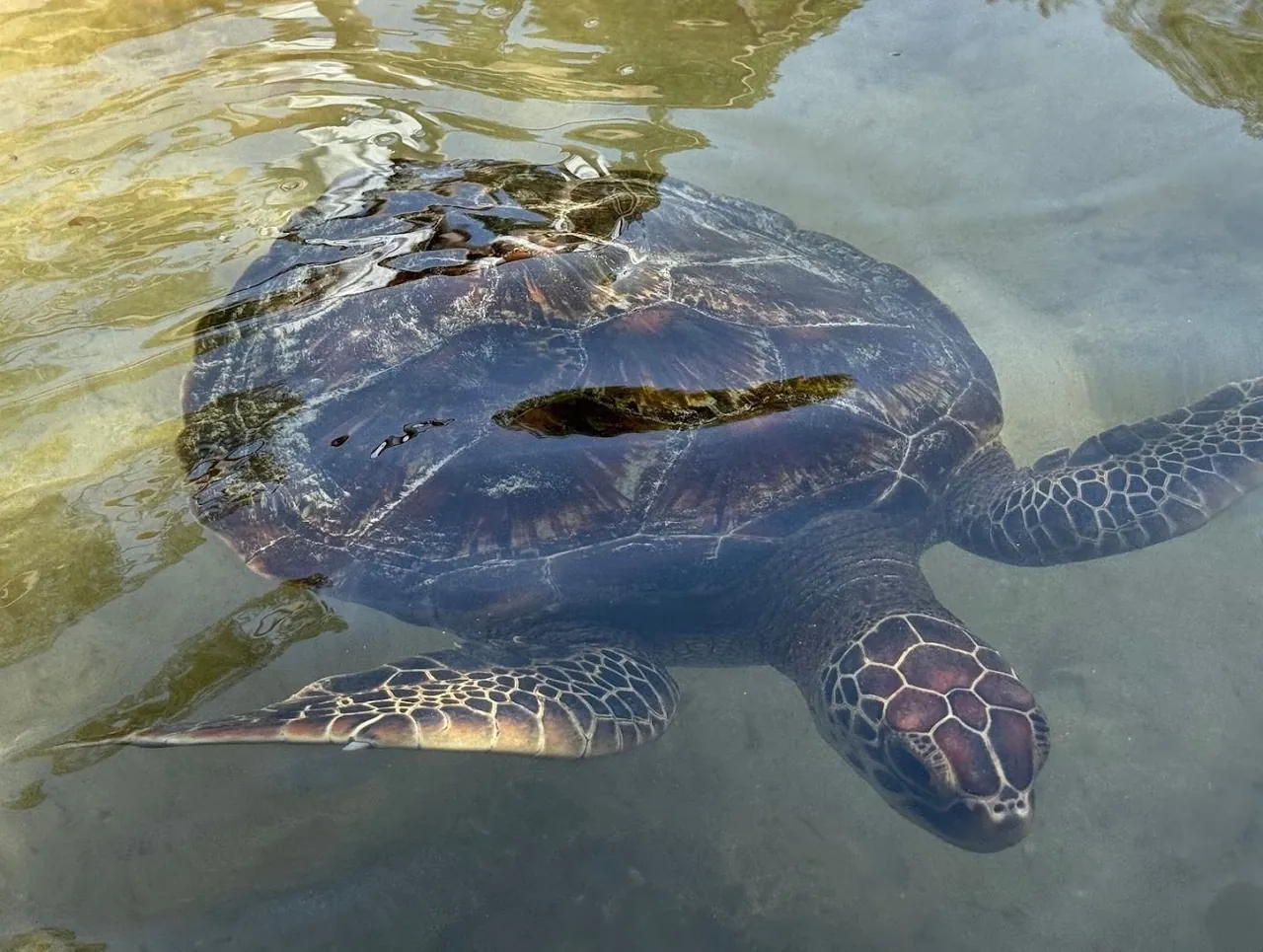
Near the Nungwi lighthouse, two natural tidal pools hold green and hawksbill turtles. At Nungwi Mnarani Aquarium, a community project since 1993, and Baraka Natural Aquarium next door, you can feed them seaweed and swim alongside them; hatchlings are kept in tanks for months before release.
Be clear about what this is: captive turtles in enclosed pools, often crowded and handled. The rescue-and-release story began with turtles caught in nets, but some adults stay for good, and head-starting hatchlings is a debated practice.
Why it's in this guide
Children love it — but if you want turtles in the wild, snorkel at Mnemba or Bawe instead.
When to go
Early morning, before the crowds. Mnarani is open daily 09:00–18:00.
Who runs it and how to book
Walk or tuk-tuk to the eastern point of Nungwi; no booking needed. Entrance fees go to the projects.
Safety: what to check
Don't touch the turtles' heads or shells, don't chase them, and don't wear sunscreen in the pool.
Worth knowing
- These are captive animals — reviews describe overcrowding and commercialisation.
- Baraka adds a small zoo, which some visitors dislike.
- Not an adventure in the physical sense; allow an hour or two.
12. Nungwi · Northern tip
Sea walking at Nungwi
Walk on the seabed in an air-fed helmet — no swimming needed.
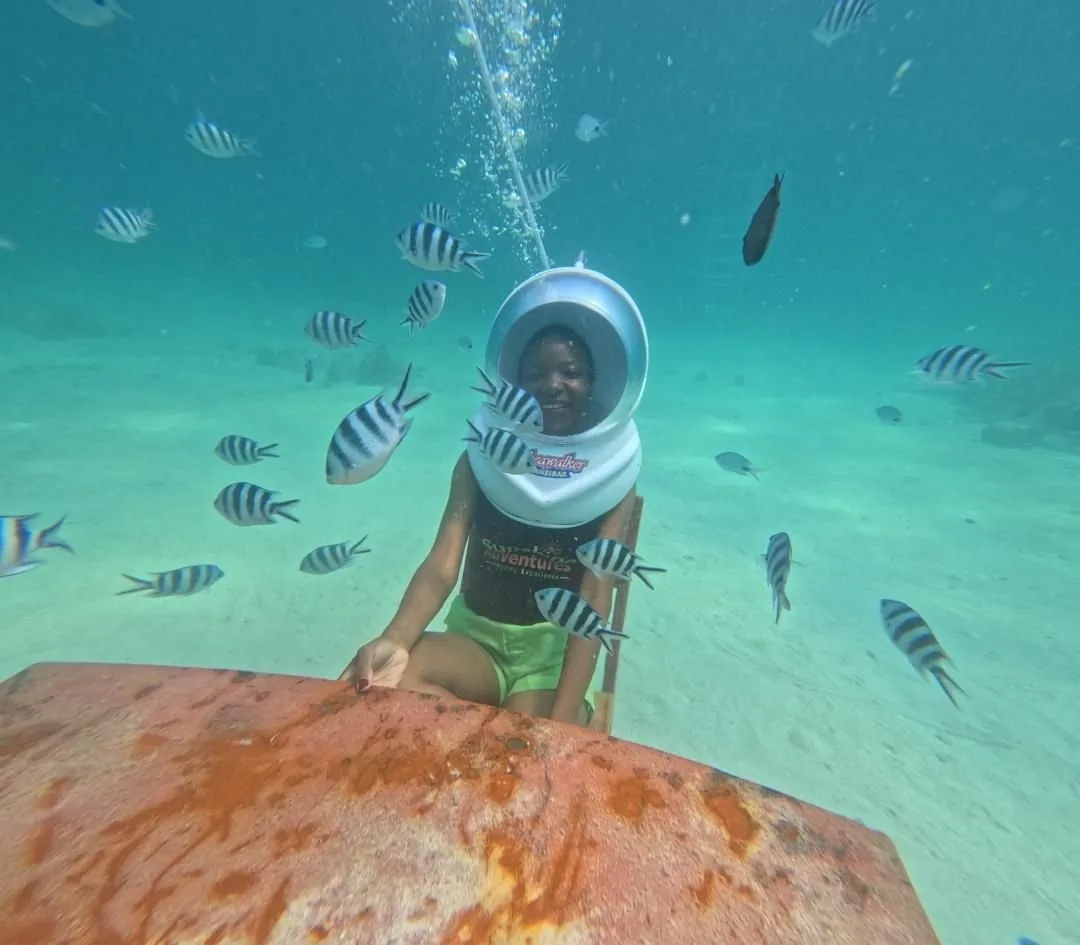
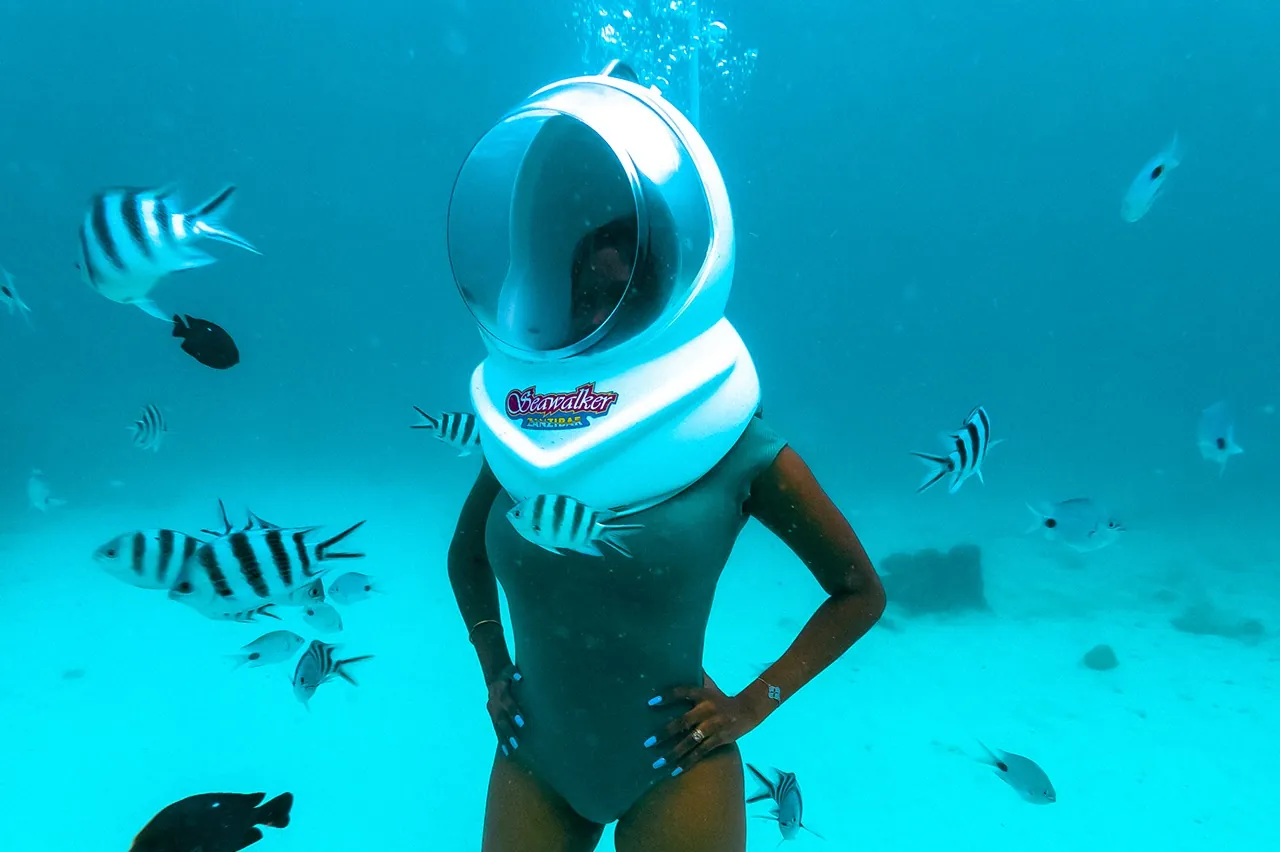
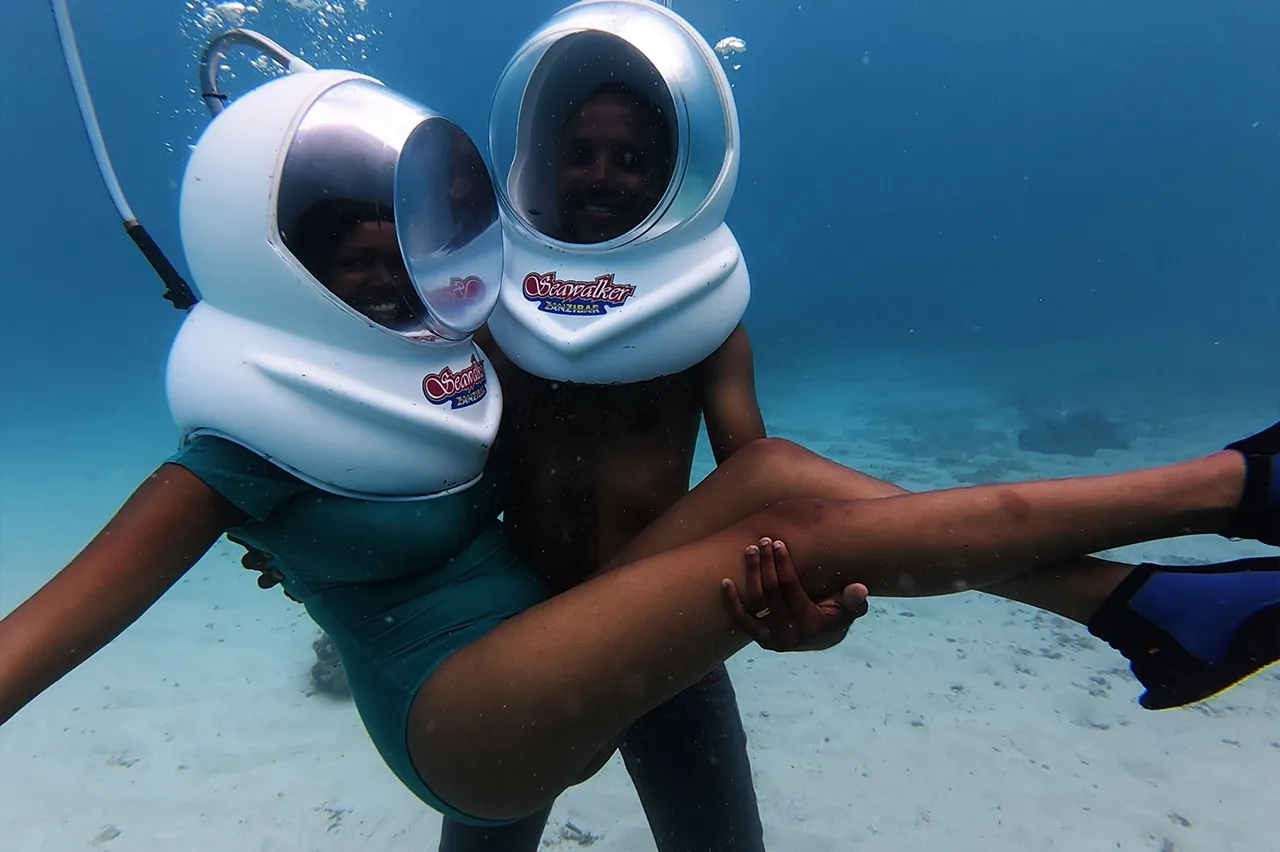
Zanzibar SeaWalk takes you out by boat to a platform off Nungwi, fits you with an air-fed helmet and lets you walk the sandy seabed for about twenty minutes among sergeant majors and reef fish. You don't need to swim or dive, and you can keep your glasses on.
Why it's in this guide
The only way for non-swimmers to stand among the fish.
When to go
Calm days; trips are rescheduled in rough seas.
Who runs it and how to book
Book with Zanzibar SeaWalk (zanzibar-seawalk.com), based at Double A Beach Hotel in Nungwi. Some packages include photos and video.
Safety: what to check
Ask how the air is supplied and whether there's a backup, how deep you'll go, how many guests each guide takes and what to do if you need to come up. You'll need to equalise your ears on the way down.
Worth knowing
- A novelty rather than a reef experience — it's mostly sand, with fed fish.
- Not for pregnancy, heart or back problems, claustrophobia or bad seasickness; minimum age isn't published (one guide says about 10).
13. Nungwi & Kendwa · Northern tip
Deep-sea fishing from Nungwi
Wahoo, dorado, tuna and sailfish in the Pemba Channel.
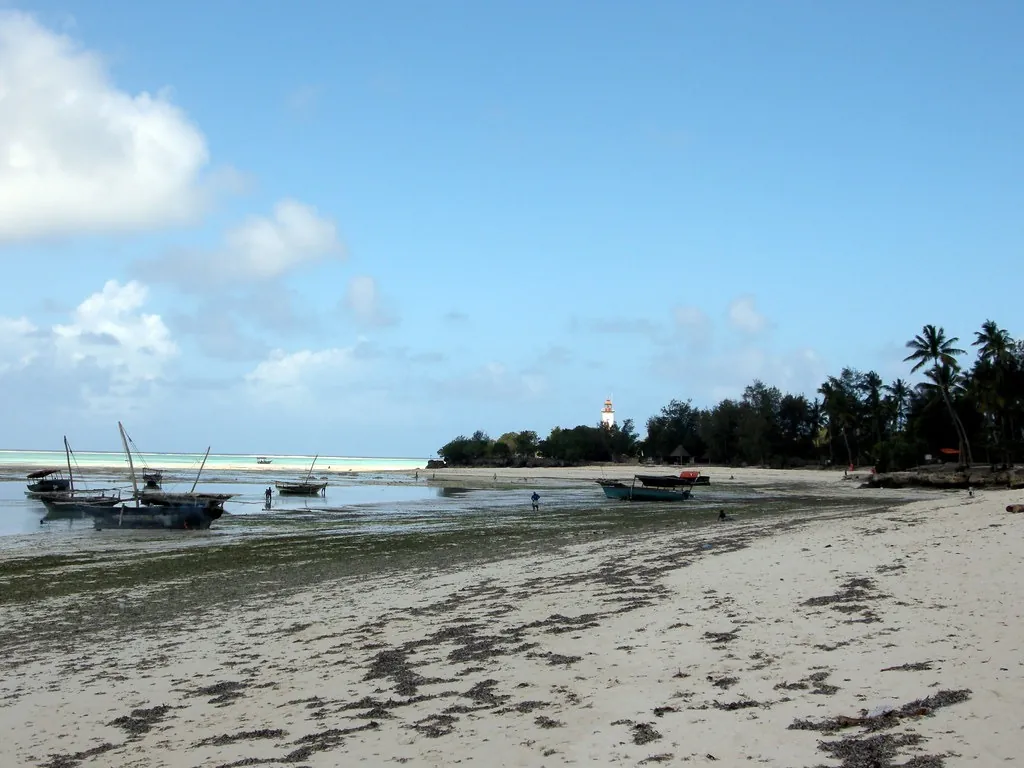
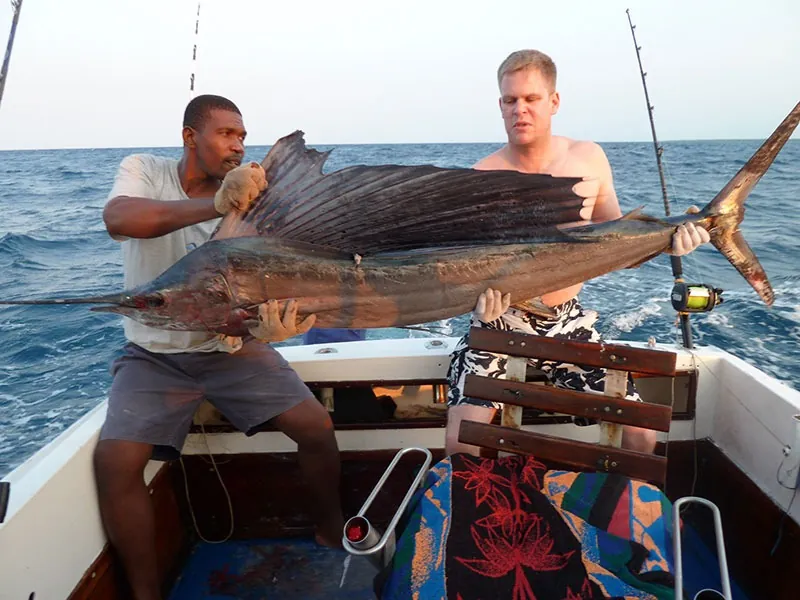
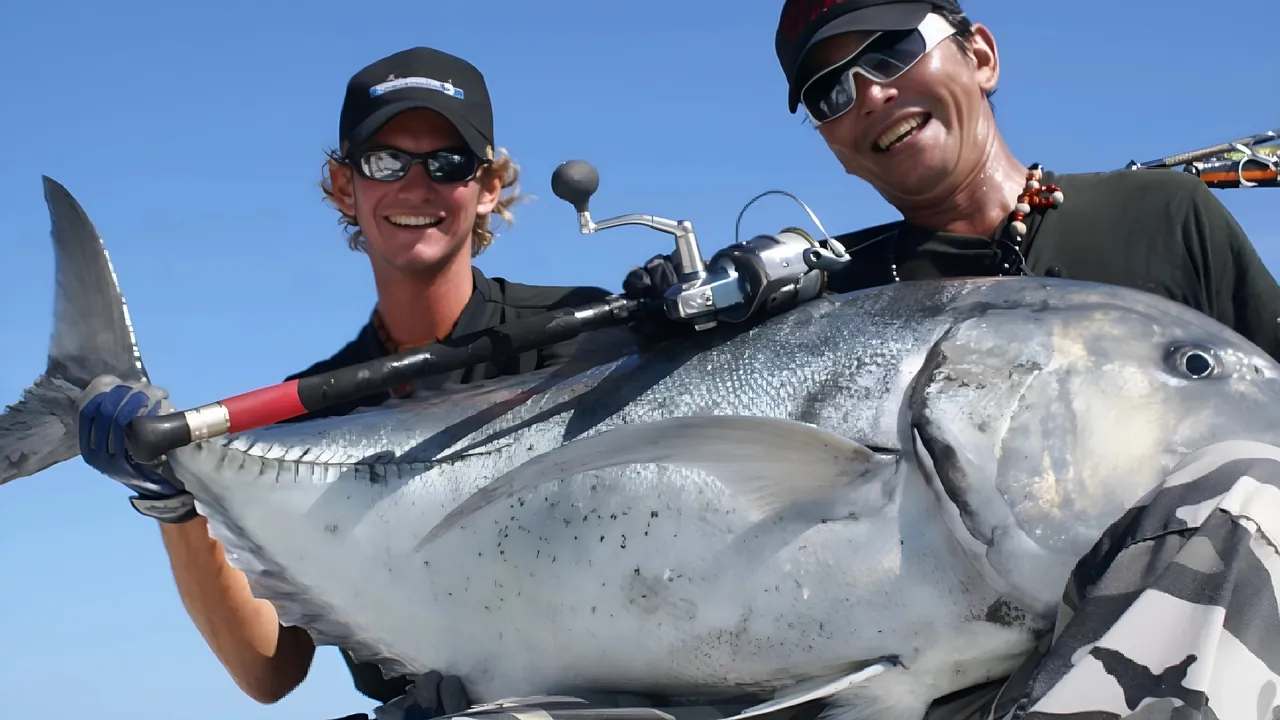
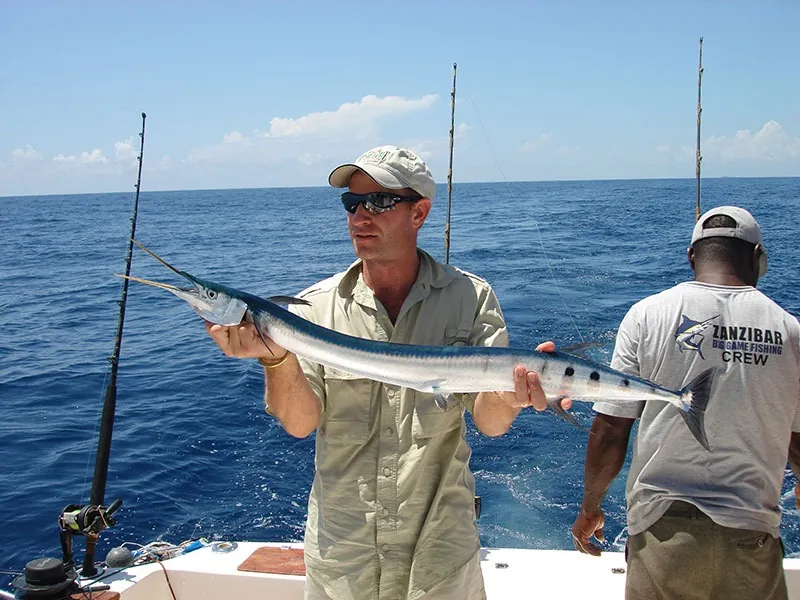
From Nungwi and Kendwa, sportfishing boats head out into the deep Pemba Channel and over Leven Bank for yellowfin tuna, wahoo, dorado, kingfish, giant trevally and, in season, sailfish and marlin. Day charters, night fishing and multi-day trips are all on offer.
Fishing Zanzibar, now part of Zanzibar Yacht Charter, has fished from Nungwi since 2005; Zanzibar Watersports in Kendwa runs its own small fleet.
Why it's in this guide
Big fish in deep blue water within an hour of the beach.
When to go
August–November is prime for yellowfin; billfish run roughly November–March.
Who runs it and how to book
Charter a boat with Zanzibar Yacht Charter (zanzibaryachtcharter.com) in Nungwi or Zanzibar Watersports in Kendwa. Agree the weather and cancellation policy before you pay.
Safety: what to check
Check for life jackets, a radio and, on small boats, a second engine. Take seasickness tablets — it can be rough.
Worth knowing
- Ask for tag-and-release on all sailfish and marlin, don't take sharks, and ask what happens to kept fish. Most operators' photos show fish killed rather than released, so agree this with the skipper first.
- Blank days happen.
14. Paje · South-east coast
Kitesurfing in Paje
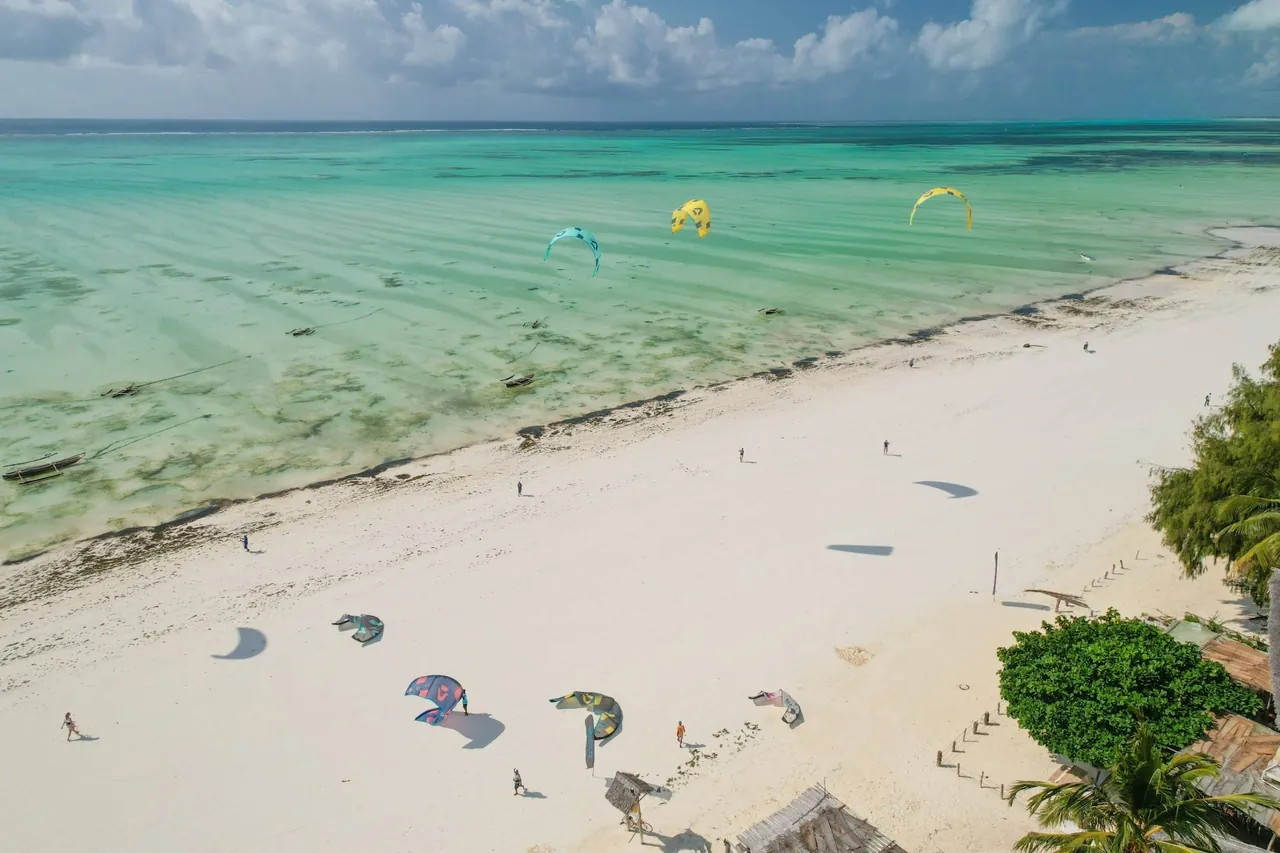
East Africa's kitesurfing capital: a huge, warm, waist-deep lagoon.
Tap any photo to see all 6.
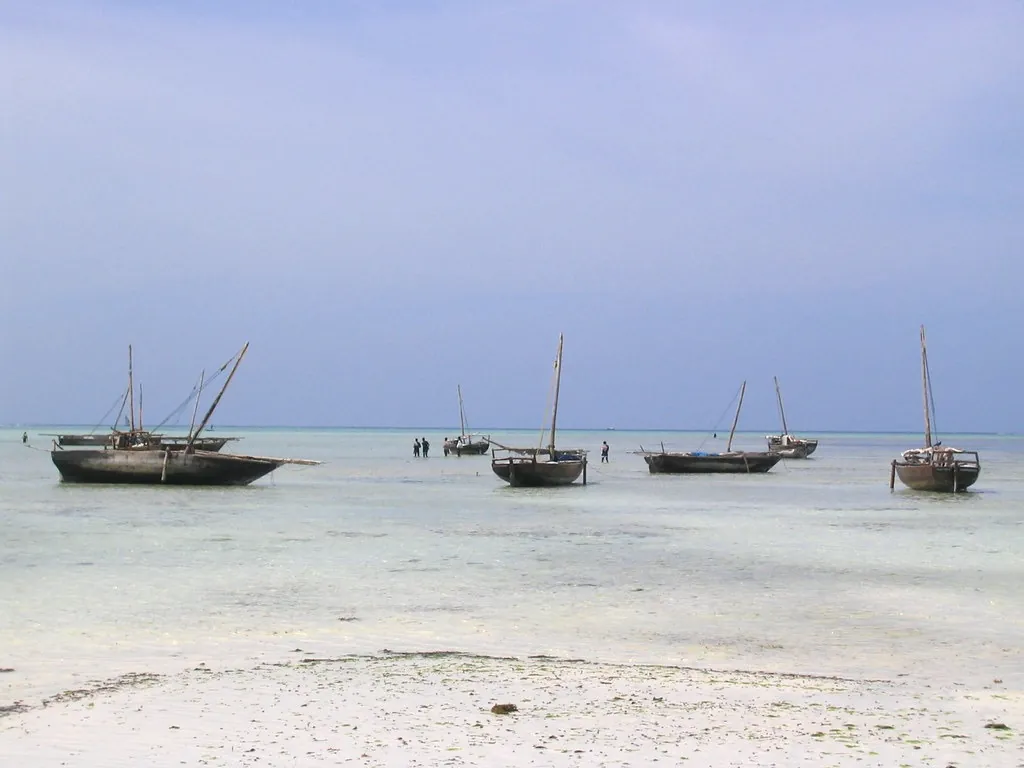
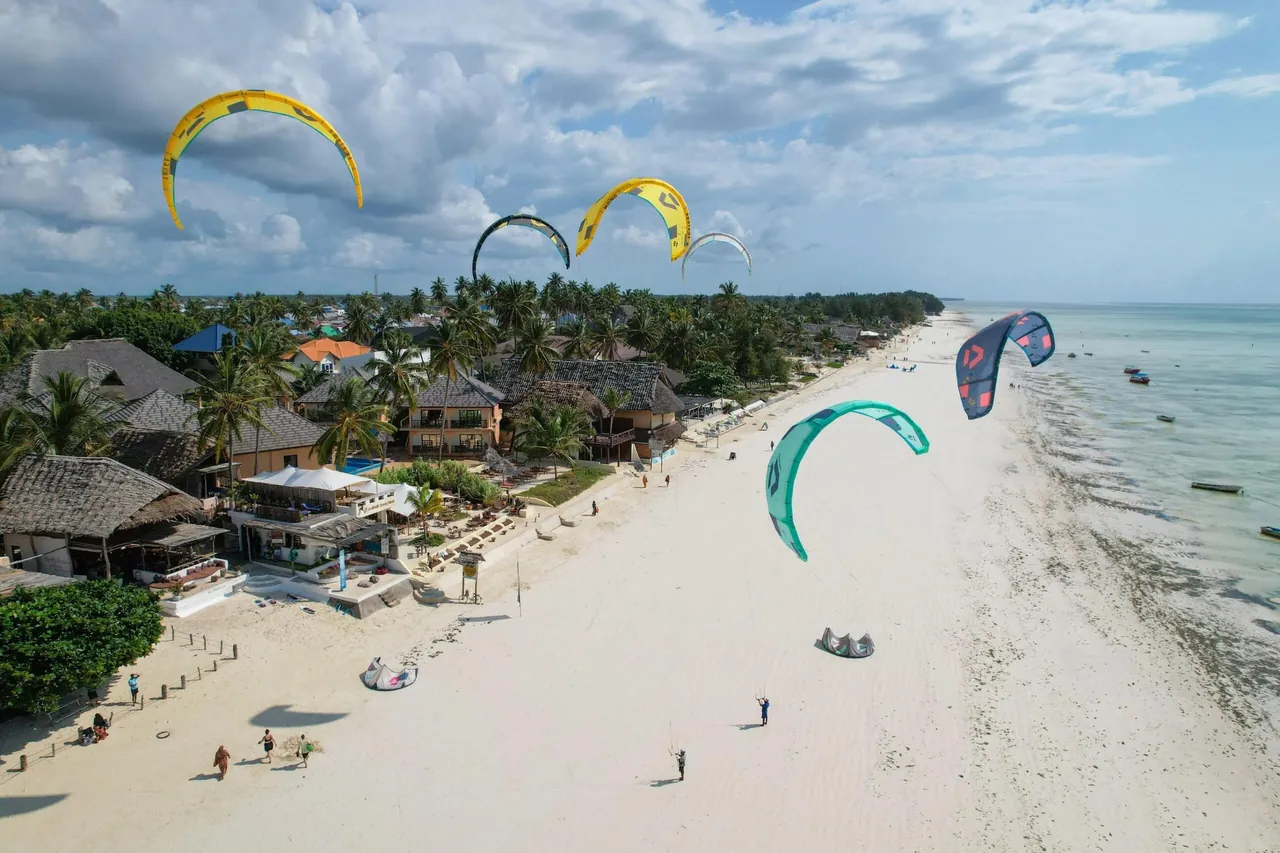
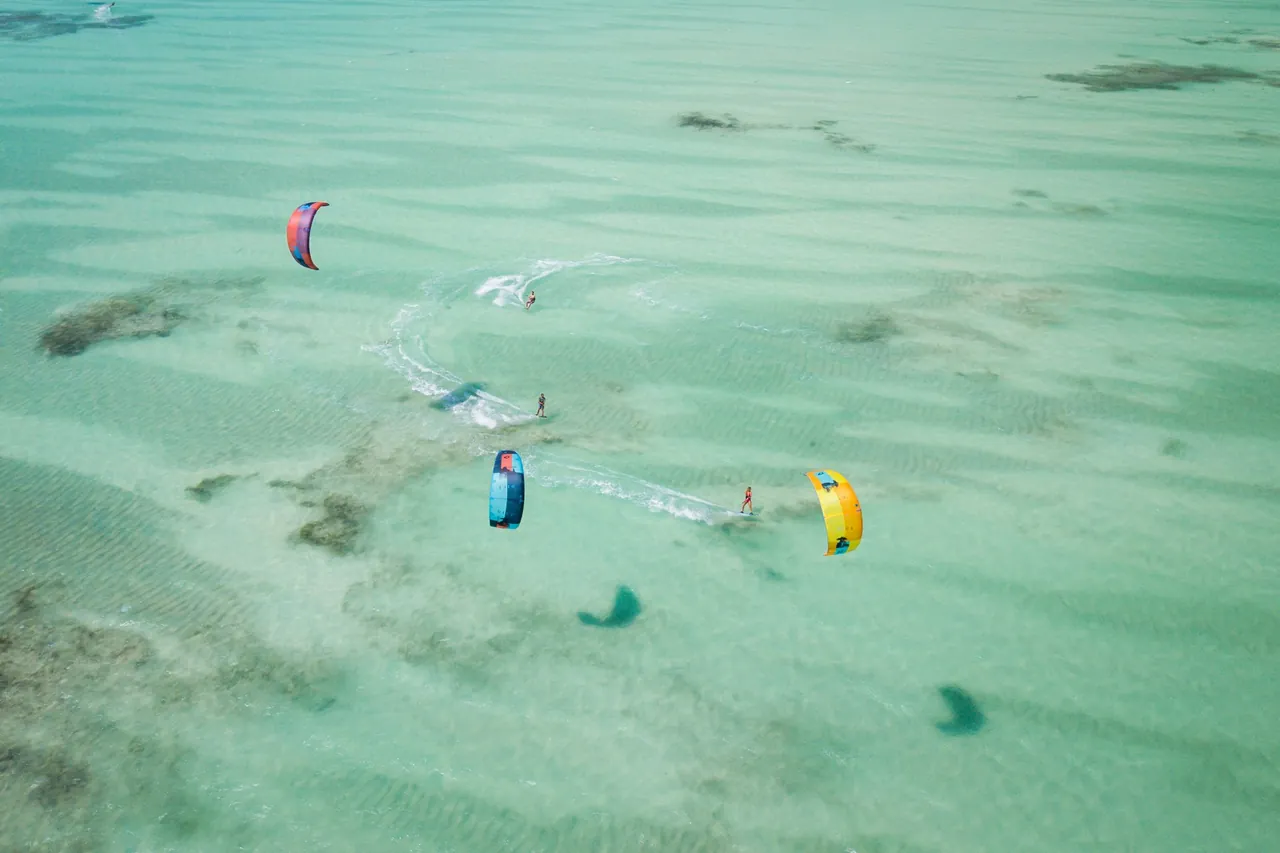
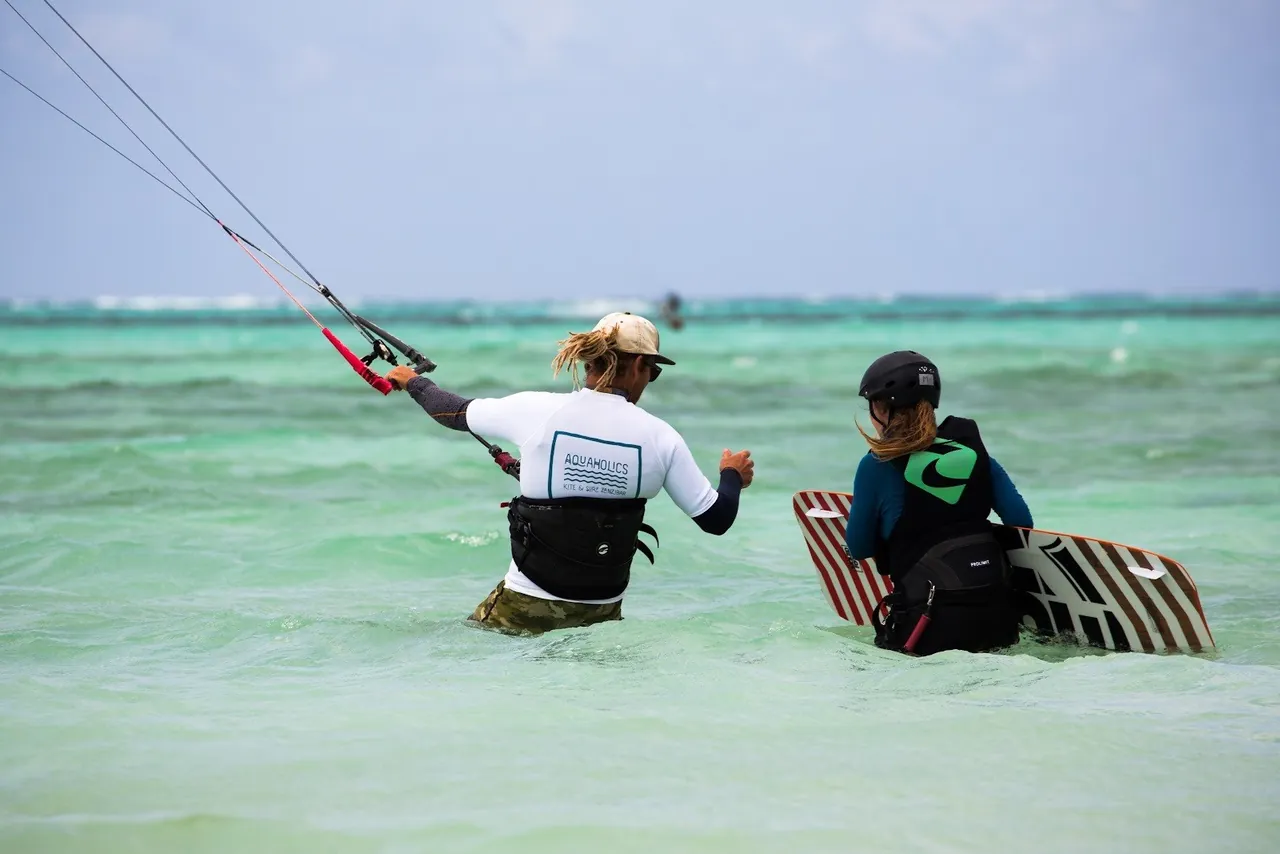
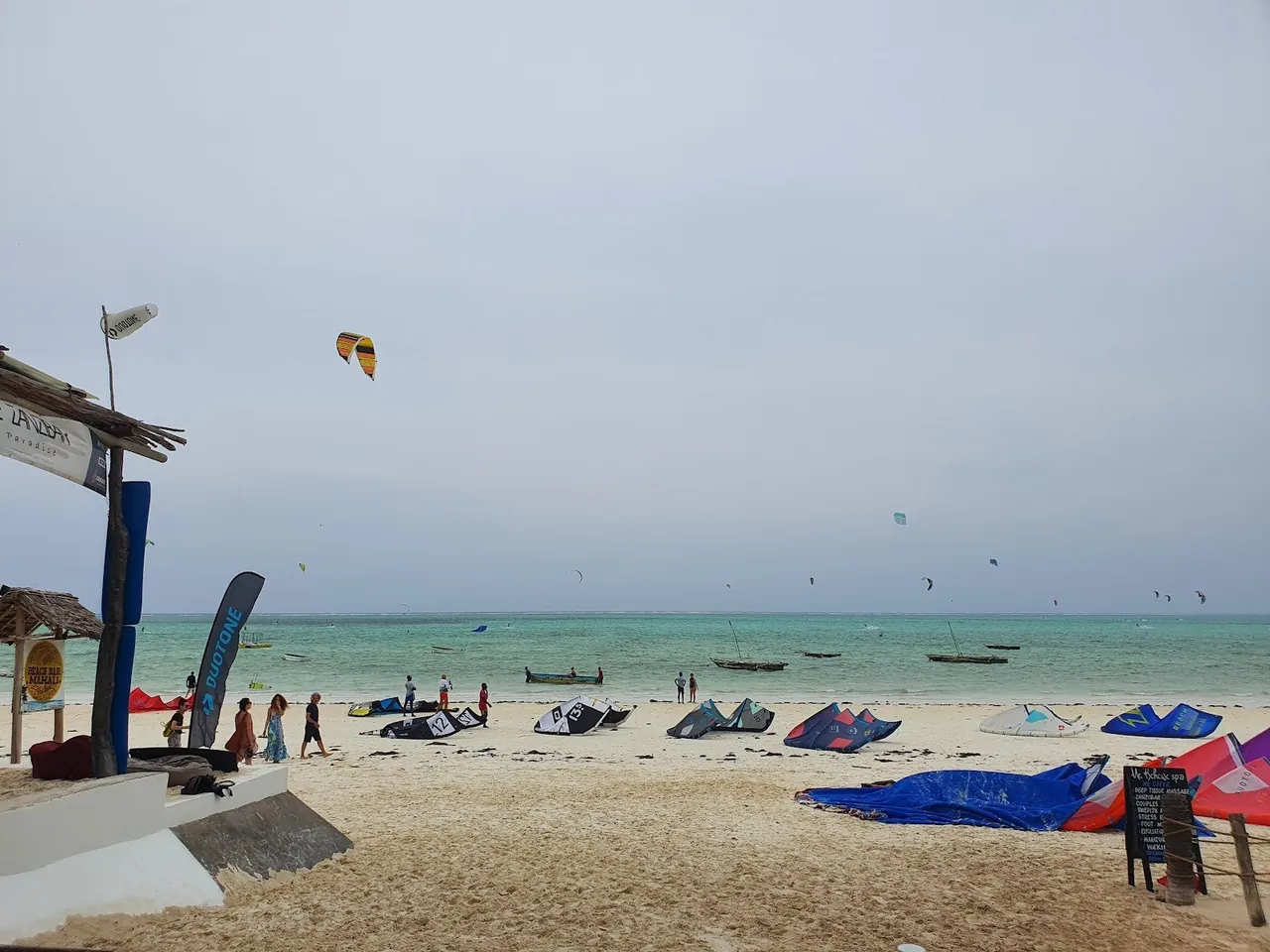
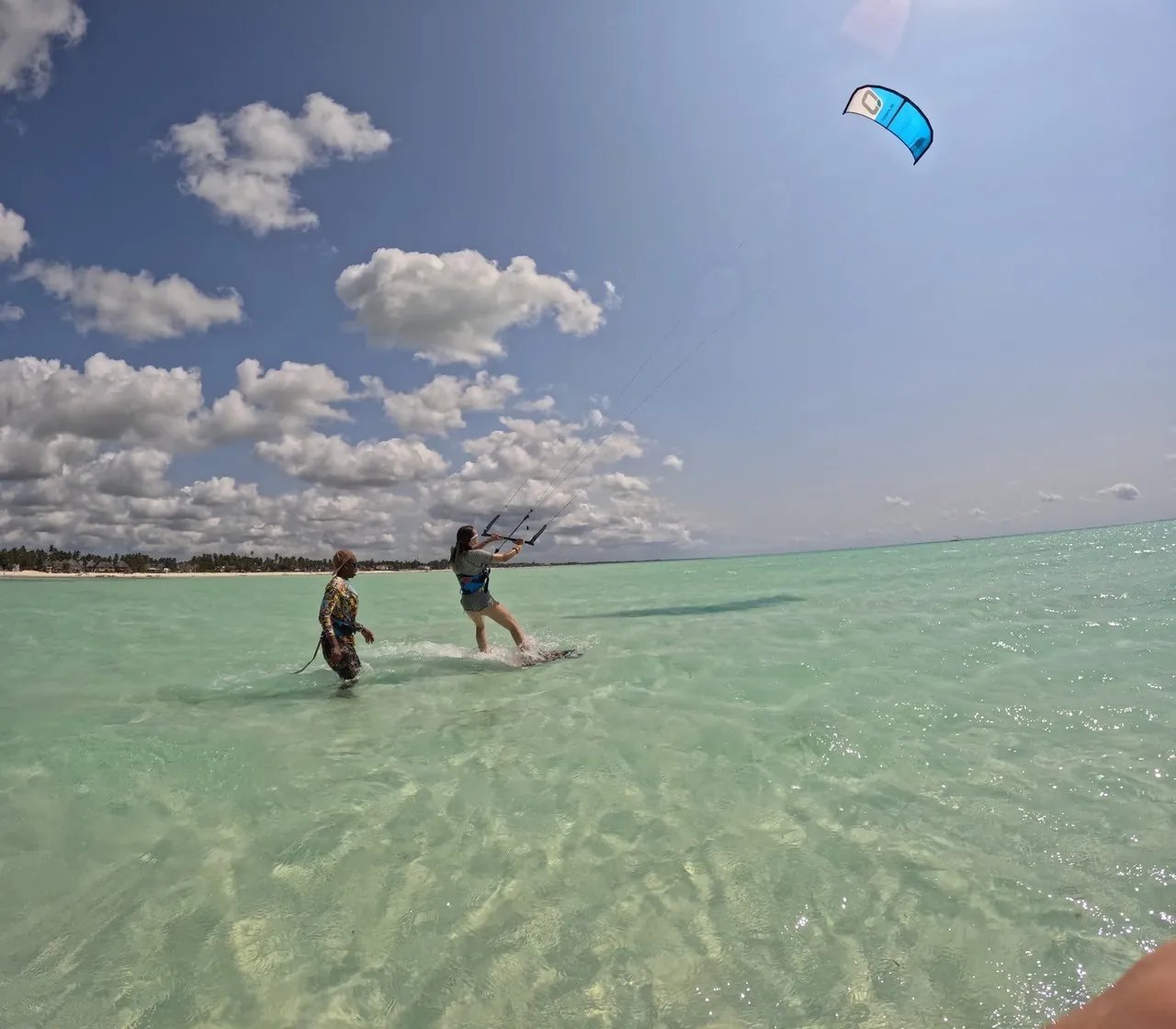
Behind a reef a kilometre and a half offshore, Paje's lagoon is huge, sandy and waist- to knee-deep, with the wind blowing side-onshore — one of the best places in the world to learn. A dozen schools line the beach; most beginners are riding short distances after a three-day, nine- or ten-hour course.
Experienced riders head out to the reef for waves, in groups or with a guide. Kite Centre Zanzibar (since 2006), B4 Kitesurf, Aquaholics and Zanzibar Kite Paradise are among the best-rated schools.
Why it's in this guide
If you've ever wanted to learn to kite, this is the place: shallow, warm, flat water and steady trade winds.
When to go
The kaskazi (late December to mid-March) is lighter and good for learners; the kusi (mid-June to mid-October) is stronger. January–February and July–August are the best months; April–May and November are usually windless.
Tide: At low tide the inner lagoon empties and riders move out to the outer lagoon; mid to high tide brings chop and small kickers. Schools time lessons to the tide, so start times shift daily.
Who runs it and how to book
Book a course a few days ahead in peak months. Kite Centre Zanzibar (kitecentrezanzibar.com), B4 Kitesurf (b4kite.surf), Aquaholics and Zanzibar Kite Paradise all teach here, and rent gear to certified riders.
Safety: what to check
Choose an IKO- or VDWS-certified school (ask to see the instructor's card) with insurance and a rescue boat on the water, at most two students per instructor, and a briefing on the reef and seaweed-farm zones. Very cheap lessons are a warning sign. Check your travel insurance covers kitesurfing. Wear a helmet and impact vest, and booties for the low-tide walk out.
Worth knowing
- Paje is the busiest kite spot in East Africa, and beginners are crowded together in peak weeks.
- Keep clear of the seaweed-farm stakes — they're local women's livelihoods and a real hazard — and watch for sea urchins.
- Children can learn from about 8 years and 35 kg.
15. Jambiani · South-east coast
Kitesurfing in Jambiani
The quieter Paje: a big lagoon behind a 2 km sandbank, with space to learn.
Tap any photo to see all 6.
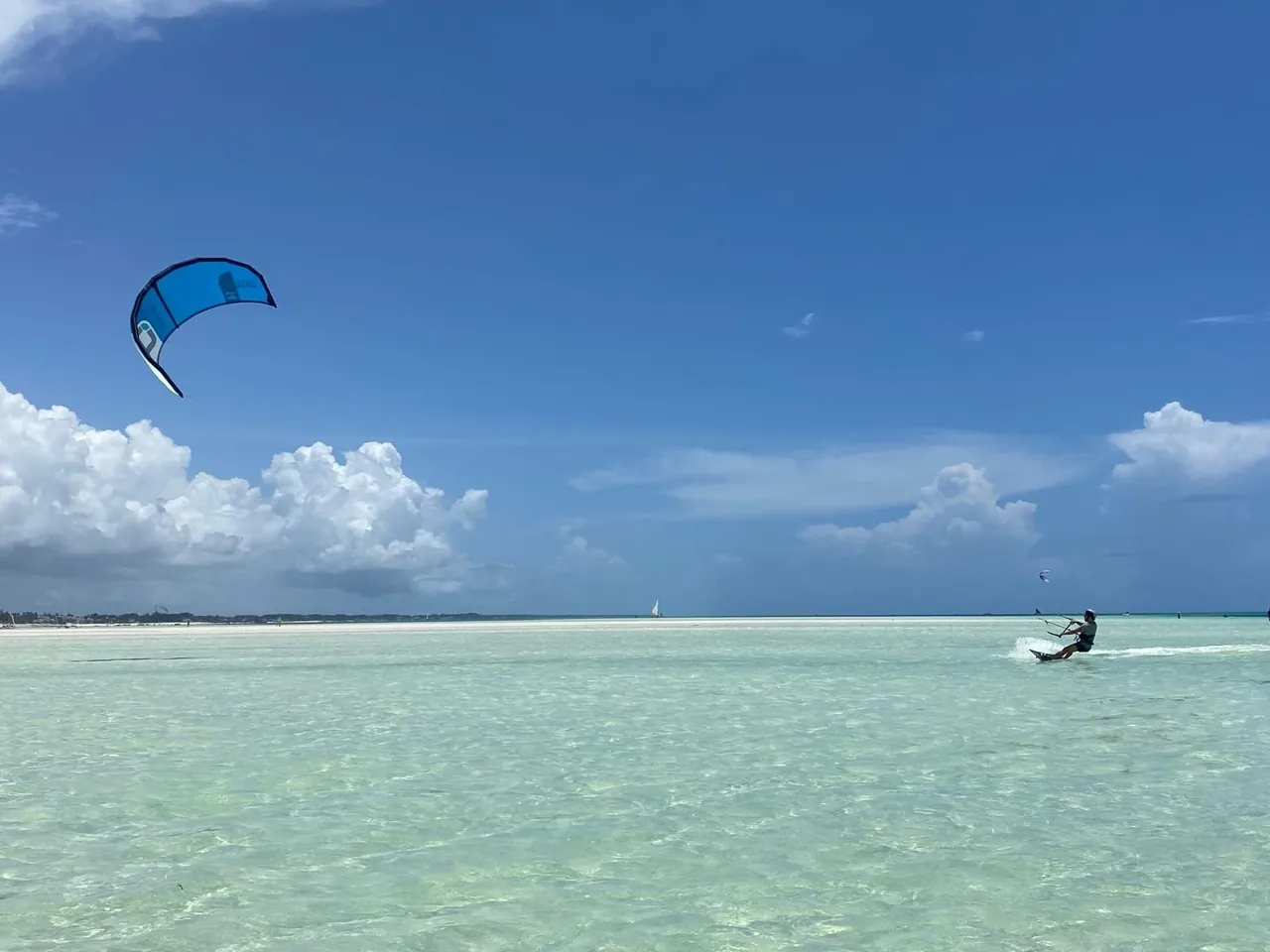
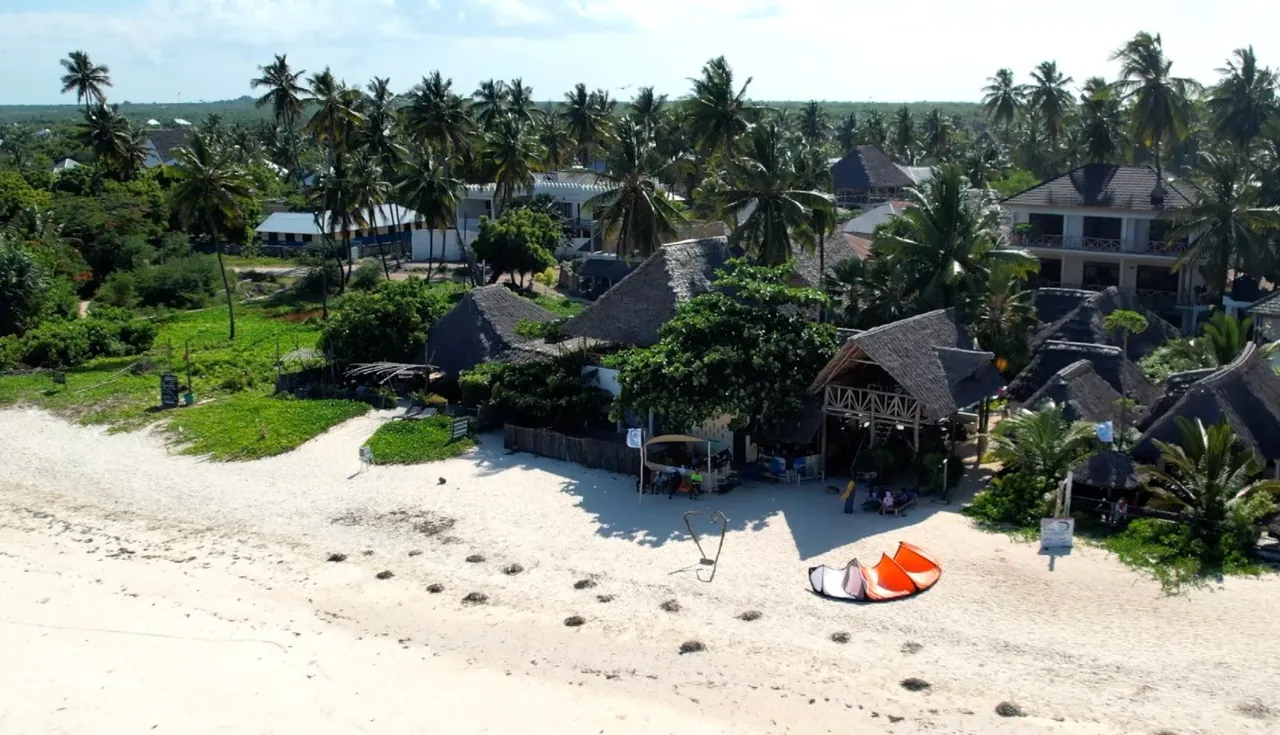
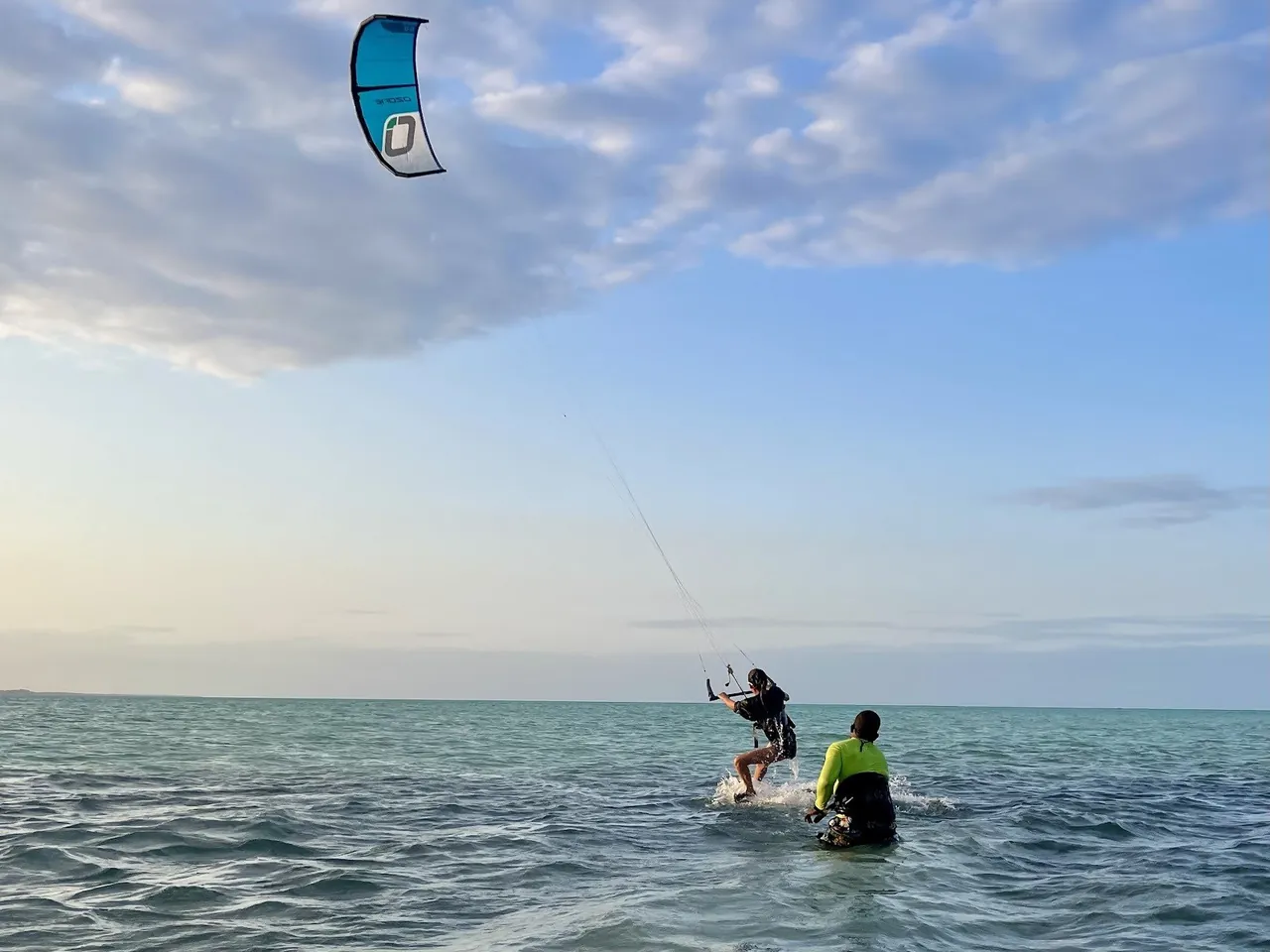
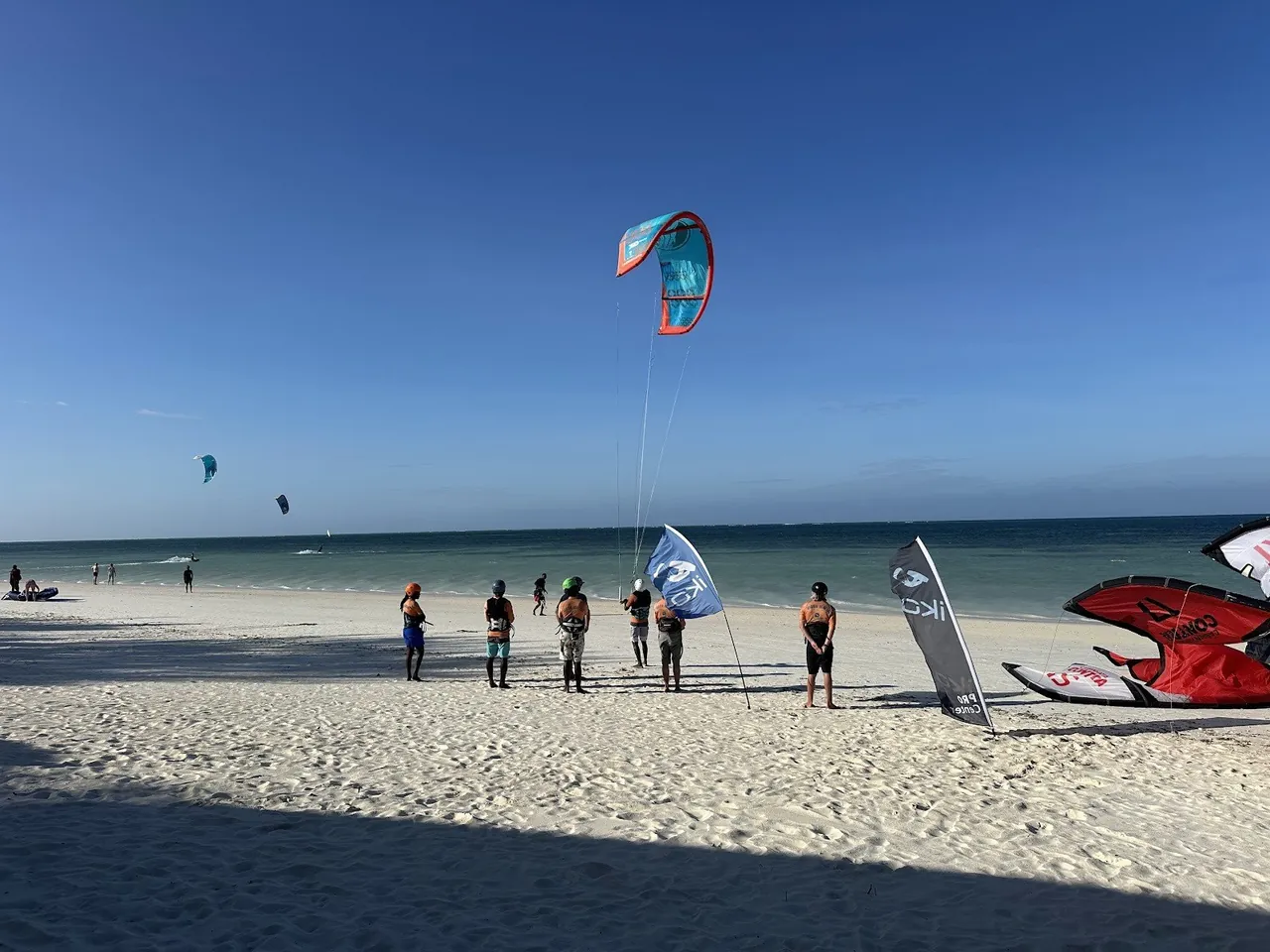
Five to eight kilometres south of Paje, a two-kilometre sandbank forms another big, shallow lagoon with a side-shore wind — and far fewer kites. Advanced riders head out to the reef waves or downwind all the way to Paje.
ZanziKite, Coconuts Kite (IKO-listed) and Mawimbi Kite School teach here, with Zanzibar Kitesurfing working both beaches.
Why it's in this guide
All the conditions of Paje with room to breathe — the better choice if crowds put you off.
When to go
The same seasons as Paje: December–March and June–October.
Tide: Jambiani is strongly tidal: at low tide you may walk a long way out, and high tide makes launching harder.
Who runs it and how to book
Book with ZanziKite (zanzi-kite.com) or Coconuts Kite (coconutskite.com); Mawimbi Kite School has no website, so contact it through its Google listing or Instagram.
Safety: what to check
Choose an IKO- or VDWS-certified school (ask to see the instructor's card) with insurance and a rescue boat on the water, at most two students per instructor, and a briefing on the reef and seaweed-farm zones. Very cheap lessons are a warning sign. Check your travel insurance covers kitesurfing. Outer-reef wave riding is for experts only.
Worth knowing
- Fewer bars and less to do than Paje.
- Some schools are very small — check their certification.
- KiteWorldWide's Jambiani school isn't taking bookings this season.
16. Kiwengwa · East coast
Kitesurfing and windsurfing in Kiwengwa
An official Duotone centre on an uncrowded north-east lagoon.
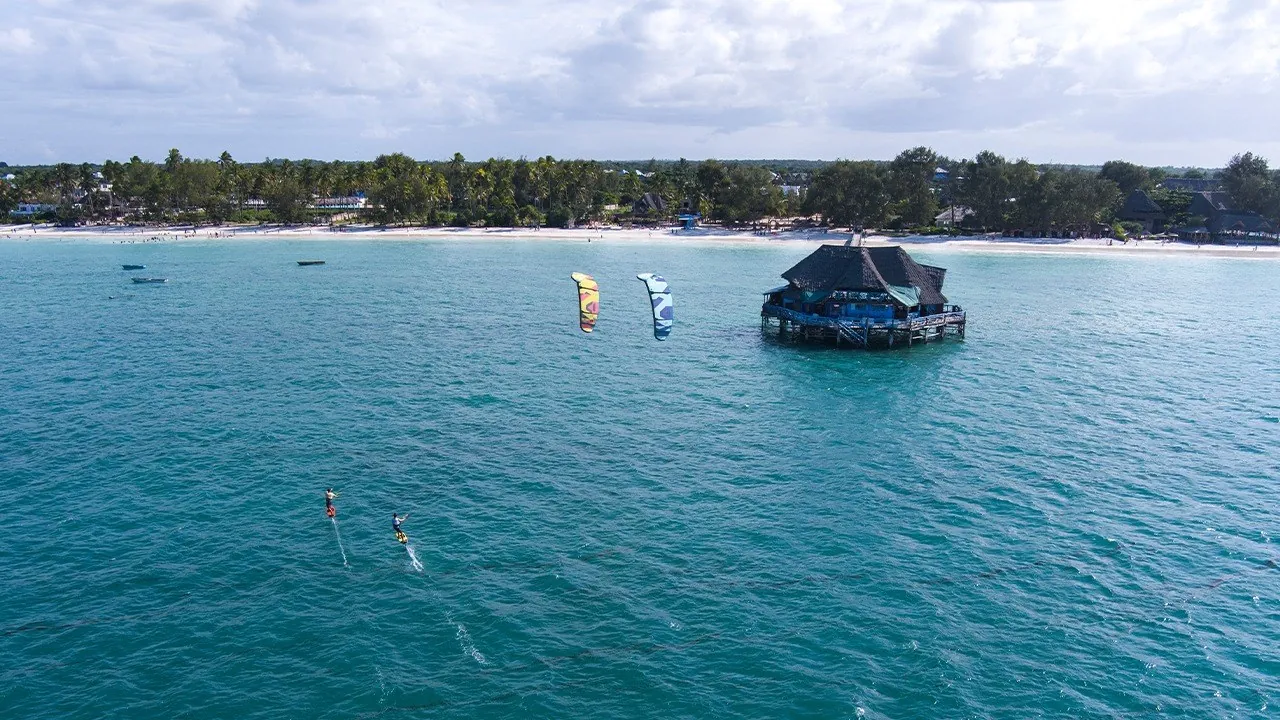
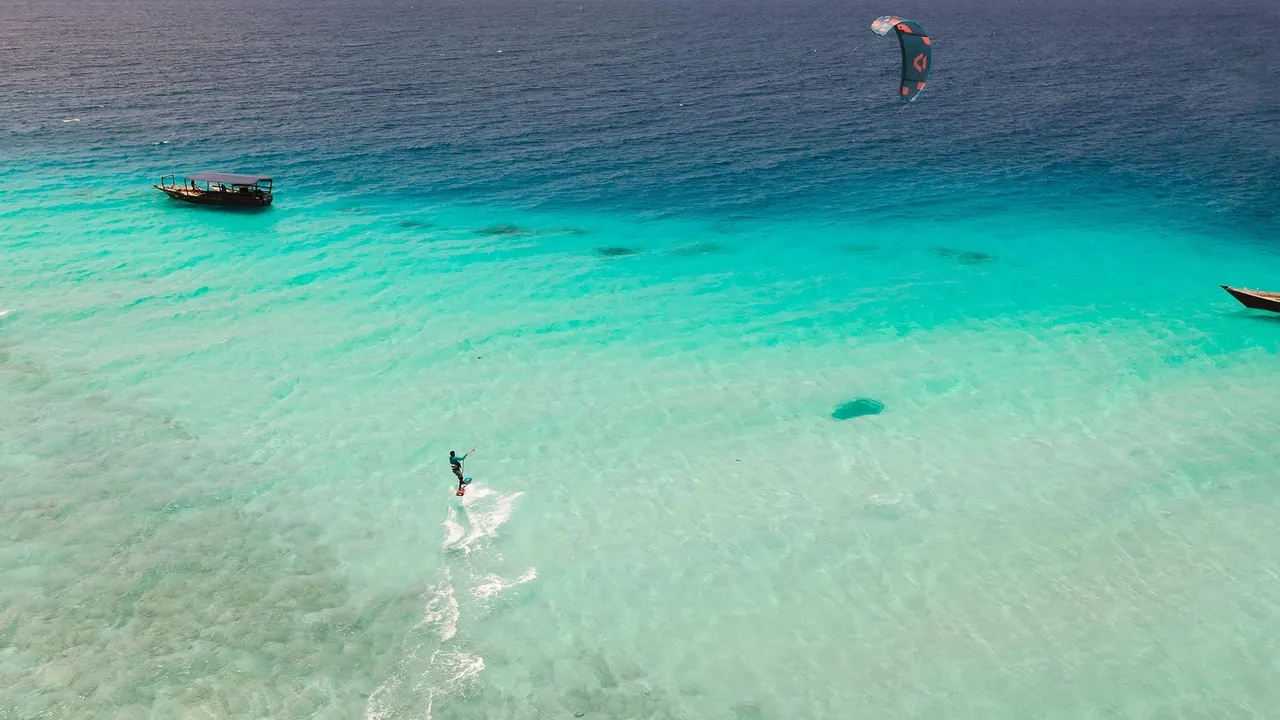
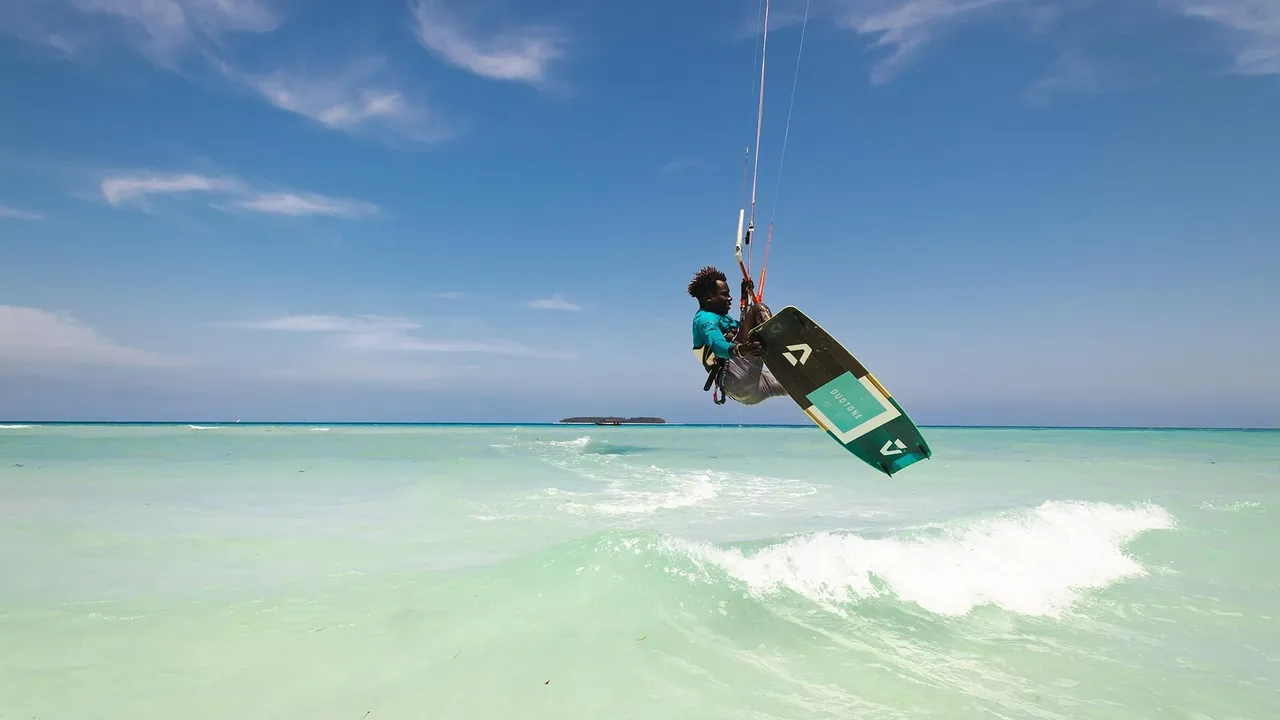
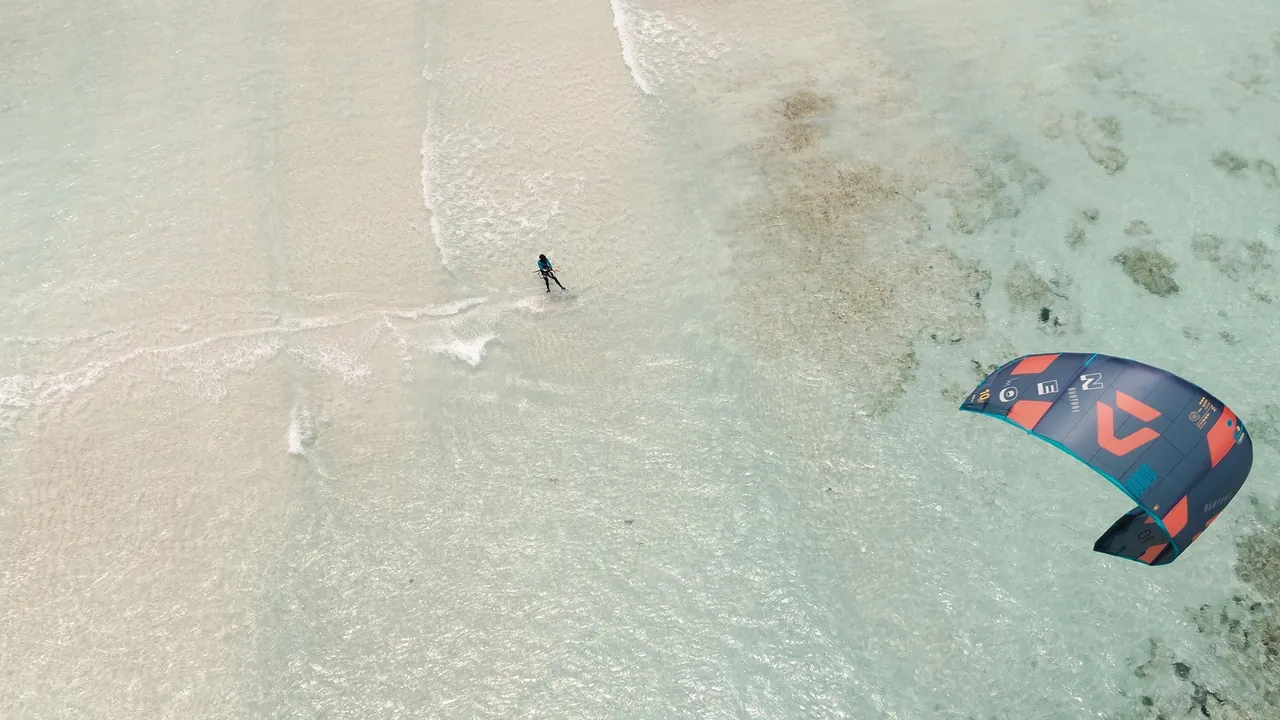
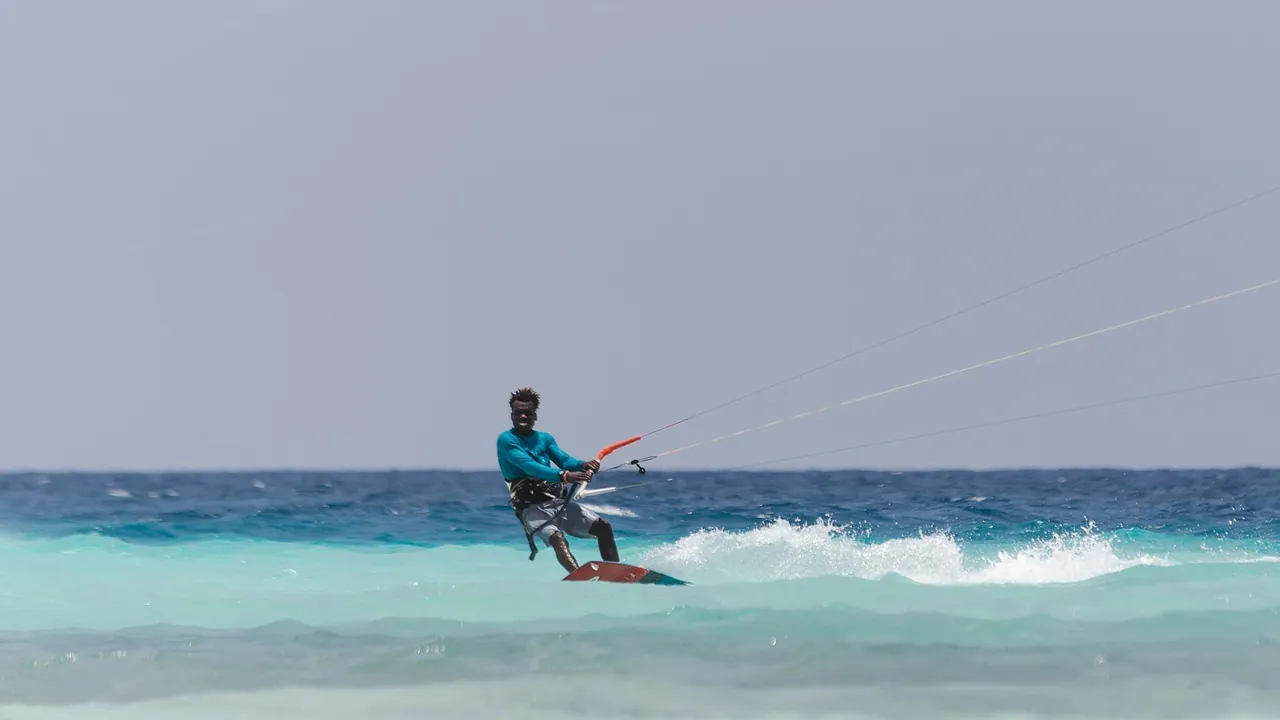
Tap any photo to see all 6.
On the long white beach at Kiwengwa, the Duotone Pro Center teaches kitesurfing, wing foiling, kite foiling and — unusually for Zanzibar — windsurfing, with at most two students per instructor and a rescue boat on standby.
The lagoon is wide and far less busy than Paje, with The Beach Lounge right on the spot for afterwards.
Why it's in this guide
The best set-up on the north-east coast, and the only clear place on the island to learn windsurfing.
When to go
December–March and June–October.
Tide: Tidal, with reef patches in the lagoon; the centre times sessions to the water.
Who runs it and how to book
Book with the Duotone Pro Center (dpc-zanzibar.com) at Mvuvi Boutique Resort. Zanzibar Watersports in Kendwa also runs kite lessons through a partner centre, with transfers.
Safety: what to check
Choose an IKO- or VDWS-certified school (ask to see the instructor's card) with insurance and a rescue boat on the water, at most two students per instructor, and a briefing on the reef and seaweed-farm zones. Very cheap lessons are a warning sign. Check your travel insurance covers kitesurfing.
Worth knowing
- Fewer schools, so less choice.
- Reef patches in the lagoon, and the Il Pontile pier and boats nearby.
17. Paje & Kiwengwa · East and south-east
Wing foiling
Flying over the lagoon on a foil, with a wing in your hands.
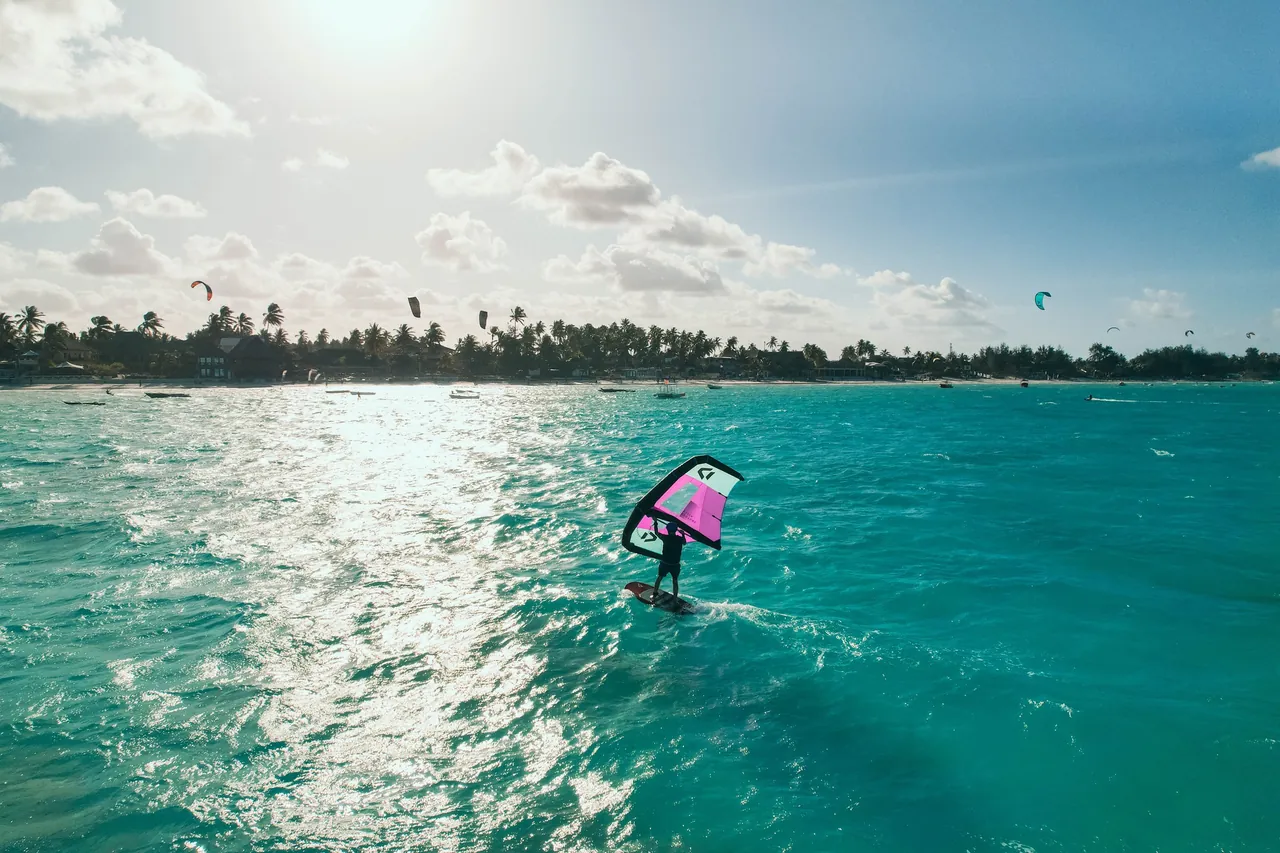
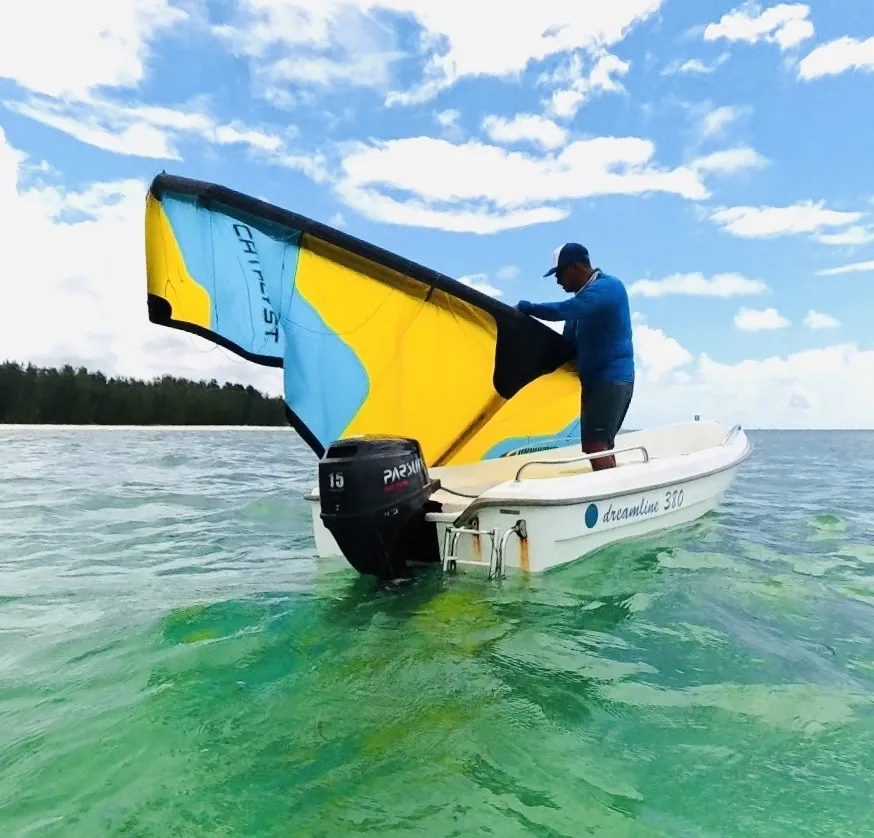
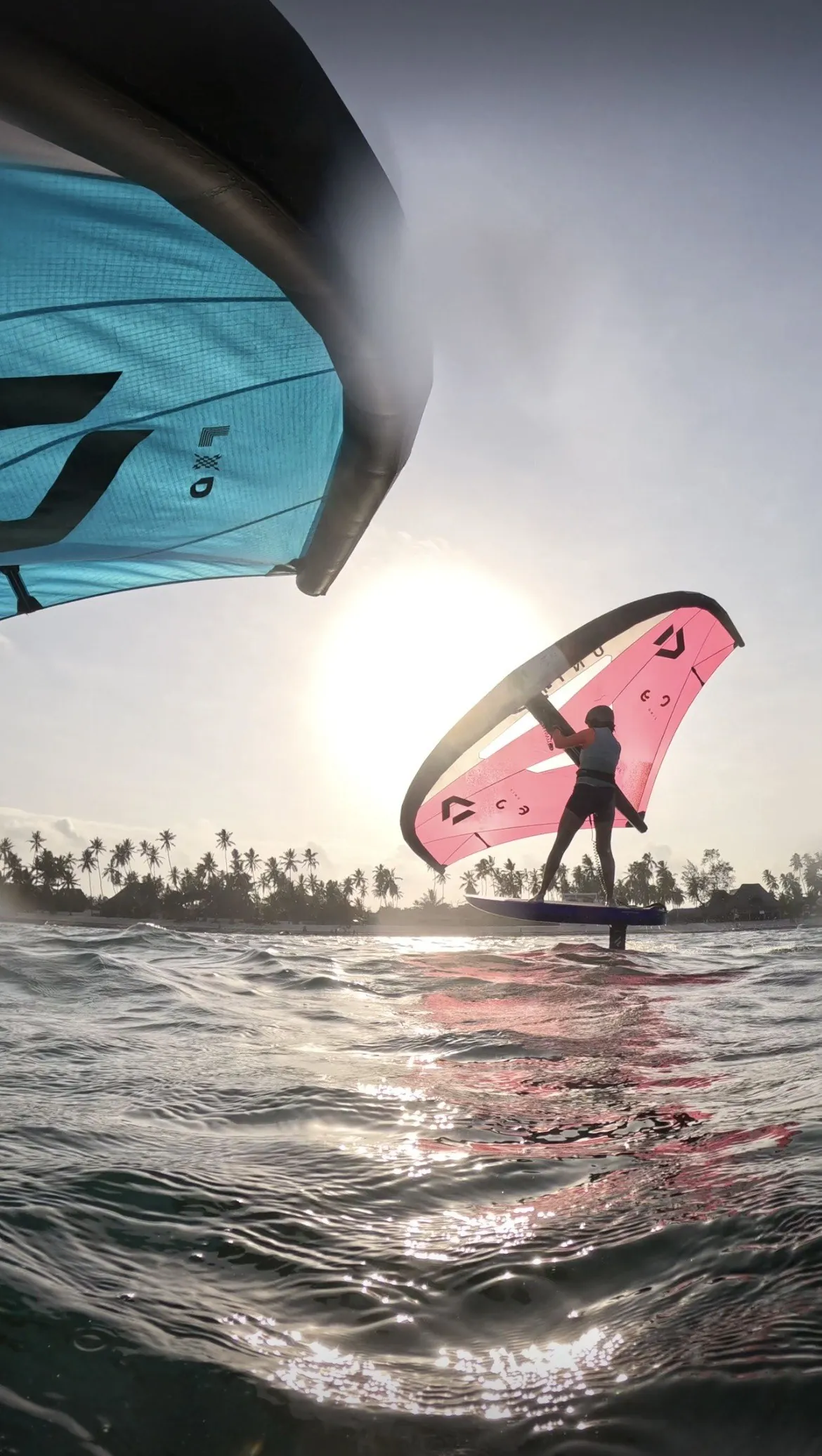
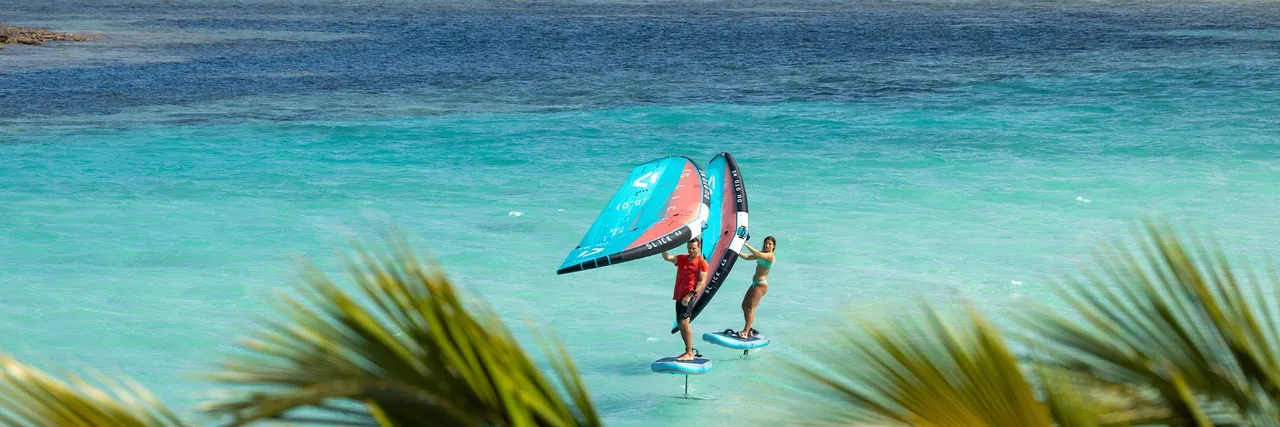
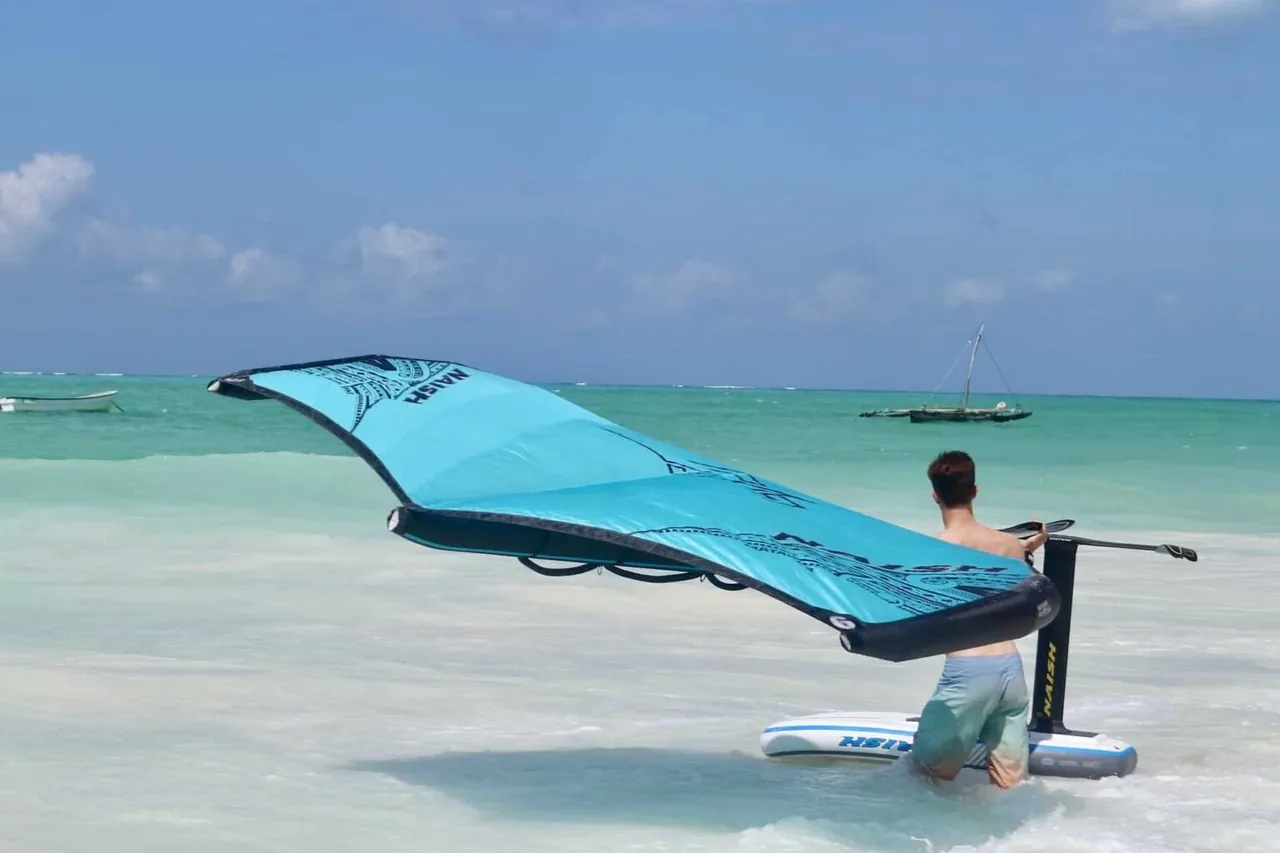
Wing foiling — holding an inflatable wing while riding a board on a hydrofoil — works in lighter wind than kitesurfing, and the lagoons are a good place to learn. Lessons start on a big board in the shallows; some schools tow you behind a boat to get the feel of the foil.
Kite Centre Zanzibar and Zanzibar Kite Paradise teach it in Paje, the Duotone Pro Center in Kiwengwa (a nine-hour, three-day beginner course), and ZanziKite and Coconuts Kite in Jambiani.
Why it's in this guide
The sport everyone's talking about, learned in warm, shallow water on the lighter-wind days.
When to go
The same wind seasons as kiting, and it's usable on lighter days.
Tide: The foil needs depth, so lessons happen at mid to high tide; it's unusable in the low-tide shallows.
Who runs it and how to book
Book a beginner course with Kite Centre Zanzibar or Zanzibar Kite Paradise in Paje, or the Duotone Pro Center in Kiwengwa.
Safety: what to check
Wear a helmet and impact vest — the foil is sharp. Keep away from the seaweed-farm stakes and swimmers, and check your insurance covers it.
Worth knowing
- Fewer schools than for kitesurfing.
- You need to be comfortable falling into the water off a foil.
18. Paje, Dongwe & Jambiani · South-east coast
Reef surfing off Dongwe and Jambiani
Yes, Zanzibar has surf — on the outer reef, by boat, for a few hours a day.
Tap any photo to see all 6.
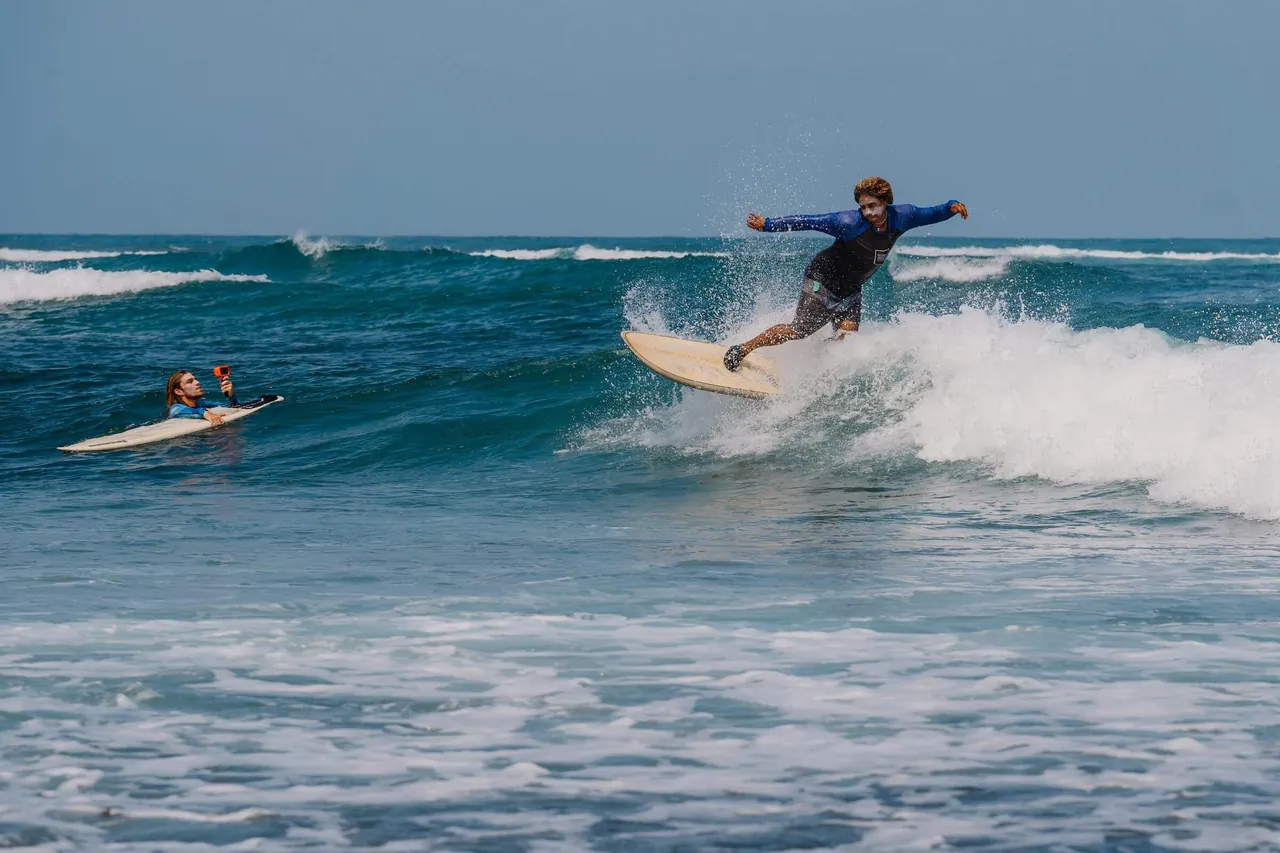
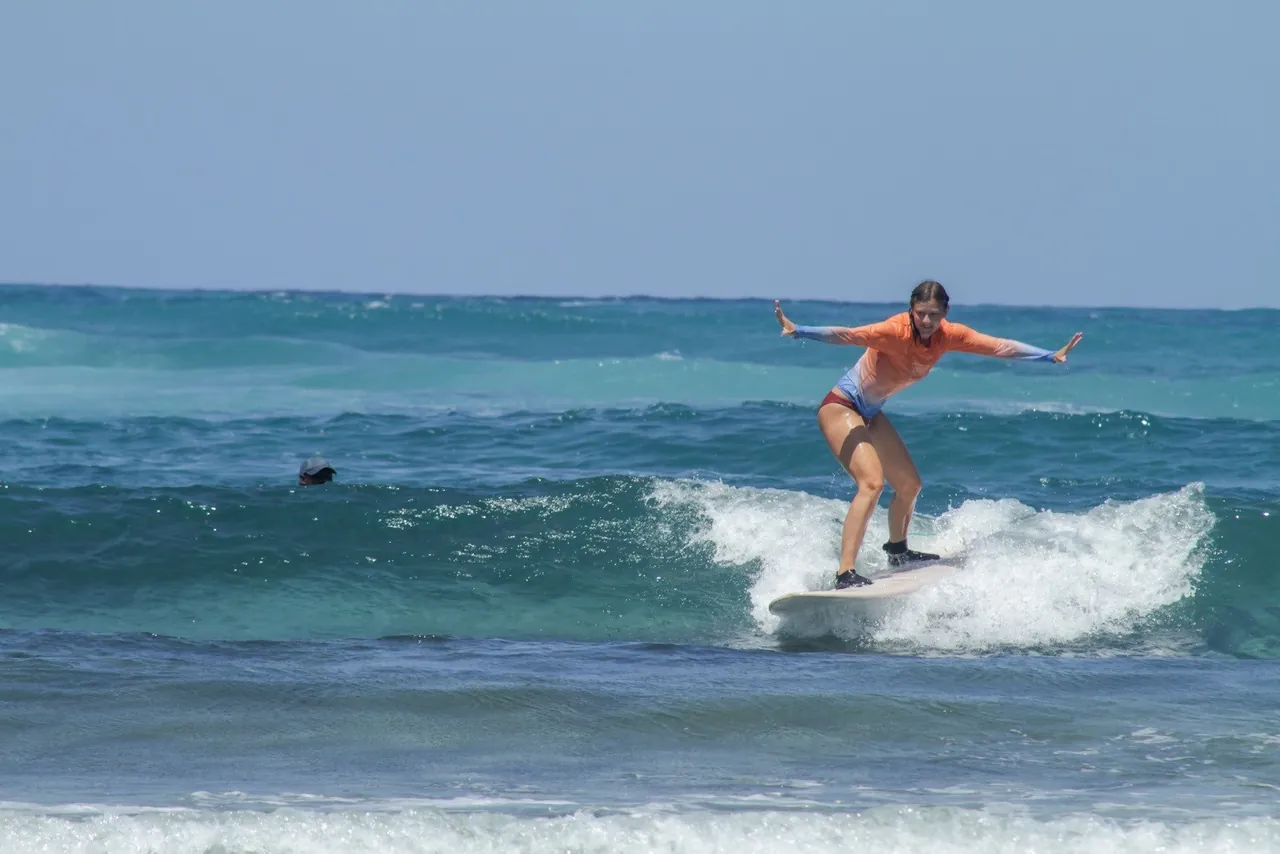
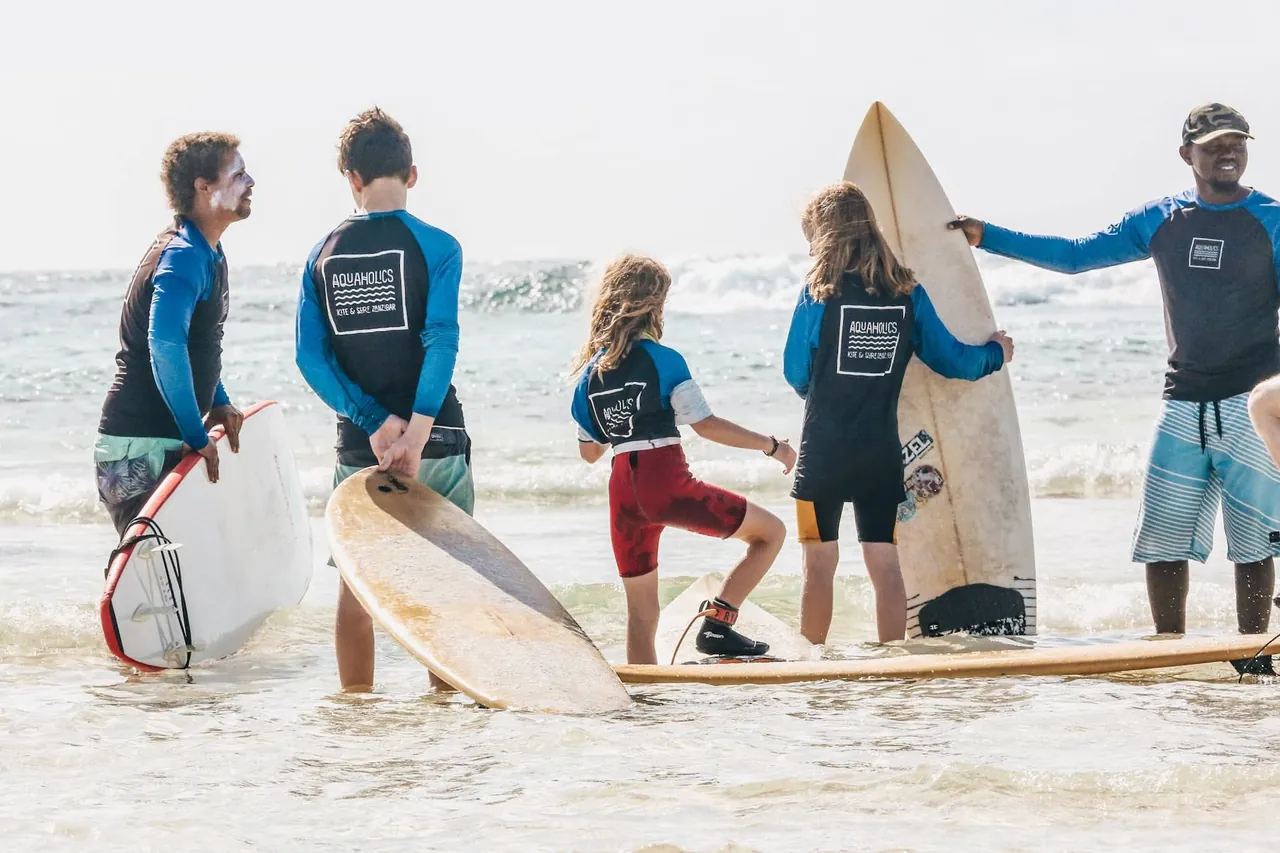
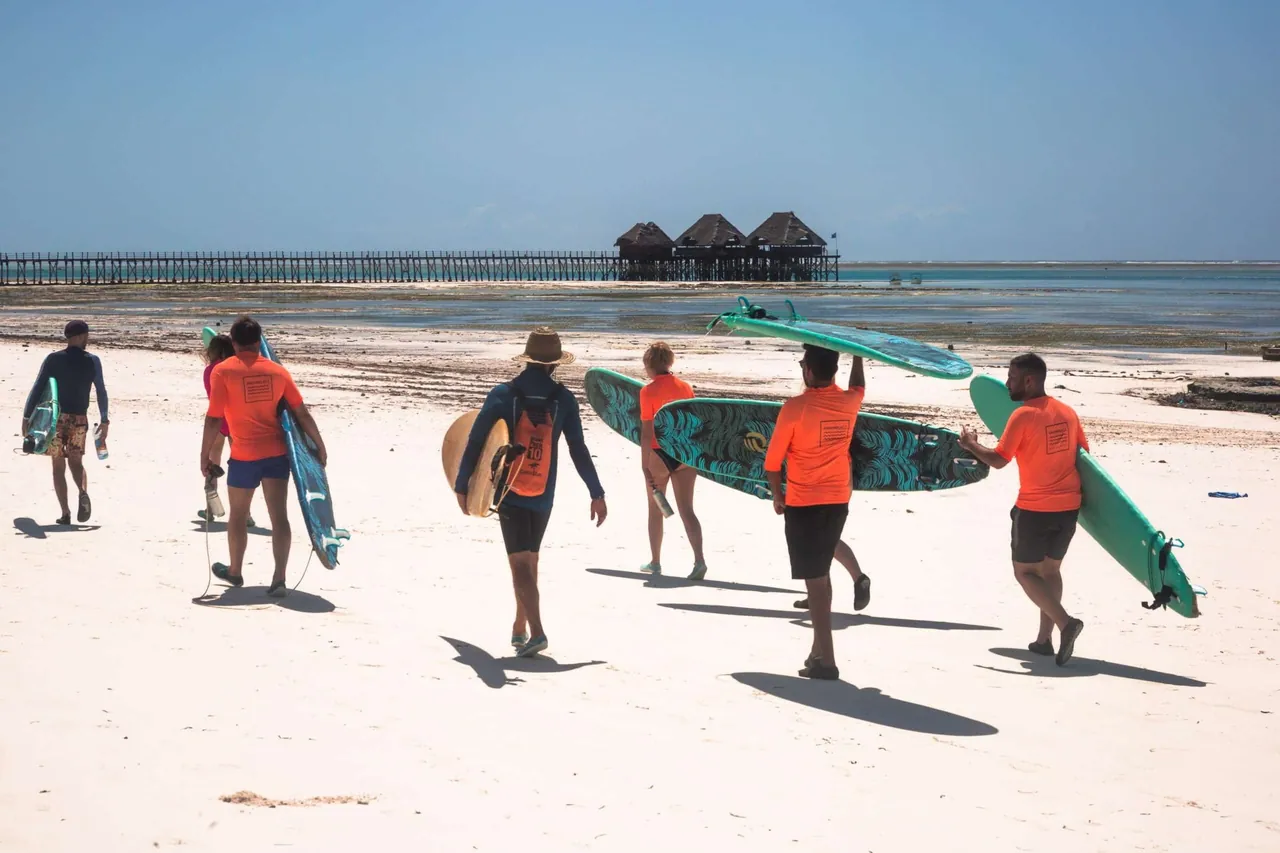
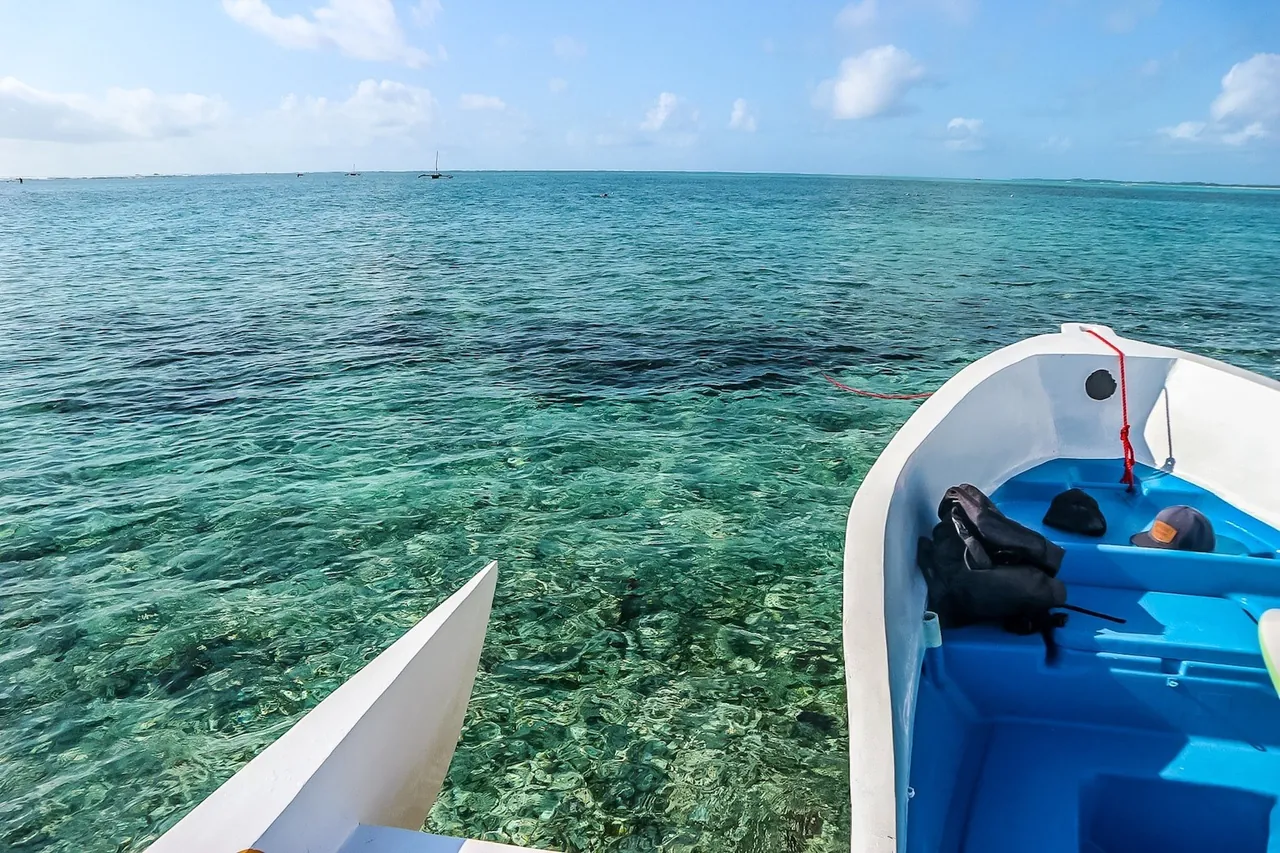
Zanzibar's waves break on the outer reef, reached by boat, and they work only for an hour and a half to three hours a day around specific tides. Off Dongwe, Tamarins is a soft, knee-to-waist-high right for beginners; Doughnuts, on the outside of the same reef, is fast and powerful; Keep Lefties is a left that holds on small swells.
Off Jambiani, J-Box is the longest right on the coast, waist to overhead, working only on the lowest tides. Aquaholics in Paje guides surf trips and lessons; Kite Centre Zanzibar and the Duotone Pro Center run reef sessions too.
Why it's in this guide
Empty reef breaks in warm water — a rare treat if you're flexible about timing.
When to go
June–October has the most consistent swell, best in July–August. December–March can bring cyclone ground swell on offshore days.
Tide: Each break works only on its tide — Tamarins on the pushing mid tide, J-Box on the lowest — so sessions are short and the time changes daily.
Who runs it and how to book
Go guided — the breaks don't appear on forecast sites and need a boat. Book with Aquaholics (aquaholics-zanzibar.com) in Paje.
Safety: what to check
Surf with a guide only; watch the currents on the dropping tide and the urchins on the reef (booties help). Boat crossings outside the reef can be dangerous in strong wind.
Worth knowing
- "Don't come if you want to surf from morning to evening" — there's no beach break, and the waves are inconsistent.
- Not a reliable surf destination; think of it as a bonus.
19. Chukwani · West coast, near Stone Town
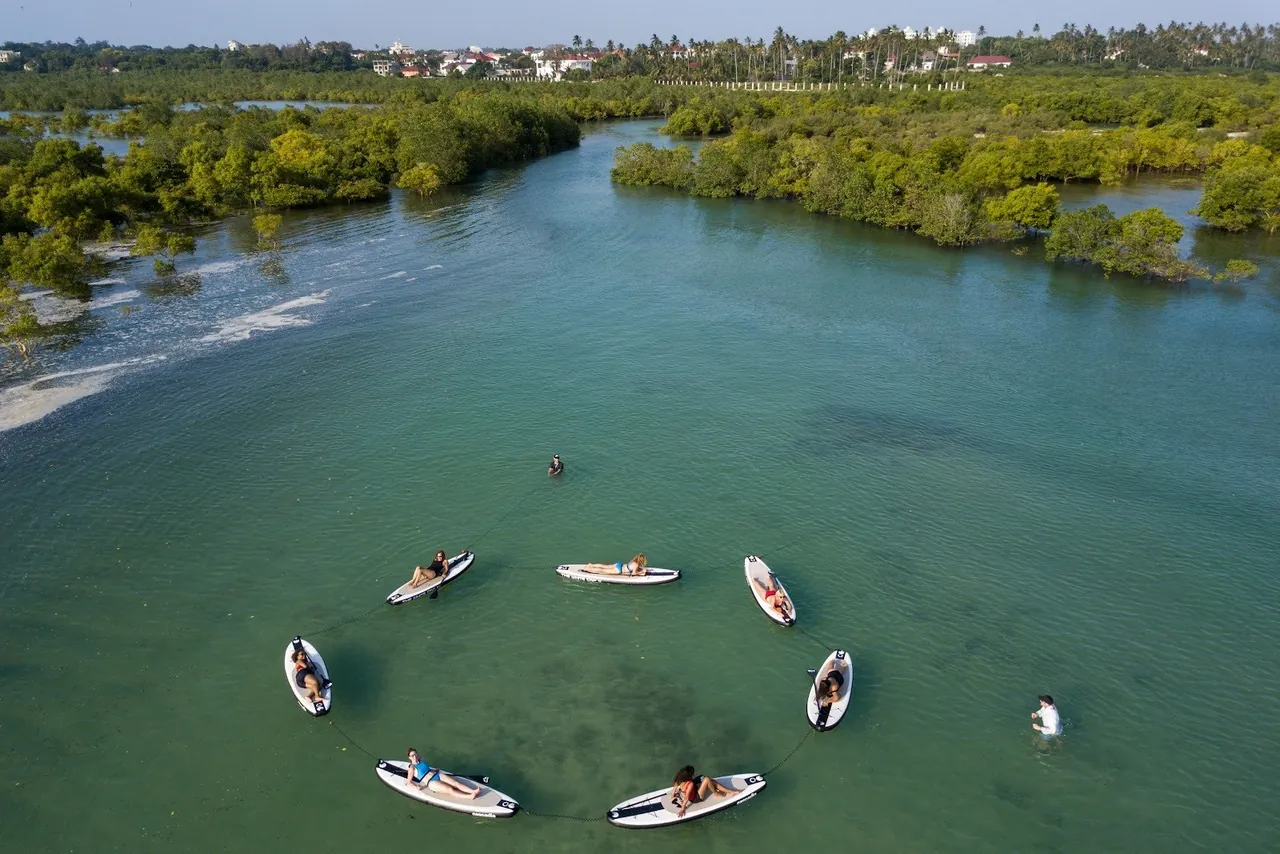
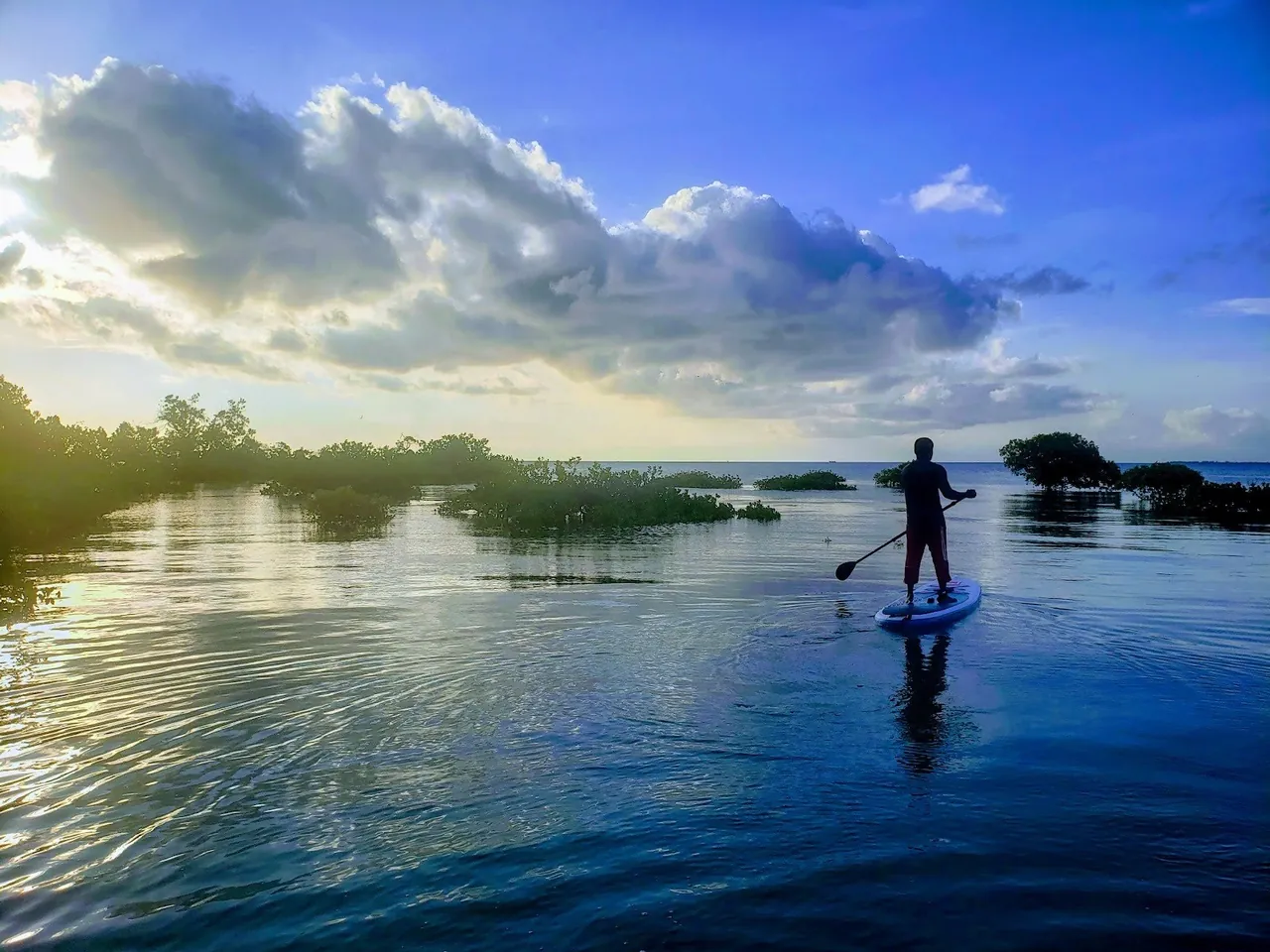
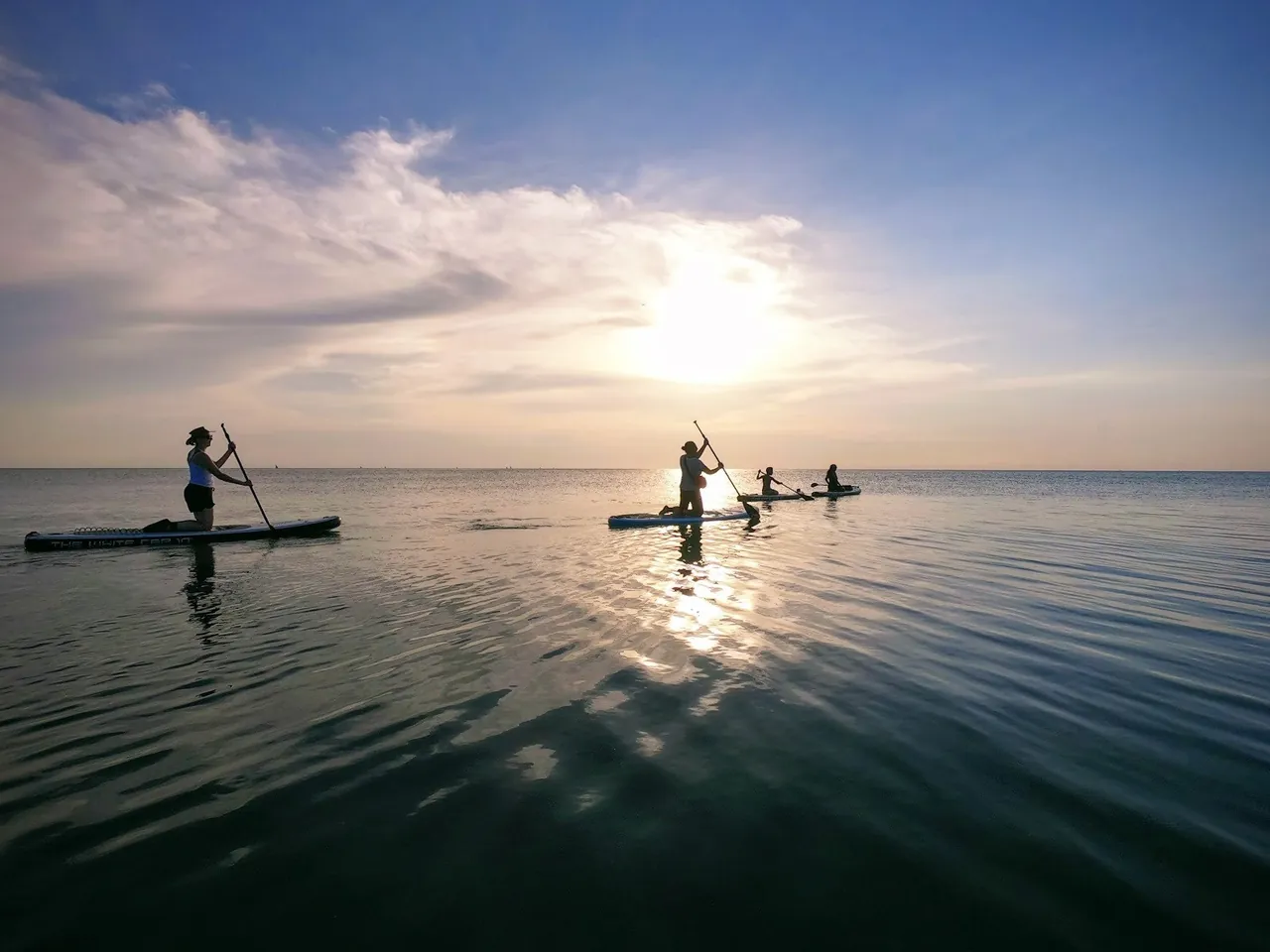
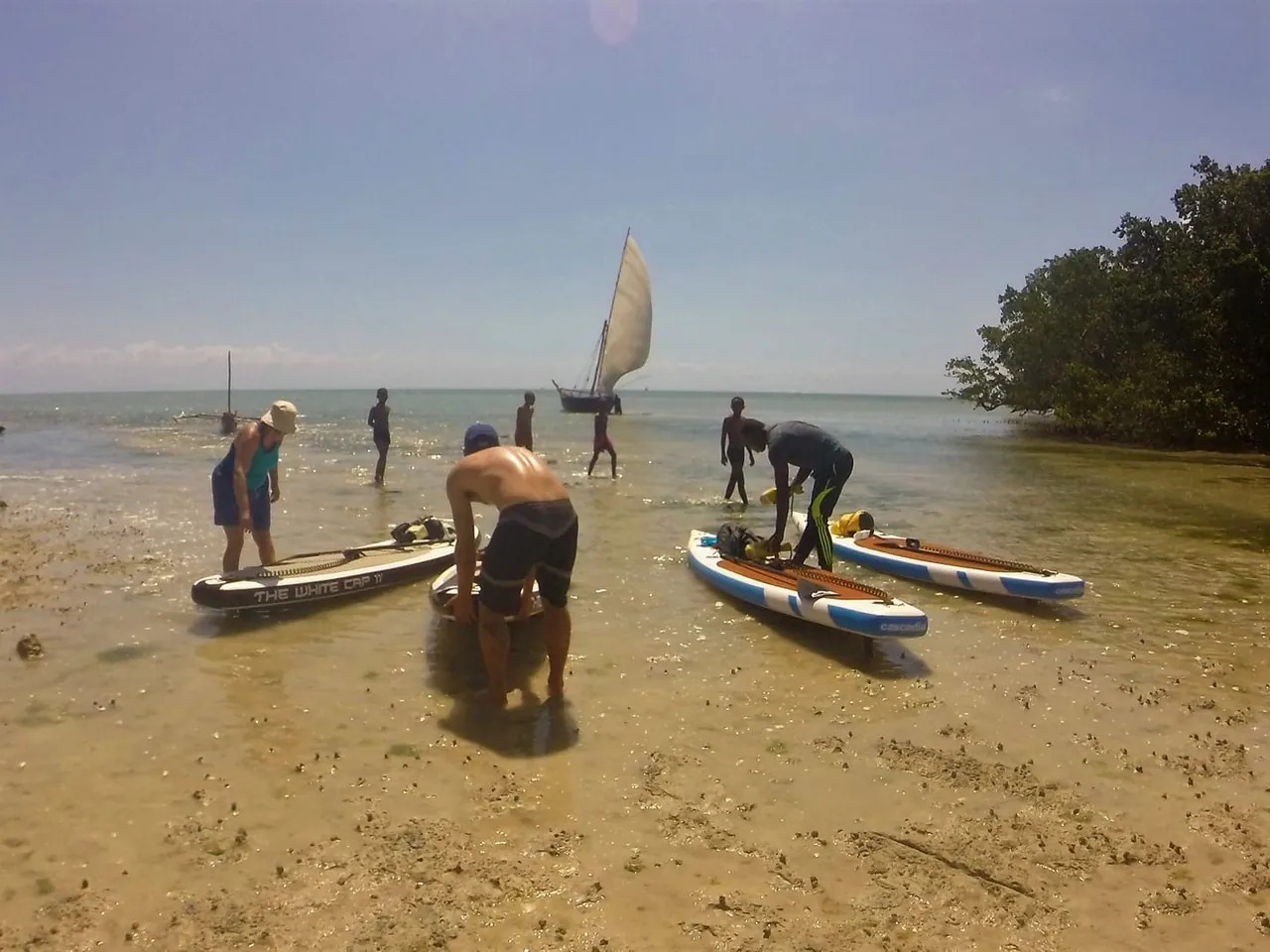
Stand-up paddling in the Chukwani mangroves
Gliding through mangrove tunnels, with a floating bar at sunset.
Tap any photo to see all 6.
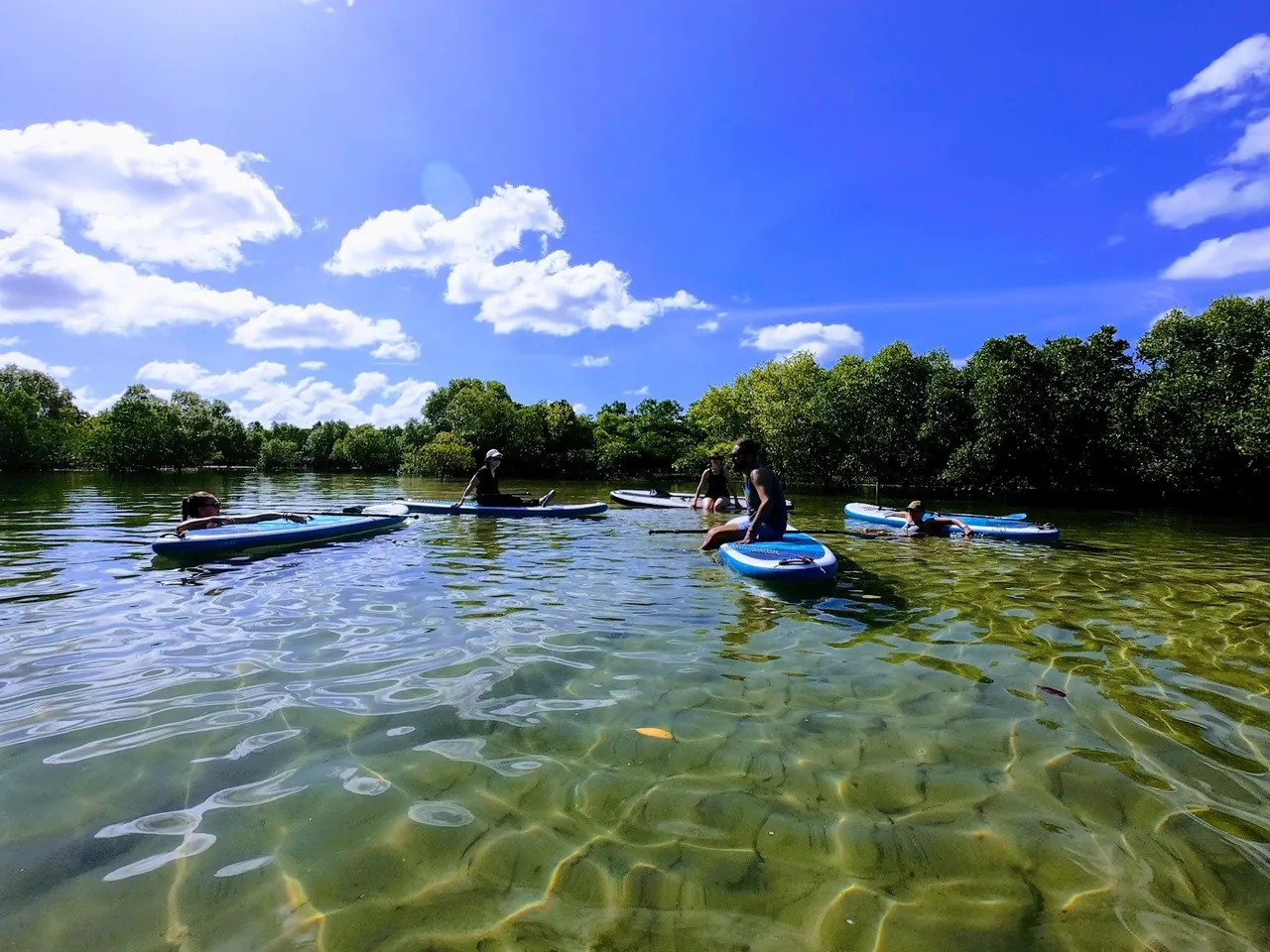
In the sheltered mangrove creeks at Chukwani, just south of Stone Town, 2 Winds Paddle Sports — the island's first stand-up paddle school — leads three-hour tours by board or kayak through tunnels and channels, with birds, crabs and young fish below.
There's a sunset paddle with a floating bar, a floating breakfast at sunrise, paddleboard yoga and a seven-kilometre paddle all the way to Stone Town.
Why it's in this guide
Calm, beautiful and open to everyone — the gentlest adventure in this guide, and one of the loveliest.
When to go
All year; calm mornings and evenings are best, and the creeks are sheltered from the trade winds.
Tide: Heavily tide-dependent — tours run when the creeks have water, so times change and they may not run every day.
Who runs it and how to book
Book with 2 Winds Paddle Sports (paddlesportszanzibar.com), which takes a deposit and refunds or reschedules if it cancels for weather. Transfers are extra. Aquaholics (Paje) and the Duotone Pro Center (Kiwengwa) rent boards on the east coast.
Safety: what to check
Every tour starts with a lesson and a safety brief, and life vests are provided. Wear water shoes against oysters and roots, and bring sun protection and insect repellent for dusk.
Worth knowing
- Not on the beach strip — a transfer from the north or east coasts.
- Mosquitoes at dusk.
20. Michamvi · South-east coast (Chwaka Bay side)
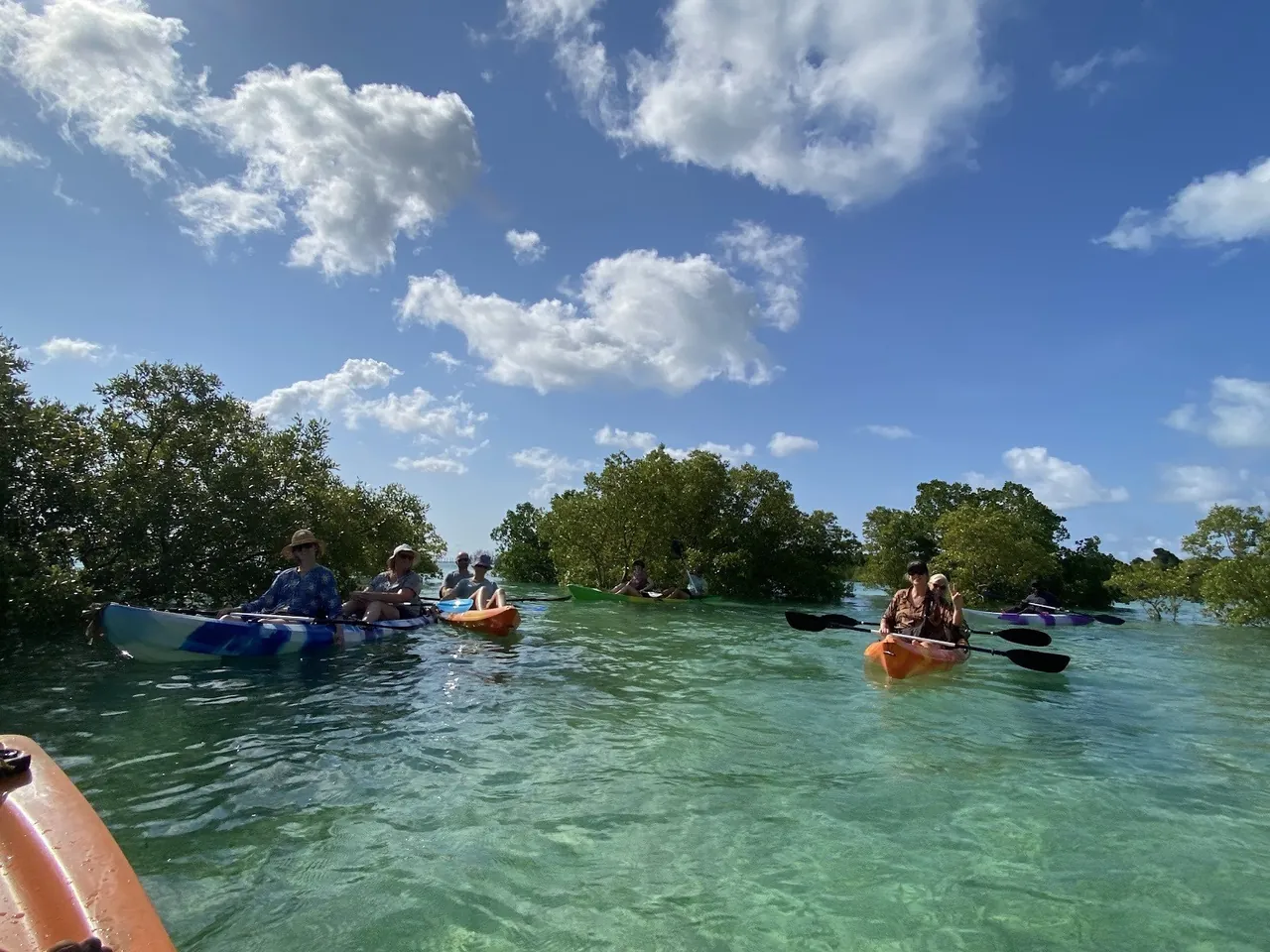
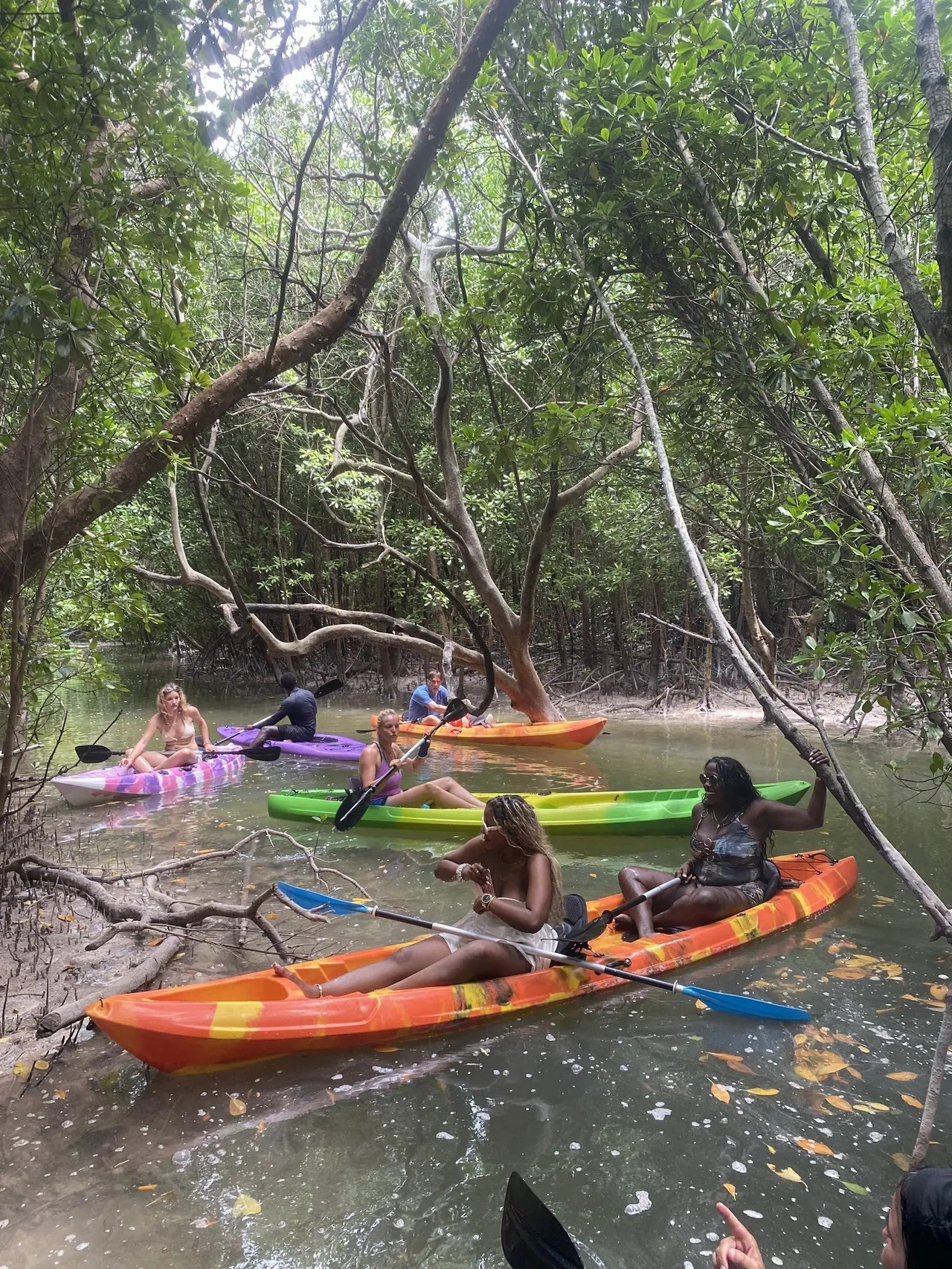
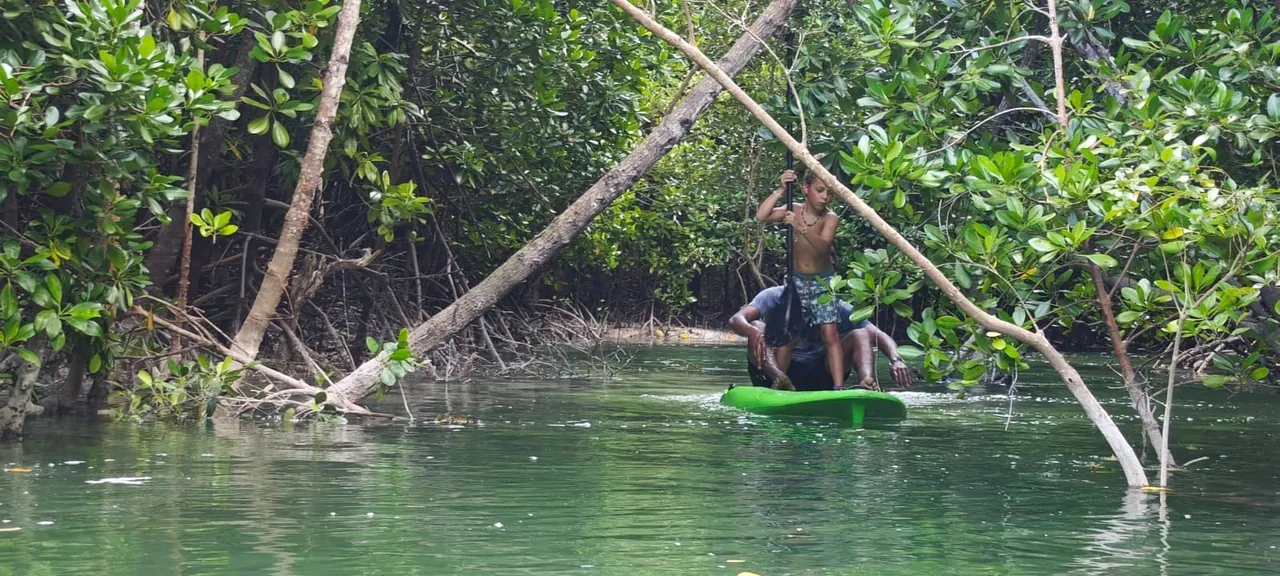
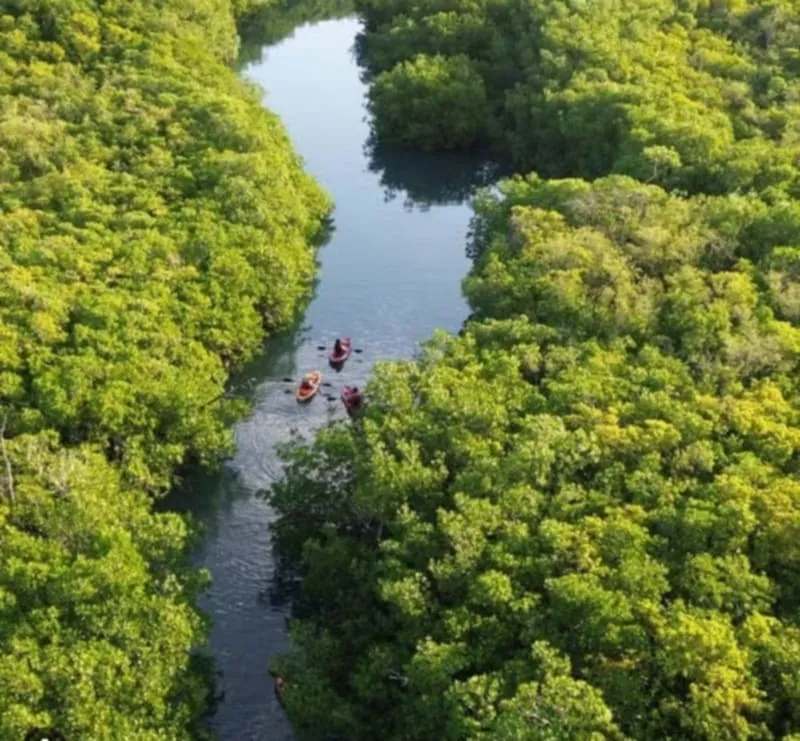
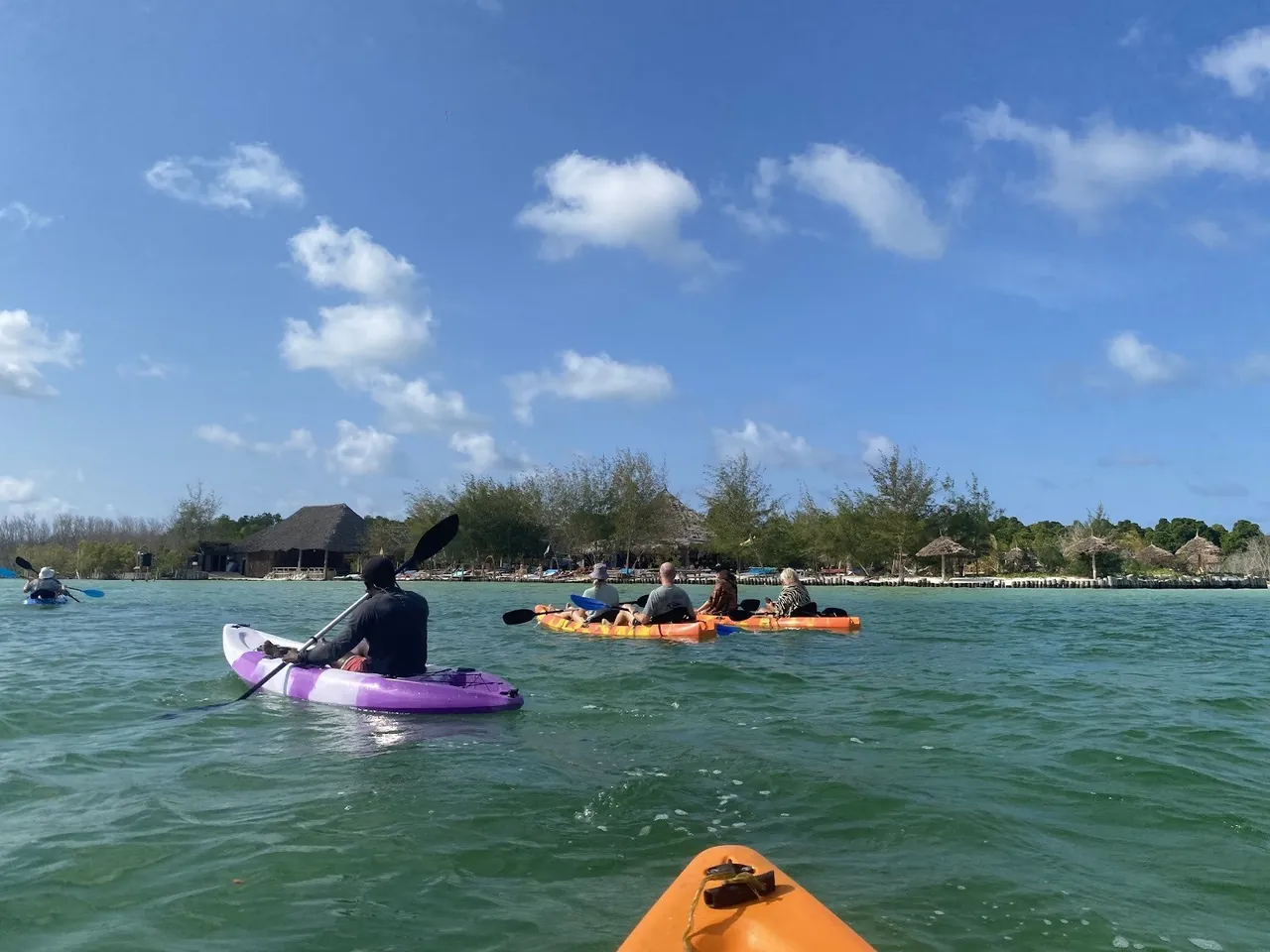
Kayaking the mangroves at Michamvi
Mangrove tunnels, then out across the bay as the sun goes down.
Tap any photo to see all 6.
On the Chwaka Bay side of the Michamvi peninsula, Ally Kayak takes small groups in sit-on-top kayaks through the mangrove tunnels and out across the bay — and because this shore faces west, sunset paddles are the favourite.
South of Stone Town, the mangroves around Uzi Island, reached by a causeway that floods at high tide, are another kayaking spot, usually combined with a village visit.
Why it's in this guide
An easy, quiet half-day from the Paje and Michamvi hotels, ending with a sunset over the water.
When to go
All year, timed to the tide; late afternoon for the sunset.
Tide: You need mid to high tide — the channels drain at low tide. On the way to Uzi Island, the causeway floods at high tide.
Who runs it and how to book
Contact Ally Kayak in Michamvi through Instagram or WhatsApp to agree a time with the tide; it's a small, informal operator, so confirm the day before. 2 Winds (Chukwani) also has kayaks.
Safety: what to check
Life jackets on, sun protection and a guide who knows the channels and tides. Keep low under branches. The open-bay paddle back can be tiring in the stronger June–October winds.
Worth knowing
- A small operator with few reviews — confirm by message.
- Uzi Island operators are thinly reviewed; check before you book.
21. Kendwa · North-west coast
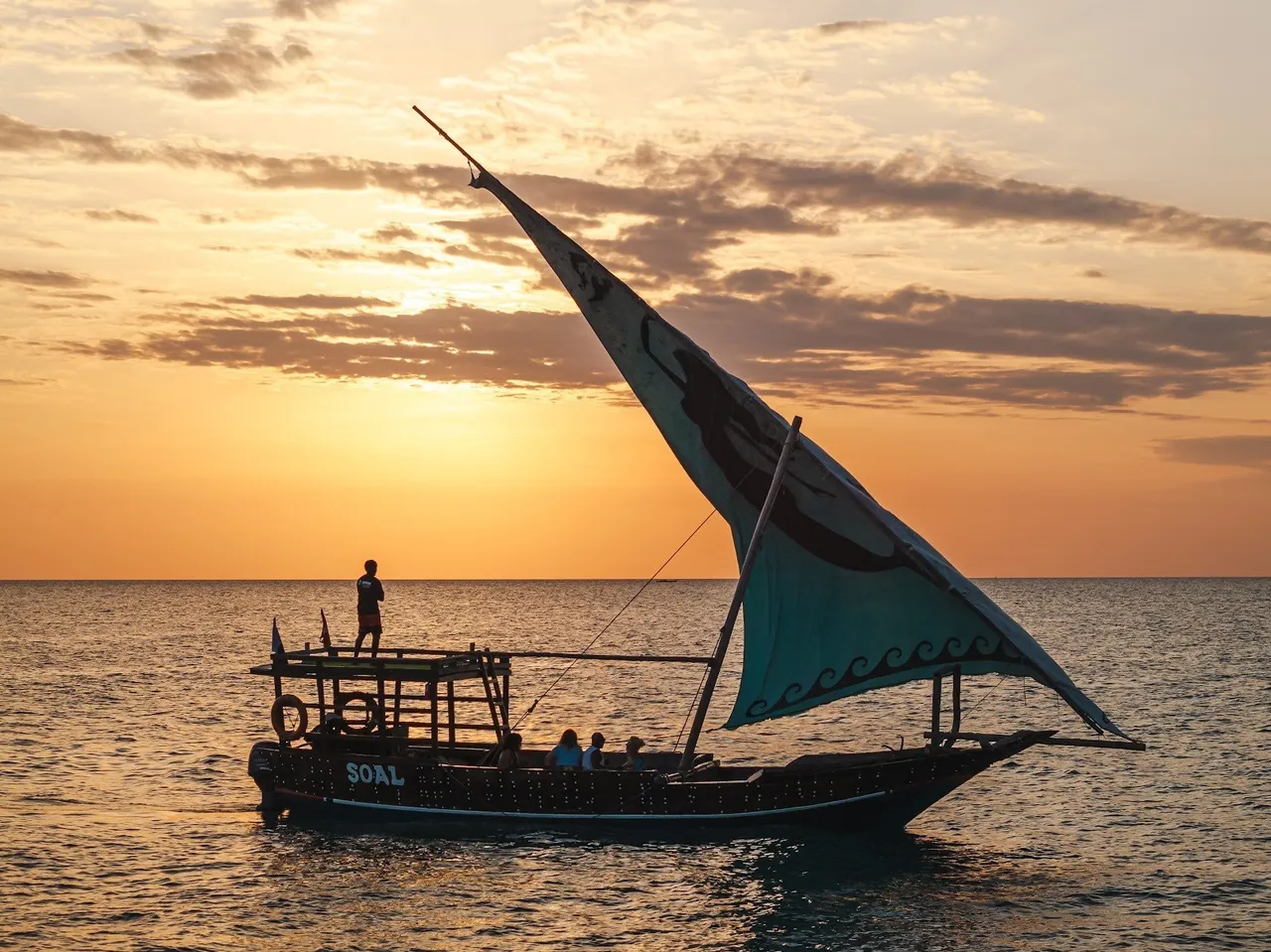
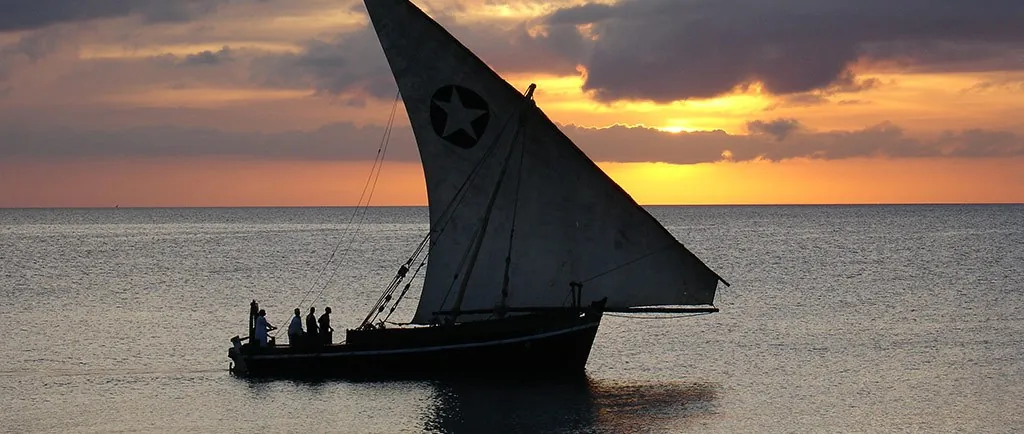
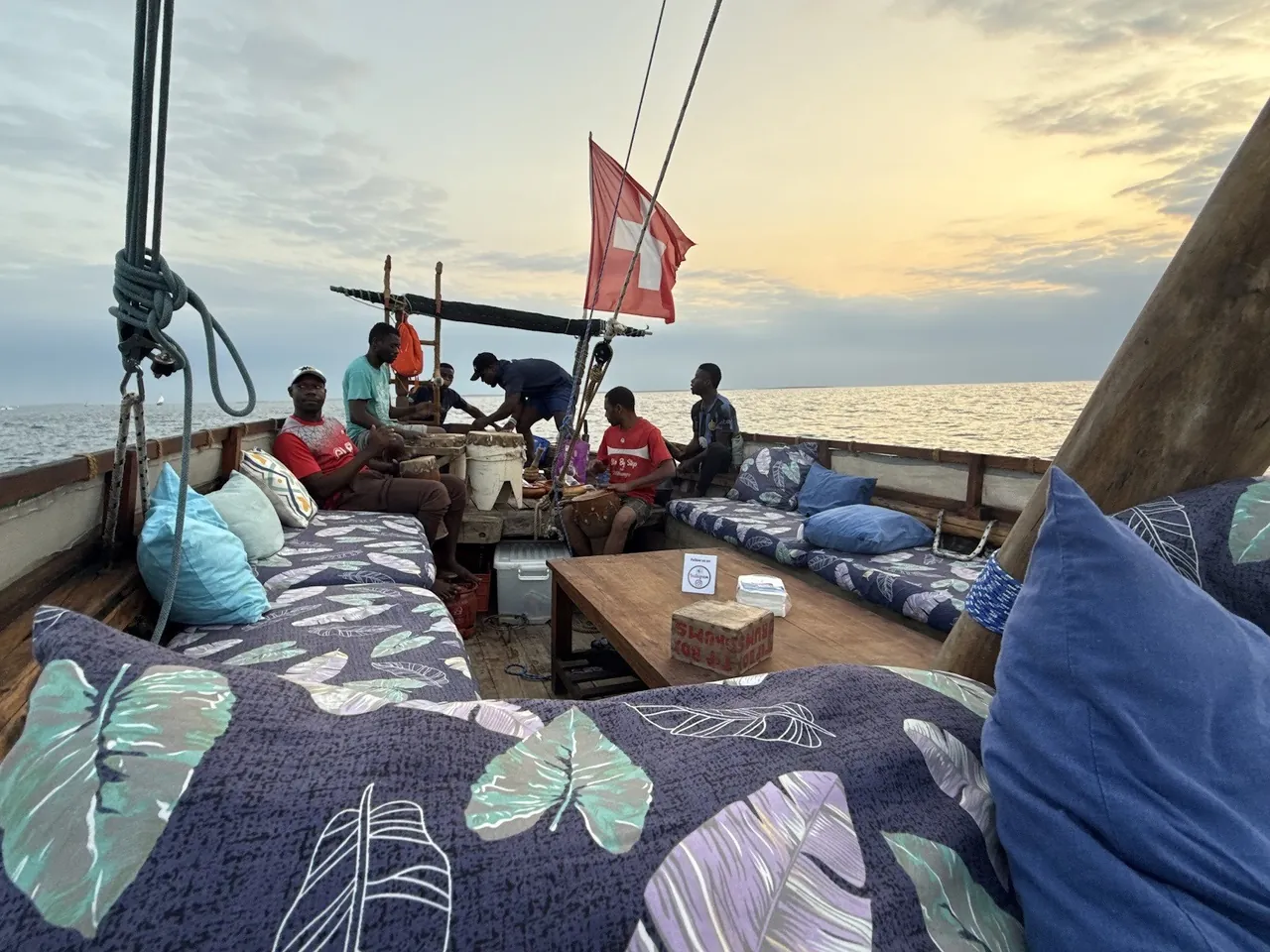
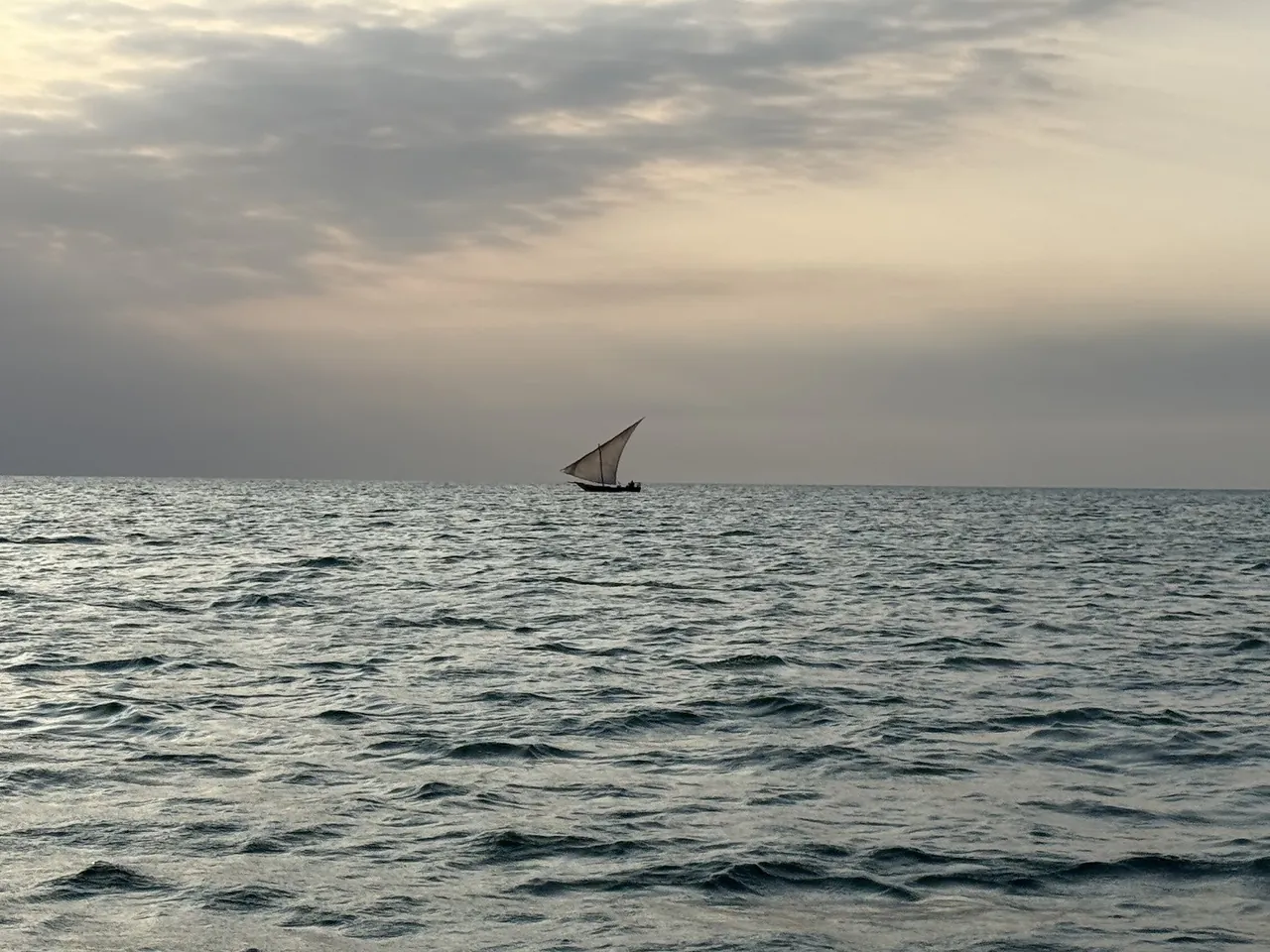
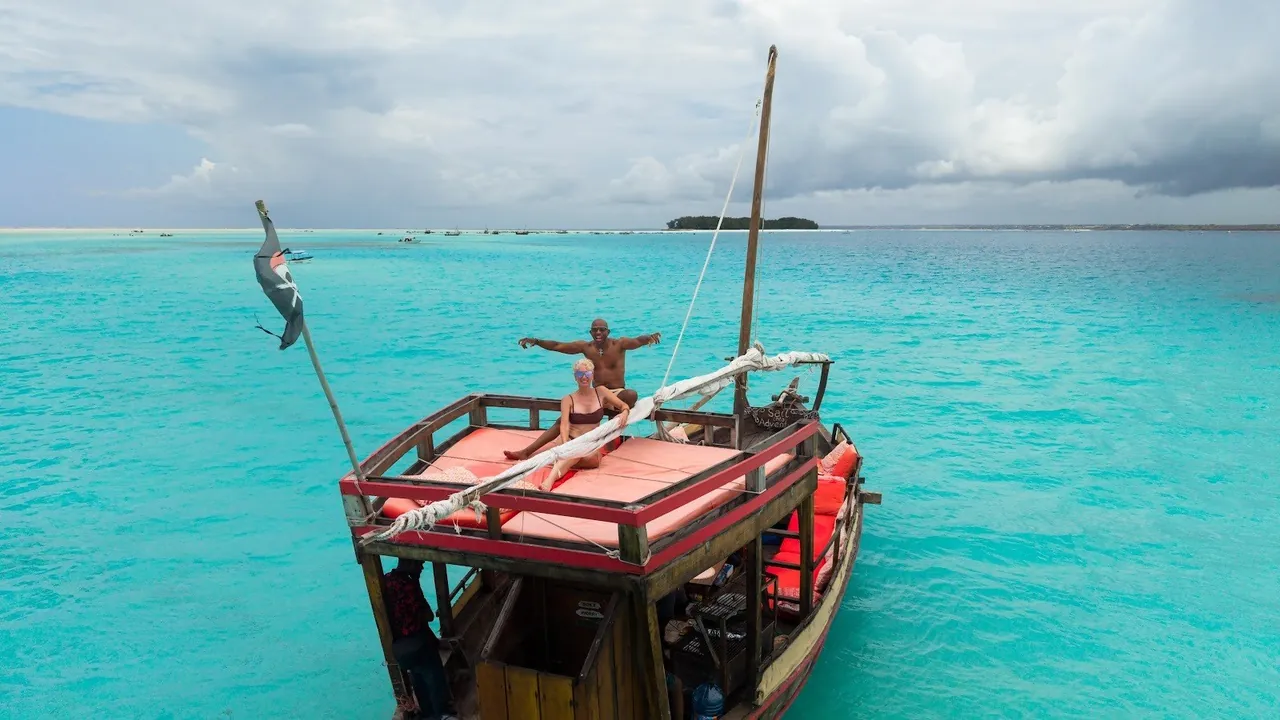
Dhow sailing from Kendwa
A wooden dhow under a lateen sail, into the sunset.
Tap any photo to see all 6.
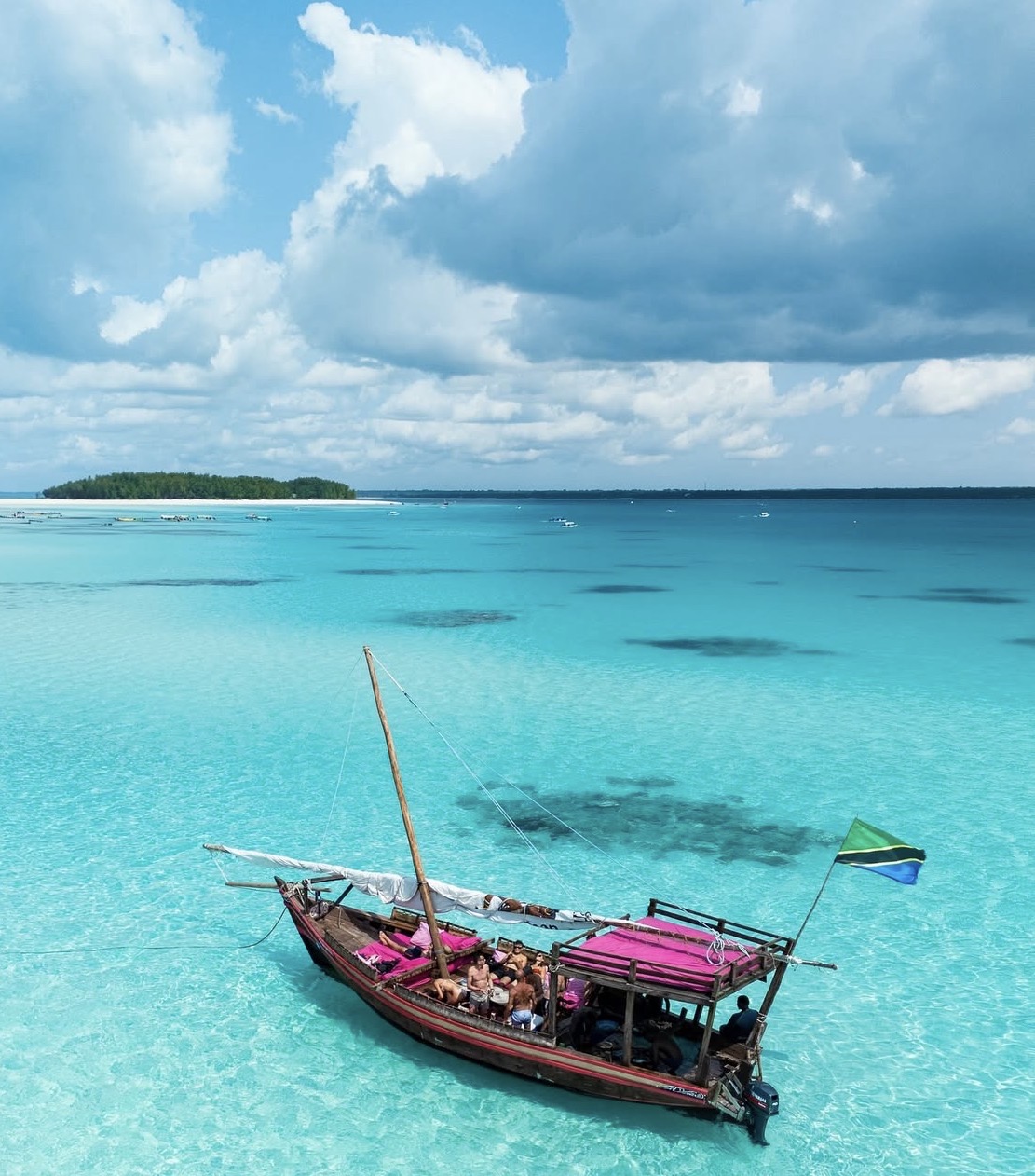
Kendwa faces west, which makes it the island's classic sunset-dhow beach: two hours under a traditional lateen sail with drinks as the sun goes down. Full-day sails go to Mnemba with snorkelling, a sandbank stop and a seafood lunch on board.
Zanzibar Watersports runs the sunset dhow from Kendwa Rocks beach (16:30–18:30) and, on Saturdays, the full-day "Seafari" to Mnemba; Dream Dhow, which says it uses no plastic, doesn't chase dolphins and never anchors on coral, and Zanzibar Dhow are both well reviewed.
Why it's in this guide
The most beautiful way to end a day on Zanzibar, on the boat that has sailed this coast for centuries.
When to go
All year; the west coast is calmer during the June–October trade winds. Sunset trips leave around 16:30.
Who runs it and how to book
Book the day before with Zanzibar Watersports (zanzibarwatersports.com), Dream Dhow (dreamdhow.com) or Zanzibar Dhow on Kendwa beach. In the south-west, Safari Blue runs the best-known full-day dhow sail from Fumba.
Safety: what to check
Check there are life jackets on board, a sober crew and a working engine, and that the boat isn't overloaded. On snorkel days, non-swimmers should ask for a vest.
Worth knowing
- Sunset hour is busy, with many boats on the water.
- Dolphin-chasing around Mnemba is a real welfare problem — choose operators that don't, and don't swim into a crowd of boats.
- We couldn't find anyone currently selling multi-day dhow trips; ask about private charters.
22. Kendwa · North-west coast
Catamaran cruises with Zanzibar Watersports
Trampolines, cushions and the open sea — and a Saturday sunset party on board.
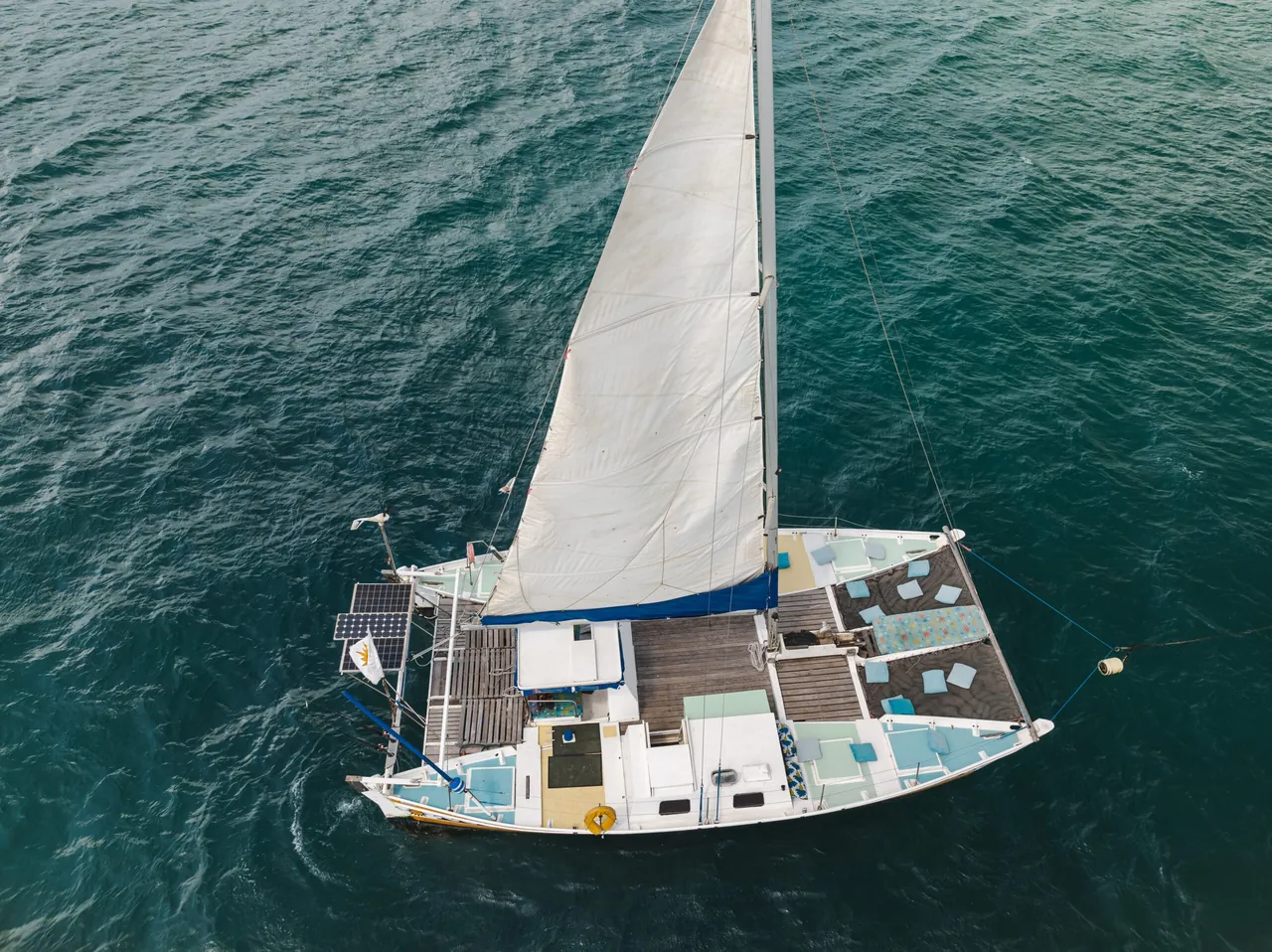
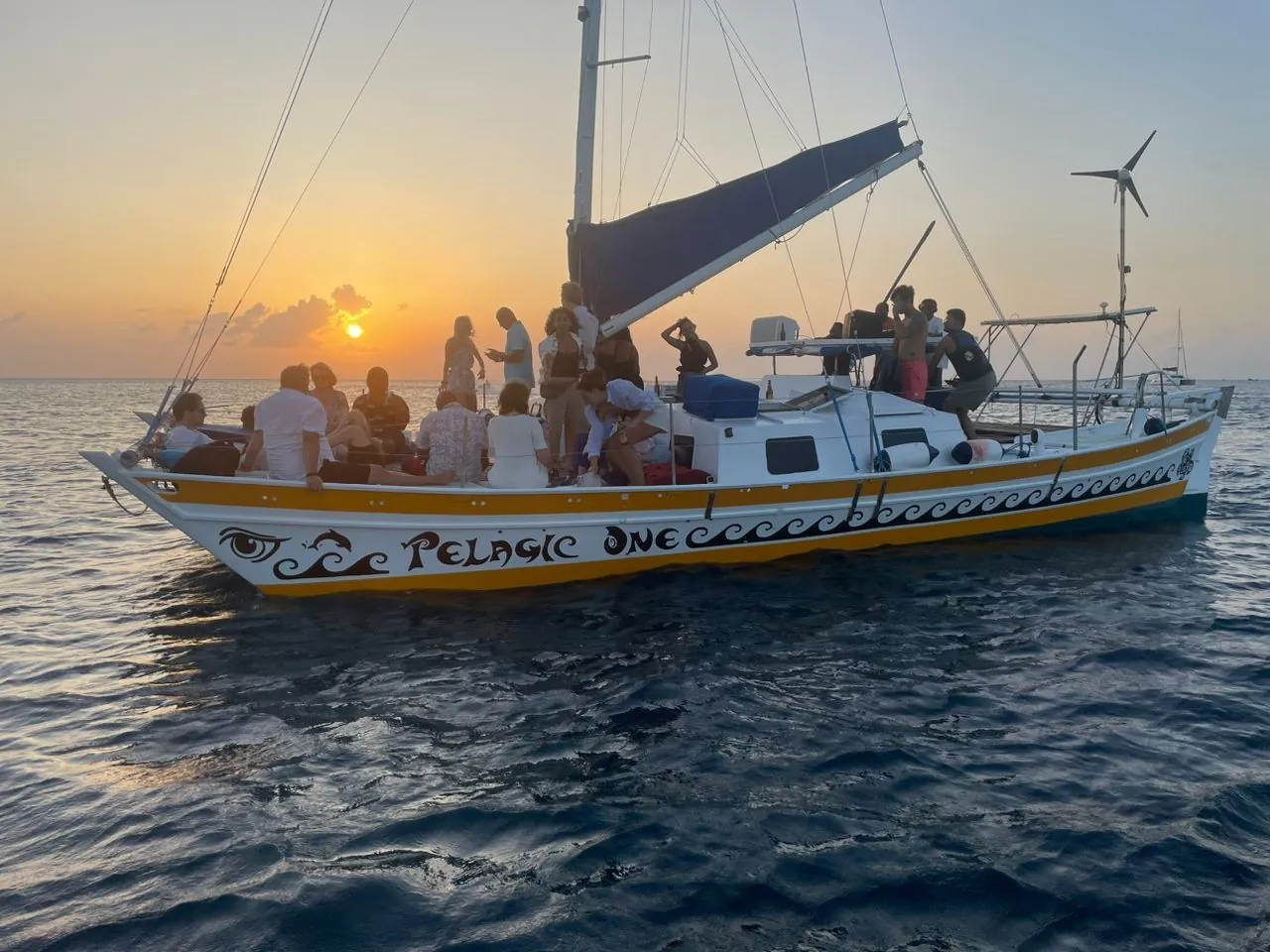
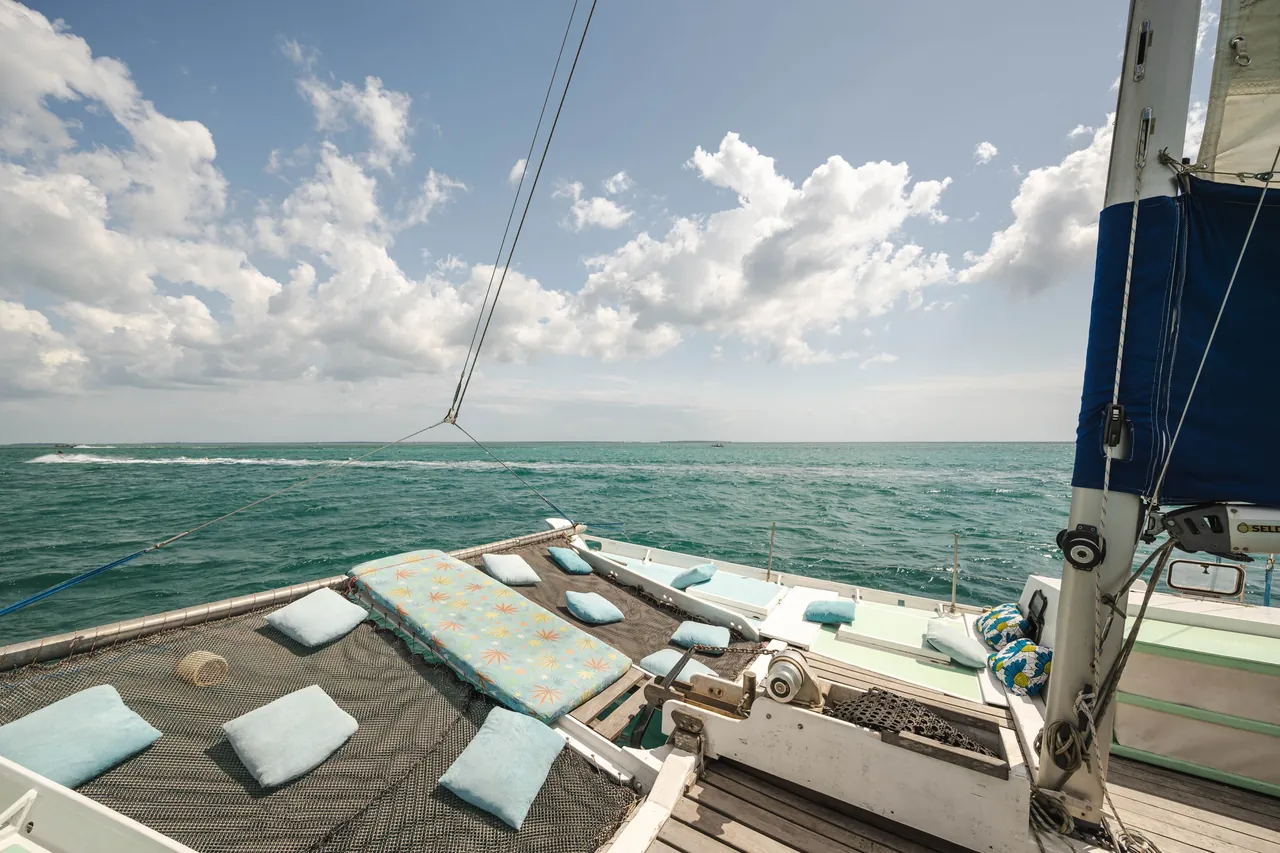
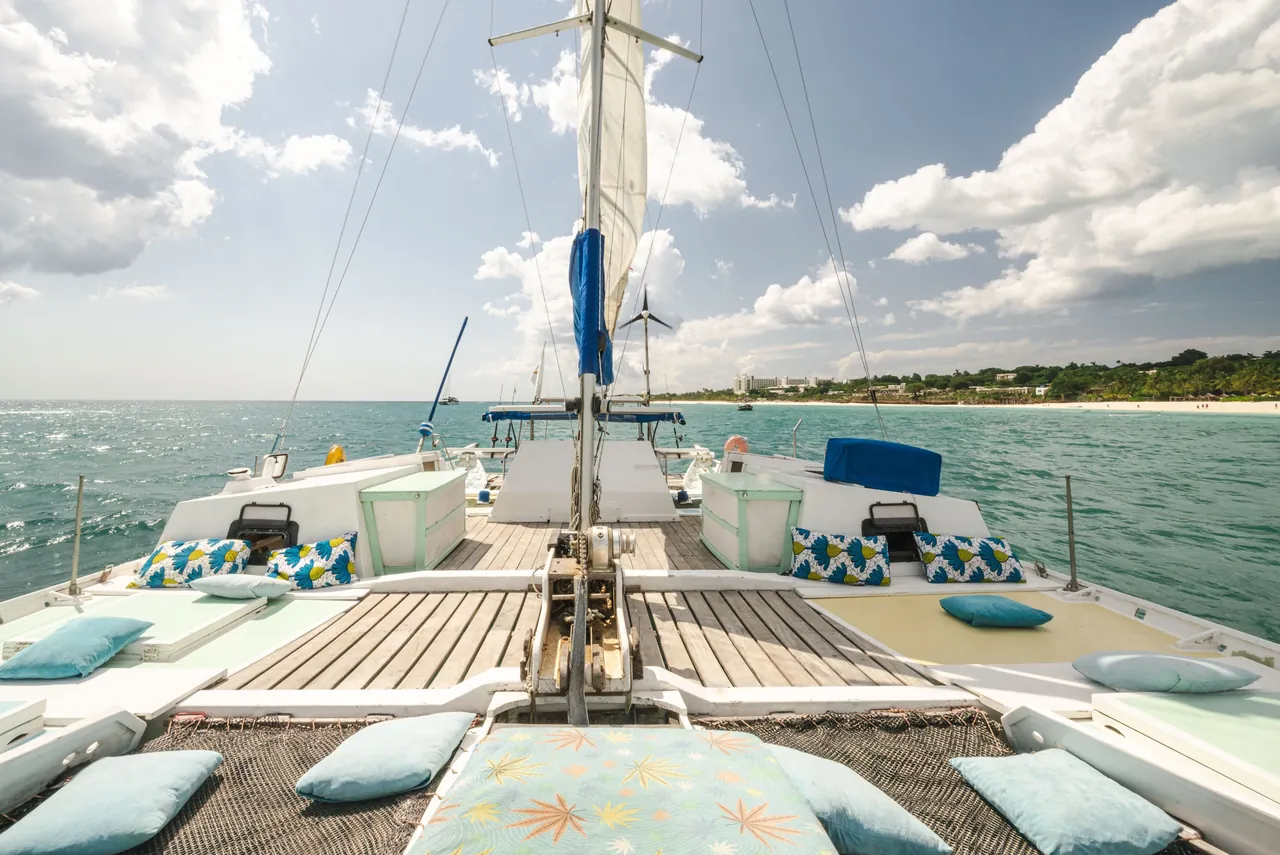
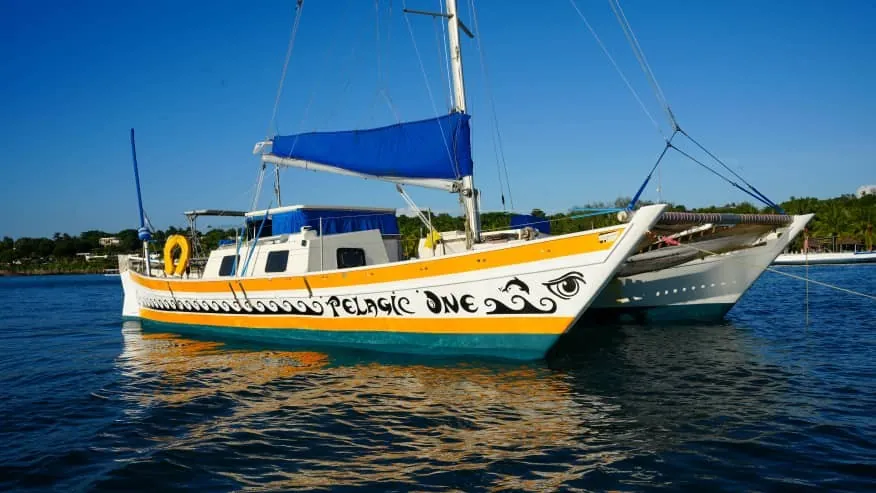
Zanzibar Watersports sails two Polynesian-style catamarans from Kendwa: Pelagic One, at 35 feet, and the 45-foot Tsitsikamma. Both are built for open-air lounging, with no cabin — just two big trampolines, a wide open deck scattered with cushions, a galley and a toilet on board — and take up to 20 people.
Charter one for a half-day or full-day cruise, a sunset sail, a fishing trip or as a floating base for a day of diving or kiting; every Saturday from 17:00 to 20:00, Pelagic One hosts the Kendwa By Night party at sea.
Why it's in this guide
The most relaxed way to spend a day on the water with friends — and a party boat at sunset on Saturdays.
When to go
All year in calm weather; the west coast is calmer during the June–October trade winds. Sunset cruises run about three hours; the Saturday party is 17:00–20:00.
Who runs it and how to book
Book a private charter (half day, full day or sunset) with Zanzibar Watersports (zanzibarwatersports.com) in Kendwa, or join the Saturday Kendwa By Night party. Prices are per boat for a group, so it's best value shared. There are no overnight trips.
Safety: what to check
Check there are life jackets for everyone and agree the route, drinks and weather plan before you go. Bring sun protection — there's little shade on the trampolines.
Worth knowing
- A private charter priced per boat — it suits groups of about ten.
- No sleeping on board; it's day and sunset trips only.
23. Kendwa & Nungwi · North-west coast
Parasailing, jet skis and waterskiing at Kendwa
Three hundred metres over the reef, then a wakeboard and an inflatable water park.

Tap any photo to see all 6.
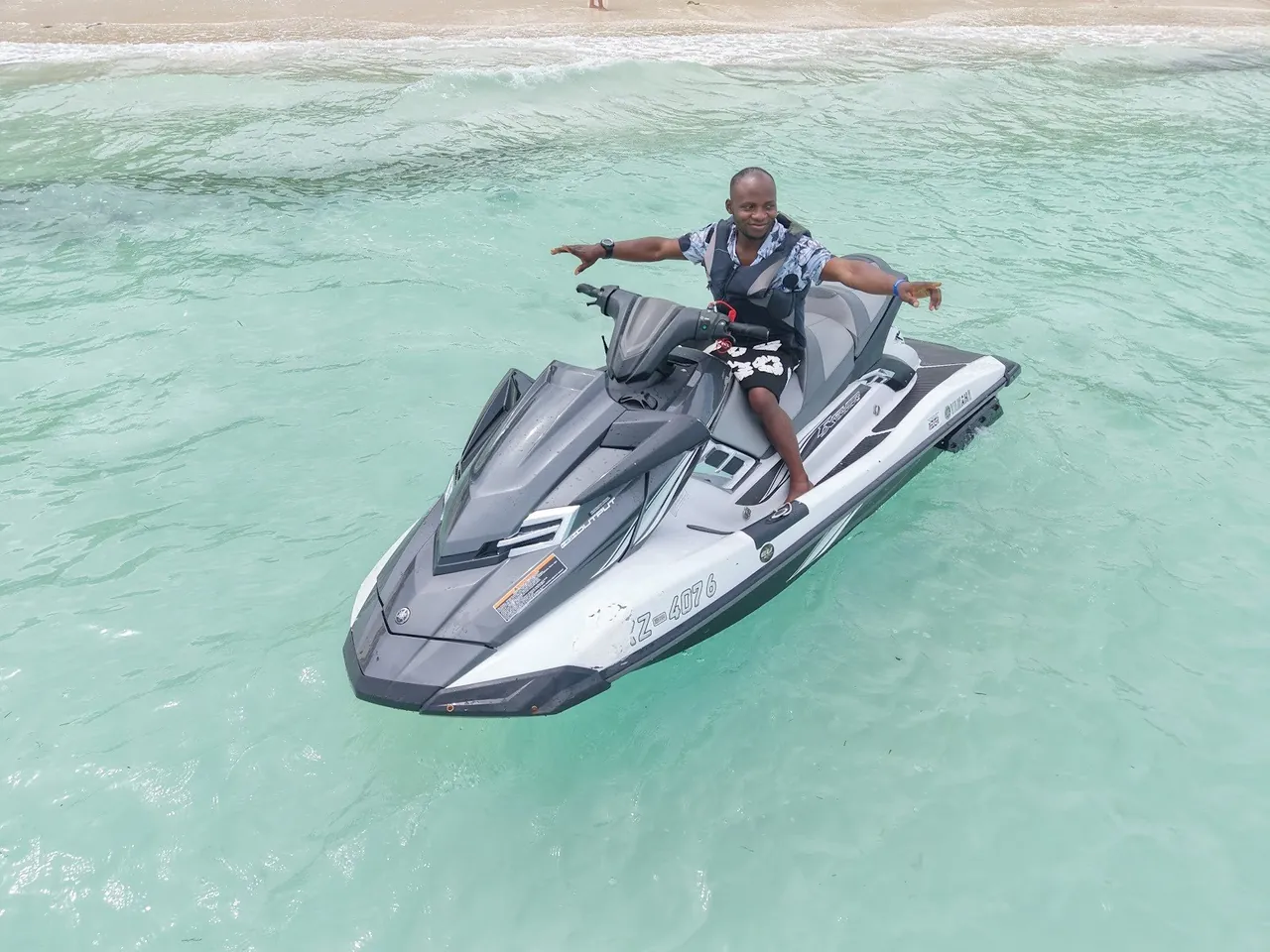
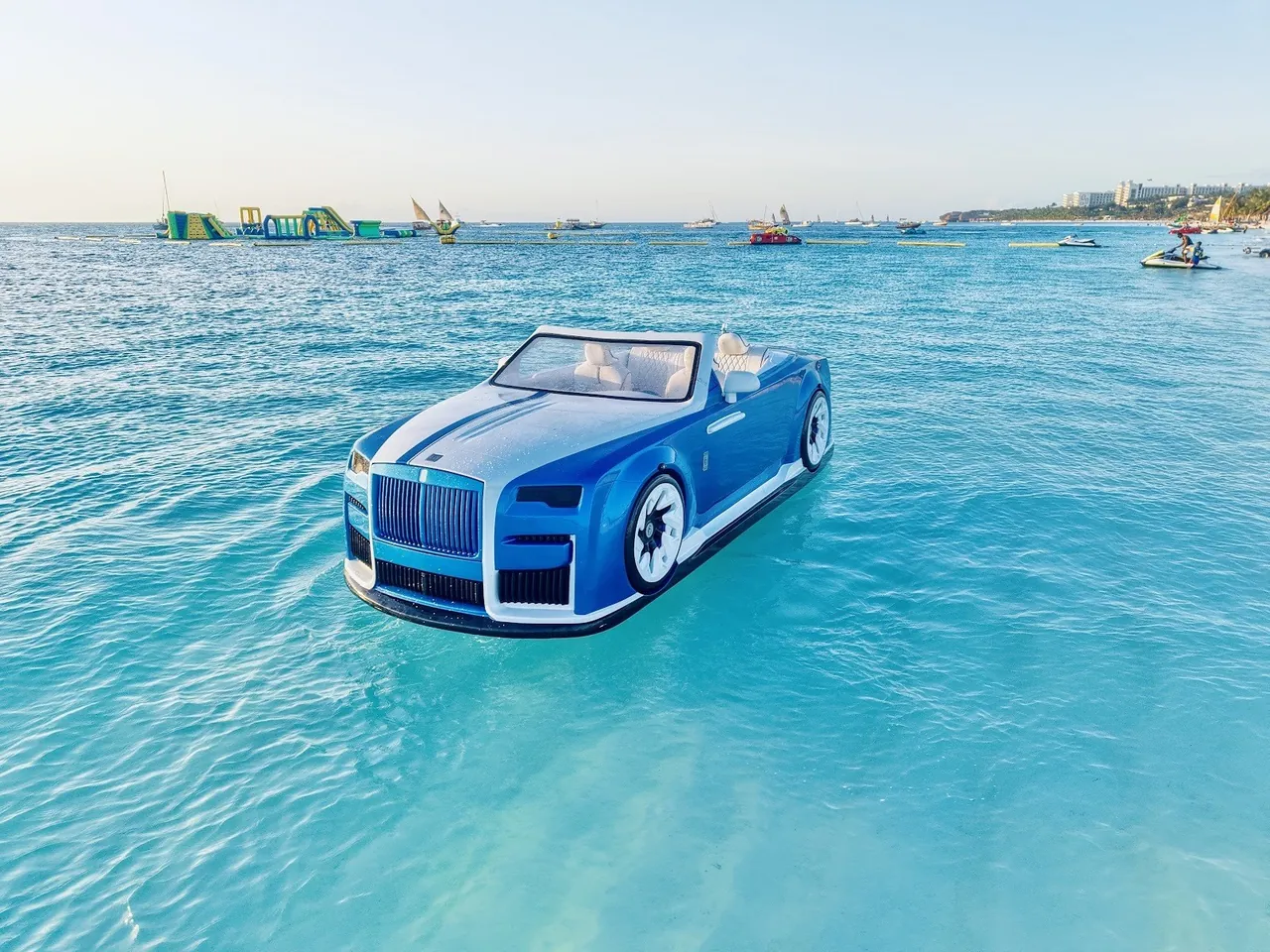
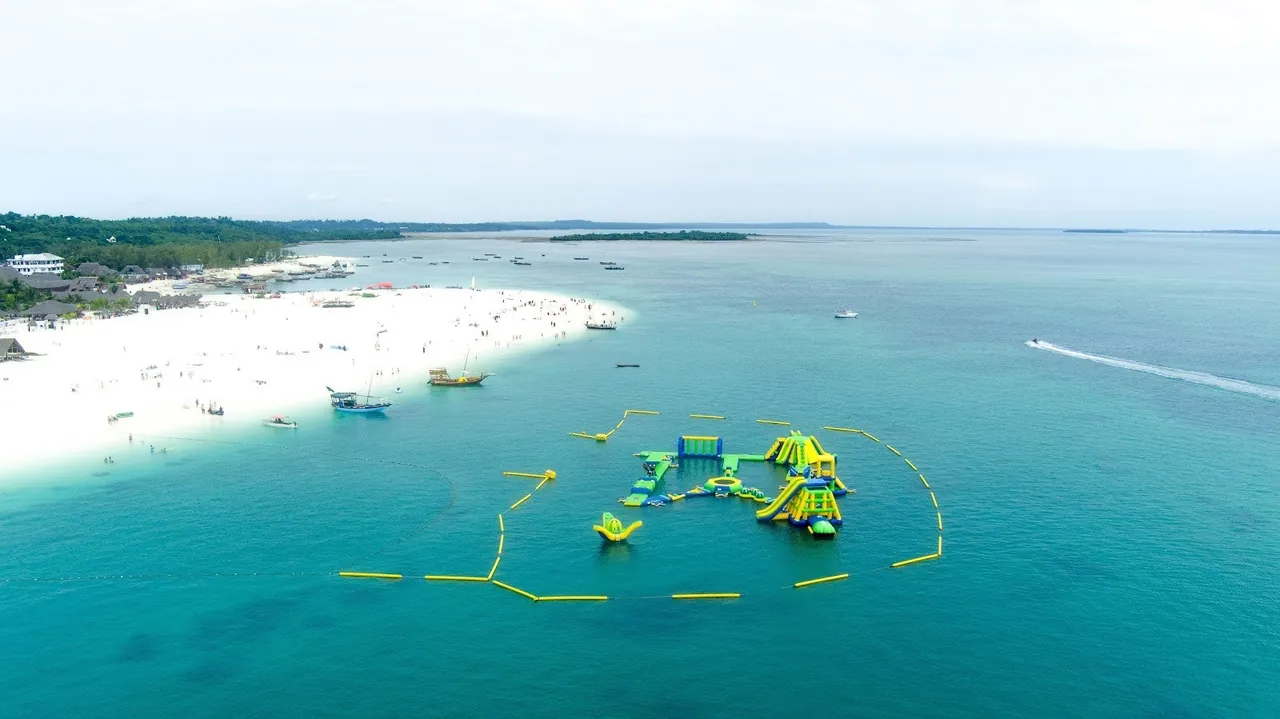
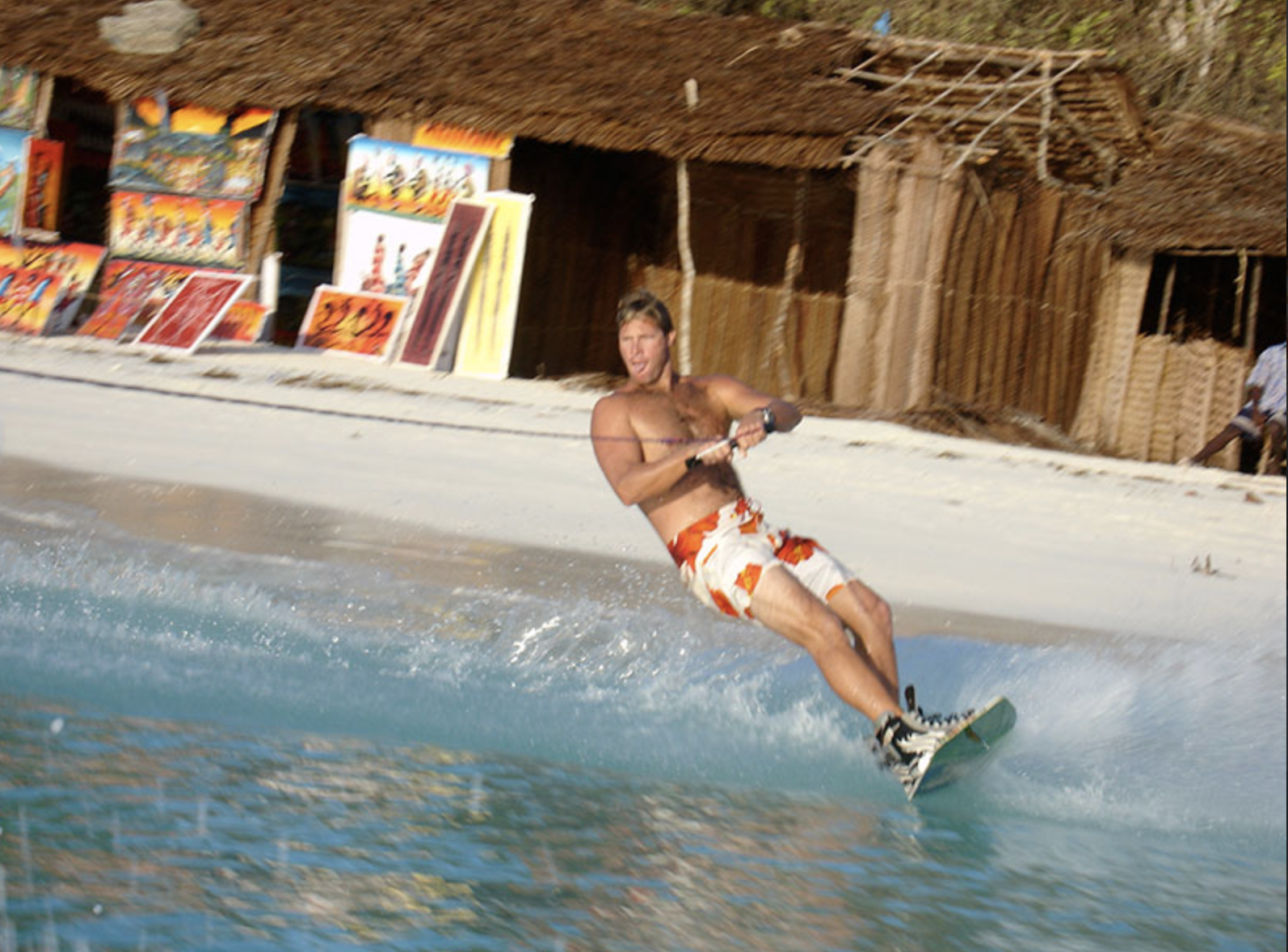
Kendwa is the island's motor-watersports beach. Zanzibar Watersports flies parasails about 300 metres over the Nungwi–Kendwa reef (tandem rides allowed) and tows waterskiers, wakeboarders and ringos; Nengo Water Sports adds jet skis, a "jet car", clear kayaks and drone filming.
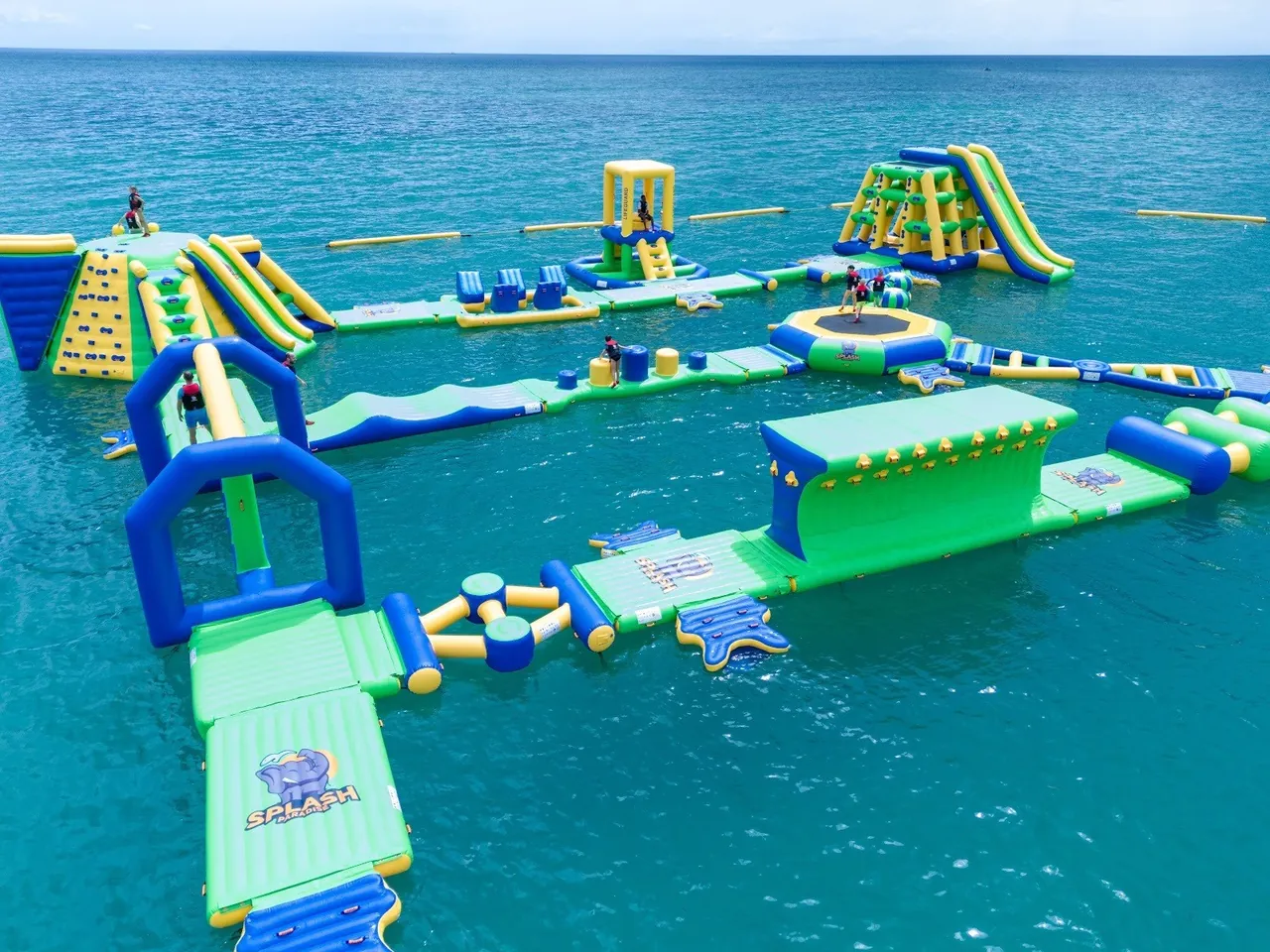
Just offshore, Splash Paradise is an inflatable water park of slides and climbing walls, open daily.
Why it's in this guide
Big, easy thrills that need no skill — and a parasail view over the reef that rivals the skydive.
When to go
All year in calm conditions; parasailing stops in strong wind and in May. Splash Paradise opens 10:00–18:00.
Who runs it and how to book
Book on the beach or ahead with Zanzibar Watersports (zanzibarwatersports.com) or Nengo Water Sports (nengowatersports.com). For Splash Paradise, life vests are compulsory, under-12s need an adult and everyone signs a waiver.
Safety: what to check
There's no published Zanzibar jet-ski rulebook: ask the operator for its Zanzibar Maritime Authority licence and insurance, a briefing, life jackets for everyone and a guide riding with you on a set route away from swimmers. For parasailing, check the harness and tow line and don't go up in gusty wind.
Worth knowing
- Jet skis are noisy and close to swimmers; never ride over shallow reef or seagrass, where props damage coral and turtles feed.
- Tandem parasailing has a combined limit of about 140 kg; no heart conditions.
- Expect beach sellers rather than shopfronts.
24. Nungwi, Kendwa & Kidoti · Northern tip
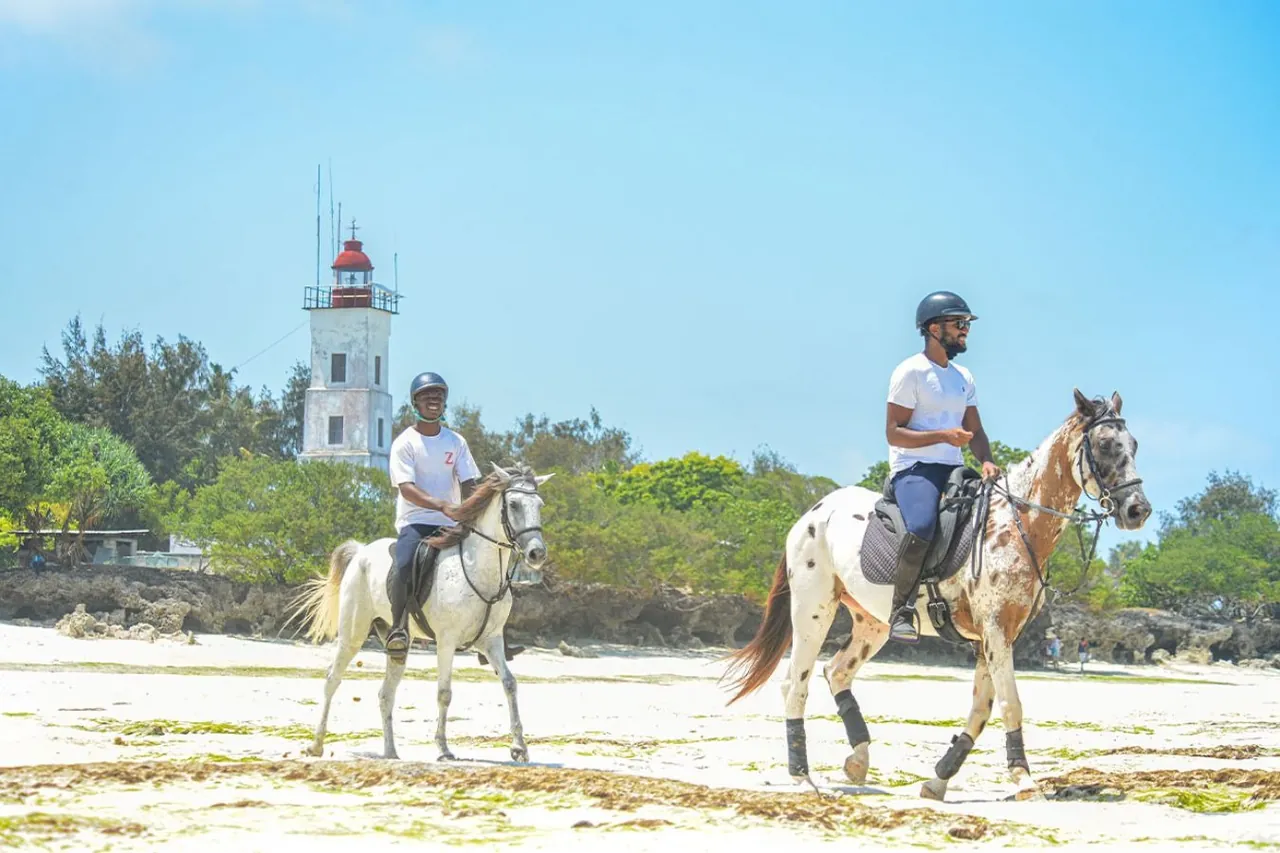
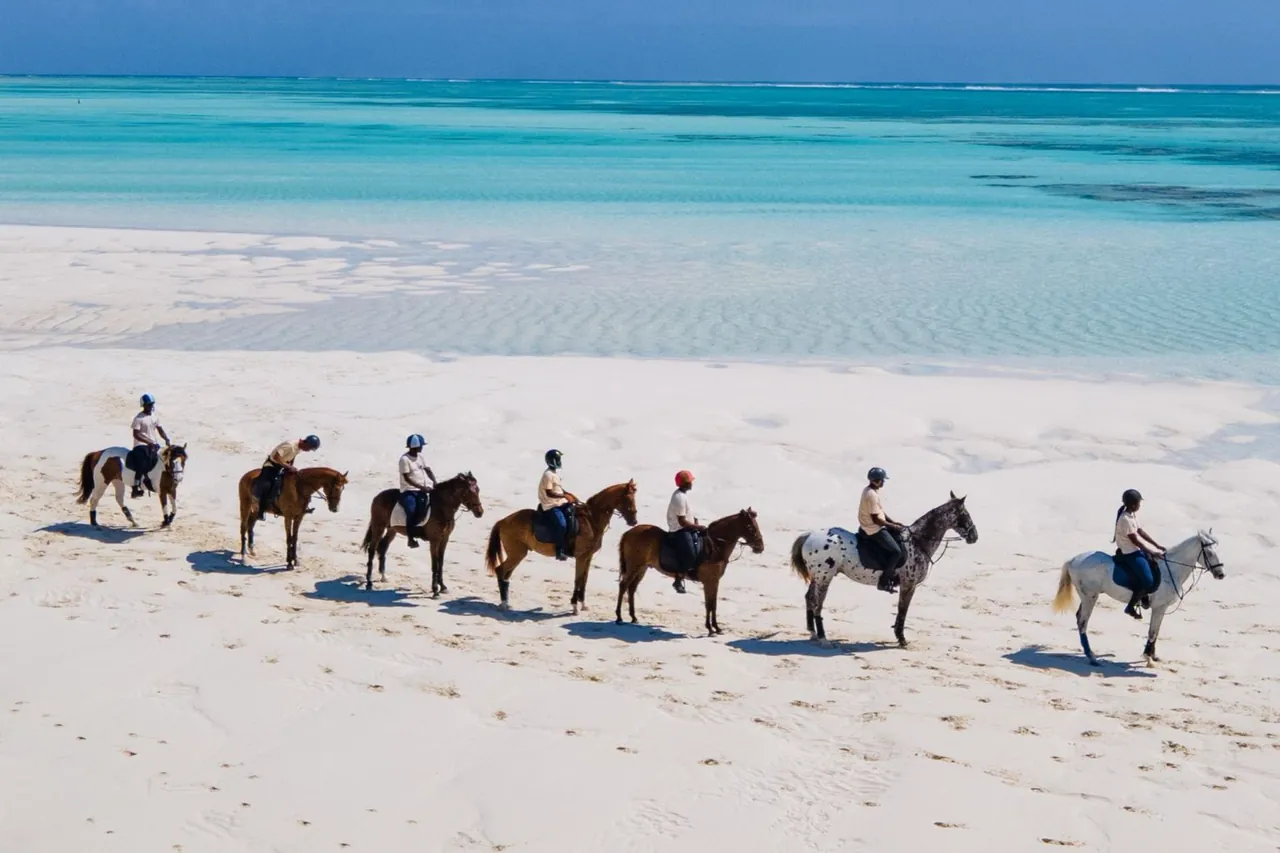
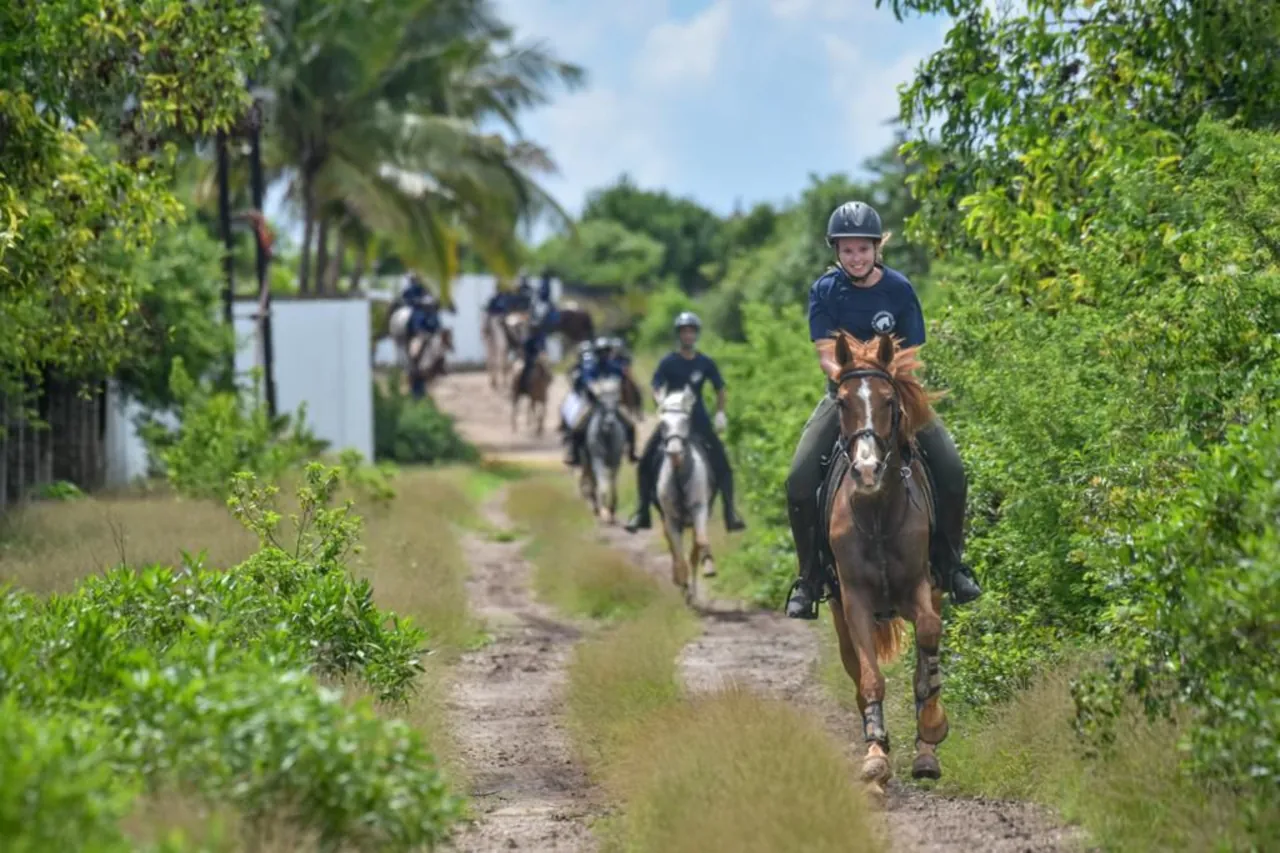
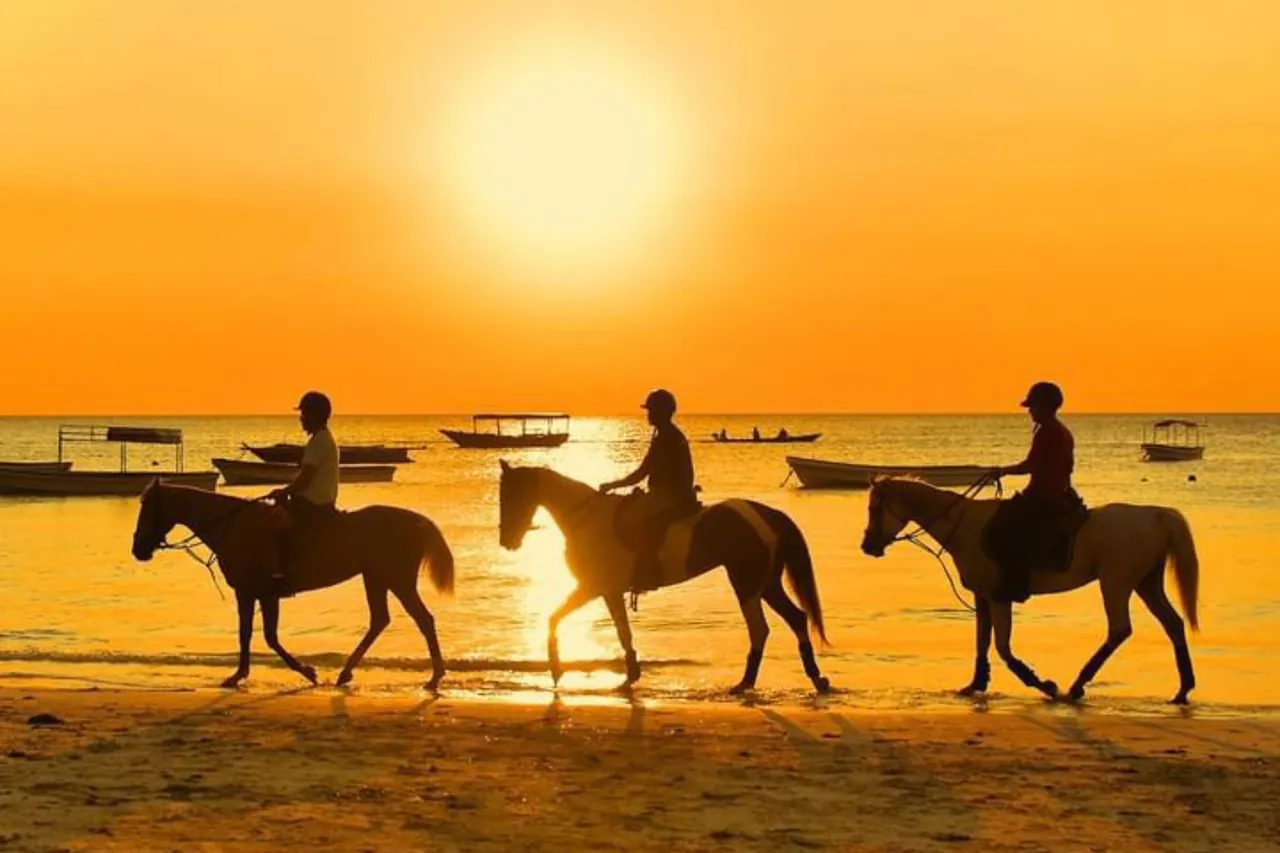
Horse riding in Nungwi and Kendwa
Gallops on the sandbanks at low tide, and swimming with the horses at high tide.
Tap any photo to see all 6.
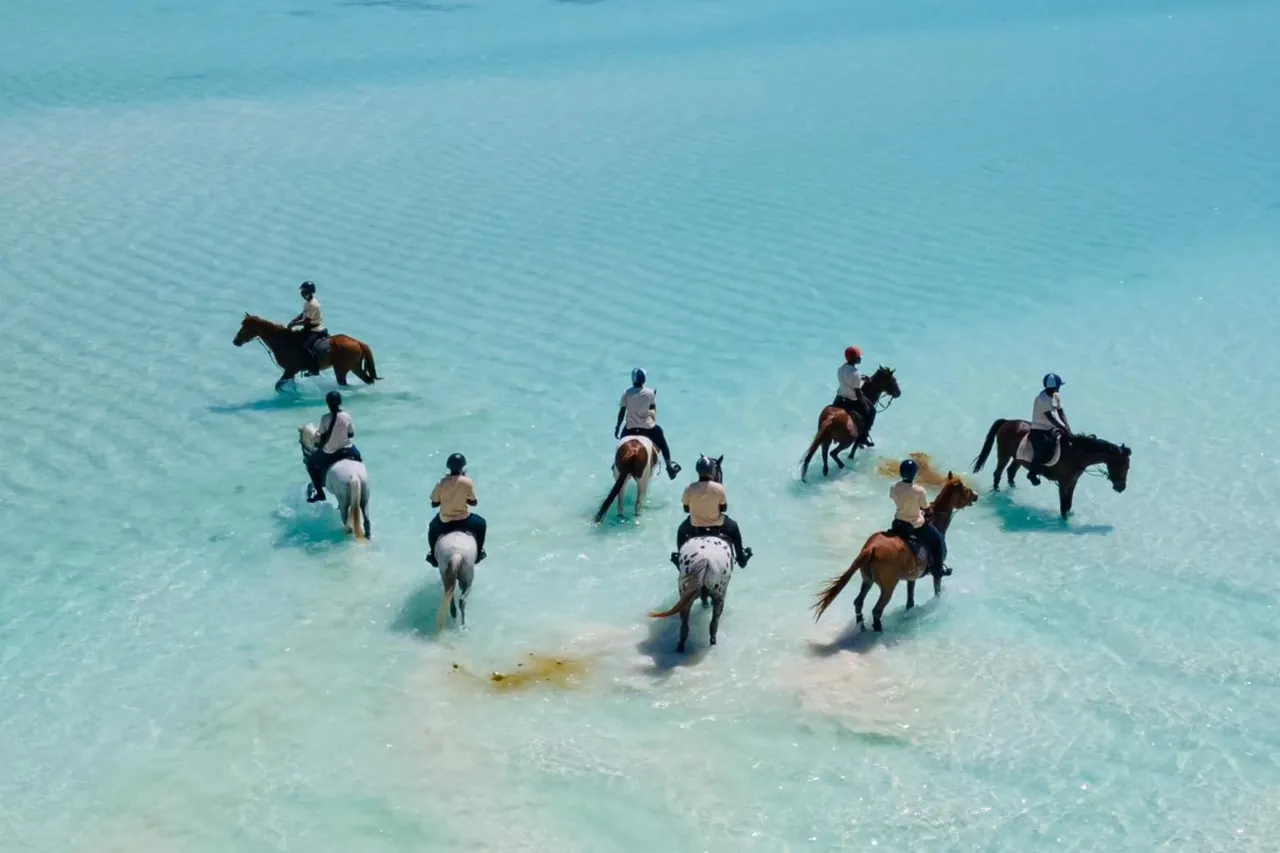
Zanzibar Horse Club rides from stables in Nungwi and Kendwa and a ranch at Kidoti. Beginners can do a 30-minute swim with the horses or an hour through the village and along the beach; experienced riders can go out for two to four hours, galloping across the sandbanks at low tide on the 25 km Great Northern Explorer.
Rides follow the tide — sandbanks at low water, swims at high water — so start times change from day to day. On the west coast, Zanzibar Horse Safaris rides from Mangapwani and Kiwengwa.
Why it's in this guide
Cantering through the shallows with the Indian Ocean all around you — one of the island's most romantic adventures.
When to go
Early morning or around sunset, out of the heat. Zanzibar Horse Club closes in April and May, when its horses rest.
Tide: Sandbank rides need low tide and the horse swims need high tide, so ride times change daily — ask the stables what's on during your stay.
Who runs it and how to book
Book Zanzibar Horse Club by WhatsApp or through its website; it's a walk or tuk-tuk ride within Nungwi or Kendwa. Zanzibar Horse Safaris (Mangapwani and Kiwengwa) needs booking in advance and doesn't arrange transport.
Safety: what to check
Helmets are compulsory at both operators and provided. Wear long trousers or leggings. Before you ride, look at the horses: ribs and hips shouldn't show, hooves should be tidy and there should be shade and water at the stables. Avoid informal rides offered by beach hawkers.
Worth knowing
- The welfare claims are the operators' own: Zanzibar Horse Club says it gives 10% of profits to ZAASO, the island's animal charity, and Zanzibar Horse Safaris says it has in-house vets. We found no independent reporting either way.
- Zanzibar Horse Safaris has a rider weight limit of about 90 kg; ask Zanzibar Horse Club, which doesn't publish one.
- Read recent reviews — Zanzibar Horse Club's Google rating is lower than most activities here.
25. Nungwi, Kiwengwa & Jambiani · North, north-east and south-east
Quad biking through the villages
Dust, baobabs, sugar cane and fishing villages, on an automatic quad.
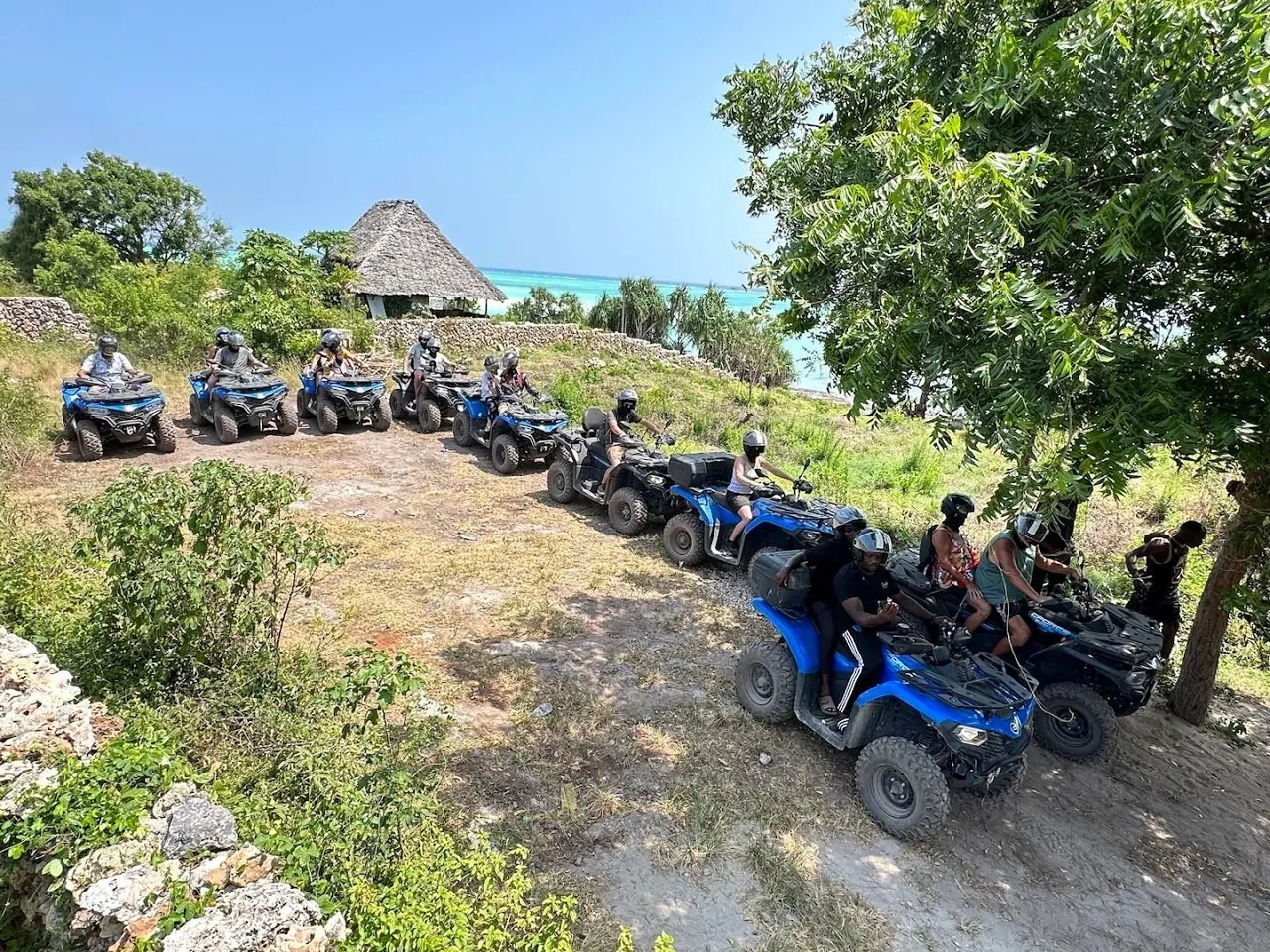



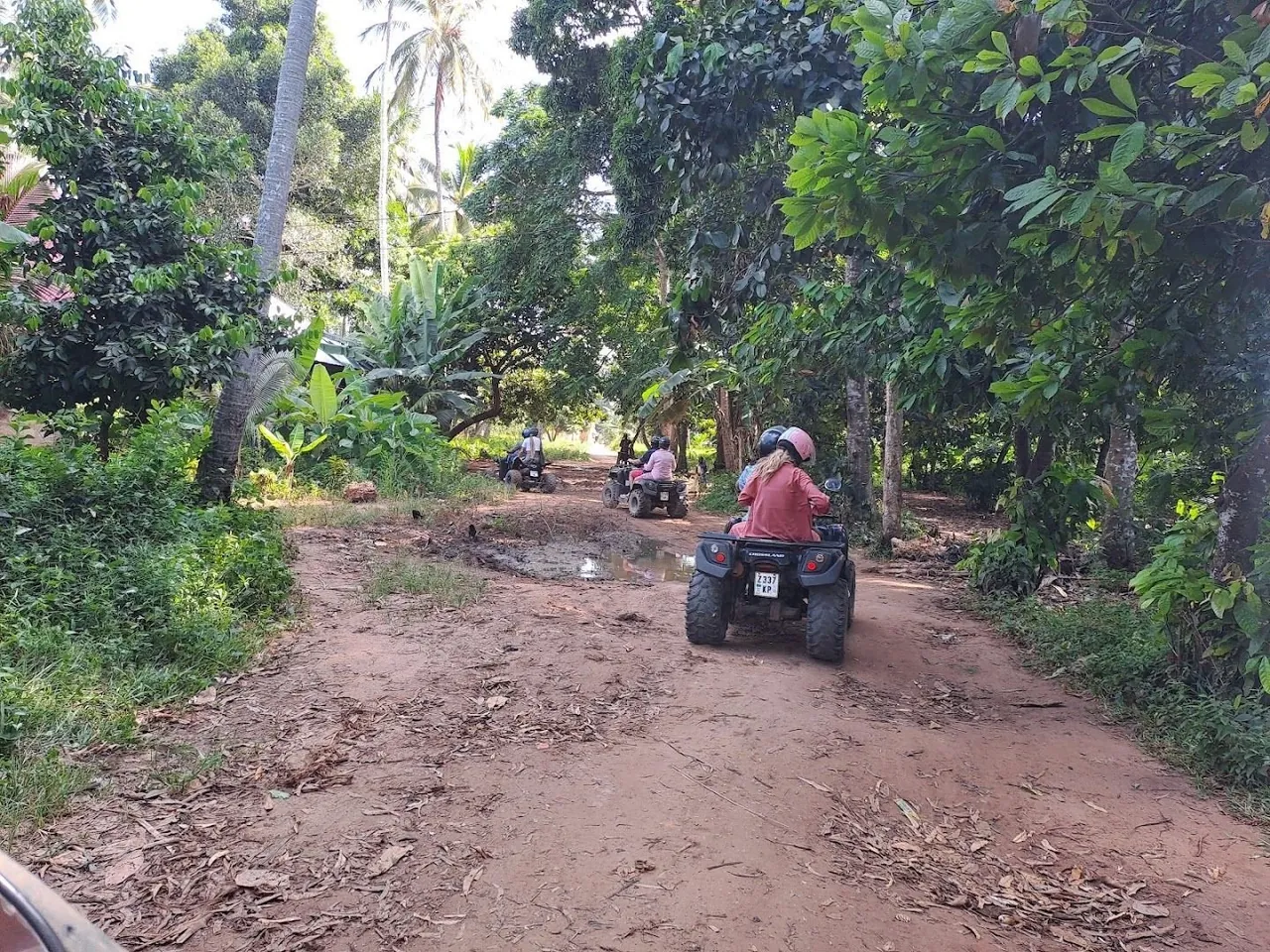
Tap any photo to see all 6.
Quad tours run for two and a half to four hours along farm tracks and village lanes, past baobabs, spice trees and sugar cane to a beach stop, with coconuts and fruit along the way. Afternoon rides on the north coast finish at sunset.
Osseliche runs from Nungwi and Kendwa; Zanzibar Quad Adventure, which says it was the island's first in 2008, rides from Kiwengwa and Jambiani. The quads are automatic, so no off-road experience is needed.
Why it's in this guide
A muddy, dusty, fun way to see the island's farmland and villages that most visitors never reach.
When to go
All year; morning (about 9:00) or afternoon (about 14:00) departures avoid the midday heat. The long rains of April–May make the tracks muddier — more fun, but slower.
Who runs it and how to book
Operators include hotel pickup in their area: Osseliche (Nungwi and Kendwa) and Zanzibar Quad Adventure (Kiwengwa and Jambiani). Book a day or two ahead; private or small-group tours are calmer than a convoy.
Safety: what to check
Drivers usually need a driving licence and to be 18 or over; passengers can ride two-up. Check the brakes and fuel before you set off, keep to the guide's speed and bring a buff for the helmet. Many travel policies exclude quads — check yours.
Worth knowing
- Tours use public roads through villages, with children, bicycles, goats and dala-dalas — slow right down.
- Cover shoulders and knees; no bikinis or very short shorts in the villages.
- Don't hand out sweets to children — buy from the village shops instead.
26. Stone Town & Paje · West and south-east
Bike tours from Stone Town and bike hire in Paje
Alleys, spice farms and village lanes at bicycle pace.
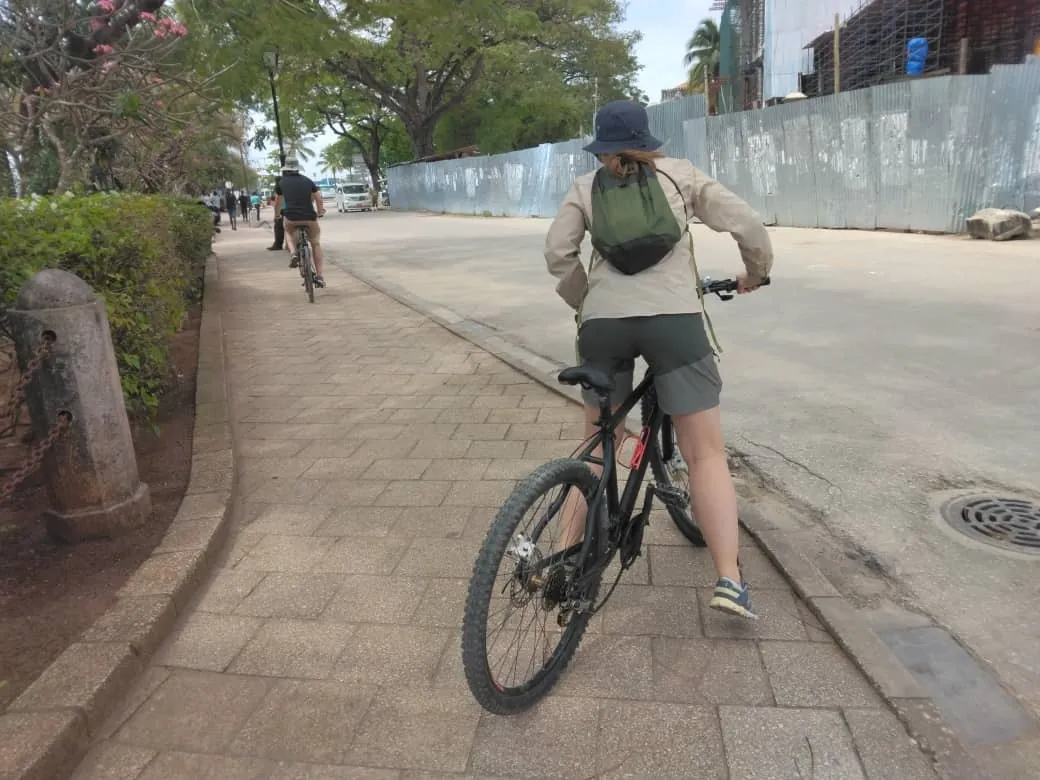
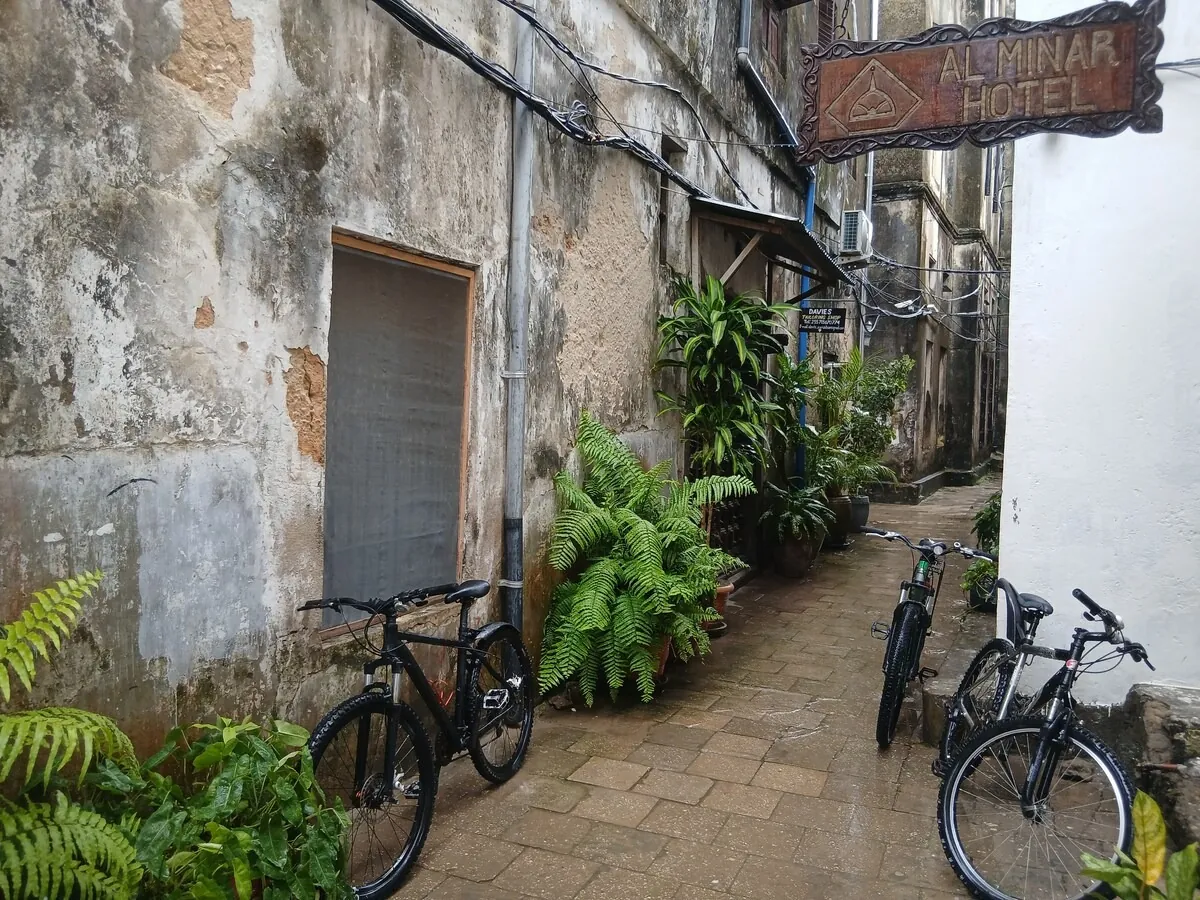
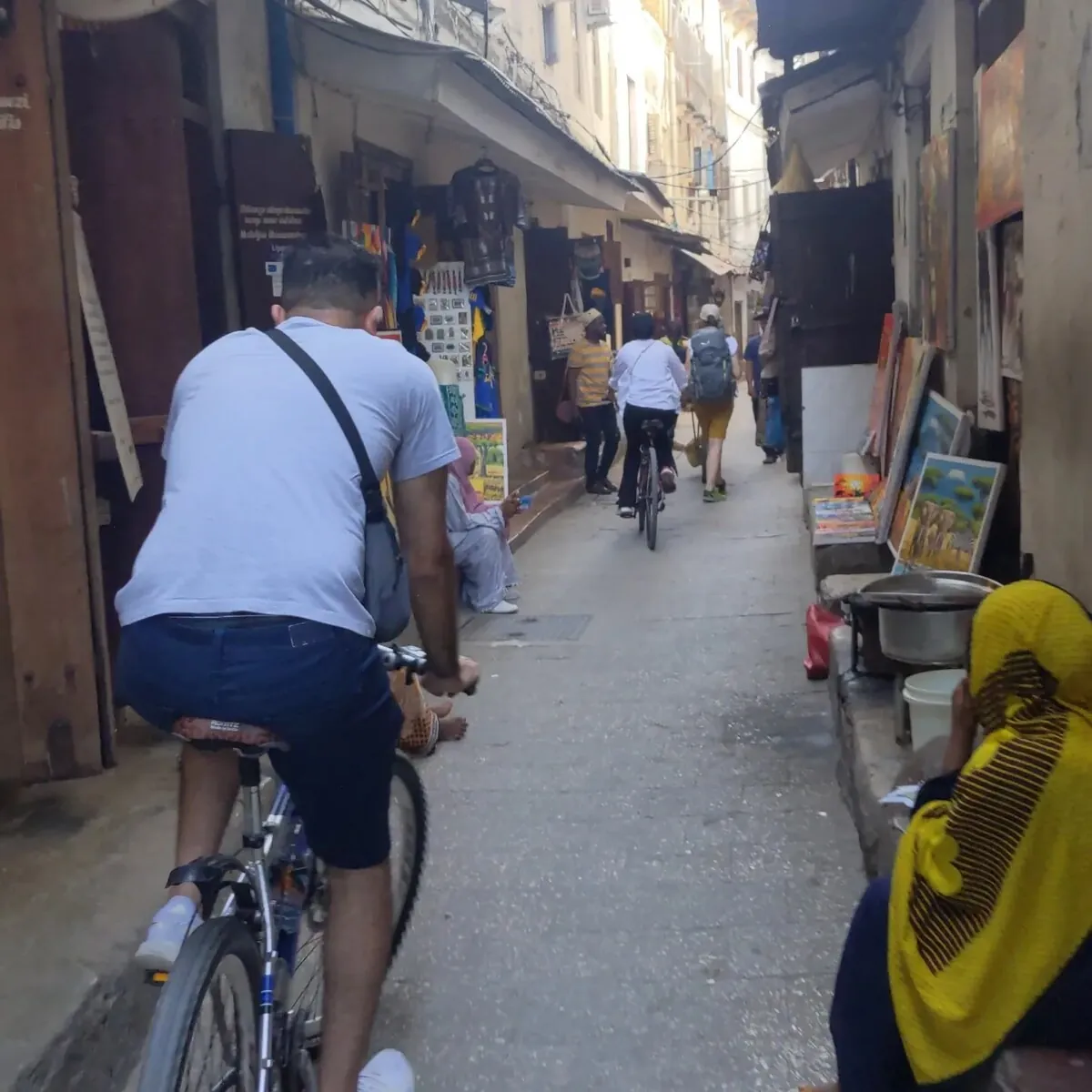
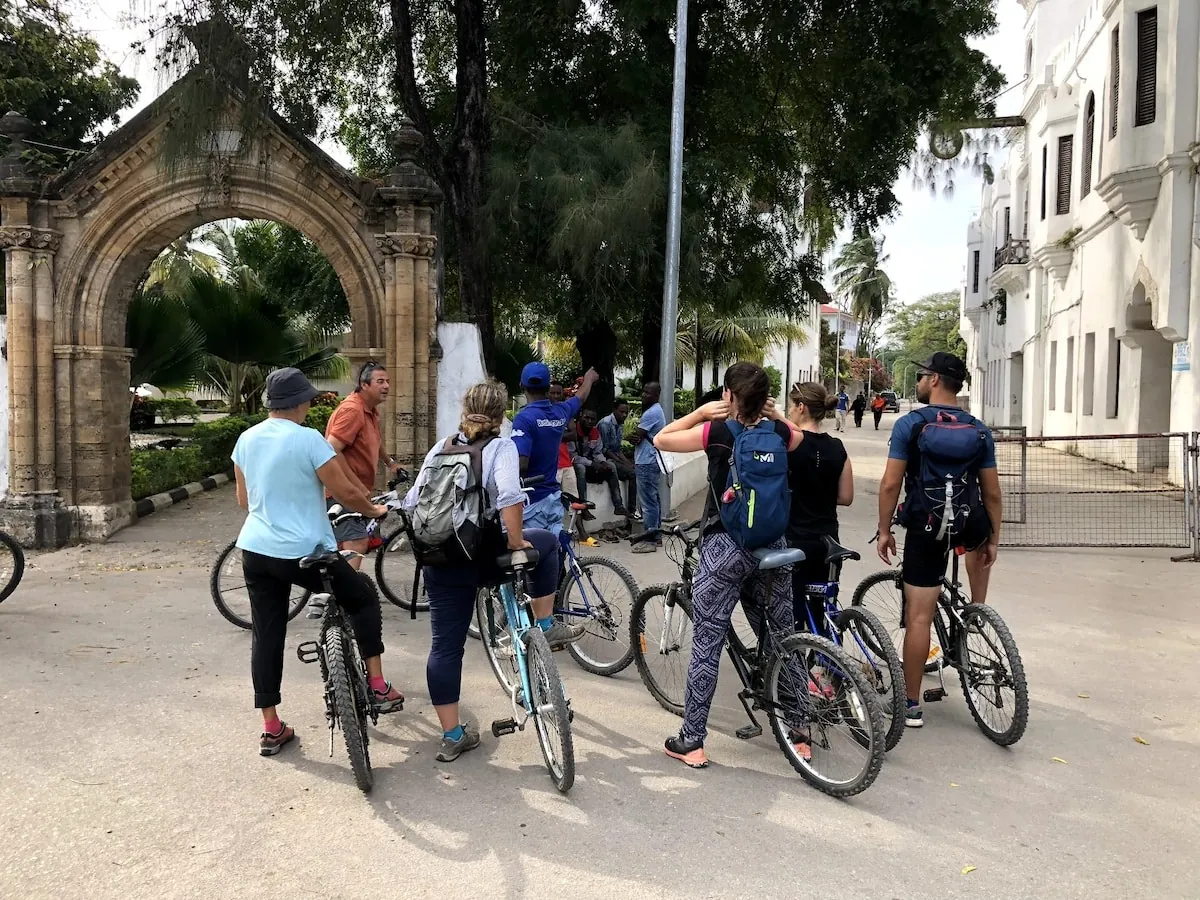
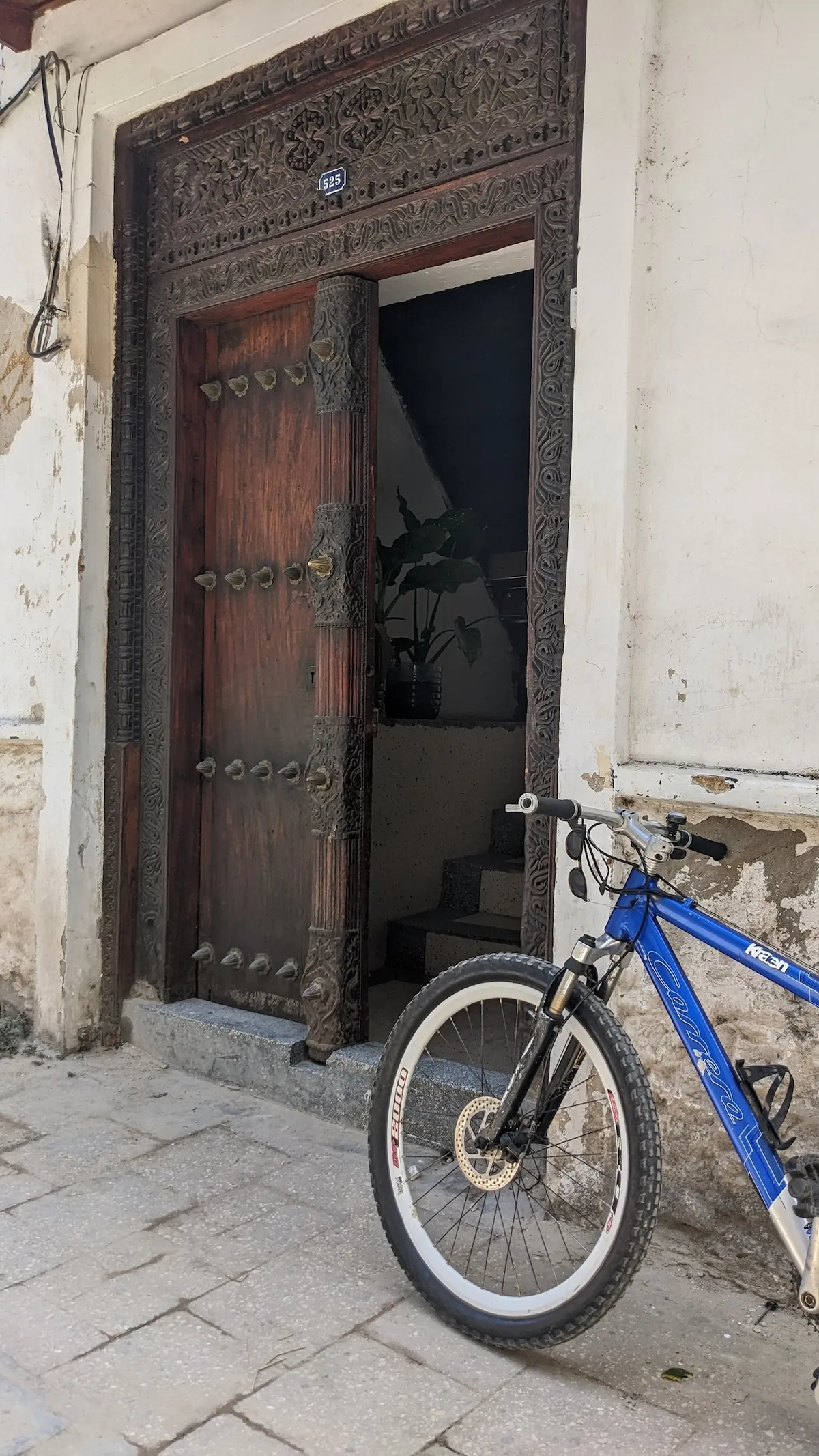
Happy Bikes Zanzibar runs guided rides from the Old Fort: a Stone Town tour through the old town and Ng'ambo, the town's other side, and a six-hour spice-farm ride out to Dole village, back through Masingini forest, where red colobus monkeys are sometimes seen.
On the east coast you can hire a bike in Paje and ride the flat lanes to Jambiani and Bwejuu — or along the hard sand at low tide.
Why it's in this guide
Slow, local and sociable — the best way to see Zanzibari life between the sights.
When to go
Early morning or late afternoon, out of the heat; avoid the heavy rains of April and May.
Tide: On the east coast you can ride the hard sand at low tide; don't try it on soft sand or as the tide comes in.
Who runs it and how to book
Book Happy Bikes through its website or Airbnb Experiences (the Stone Town tour is 18+, up to 10 riders). In Paje, bike hire is a walk from most hotels; ask your hotel for the nearest.
Safety: what to check
Ask for a helmet, check the brakes and tyres, carry water and lock the bike. Zanzibar drives on the left, and the main roads are shared with fast dala-dalas, motorbikes and trucks.
Worth knowing
- Cover shoulders and knees in Stone Town and the villages, and walk the bike through crowded market lanes.
- Scooter hire needs a temporary Zanzibar driving permit as well as a licence with a motorcycle category; police checkpoints are common, and it's riskier than a guided bike tour.
27. Jozani · Centre-south
Jozani forest and the mangrove boardwalk
Red colobus monkeys, mahogany and a six-hour hike into Zanzibar's only national park.

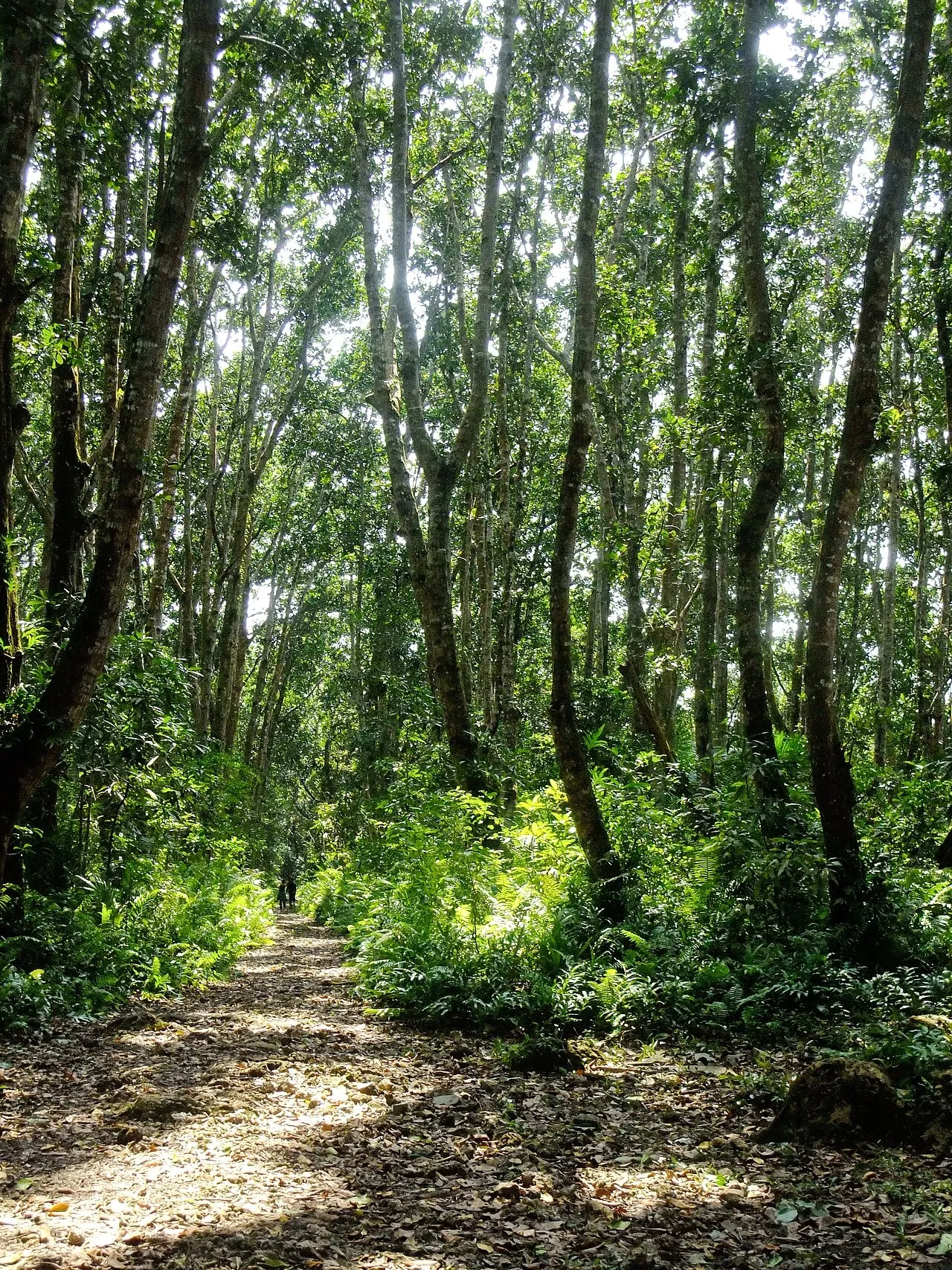
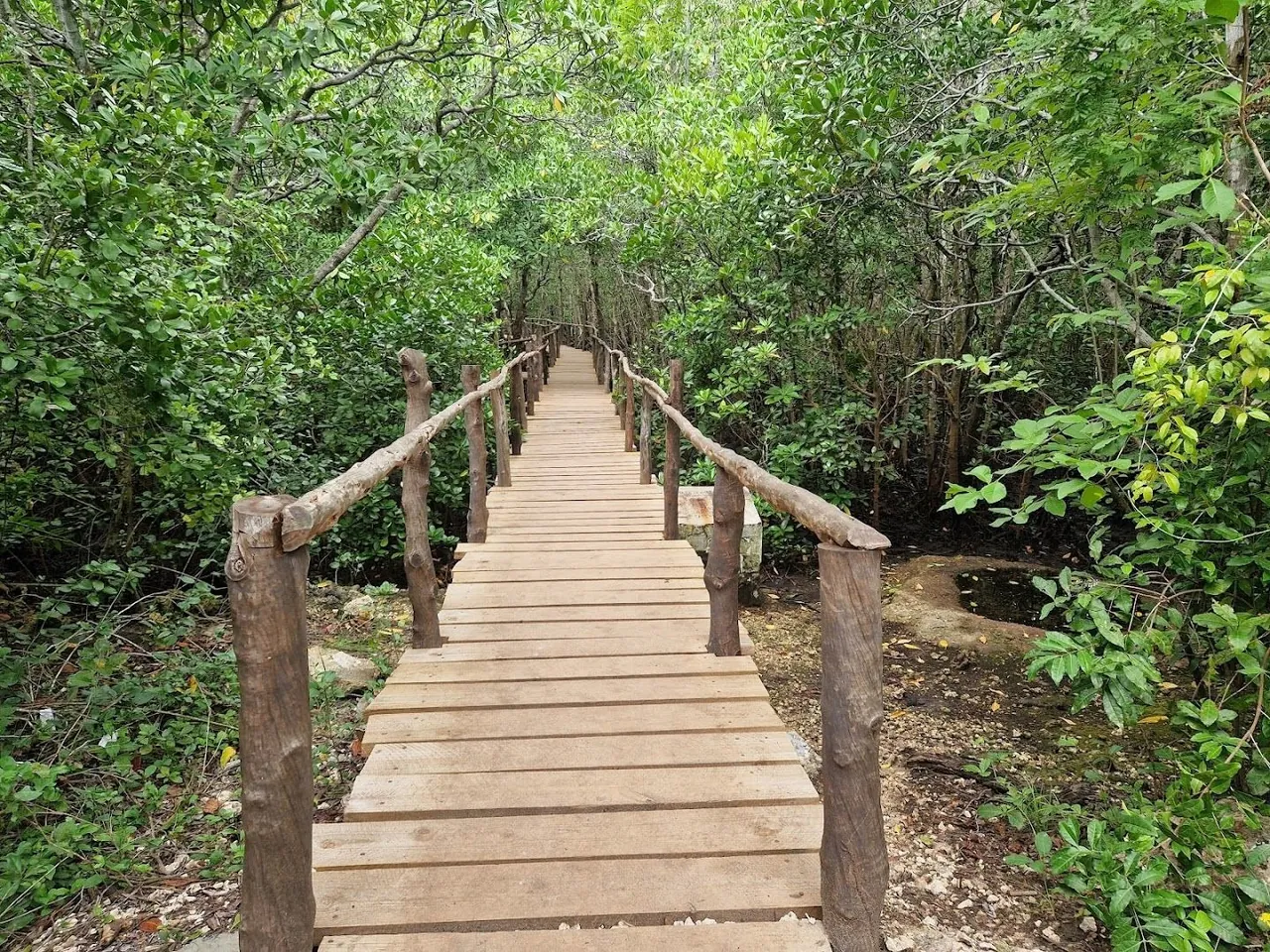
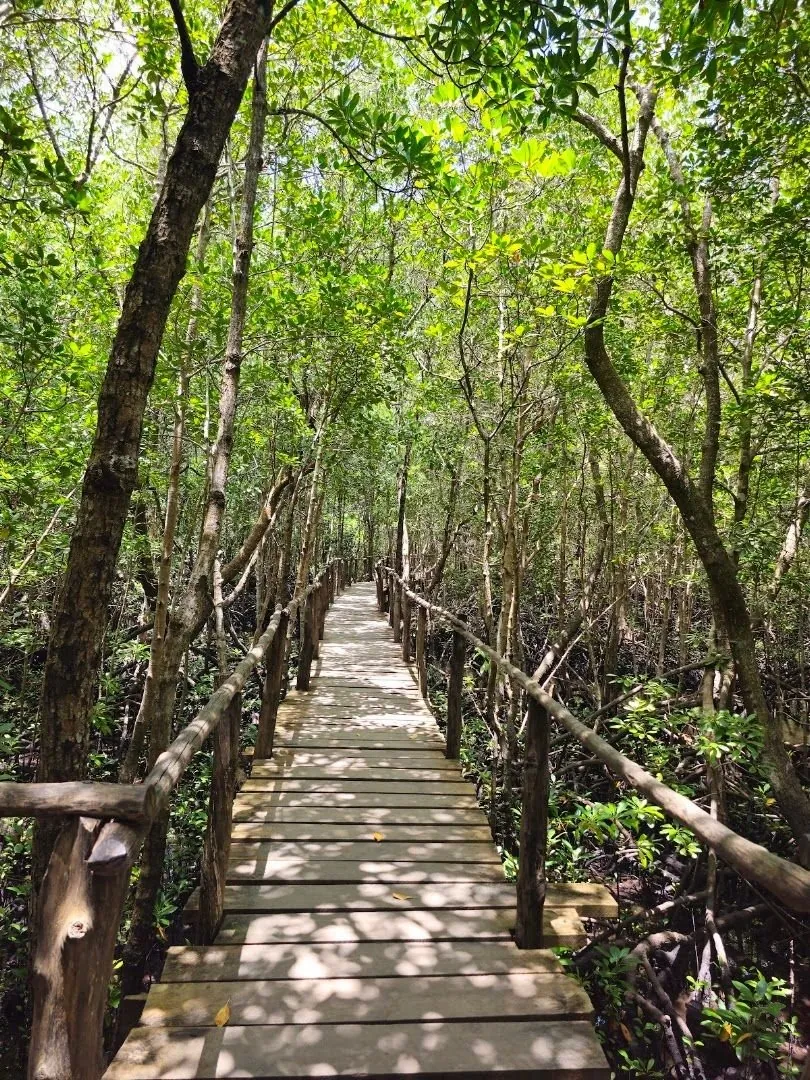
Tap any photo to see all 6.
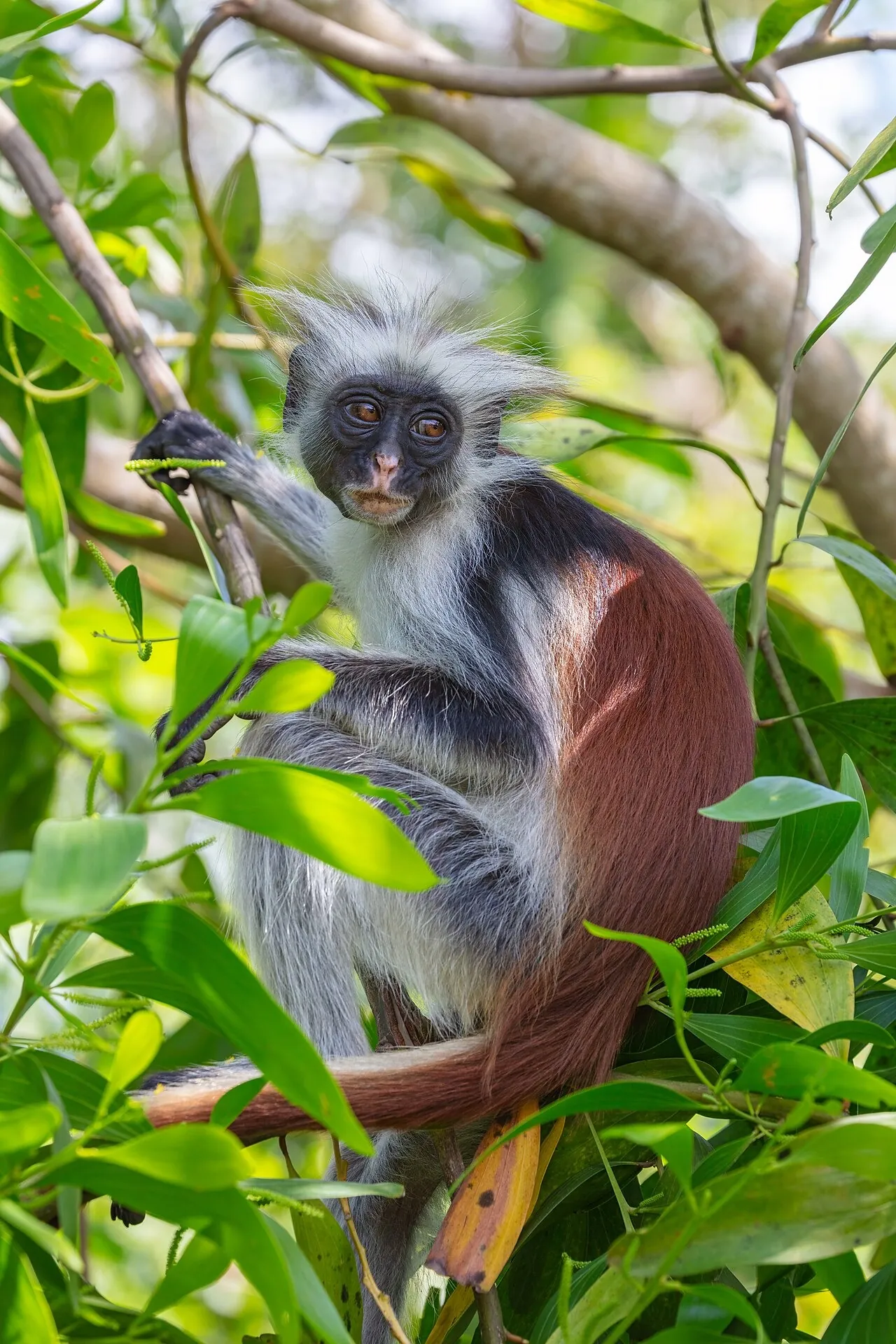
Jozani–Chwaka Bay National Park is Zanzibar's only national park and home to the endemic Zanzibar red colobus, which you'll meet up close. The usual visit is an hour's gentle walk, but the park also runs a two- to three-hour middle tour, an early-morning bird walk and a six- to seven-hour long hike deep into the forest, with Sykes's monkeys, chameleons, bushbabies and elephant shrews.
A short drive south, the Pete mangrove boardwalk crosses the swamp, with mudskippers and crabs at the right tide.
Why it's in this guide
The long hike is the island's best wildlife adventure — the real forest, well beyond the busy loop.
When to go
Early morning (from about 8:00), when the monkeys are active and before the tour groups. Open roughly 8:00–16:00. Trails are muddy in the rains and low areas can flood in April–May.
Who runs it and how to book
Go with an official park guide from the gate, or book the long, middle or bird tours ahead through jozaniforest.com. It's about 40 minutes from Stone Town and 20–25 minutes from Paje by taxi; the dala-dala to Makunduchi or Paje stops at the gate.
Safety: what to check
Stay about three metres from the monkeys and never feed or touch them — they're endangered and catch human illnesses. No flash. Wear closed shoes and bring insect repellent and water.
Worth knowing
- At midday the short loop can feel crowded and quick.
- Entry fees are quoted differently by different sources — check at the gate.
28. Jambiani · South-east coast
Swimming in Kuza Cave
A cool, clear pool in a limestone cave, down a jungle path.
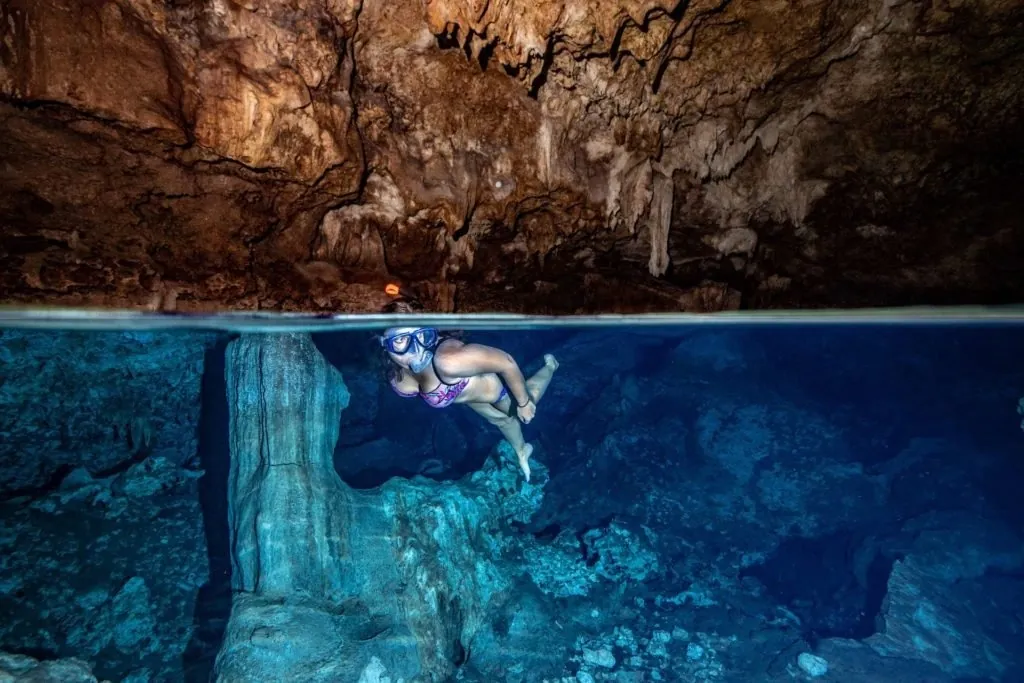
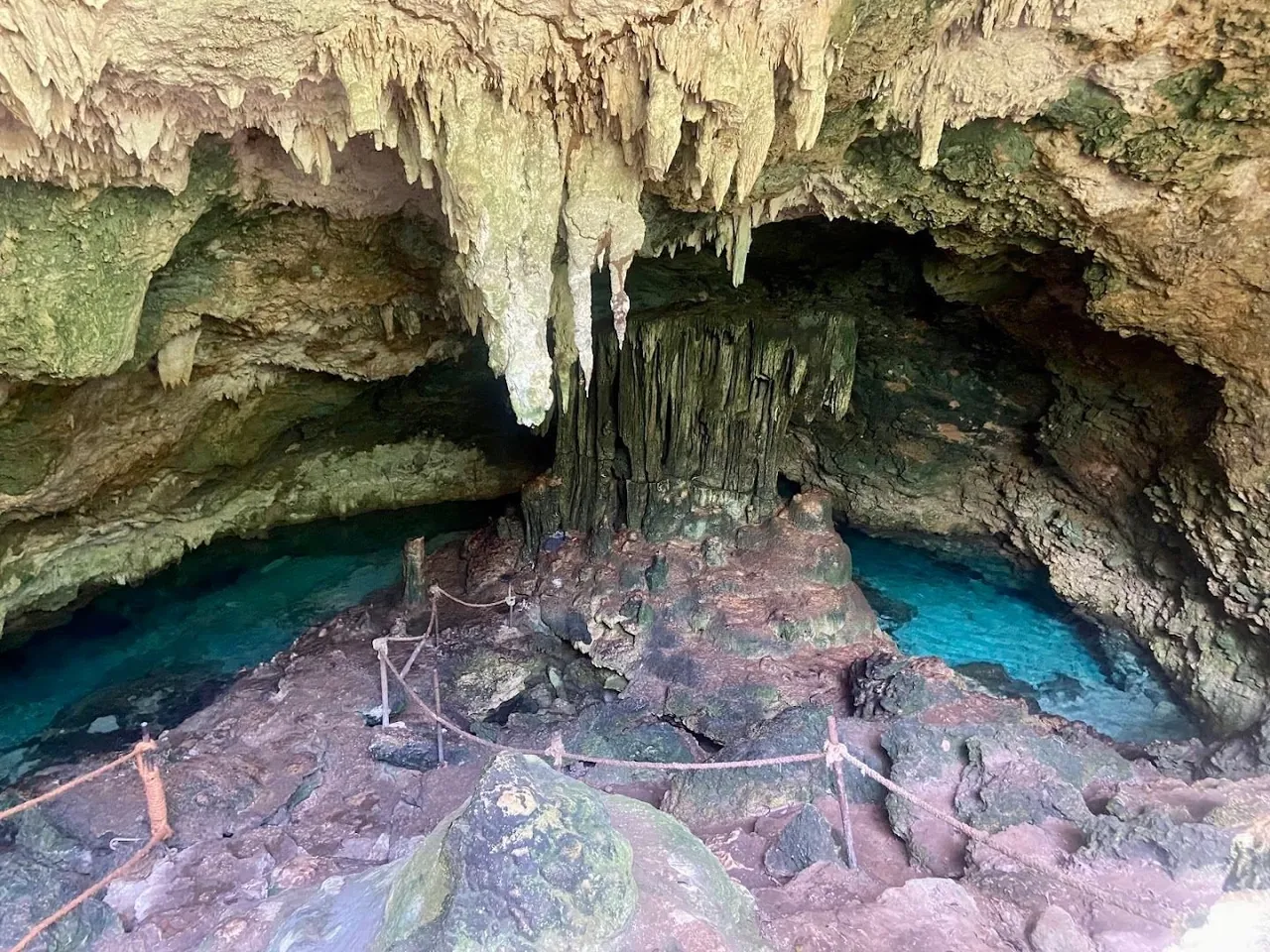
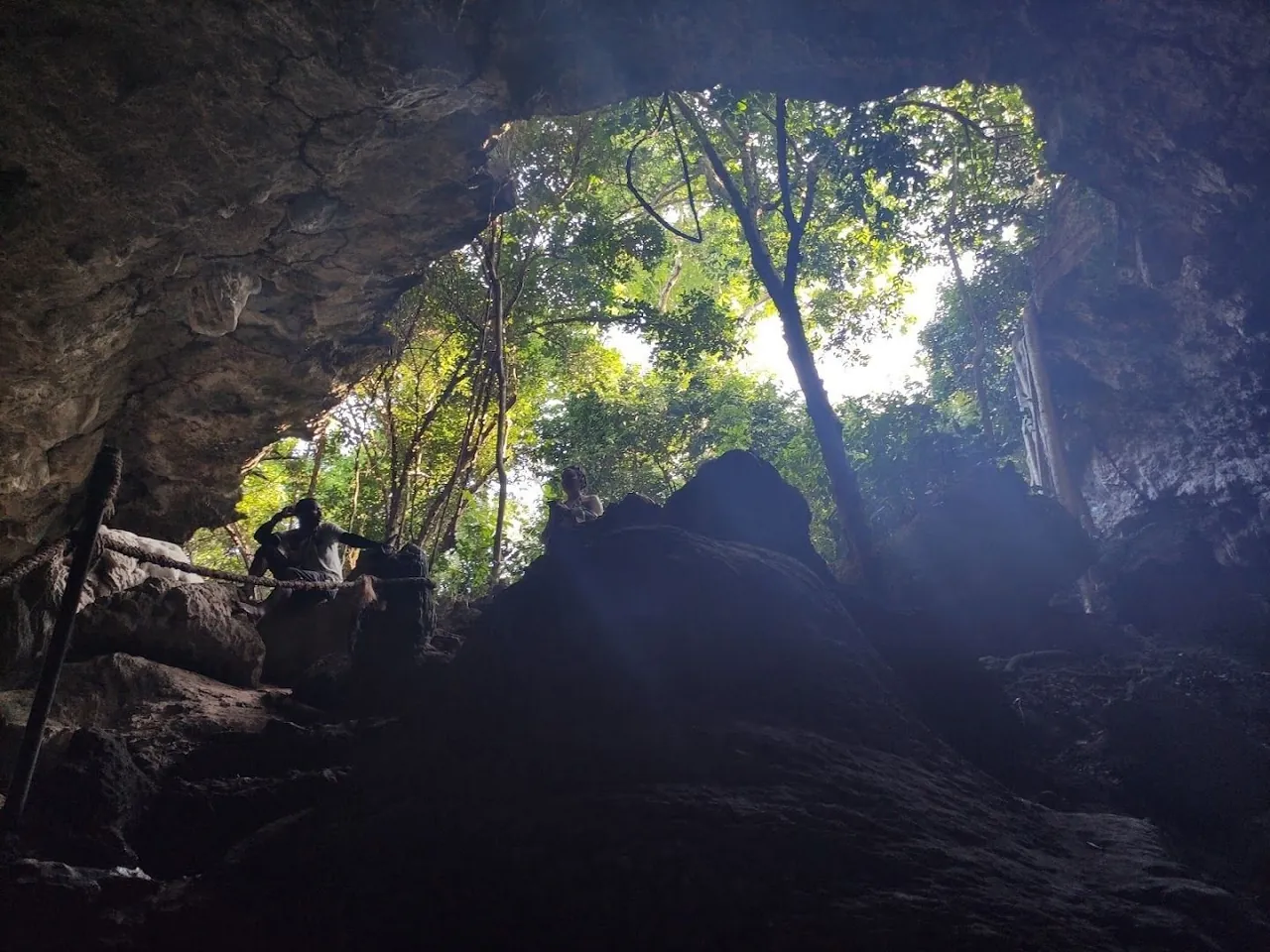
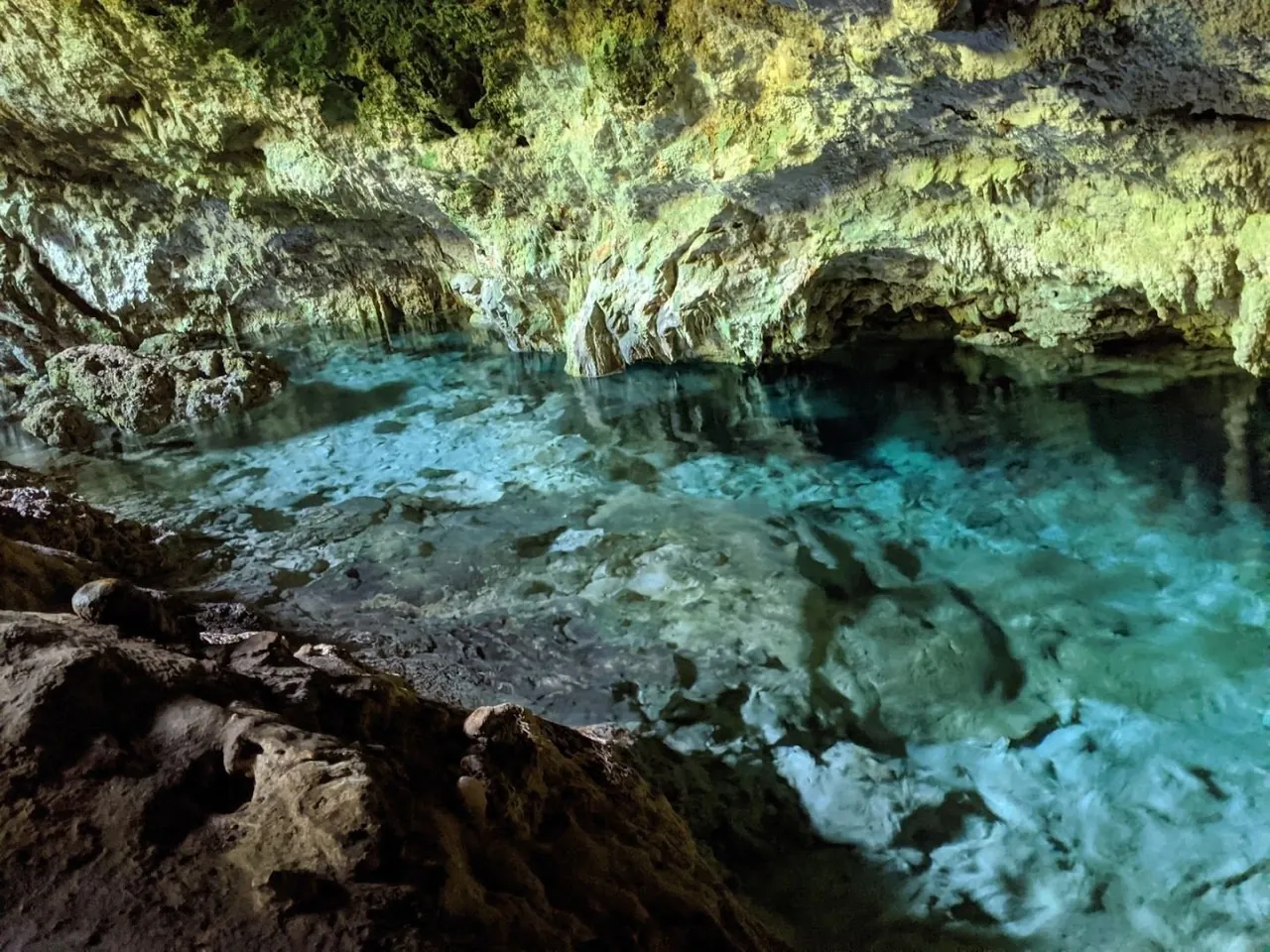
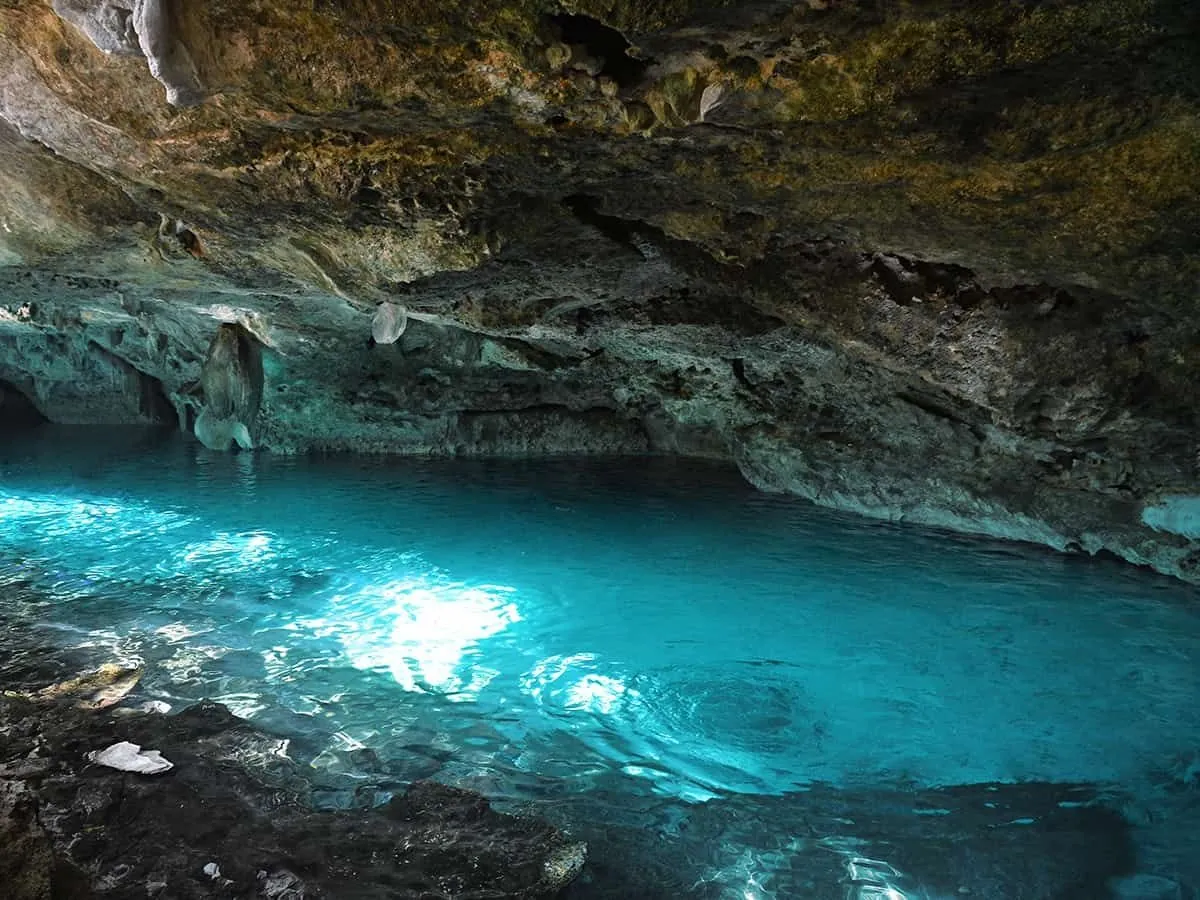
Down a five-minute jungle path and a flight of steep steps, Kuza Cave opens into a limestone sinkhole of stalactites over a pool of clear, cool water up to about three metres deep. You swim or snorkel among the submerged formations.
It's run as a community culture centre, with a Swahili house, an African history map and, if you stay longer, cooking, drumming and craft lessons.
Why it's in this guide
Swimming in a sacred cave pool is one of Zanzibar's strangest and most memorable dips.
When to go
Early morning or late afternoon, outside the day-tour rush. Open daily 8:30–18:30; at most 20 people are allowed in the cave at once.
Who runs it and how to book
No booking needed for the cave (30–60 minutes). Turn inland at the Kuza Cave sign in Jambiani — 5–10 minutes by tuk-tuk from Jambiani or Paje.
Safety: what to check
Bring water shoes, a mask and a towel (they can also be hired) and an underwater torch if you have one. The steps are steep and the rocks slippery and sharp. Rinse off sunscreen before you swim.
Worth knowing
- Non-swimmers shouldn't go in the water, and children need close supervision near the drop-offs.
- Not wheelchair-accessible.
- Smaller and busier than the photos suggest; tiny shrimp nibble. The cave is considered sacred — dress modestly on the way in.
29. Mangapwani · North-west coast
Mangapwani coral cavern and slave chamber
A scramble into a dark coral cavern — and a sobering memorial to the slave trade.
Tap any photo to see all 6.
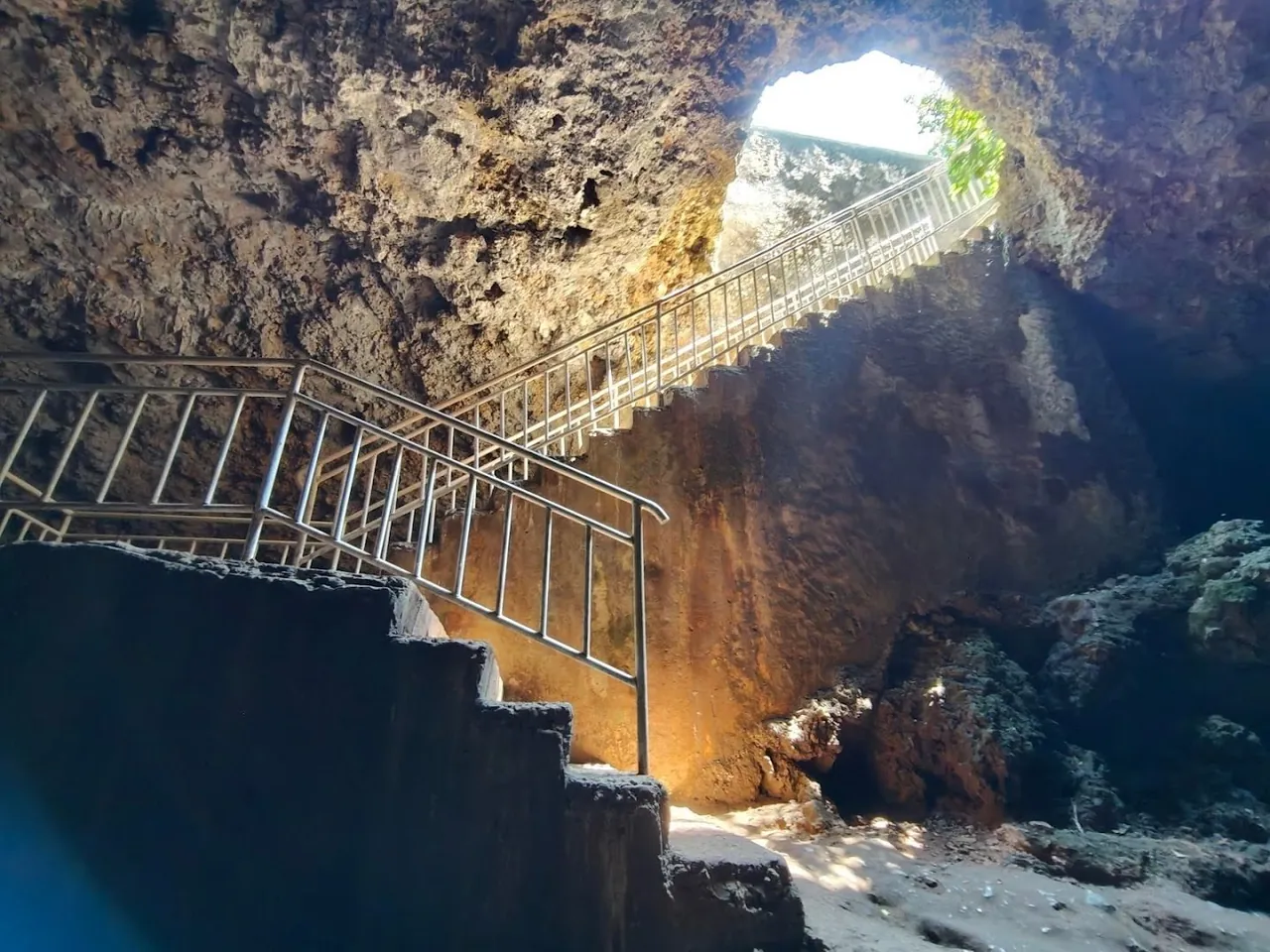
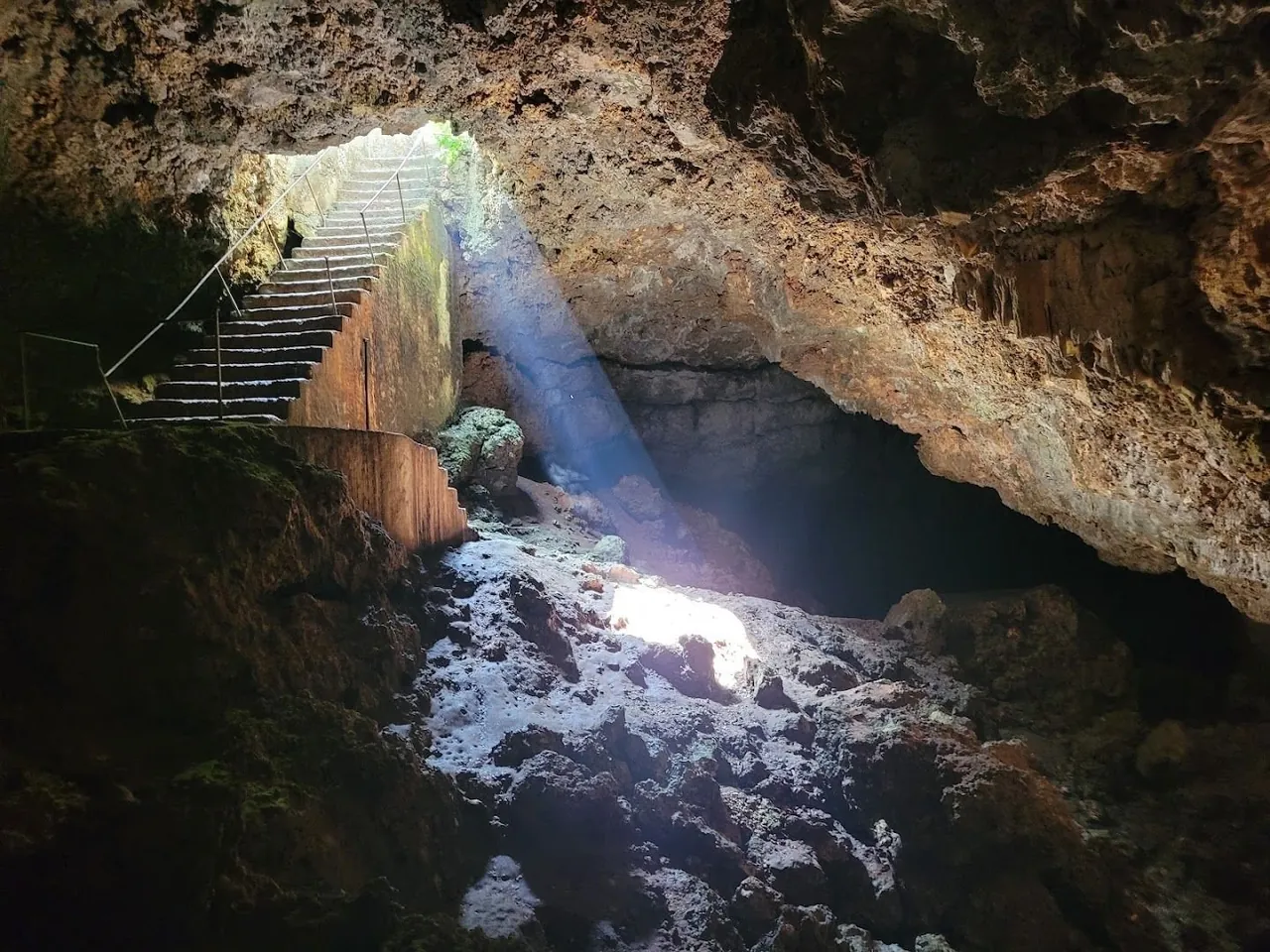
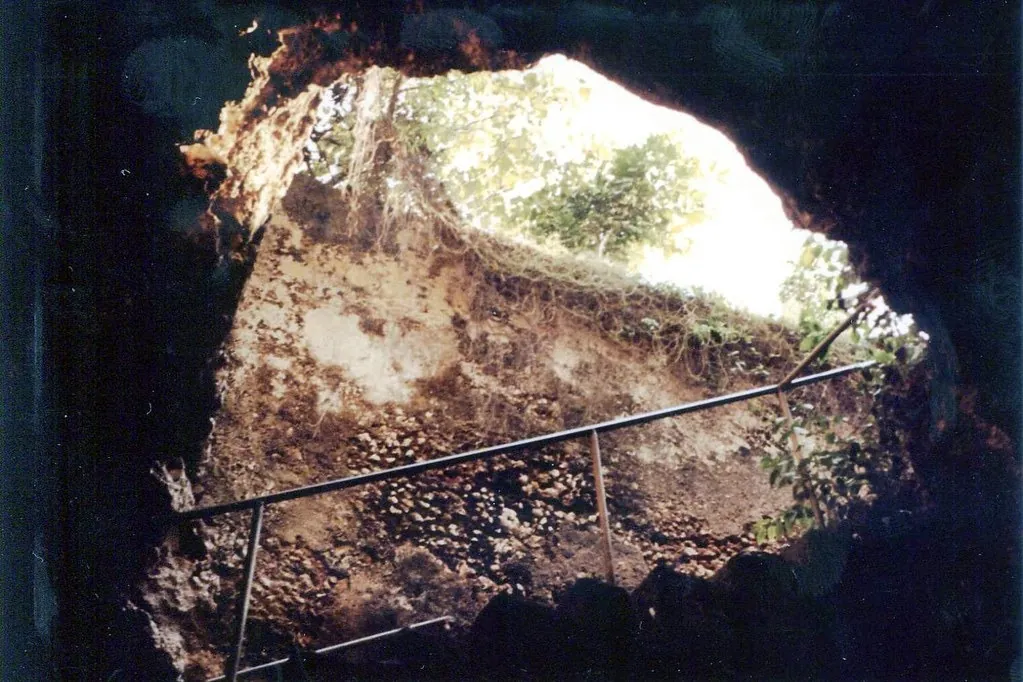
North of Stone Town, stone steps lead down into Mangapwani's coral cavern, a big dark chamber lit by shafts of daylight. Local guides lead you along slippery, scrambling routes with a few squeezes to a freshwater pool at the bottom.
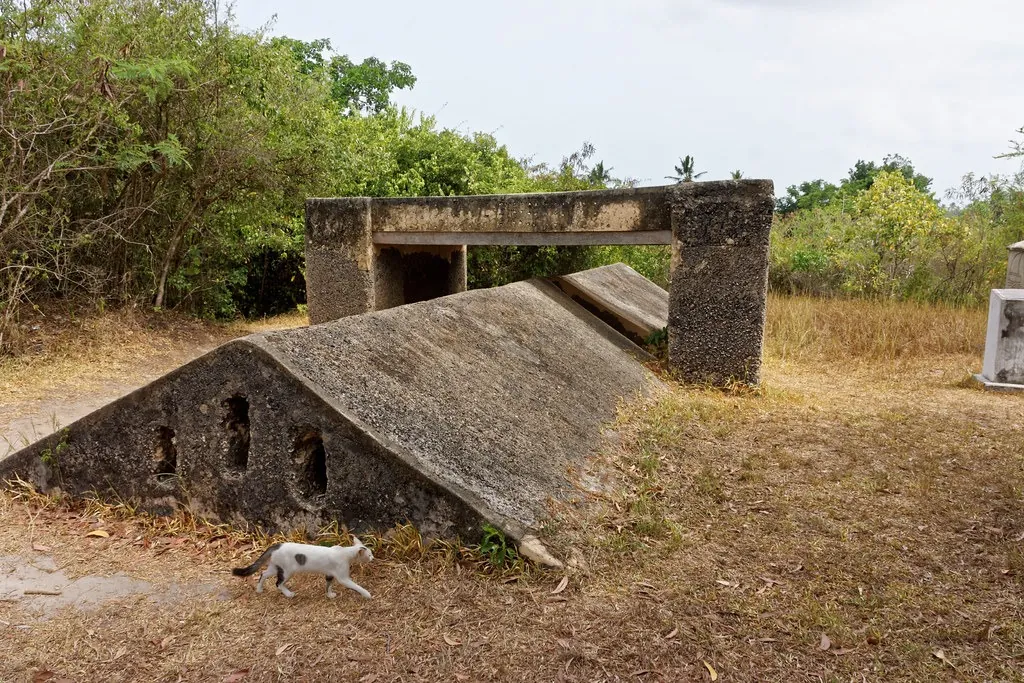
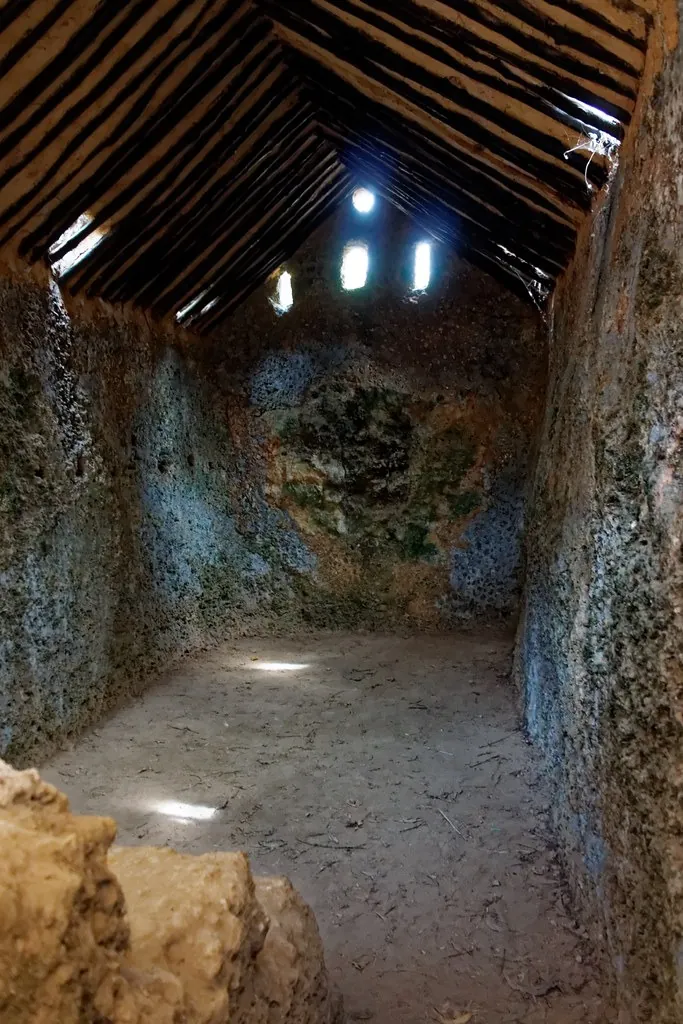
A few kilometres up the coast, the slave chamber is a cell cut into the coral rock, reportedly built around 1880 to hide enslaved people after the trade was banned. It's a short visit, beside a modern memorial.
Why it's in this guide
Proper caving, close to Stone Town — and history that should be seen.
When to go
All year. Combine the chamber with low tide at Mangapwani beach, where its passage meets the shore.
Tide: At low tide you can follow the slave chamber's passage down to the beach.
Who runs it and how to book
Take a taxi from Stone Town (30–40 minutes) or join a north-west day tour; local guides wait at the cavern. Expect a small cash entry and a tip for the guide.
Safety: what to check
Bring a head torch — there's no electric light — and non-slip shoes. Go with a guide inside the cavern, and expect heat and humidity underground.
Worth knowing
- This is a site of the slave trade: treat it as a memorial, not a playground, and keep selfies sober.
- Not suitable for limited mobility; facilities are minimal.
- Historians disagree about how the cavern itself was used.
30. Masingini · Inland, near Stone Town
Zipline over Masingini forest
About a kilometre on a wire over the treetops, twenty minutes from Stone Town.
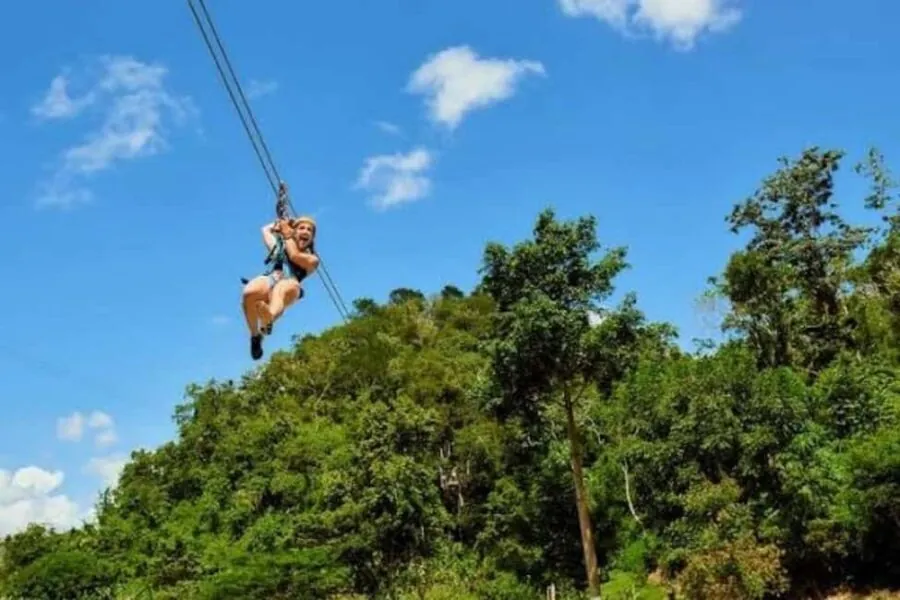

In the hills east of Stone Town, the Masingini forest reserve has what operators sell as Zanzibar's longest zipline — a single line of about a kilometre over the canopy. You walk back up through the forest with a guide, sometimes past red colobus monkeys.
It's sold by tour companies rather than direct, often with transfers and other stops; we couldn't confirm who owns and runs the line itself.
Why it's in this guide
The island's only zipline, and a rare look at the forest above Stone Town.
When to go
The dry months (June–October and December–February).
Who runs it and how to book
Book through a tour company (several sell it on GetYourGuide, Viator and Expedia), usually with hotel transfer; the meeting point is the Masingini forest office. Some listings charge the zipline fee separately on site.
Safety: what to check
Ask who maintains the cable and brakes and when it was last inspected, what the maximum weight is, and check your helmet and harness; a guide should clip you in. Confirm the line is running on the day — one reviewer found the return cable car out of action.
Worth knowing
- The lowest-confidence entry in this guide: there's no official operator website, and reseller details contradict each other.
- Minimum age is 11 or 12 depending on the listing; not for pregnancy, back problems or a fear of heights.
- The walk back up needs moderate fitness.
Every activity in our directory
All the activities and operators listed in the Mzungu Zanzibar directory — with members' reviews, opening hours and maps. The list updates as new ones are added.
- African QueenKendwa 5.0 (1)
- Bike tours from Stone Town and bike hire in PajeStone TownIn this guide

- Catamaran cruises with Zanzibar WatersportsKendwaIn this guide

- Deep-sea fishing from NungwiNungwiIn this guide

- Dhow sailing from KendwaKendwaIn this guide

- Diving the north coast and Leven BankKendwaIn this guide

- Dolphins at KizimkaziKizimkaziIn this guide

- Happy FarmKinyasini

- Jozani forest and the mangrove boardwalkJozaniIn this guide

- Kayaking the mangroves at MichamviMichamviIn this guide

- Kendwa Rocks Beach HotelKendwa 5.0 (1)

- Kitesurfing and windsurfing in KiwengwaKiwengwaIn this guide

- Kitesurfing in JambianiJambianiIn this guide

- Kitesurfing in PajePajeIn this guide

- Mangapwani coral cavern and slave chamberMangapwaniIn this guide

- Nungwi Mnarani AquariumNungwiIn this guide
- Parasailing, jet skis and waterskiing at KendwaKendwaIn this guide

- Quad biking through the villagesKiwengwaIn this guide

- Reef surfing off Dongwe and JambianiPajeIn this guide

- Safari Blue in Menai BayFumbaIn this guide

- Scenic helicopter flightsStone TownIn this guide

- Scuba diving at Mnemba AtollMatemweIn this guide

- Sea walking at NungwiNungwiIn this guide

- See Zanzibar ToursKendwa 5.0 (1)

- Skydive ZanzibarKendwaIn this guide

- Snorkelling at MnembaMatemweIn this guide

- Snorkelling Chumbe Island Coral ParkChumbe IslandIn this guide

- Snorkelling Tumbatu with Zanzibar WatersportsKendwaIn this guide

- Splash ParadiseKendwa

- Stand-up paddling in the Chukwani mangrovesChukwaniIn this guide

- Swimming in Kuza CaveJambianiIn this guide

- Tropicana Kendwa Beach HotelKendwa

- Wing foilingPajeIn this guide

- Wrecks and reefs off Stone TownStone TownIn this guide

- Zanzibar Horse ClubNungwiIn this guide

- Zanzibar WatersportsKendwa
- Zipline over Masingini forestMasinginiIn this guide
Before you go
A.Winds, seasons and tides
Two trade winds shape the year. The kaskazi blows from the north-east from about mid-December to early March — lighter, warm and good for learning to kite. The kusi blows from the south-east from about June to early October — stronger, cooler and windier in the afternoons. The long rains of April and May, and November, are the quiet months for wind sports; some operators close in April and May.
On the east coast the tide decides almost everything: the lagoons drain a long way at low tide and fill again a few hours later. Kite lessons, horse rides, kayak trips and reef surf all move with it, so expect start times to change from day to day.
B.Choosing a safe operator
Book with operators who have a proper base, a website or a well-reviewed listing, and the right certification: PADI or SSI for diving, IKO or VDWS for kitesurfing. Ask to see the instructor's card, what safety boat and radio they carry, and how many students each instructor takes.
Be wary of the cheapest deal on the beach. Sellers on the busier beaches offer trips at a discount; they may be fine, but you can't check them. Book through your hotel or directly with the operators in this guide.
C.Insurance and health
Check that your travel insurance covers the activity — many policies exclude skydiving, quad biking, motorised watersports or diving below a certain depth unless you add cover. Tell operators honestly about heart conditions, recent surgery, pregnancy and back injuries; several activities have strict limits.
Don't fly within 18–24 hours of scuba diving, and leave a day between diving and skydiving or a helicopter flight. Drink plenty of water and respect the sun: the equatorial UV is fierce, even on cloudy days.
D.Wildlife and the reef
Don't touch, chase or feed wildlife. At Kizimkazi and Mnemba, boats crowding and chasing dolphins is a real problem: choose operators who keep their distance and don't jump in on top of a pod. Never stand on coral, and choose operators who don't anchor on the reef or take starfish out of the water.
Marine parks and the national park charge conservation fees — pay them, they protect what you came to see. Rinse off sunscreen before swimming in caves, and use reef-safe sunscreen in the sea.
E.Villages and respect
Quad, bike and horse routes pass through villages and past mosques. Cover shoulders and knees when you leave the beach, slow right down, and ask before photographing people, especially children. Don't hand out sweets or money; buy from village shops instead.
Mangapwani's slave chamber is a memorial. Treat it with the respect you'd give any site where people suffered.
An adventure day
A few ways to fill a day in one part of the island.
The north tip
Fly, ride and sail, all from Kendwa and Nungwi.
Morning
Tandem skydiving over KendwaEarly slots often have the clearest skies.
Afternoon
Horse riding in Nungwi and KendwaA beach ride or a swim with the horses, depending on the tide.
Sunset
Dhow sailing from KendwaThe sunset dhow leaves Kendwa beach around 16:30.
Paje and Jambiani
A kite lesson, a cave swim and the forest.
Early morning
Jozani forest and the mangrove boardwalkThe red colobus are most active before the crowds.
Midday
Kitesurfing in PajeLessons are timed to the tide — book the slot ahead.
Late afternoon
Swimming in Kuza CaveA cool swim in the cave pool, after the day-tour rush.
From Stone Town
Under the water, through the mangroves and into a cavern.
Morning
Wrecks and reefs off Stone TownDive or snorkel the Great Northern wreck.
Afternoon
Mangapwani coral cavern and slave chamberBring a head torch; go with respect.
Sunset
Stand-up paddling in the Chukwani mangrovesPaddle the mangroves to the floating bar — timed to the tide.
Matemwe and Kiwengwa
Mnemba below the surface, then the quads and the kites.
Morning
Scuba diving at Mnemba AtollTwo dives, back by early afternoon.
Afternoon
Quad biking through the villagesThrough the villages from Kiwengwa — cover up.
Or instead
Kitesurfing and windsurfing in KiwengwaA taster lesson at the Duotone centre.
How this guide is made
This guide is written by the Mzungu Zanzibar editors. No operator paid to be included. Operators, seasons, limits and safety details were checked against each operator's own site, current listings and recent reviews on the date shown; anything we could not confirm is listed with that activity. Safety and animal-welfare claims are the operators' own and are reported as such. Prices and fees are never given because they change. The descriptions are not first-hand accounts.
This guide has 161 photographs. They come from the operators' own websites, from Google Maps contributors and from photographers on Flickr and Wikimedia Commons, each credited beneath the picture and linked to where it came from. Underwater shots we couldn't tie to the exact site are marked UNVERIFIED. They're shared here to celebrate these places. If one is yours and you'd like it removed or credited differently, we'll gladly do it — contact us. 23 captions begin “UNVERIFIED”: the photo is relevant, but we couldn't confirm it shows the exact spot.
