Mzungu Zanzibar guide
Postcards from Zanzibar: The Island's Picture-Perfect Places
Sandbanks and sunsets, carved doors and coral caves — the island's most beautiful places, and when to be there.
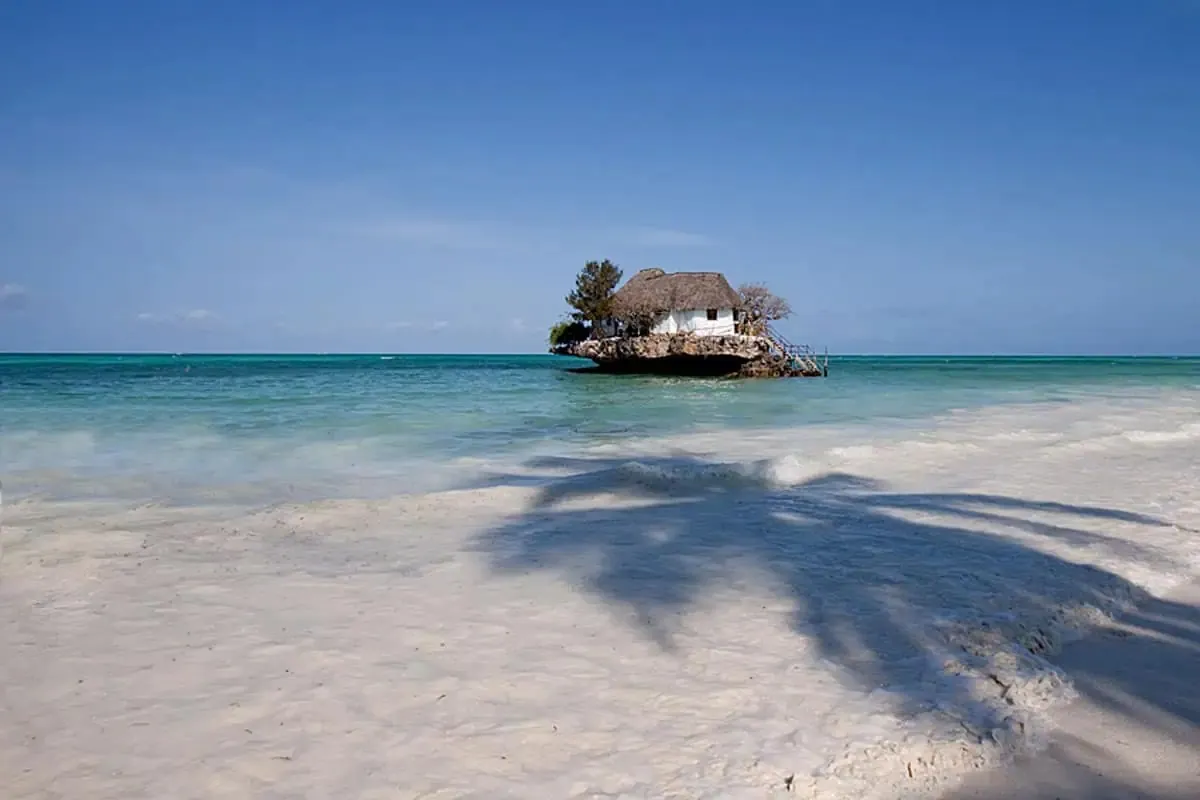
The view from Pingwe beach, with the tide in and the restaurant cut off from the shore. Photo: The Rock Restaurant Zanzibar, Shared with credit
Last reviewed by our editors on 22 October 2026
- Nakupenda sandbank
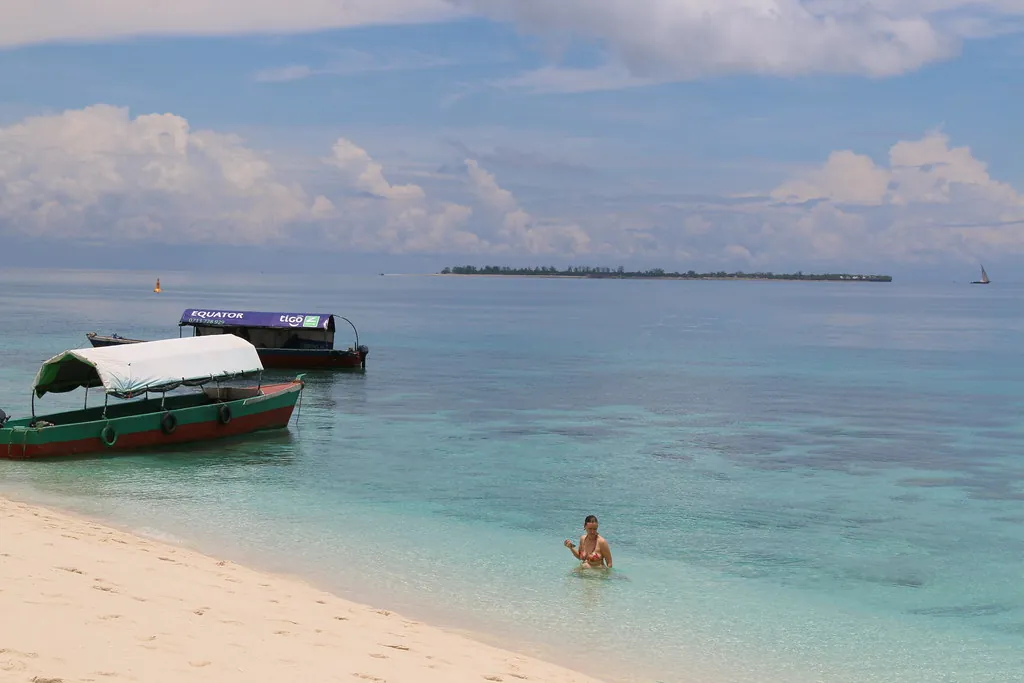
- Stone Town's alleys and carved doors
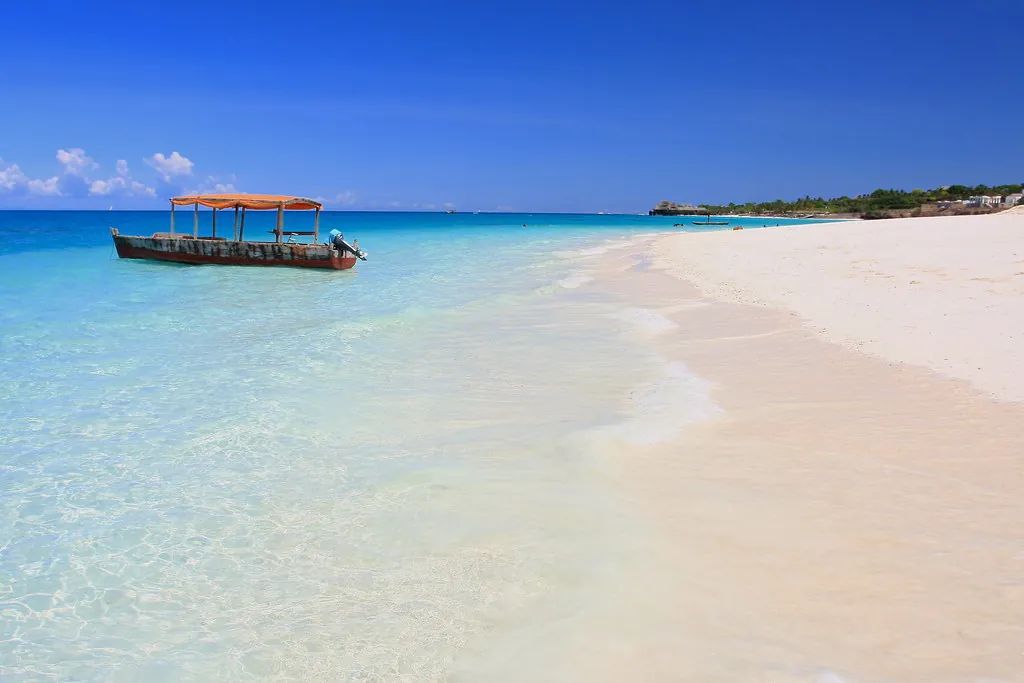
- Kendwa beach at sunset
- Jozani Chwaka Bay National Park
- Menai Bay and Kwale Island
- Kuza Cave
- Mnemba Atoll
- The Rock
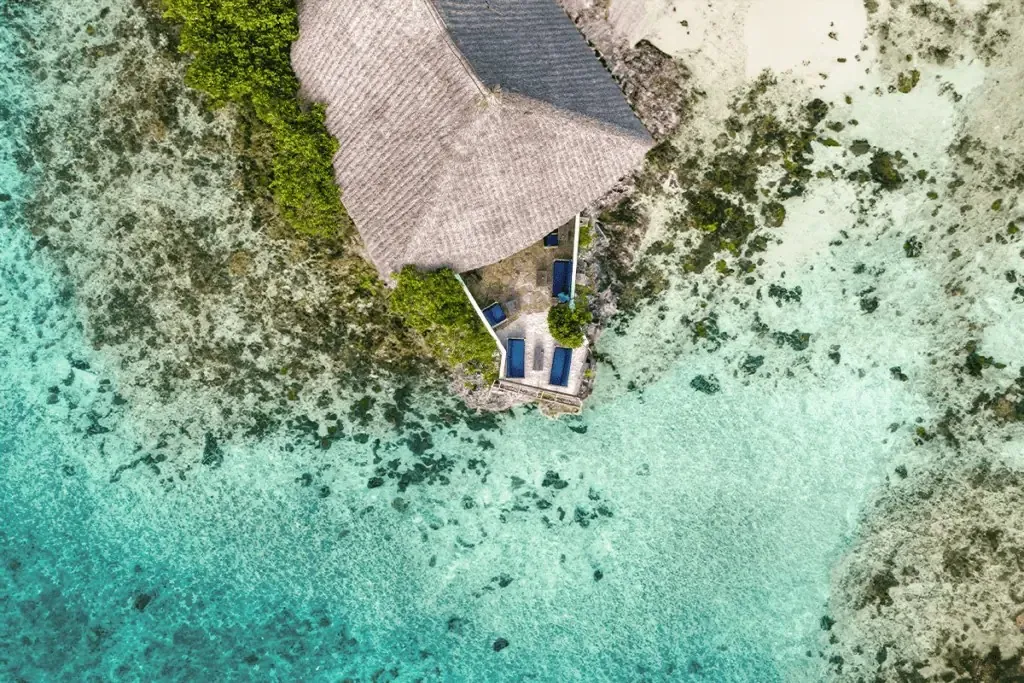
Zanzibar is one of the most photogenic places in the Indian Ocean — and much of its beauty depends on when you arrive.
The same lagoon can be a sheet of turquoise at high tide and a kilometre of sand, seagrass and seaweed farms six hours later. Sandbanks rise and vanish. The west coast gets the sunsets, the east coast the sunrises, and Stone Town's alleys glow for an hour before dusk.
This guide gathers the island's most picturesque places — beaches and sandbanks, reefs and islands, forests, caves and the old town — and tells you when to be there, how to get there and what to know before you go.
Join Mzungu Zanzibar to share your favourite spots and ask locals for advice. The guide itself is free to read.
How to read this guide
- Our picks, checked practicalities
- Why a place is here, and what you'll see, is the editors' judgement. Where it is, how to visit, and the tide and timing advice were checked against current sources on the date shown with each place. Nothing here claims we visited, and we never give prices or fees — they change; ask locally.
- Tides decide a lot
- Each place says whether the tide matters. If it does, check a tide table for your dates — the community has one — before you plan the day.
About the photographs. They come from photographers on Wikimedia Commons and Flickr and from venues' own websites, each credited beneath the picture and linked to where it came from. They're shared here to celebrate these places. If one is yours and you'd like it removed or credited differently, we'll gladly do it — contact Mzungu Zanzibar.
Find your spot
Groupings are our suggestions to help you choose, not a ranking — the places are listed roughly by area, from Stone Town around the island.
Sunsets over the sea
West-facing spots where the sun goes down into the water.
- Forodhani Gardens at sunset · Stone Town
- Stone Town's rooftops at sunset · Stone Town
- Kendwa beach at sunset · Kendwa
- Nungwi's dhow yard and lighthouse · Nungwi
- Michamvi Kae · Michamvi
- Mangapwani caves and beach · Mangapwani
Sunrise
East-coast beaches where the day starts over the reef.
- Matemwe at sunrise · Matemwe
- Pongwe and its island · Pongwe
- Paje lagoon · Paje
- Jambiani at low tide · Jambiani
- Mtende beach · Mtende
Turquoise water and sandbanks
The colours that made Zanzibar famous.
- Nakupenda sandbank · Off Stone Town
- Mnemba Atoll · Off Matemwe
- Menai Bay and Kwale Island · Fumba and Kizimkazi
- Paje lagoon · Paje
- The Rock · Michamvi Pingwe
History and architecture
Carved doors, palaces and places of remembrance.
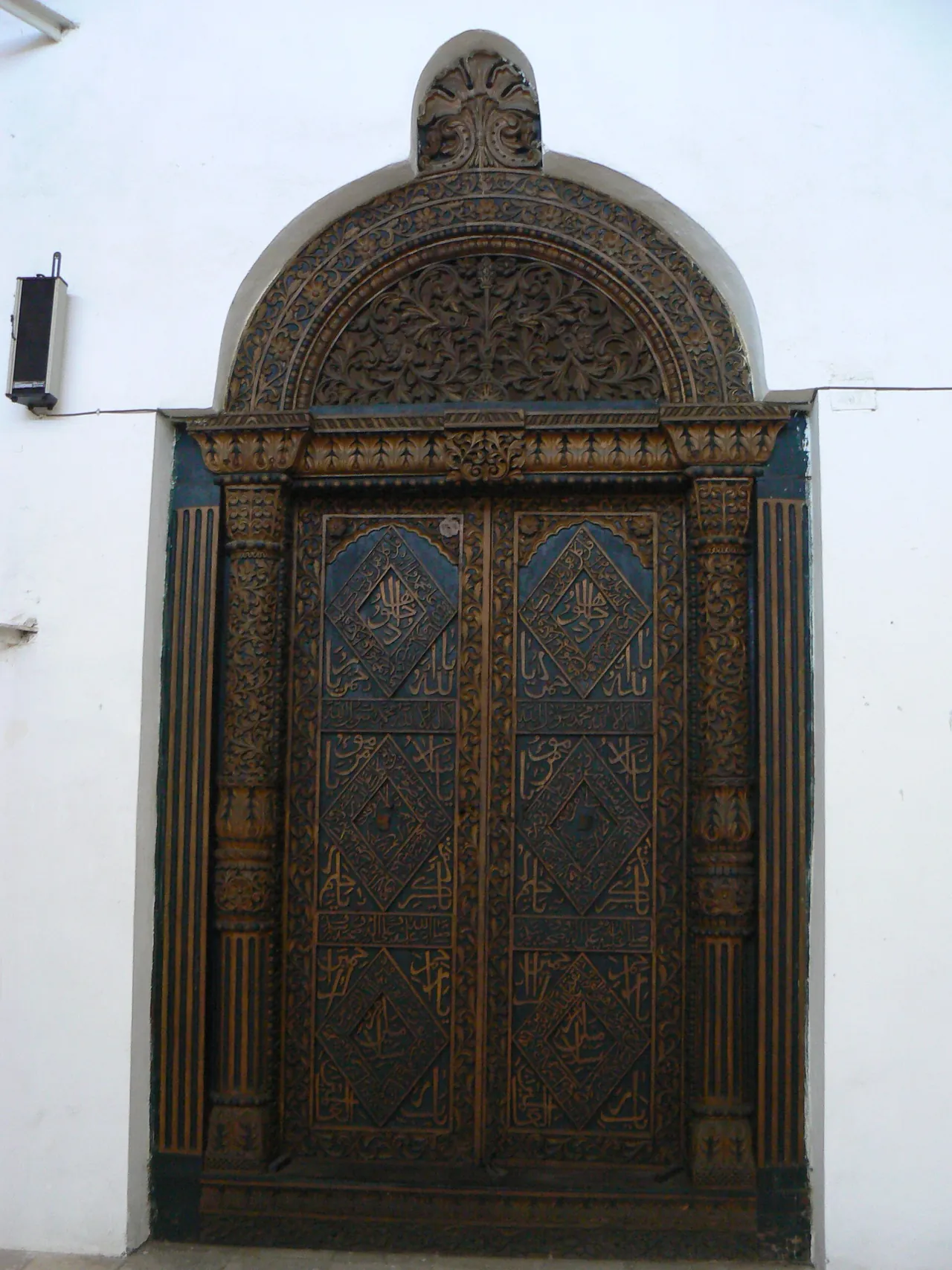
- Stone Town's alleys and carved doors · Stone Town
- Maruhubi Palace ruins · North of Stone Town
- Mangapwani caves and beach · Mangapwani
- Prison Island (Changuu) · Off Stone Town
Wildlife and nature
Monkeys, tortoises, turtles and reefs.
- Jozani Chwaka Bay National Park · Jozani
- Prison Island (Changuu) · Off Stone Town
- Chumbe Island Coral Park · Off Mbweni
- Mnemba Atoll · Off Matemwe
Best at low tide
When the east-coast sea goes out, these come into their own.
- Jambiani at low tide · Jambiani
- Nakupenda sandbank · Off Stone Town
- Kuza Cave · Jambiani
- Matemwe at sunrise · Matemwe
Good with children
Easy trips with something to see and do.
- Prison Island (Changuu) · Off Stone Town
- Jozani Chwaka Bay National Park · Jozani
- Kendwa beach at sunset · Kendwa
- Forodhani Gardens at sunset · Stone Town
The places
Twenty-one of the island's most beautiful spots, from Stone Town round the north and down the east coast to the south. Tap any photo to see them all.
- 1. Stone Town's alleys and carved doors · Old town
- 2. Forodhani Gardens at sunset · Viewpoint
- 3. Stone Town's rooftops at sunset · Viewpoint
- 4. Prison Island (Changuu) · Island
- 5. Nakupenda sandbank · Sandbank
- 6. Chumbe Island Coral Park · Reef and sea
- 7. Maruhubi Palace ruins · Historic site
- 8. Mangapwani caves and beach · Cave
- 9. Nungwi's dhow yard and lighthouse · Beach
- 10. Kendwa beach at sunset · Beach
- 11. Mnemba Atoll · Reef and sea
- 12. Matemwe at sunrise · Beach
- 13. Pongwe and its island · Beach
- 14. Jozani Chwaka Bay National Park · Nature
- 15. Michamvi Kae · Beach
- 16. The Rock · Viewpoint
- 17. Paje lagoon · Beach
- 18. Jambiani at low tide · Beach
- 19. Kuza Cave · Cave
- 20. Mtende beach · Beach
- 21. Menai Bay and Kwale Island · Reef and sea
1. Stone Town · West coast
Stone Town's alleys and carved doors
A UNESCO-listed maze of coral-stone houses, carved doors and seafront palaces.
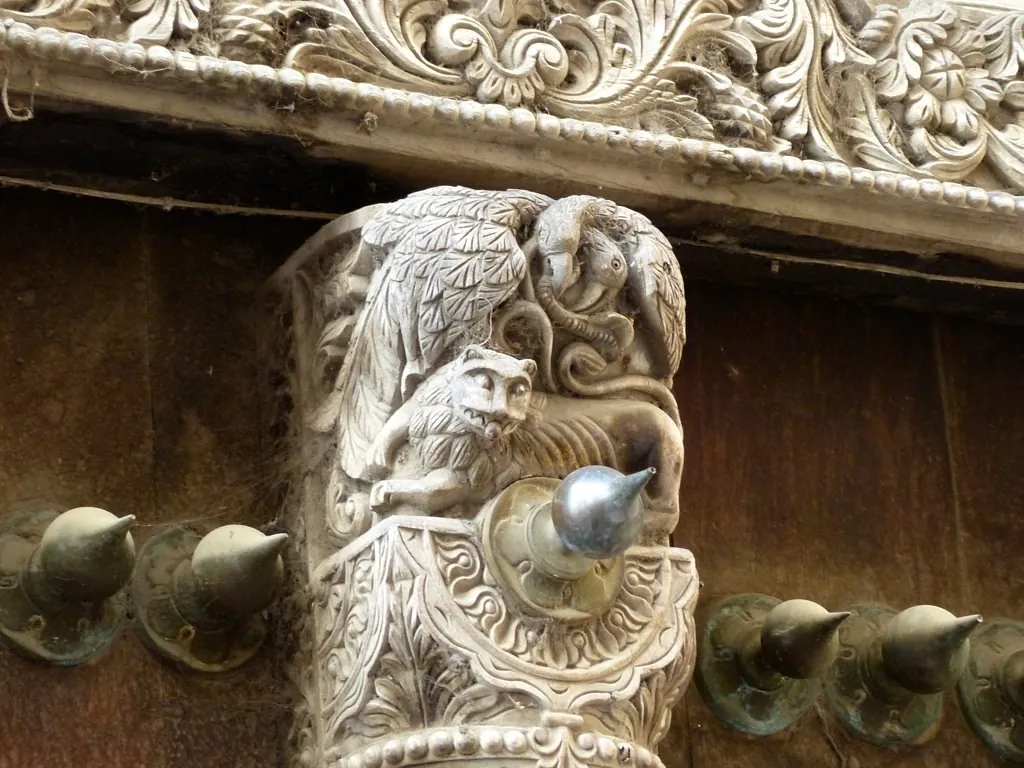
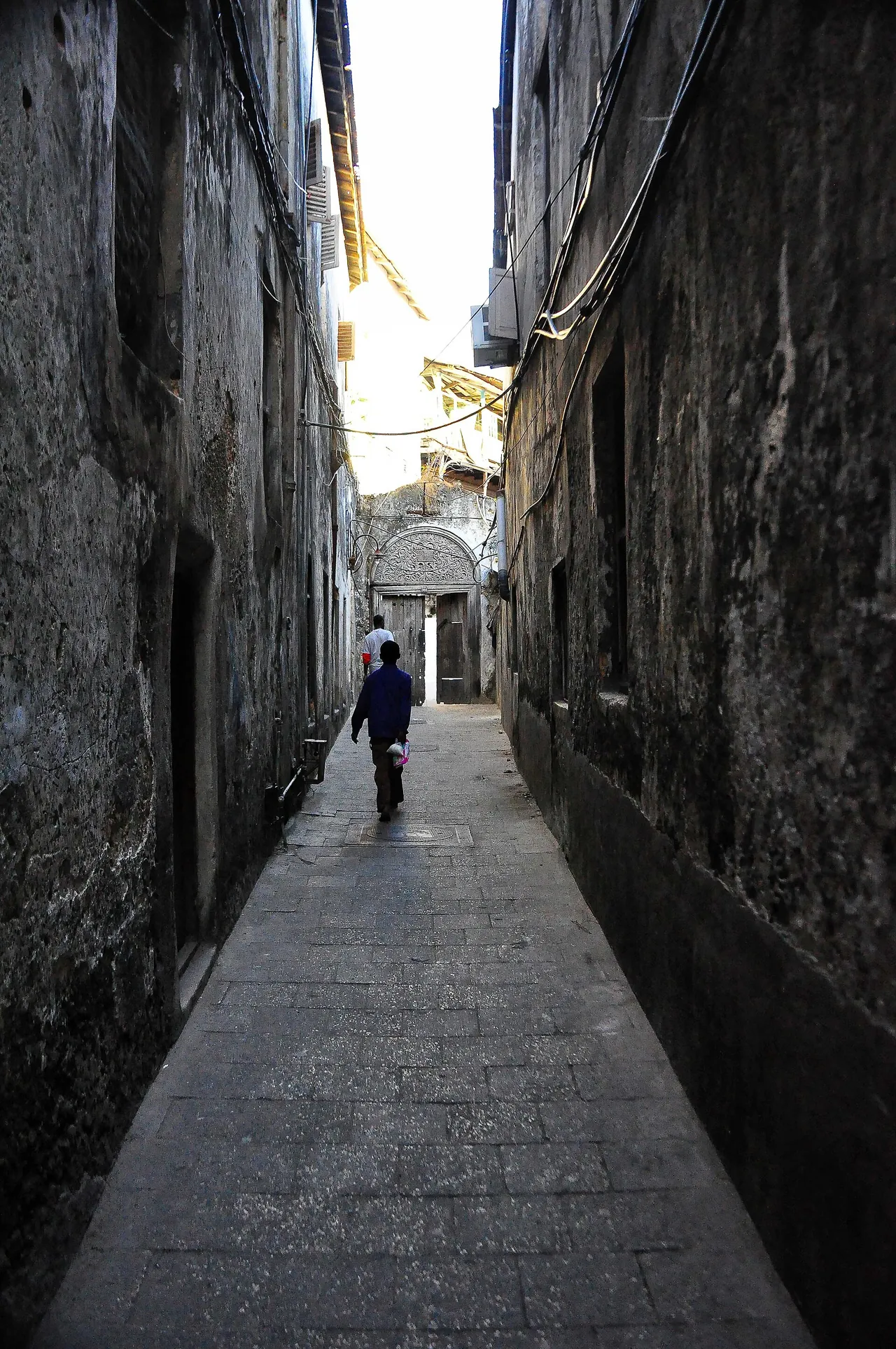
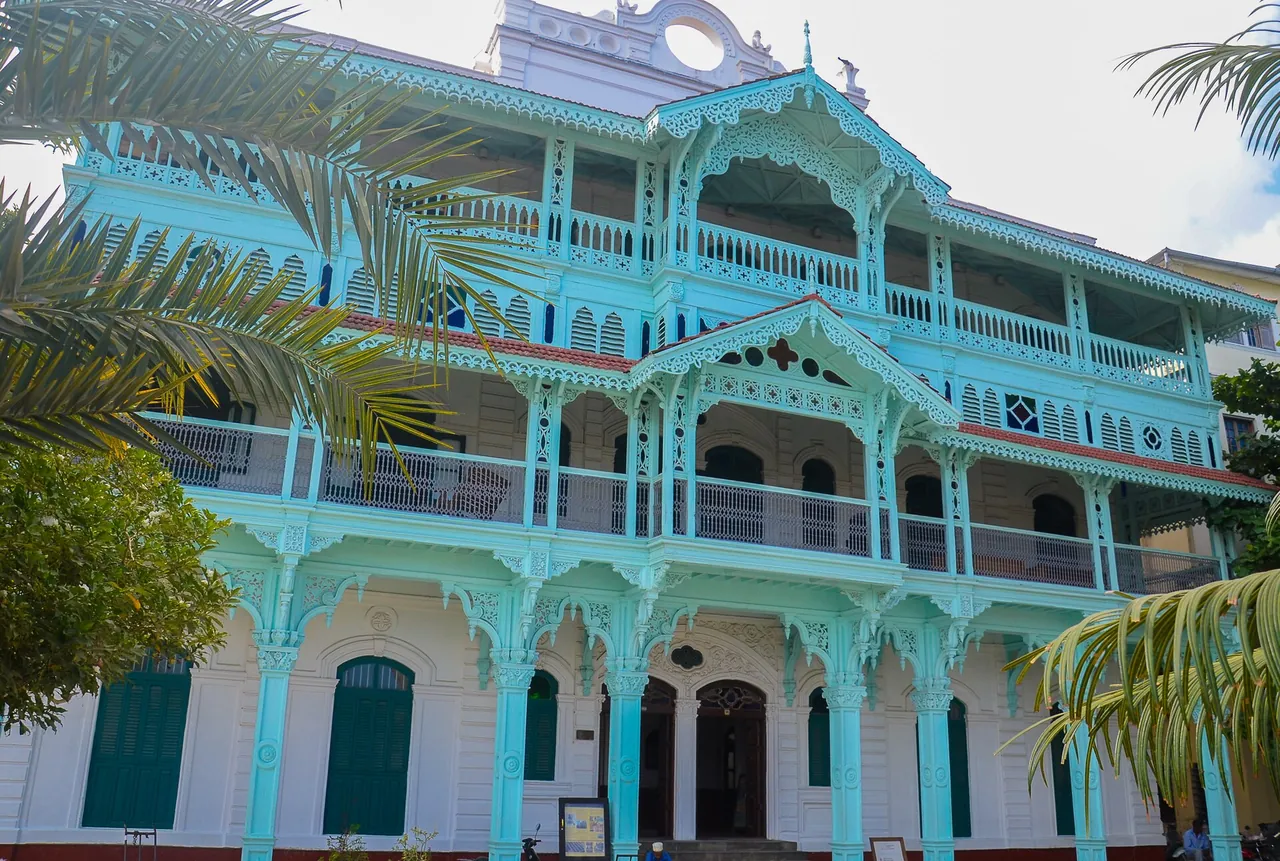
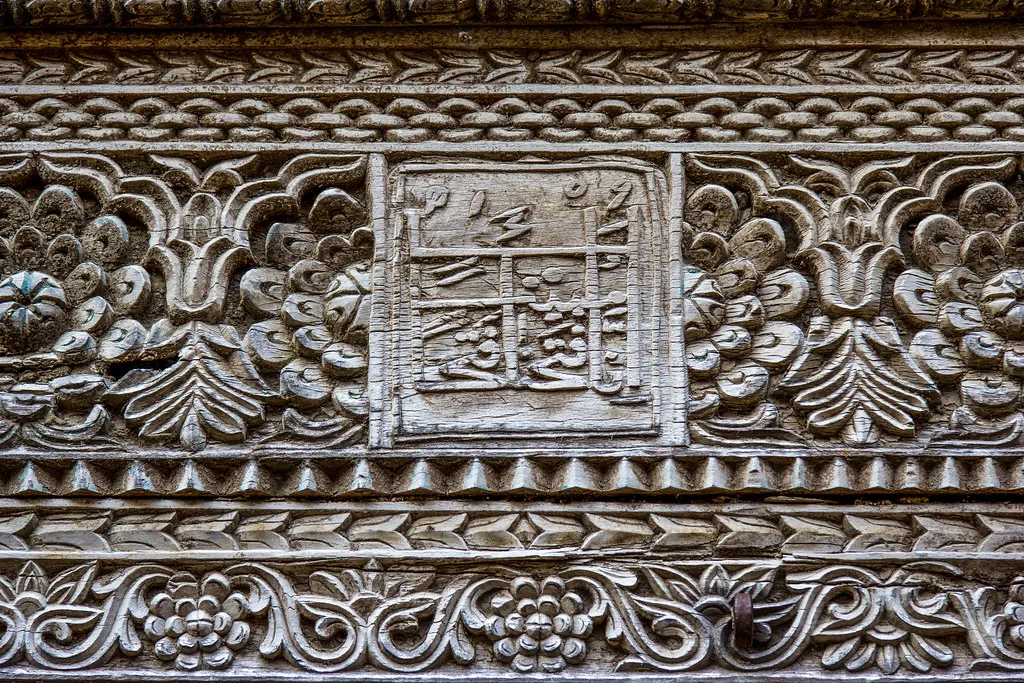
Tap any photo to see all 8.
Stone Town, the old heart of Zanzibar City, has been a UNESCO World Heritage Site since 2000. Its narrow, shaded lanes are lined with coral-stone merchant houses, mosques, temples, churches and bazaars built from Swahili, Omani, Indian and European traditions — with stone benches (barazas) outside the houses and balconies leaning overhead.
Its famous carved doors, mostly of teak and some studded with brass, are photographed on every walk. Along the seafront stand the Old Fort, the Palace Museum and the House of Wonders, and near the port the restored Old Dispensary with its wooden balconies and stained glass.
Why it's in this guide
Every turn frames another doorway, balcony or slice of light — the most photogenic old town in East Africa.
When to go
The first two hours after sunrise bring soft light and empty lanes as shopkeepers open their doors — the best time for the doors. Late afternoon turns golden before you head to Forodhani for sunset. Midday is hot and busy.
How to visit
On foot. A licensed local guide, booked through your hotel, makes sense of the maze and explains the doors, the former slave market at the Anglican Cathedral and the seafront monuments. Some sites charge entry.
Photography tips
Doors and buildings are fine to photograph; people are not without asking — especially women and children. Shoot alleys with the light behind you in the morning, and look up for balconies and carved lintels.
Worth knowing
- The House of Wonders partly collapsed in December 2020 and is still closed under scaffolding, seen from outside only. Ignore anyone offering to get you inside.
- Cover shoulders and knees; be more careful still during Ramadan, when it's polite not to eat, drink or smoke in the street by day.
- Unofficial guides can be persistent — use a licensed guide arranged by your accommodation.
2. Stone Town · West coast
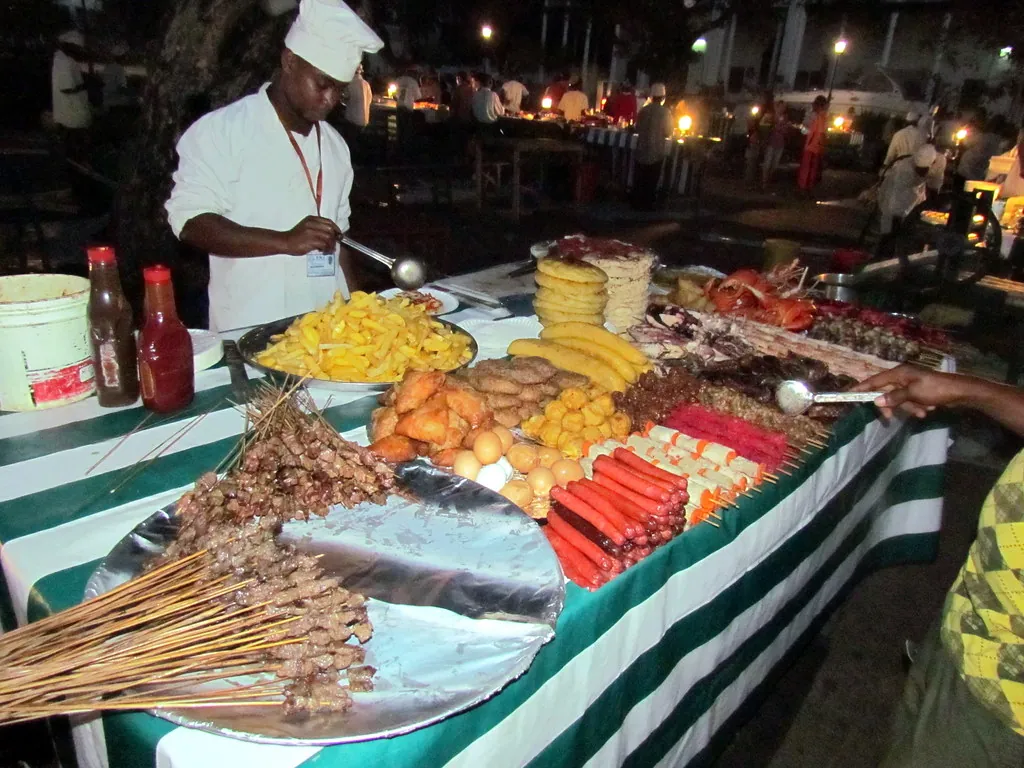
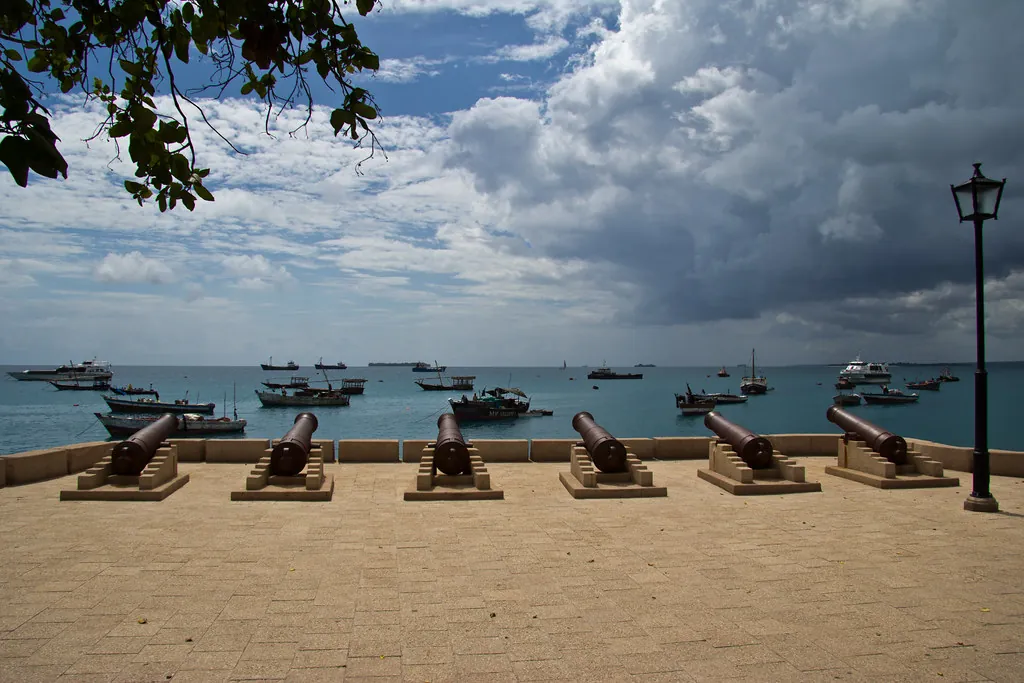
Forodhani Gardens at sunset
The sun sets over the harbour, boys somersault off the sea wall and the night market lights up.
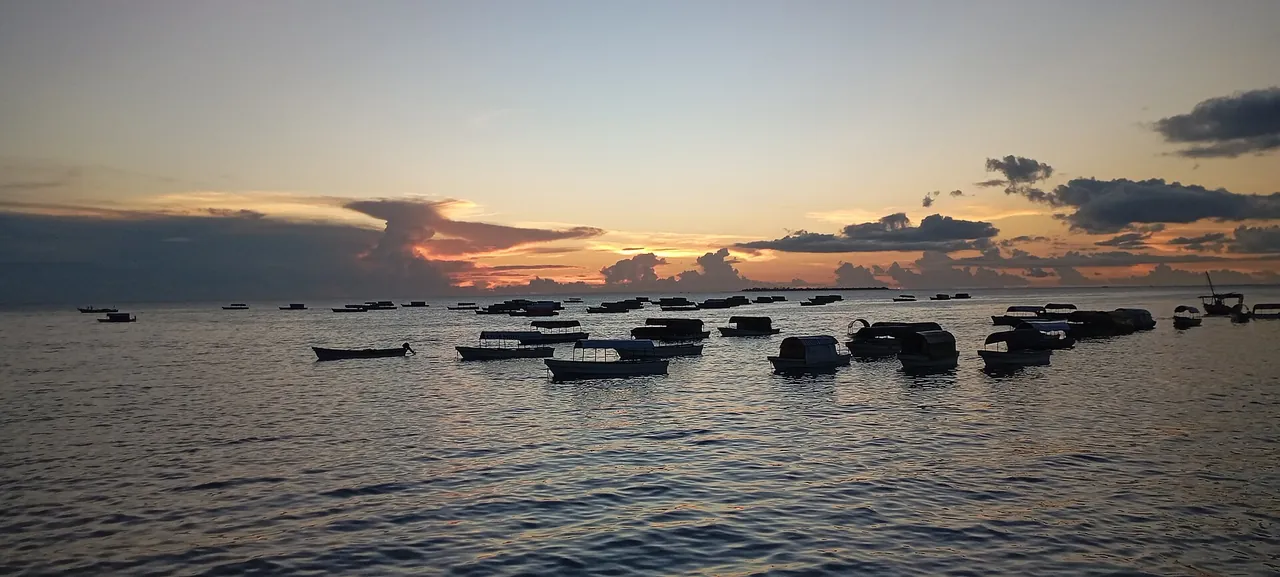
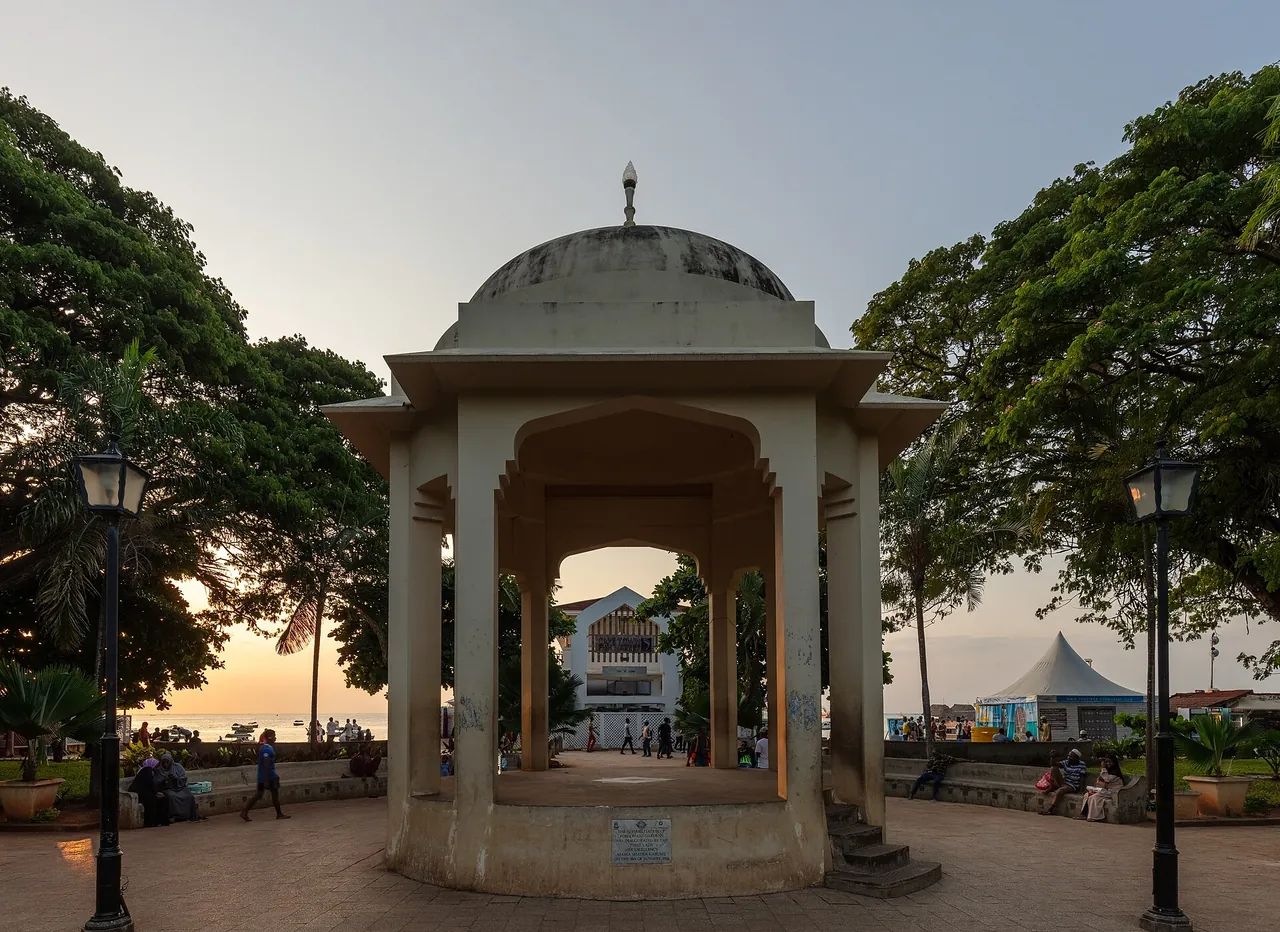
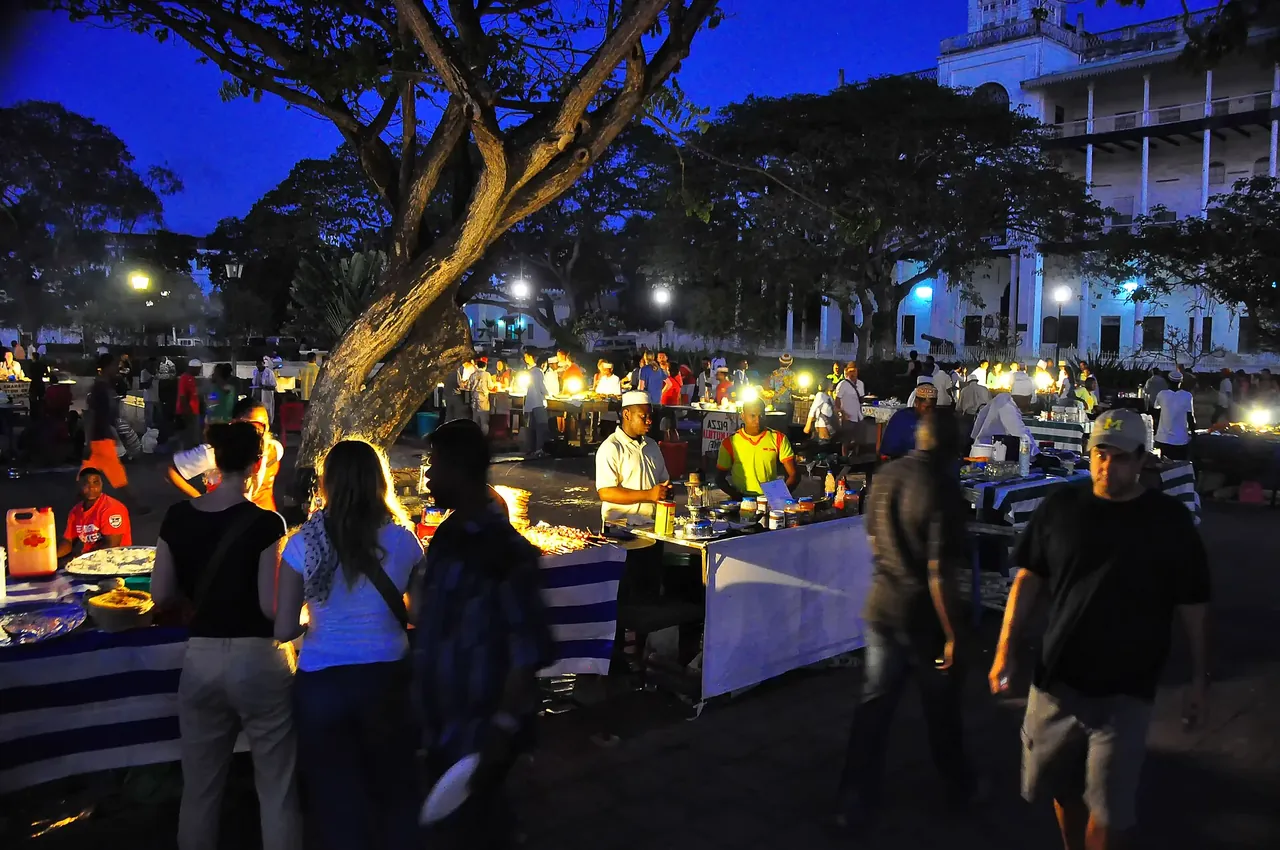
Tap any photo to see all 7.
Forodhani is the small seafront park in front of the Old Fort and the House of Wonders, restored by the Aga Khan Trust for Culture and reopened in 2009. Big shade trees, a domed gazebo and old cannons line the sea wall, with dhows at anchor in the harbour.
The park faces west, so the sun goes down over the sea right in front of you. At dusk local boys run and somersault off the wall into the water, and after dark the food stalls light up with grilled seafood, Zanzibar pizza and sugar-cane juice.
Why it's in this guide
Stone Town's nightly ritual — sunset, divers and lamplit stalls — in the most atmospheric setting on the island.
When to go
Arrive about an hour before sunset — sunset is roughly between 18:15 and 18:45 all year — for golden light on the seafront, the divers, the sunset itself and the market lighting up afterwards.
How to visit
Walk — it's a public park, free to enter, a few minutes from anywhere in Stone Town. Food is paid for stall by stall.
Photography tips
Silhouettes of the divers against the sunset are the classic shot; ask first, as some divers ask for a tip after posing. After dark, the stall lamps make good low-light portraits of the food.
Worth knowing
- Stall sellers can be pushy — agree the price before ordering, and choose freshly grilled food.
- Crowded at sunset, especially at weekends; watch your pockets.
- Especially busy straight after sunset during Ramadan. Cover shoulders and knees, as everywhere in Stone Town.
3. Stone Town · West coast
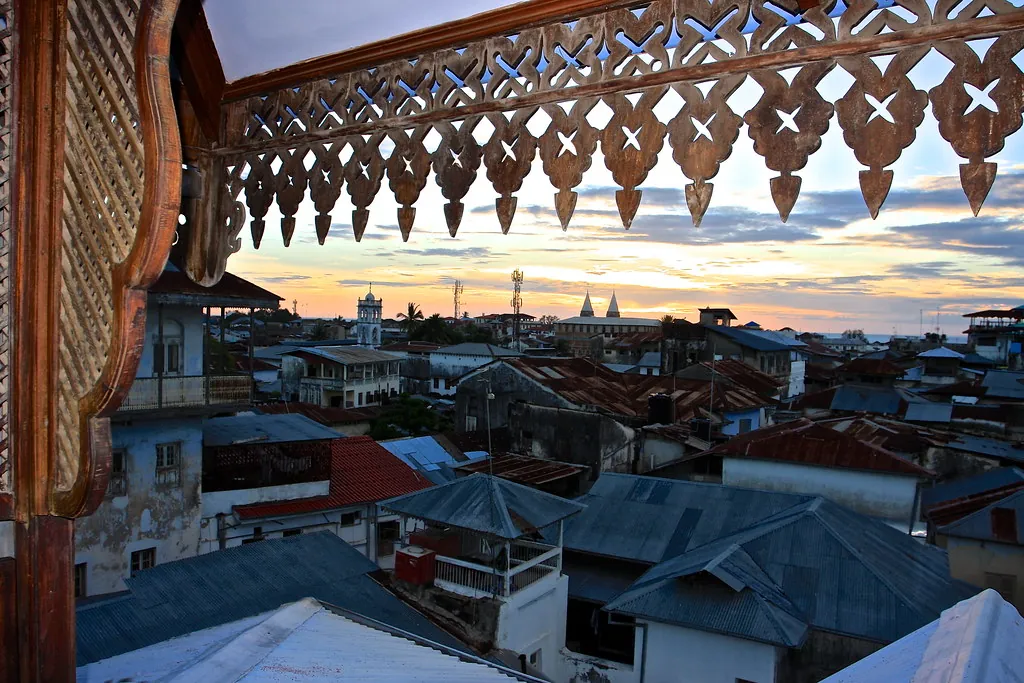
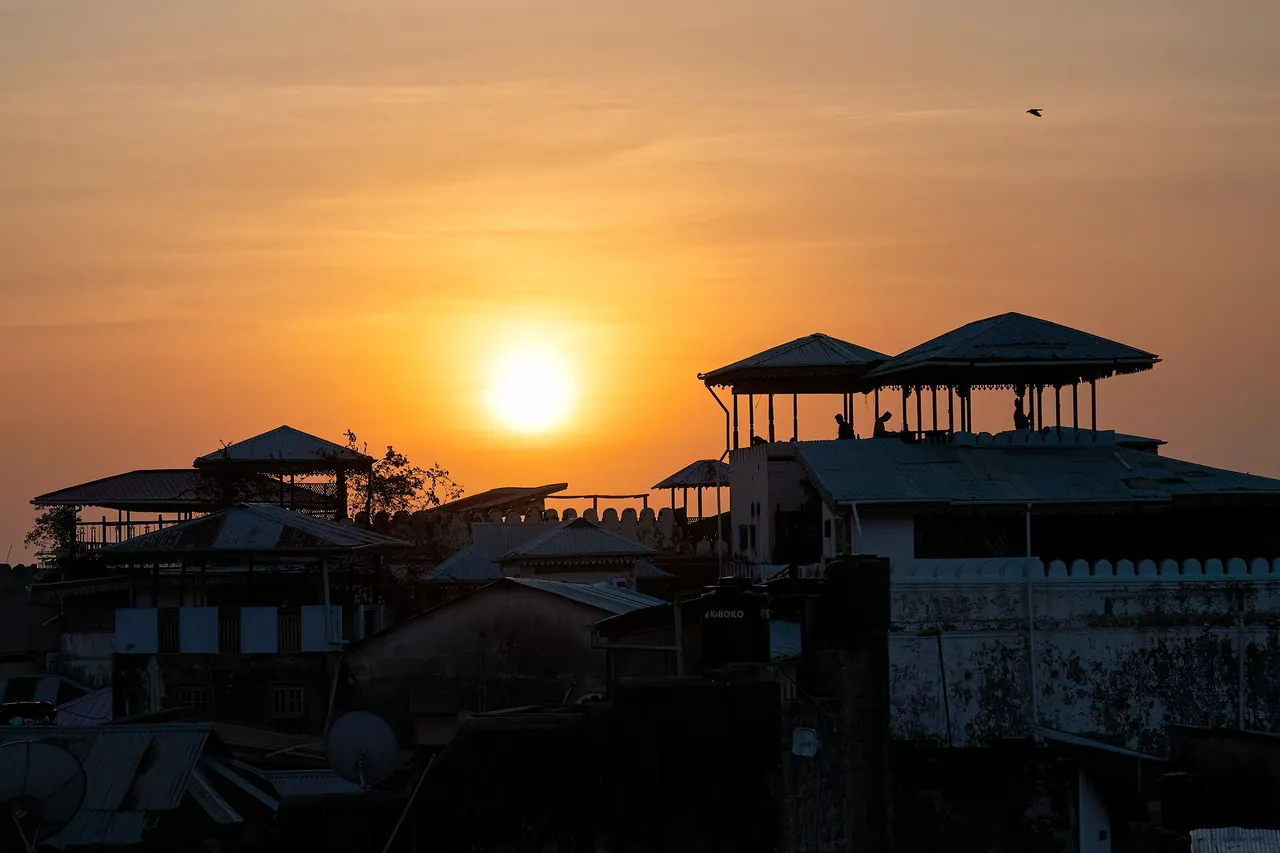
Stone Town's rooftops at sunset
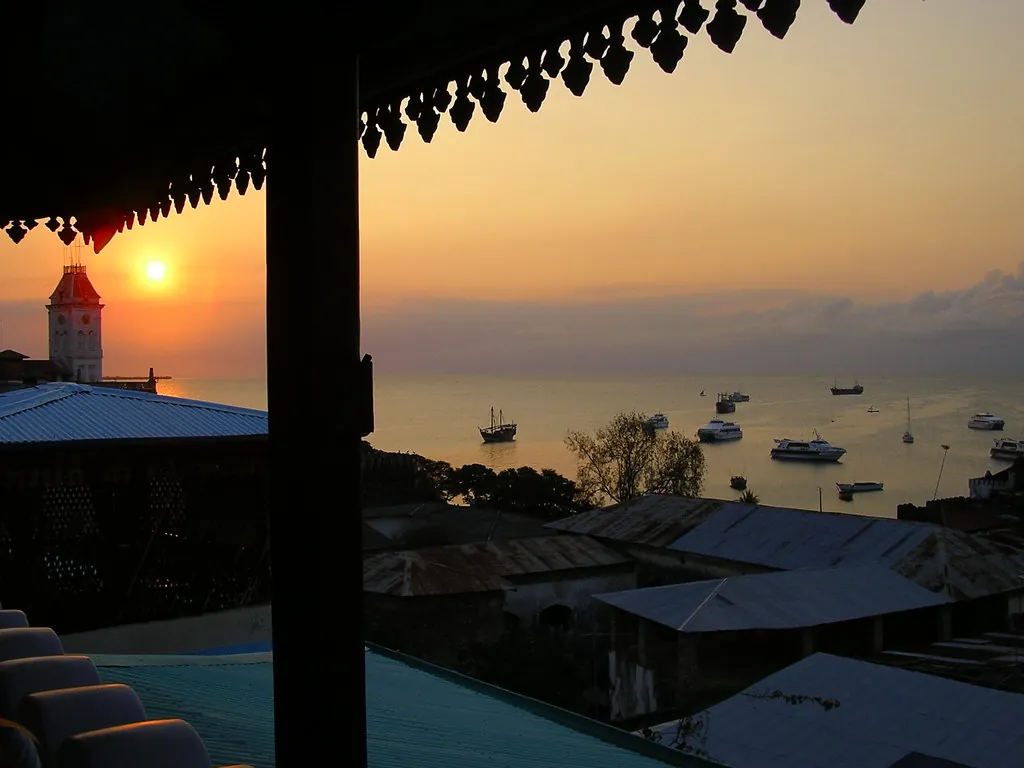
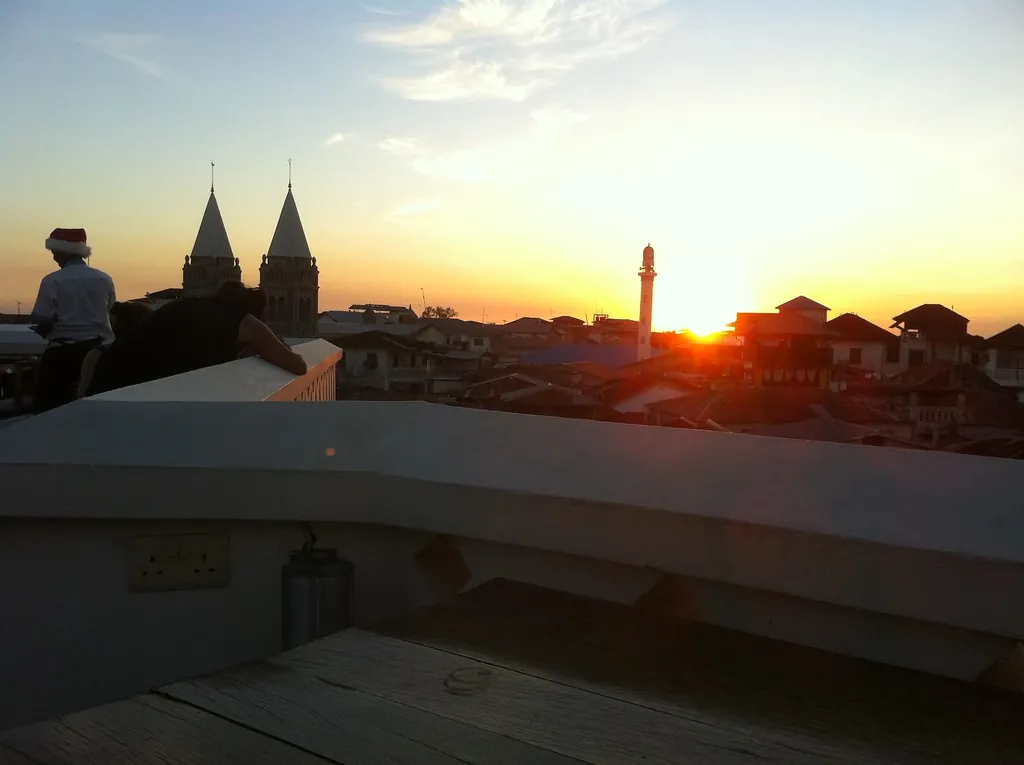
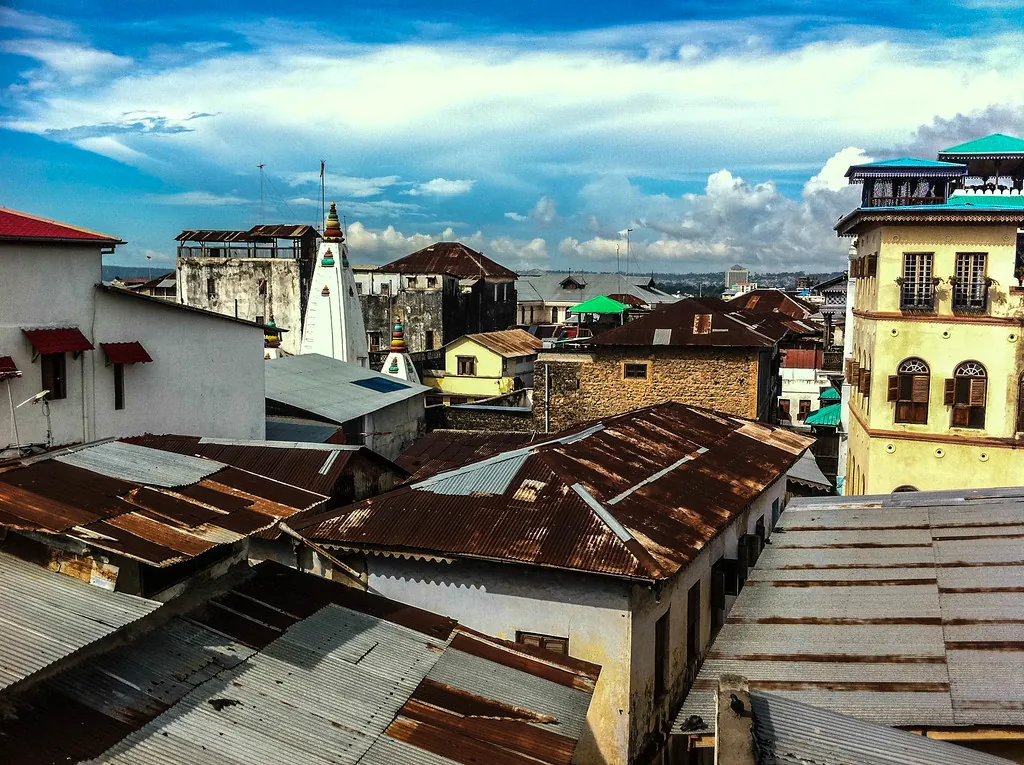
Tin roofs, minarets and the sea, with the call to prayer rising at dusk.
Tap any photo to see all 8.
From the rooftop terraces of Stone Town's hotels you look across a sea of rust-red tin roofs, domes and minarets, with the Anglican Cathedral spire in view and the Indian Ocean beyond, dhows heading out as the light goes amber.
Emerson Spice's rooftop Tea House on Kiponda Street is the best known and is confirmed open, serving sundowners from 18:00 and a set seafood dinner at 19:00. Several other hotels have rooftop bars; check that one is open before you go.
Why it's in this guide
The view that sums up Stone Town — and the moment the calls to prayer sound from every direction is unforgettable.
When to go
Arrive 45–60 minutes before sunset; the best light is in the last 20 minutes. Book ahead in high season.
How to visit
Walk to the hotel and reserve a table — some rooftops are for guests or diners only.
Photography tips
A short telephoto compresses the roofs and minarets into a layered skyline. Be discreet with neighbouring rooftops: people live and pray on them.
Worth knowing
- Most rooftops are up many steep, narrow stairs — not step-free.
- Not every venue serves alcohol, and hours can change during Ramadan.
- The Africa House's famous Sunset Bar was listed as closed when we checked — confirm with the hotel before planning around it.
4. Off Stone Town · West coast
Prison Island (Changuu)
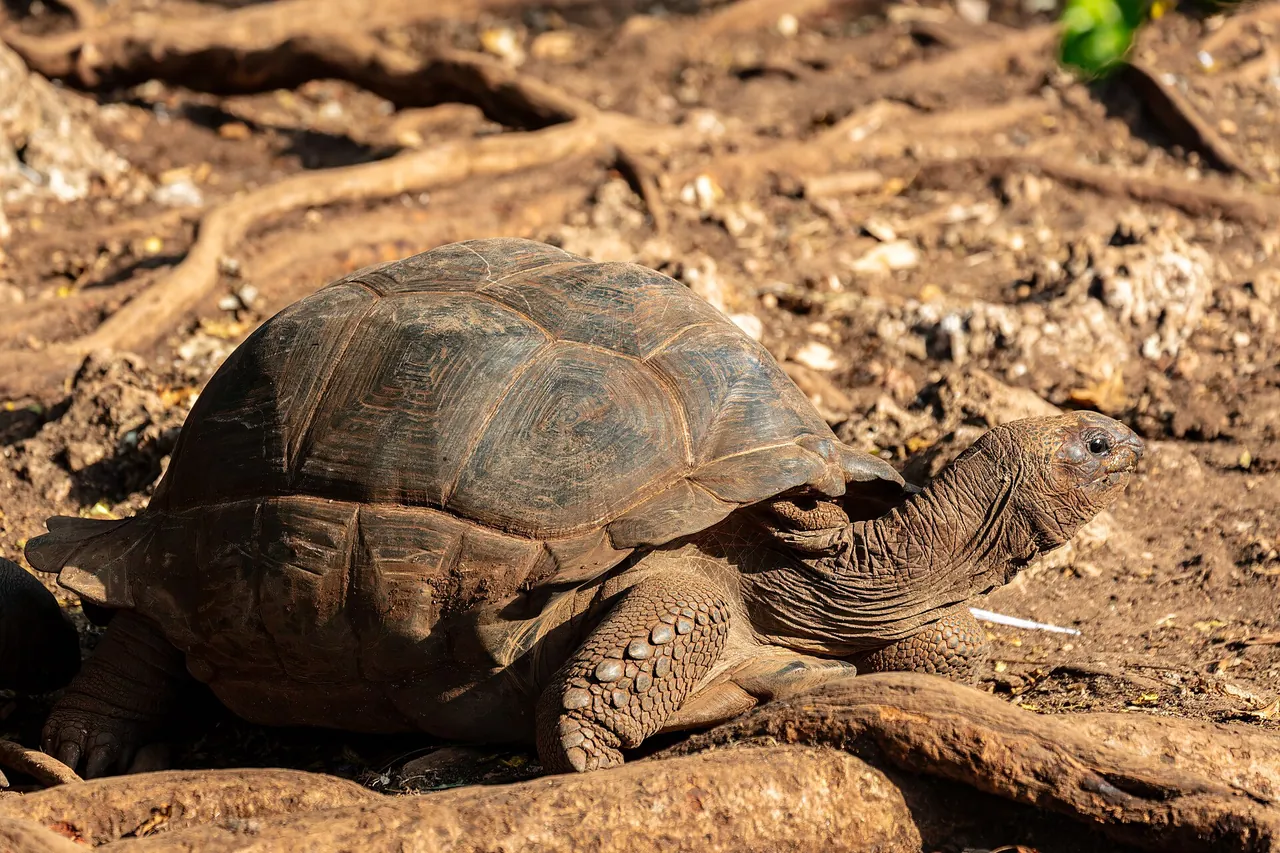
Giant tortoises, a colonial prison that never held prisoners, and clear water.
Tap any photo to see all 7.
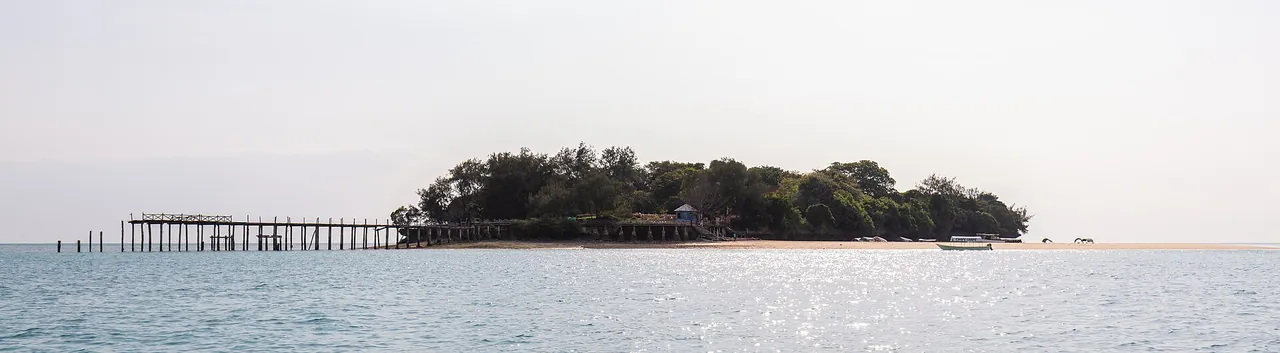
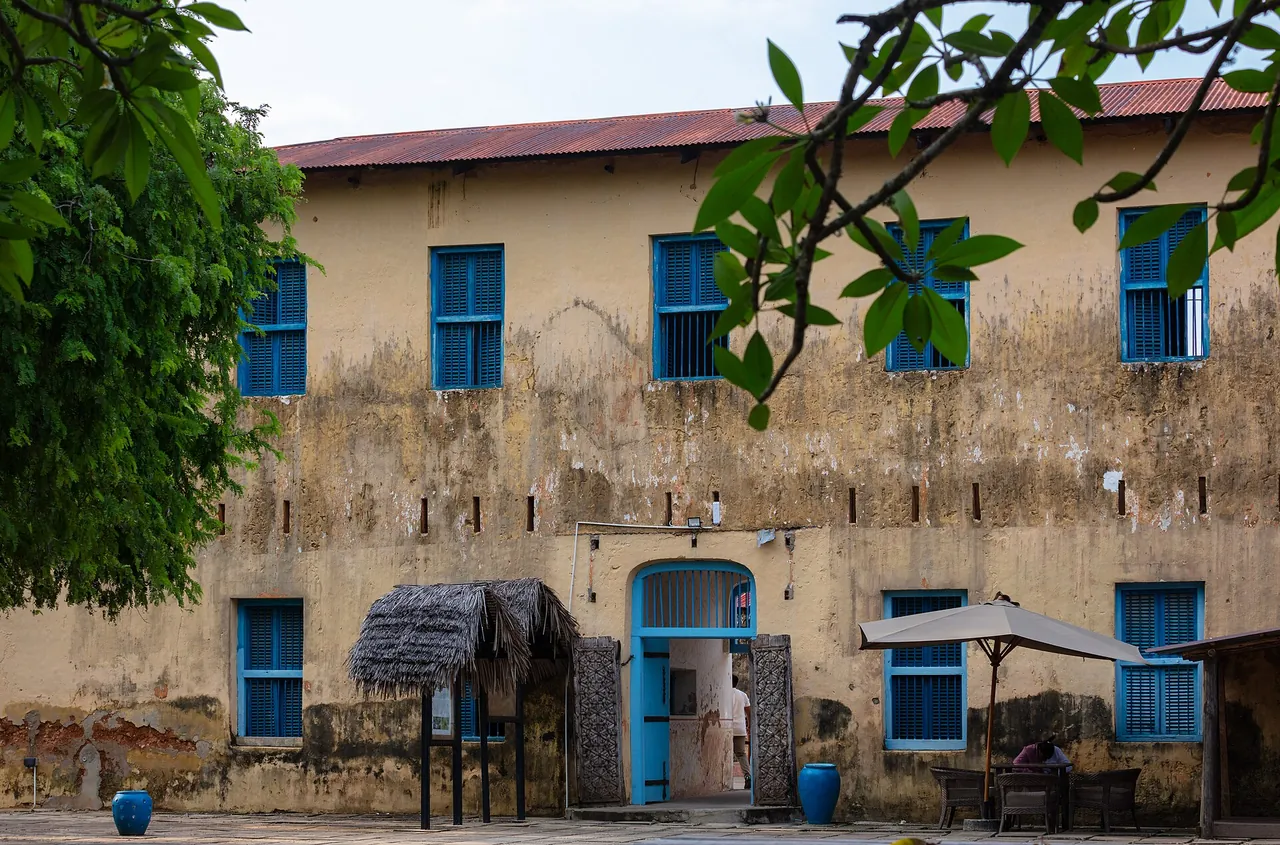
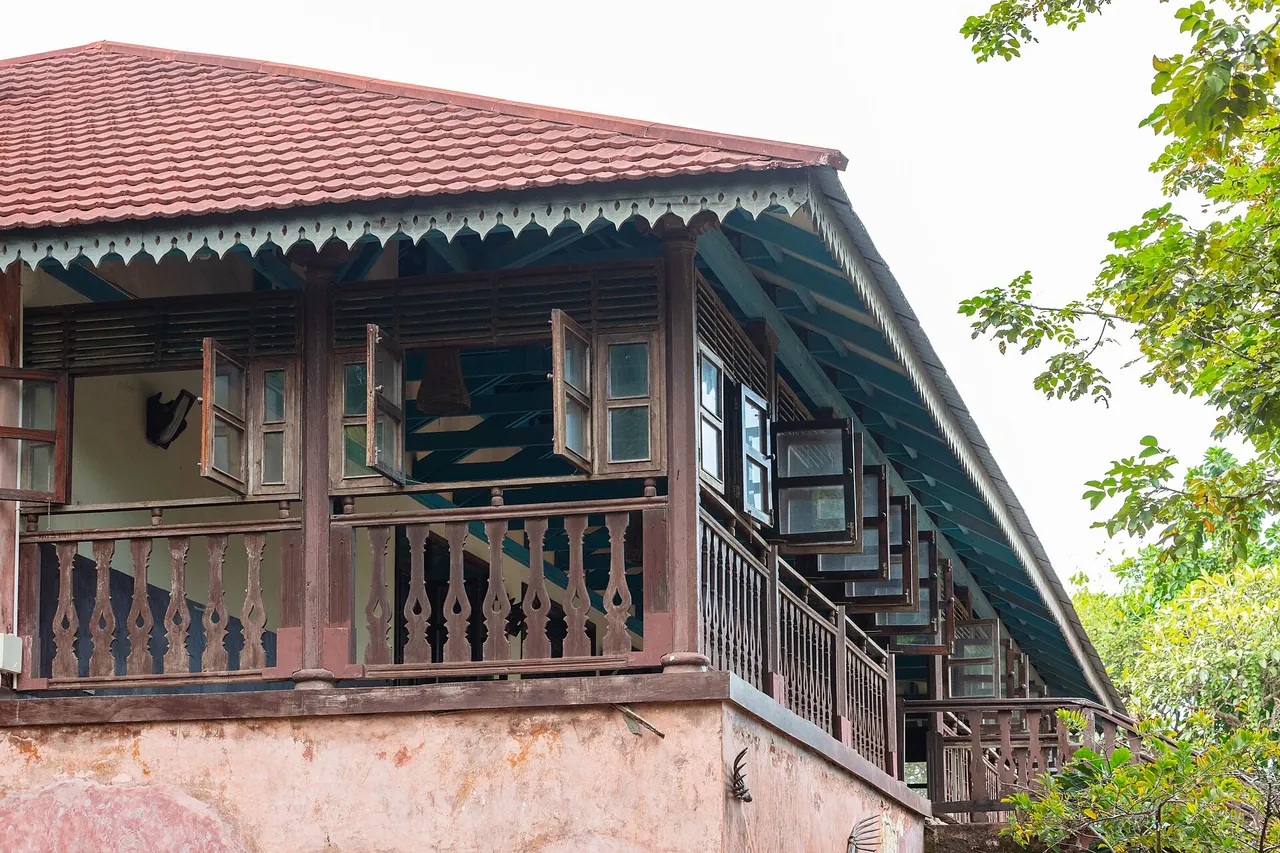
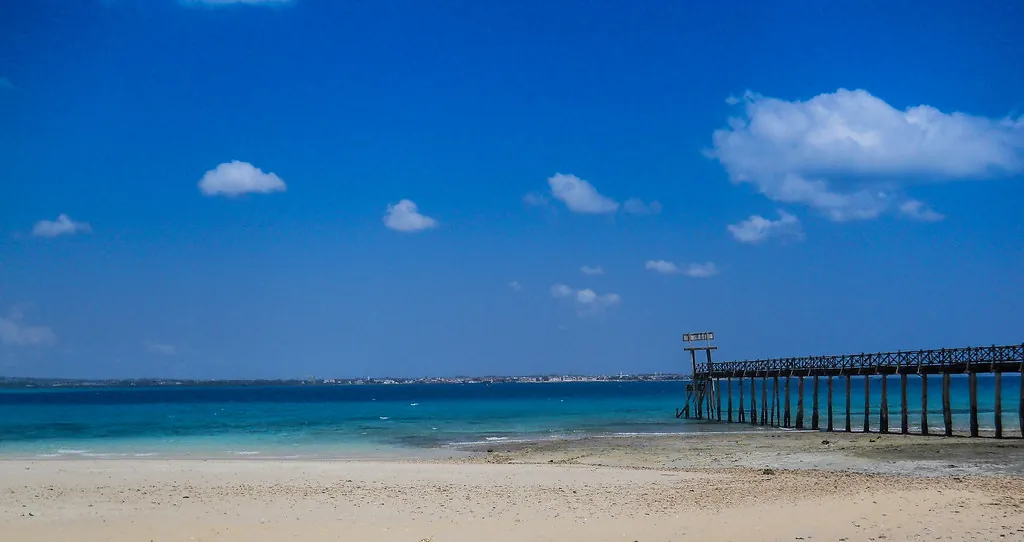
Changuu lies about 5.6 km north-west of Stone Town, 20–30 minutes away by boat. A prison was built here in the 1890s but never used; the island became a quarantine station instead, and its weathered buildings and long wooden jetty still stand.
Its giant Aldabra tortoises descend from four given by the governor of the Seychelles in 1919. After thefts almost wiped them out, they now live in a protected enclosure, with peacocks wandering the grounds and a small white beach looking back to Stone Town.
Why it's in this guide
An easy half-day from Stone Town with ancient tortoises, colonial ruins and turquoise water in one place.
When to go
Morning, before the midday tour boats, or late afternoon for the softest light on the buildings. The long rains can make the crossing choppy.
Tide: Snorkelling is best at mid-to-high tide in calm conditions; at low tide the beach and the end of the jetty can be shallow and rocky. Many trips combine it with Nakupenda, timed for the sandbank's low tide.
How to visit
By boat from Stone Town — through your hotel, a licensed operator or a boat agreed on the beachfront. There's a government entry fee, paid on arrival.
Photography tips
Get down to the tortoises' eye level for portraits, and shoot the jetty from the beach in the late-afternoon light.
Worth knowing
- Beach 'captains' tout hard: agree the price, timing and what's included before you leave.
- Never sit on, ride or lift the tortoises, and follow the keepers' rules on feeding.
- Busy in the late morning.
5. Off Stone Town · West coast
Nakupenda sandbank
A strip of white sand that rises from the sea at low tide — 'Nakupenda' means 'I love you'.
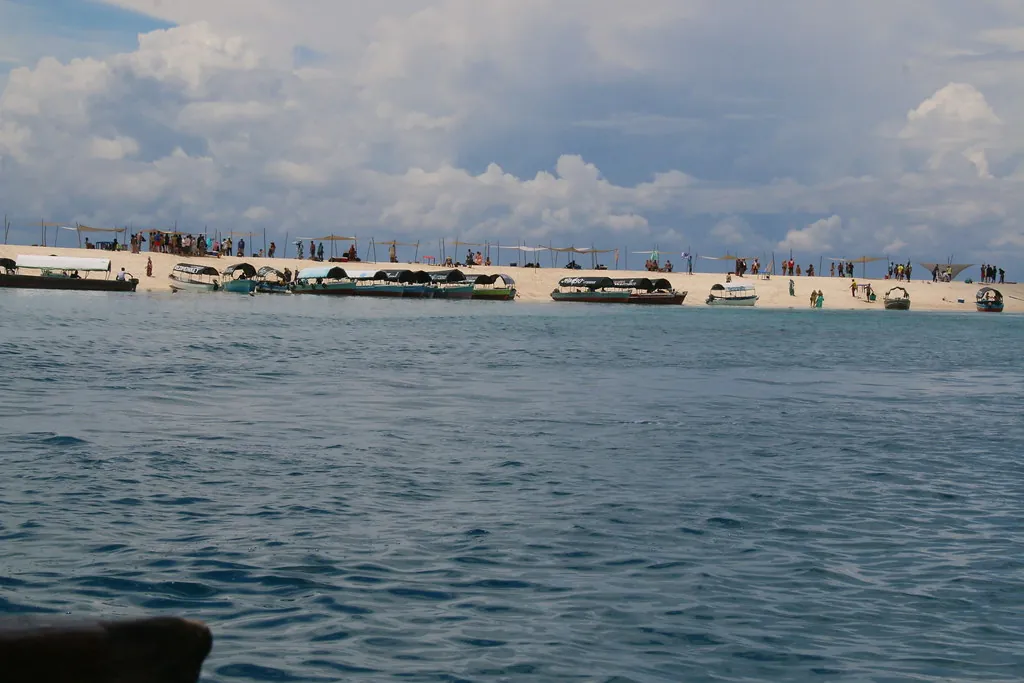
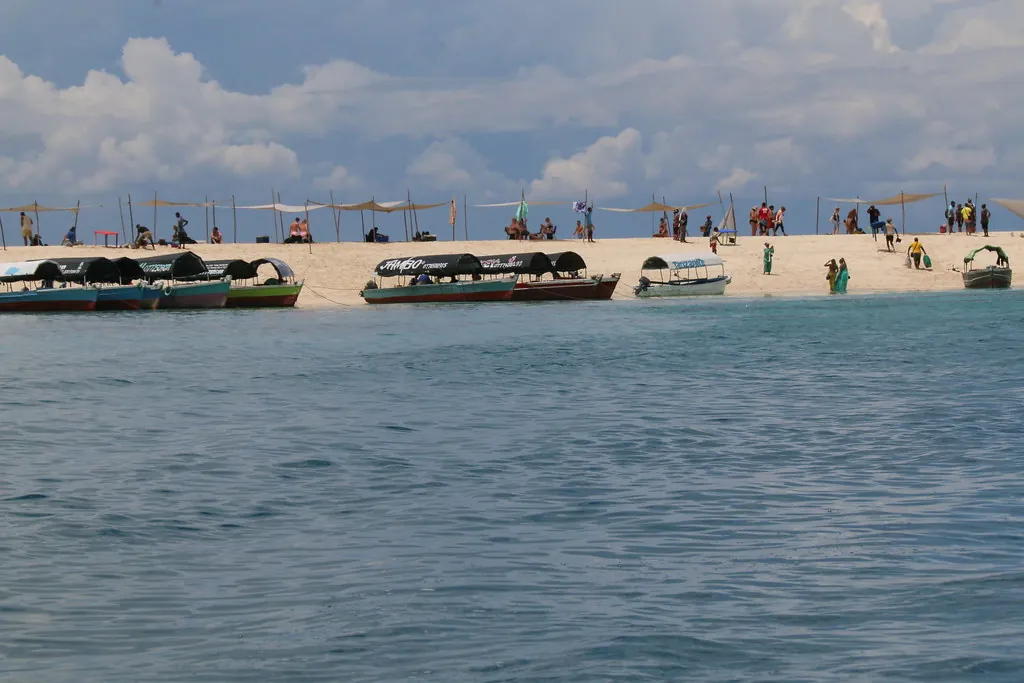
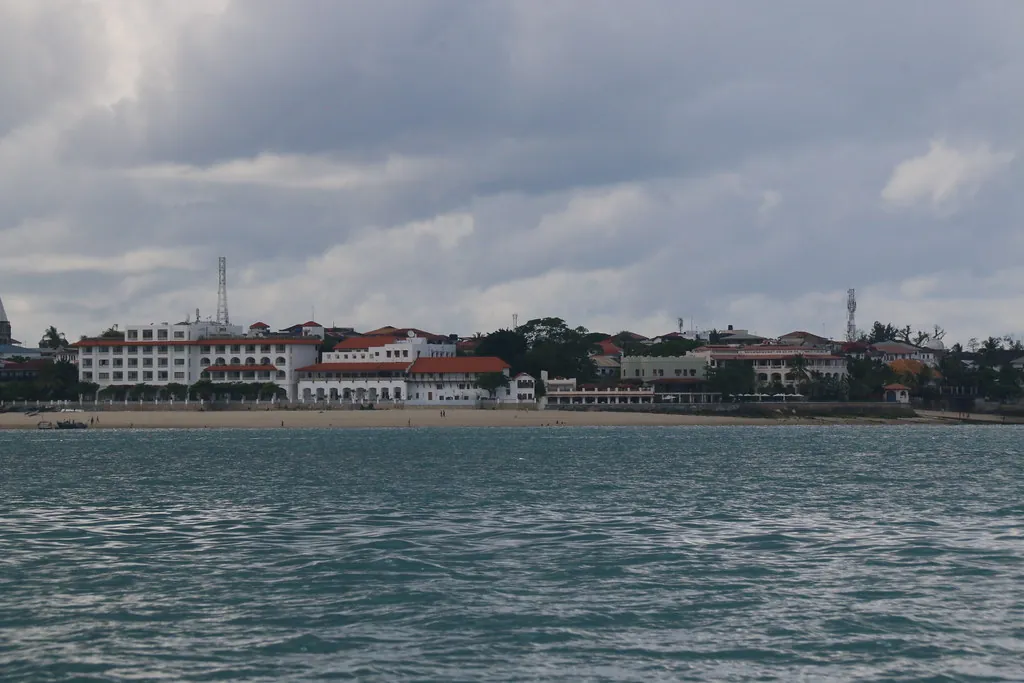
Nakupenda is a tidal sandbank a few kilometres off Stone Town, 15–30 minutes away by boat. Nothing is built on it: just white sand surrounded by clear turquoise water, with boats pulled up along the edge.
On one side you see the Stone Town skyline; on the other, open sea and passing dhows and ferries.
Why it's in this guide
Pure, simple and very Zanzibar — a beach that exists only for a few hours at a time.
When to go
Morning, at low tide: more sand, softer light and fewer people. Avoid the midday sun if you can.
Tide: Everything. The sandbank appears at low tide and shrinks or vanishes around high tide, so trips are timed to the tide table — check it, or ask the operator, when you book.
How to visit
By boat only, on a half-day trip or a full day with Prison Island; trips usually include fruit and a seafood lunch. Shared trips are busier; private boats are available.
Photography tips
Go early for an empty strip of sand. A drone shot needs a permit; from the sand, shoot along the bank with the boats as a leading line.
Worth knowing
- Very popular — by late morning there can be dozens of boats and sellers on a small strip of sand.
- No toilet and no natural shade: bring a hat, water and reef-safe sun cream, and take all rubbish back.
- Choose an operator that doesn't anchor on coral.
6. Off Mbweni · West coast
Chumbe Island Coral Park
A protected coral island with a lighthouse, an eco-lodge and some of the island's best snorkelling.
Tap any photo to see all 8.
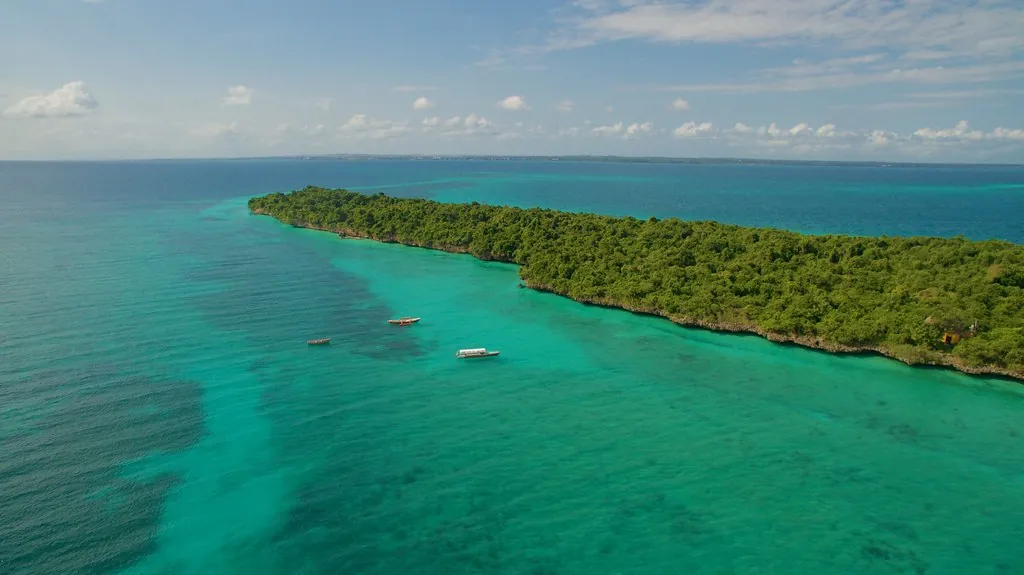
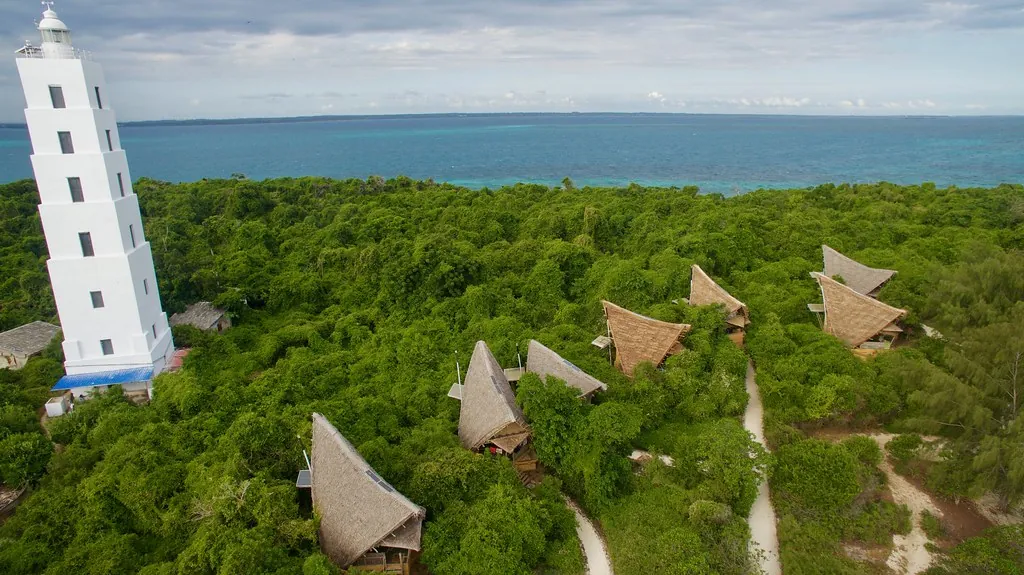
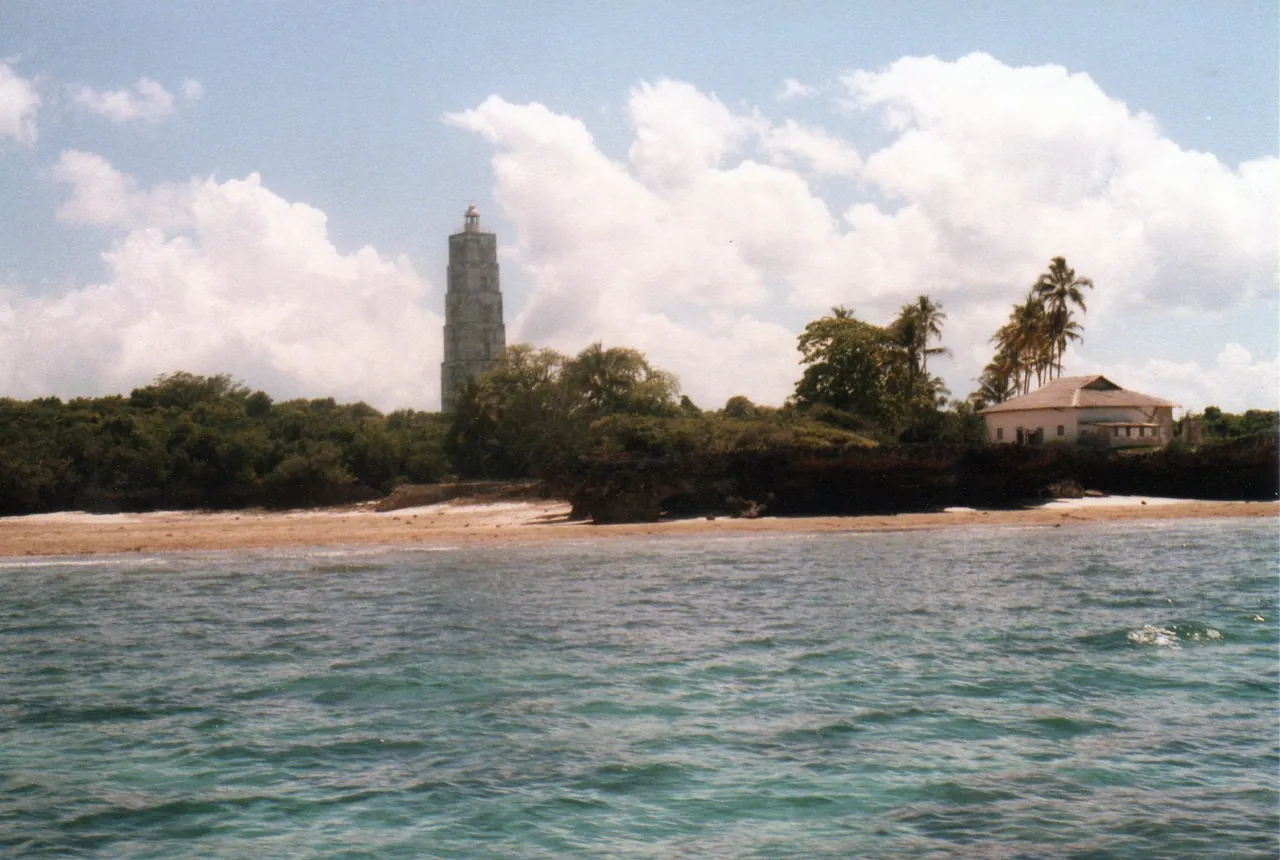
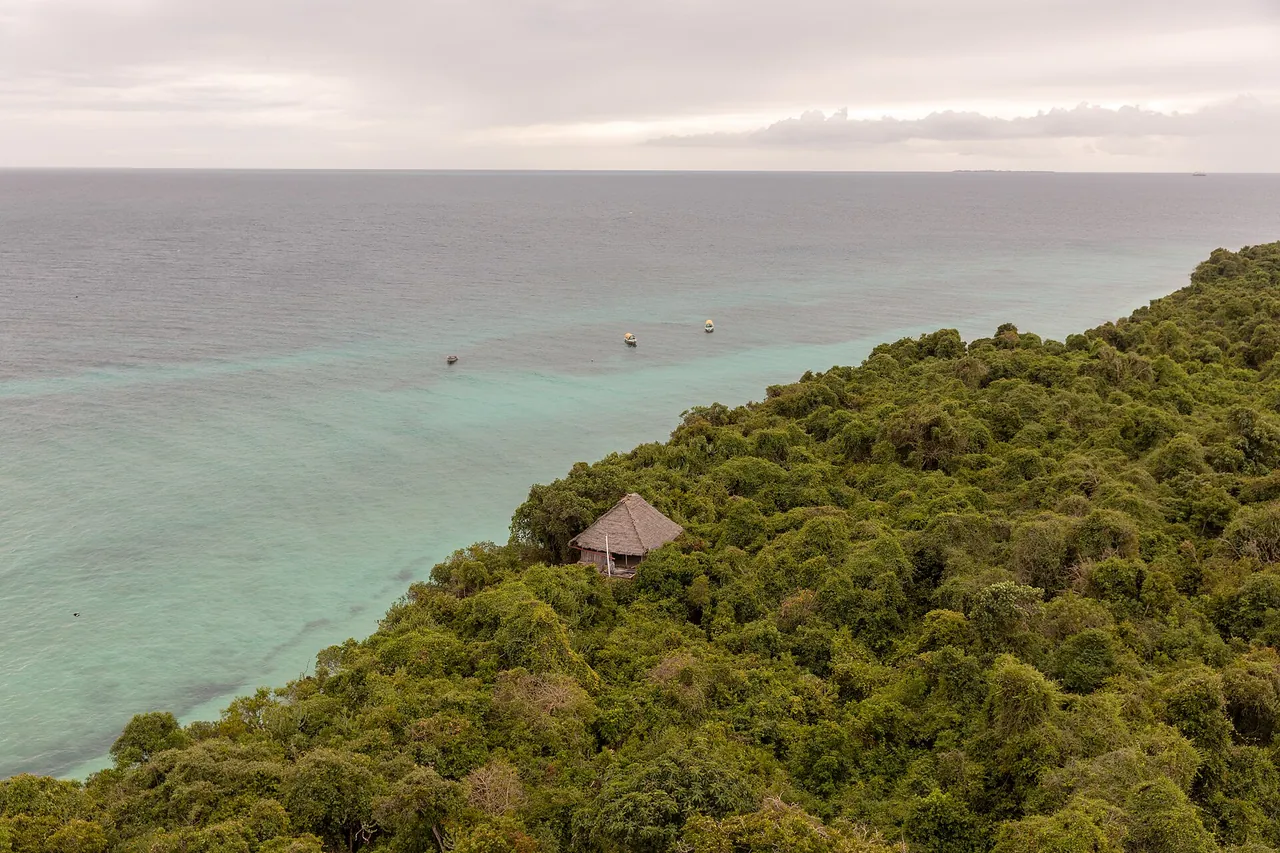
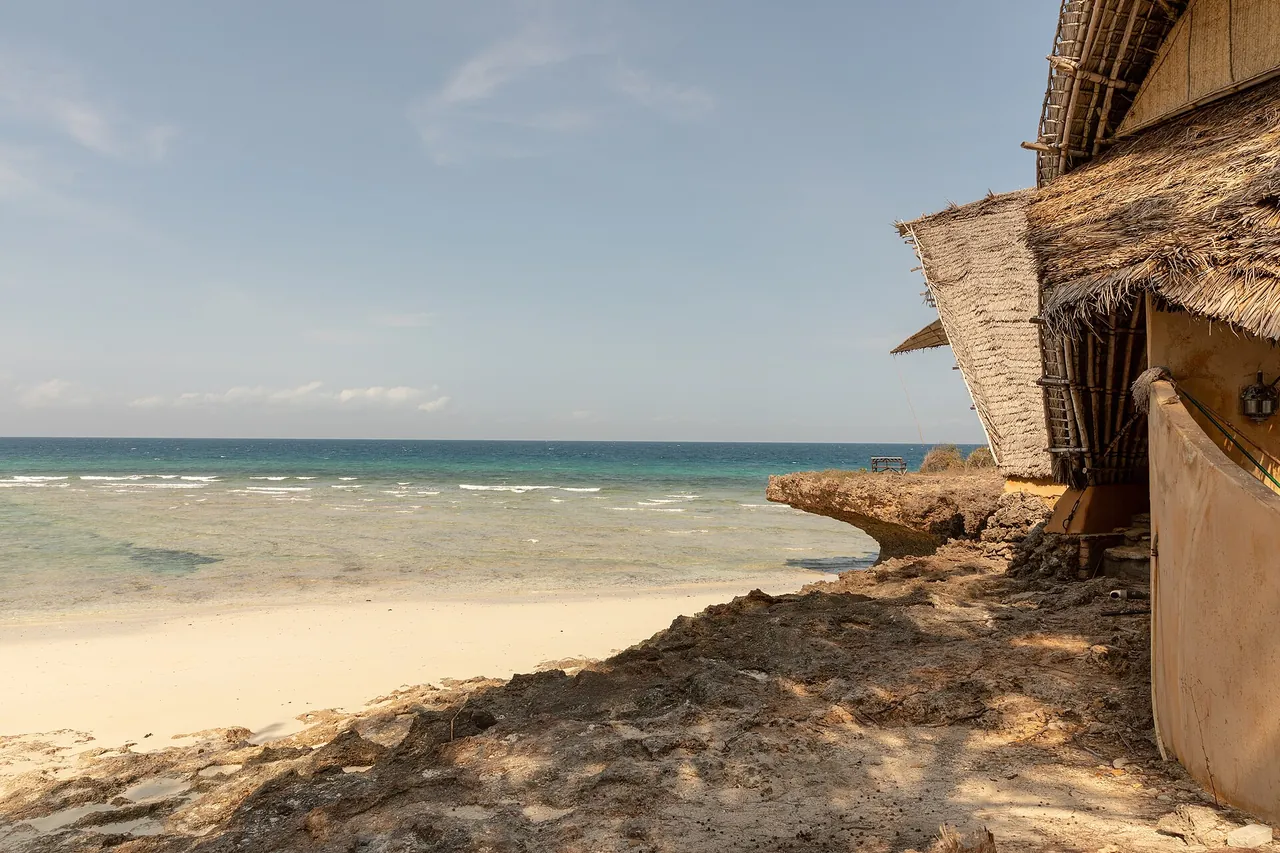
Chumbe is a small uninhabited island 8 km off the west coast. Its reef sanctuary was gazetted in 1994 as Tanzania's first marine protected area and is run by a non-profit, Chumbe Island Coral Park, whose small eco-lodge funds the conservation work.
The shallow reef teems with corals and reef fish, with turtles and blacktip reef sharks. On land there's a lighthouse you can climb, a small historic mosque beside it and coral-rag forest with baobabs.
Why it's in this guide
The lighthouse above a clear, protected reef — and the knowledge that your visit helps keep it that way.
When to go
Calm, clear days — usually in the drier months — for snorkelling. One operator reports a closure during the long rains, roughly April to early June; check with the park.
Tide: Intertidal walks need low tide; at very low tides a sandbar appears off the island's northern tip.
How to visit
Book in advance: visitor numbers are capped. Day trips by boat from Mbweni, just south of Stone Town, include a guided snorkel, a forest walk, the lighthouse and lunch; you can also stay overnight in the eco-bungalows.
Photography tips
From the top of the lighthouse you see the whole reef and island. Underwater, shoot close to the coral in the shallows where the light is strongest.
Worth knowing
- More expensive than an ordinary snorkel trip, because the fee funds the reserve.
- No touching or standing on coral, no fishing, no collecting shells; use reef-safe sun cream.
- The seasonal closure dates aren't on the park's own site — confirm when you book.
7. North of Stone Town · West coast
Maruhubi Palace ruins
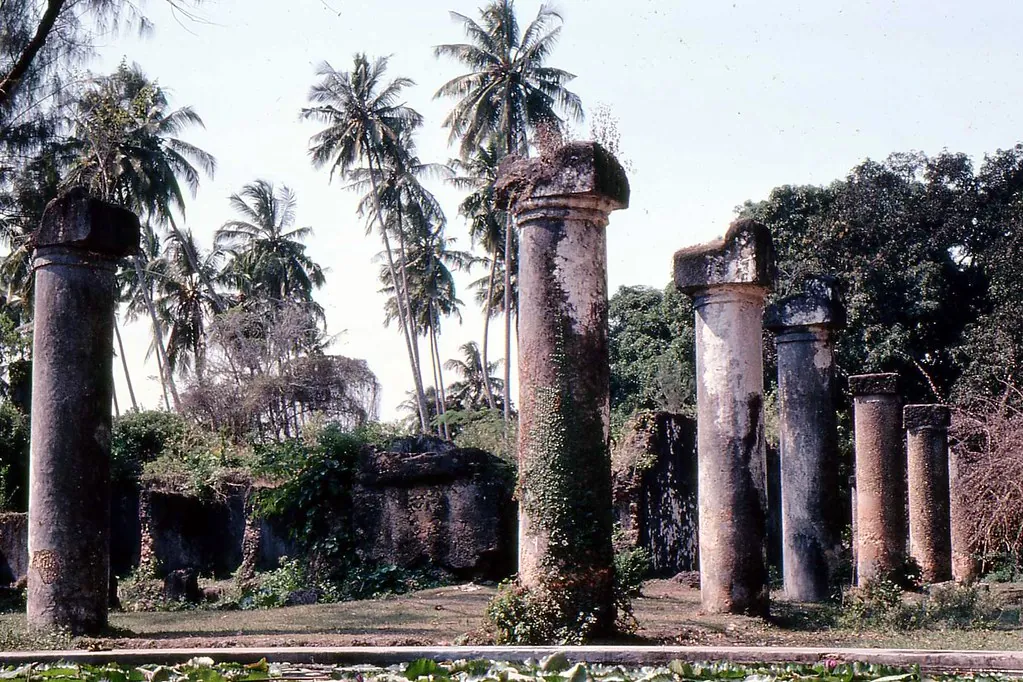
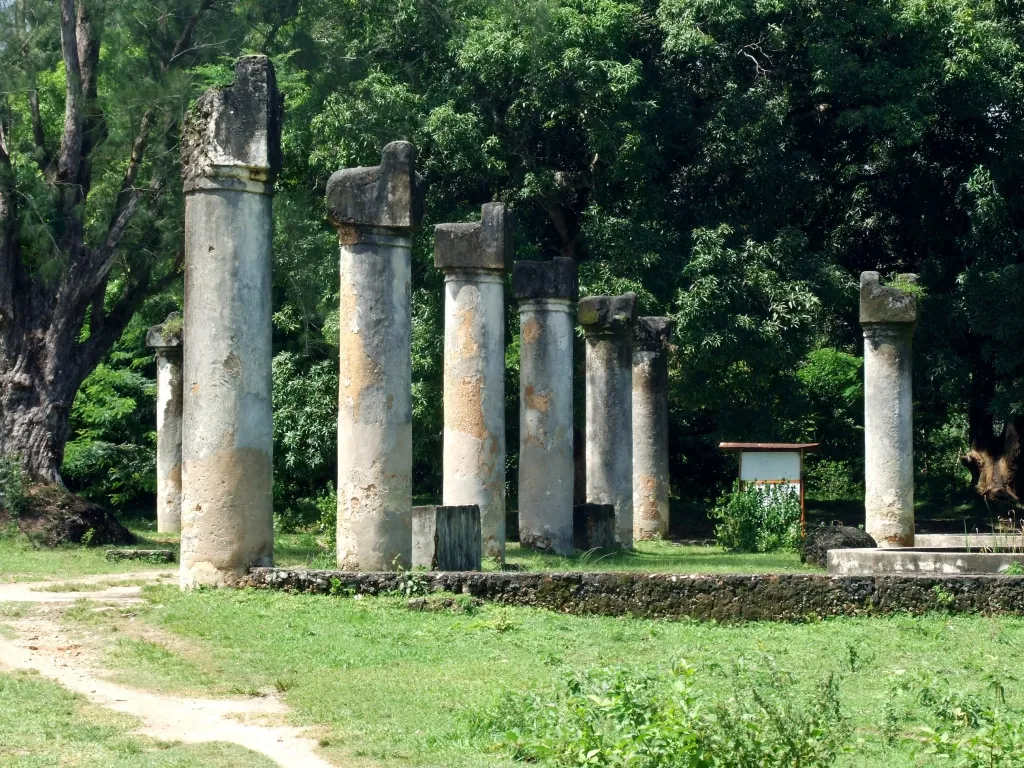
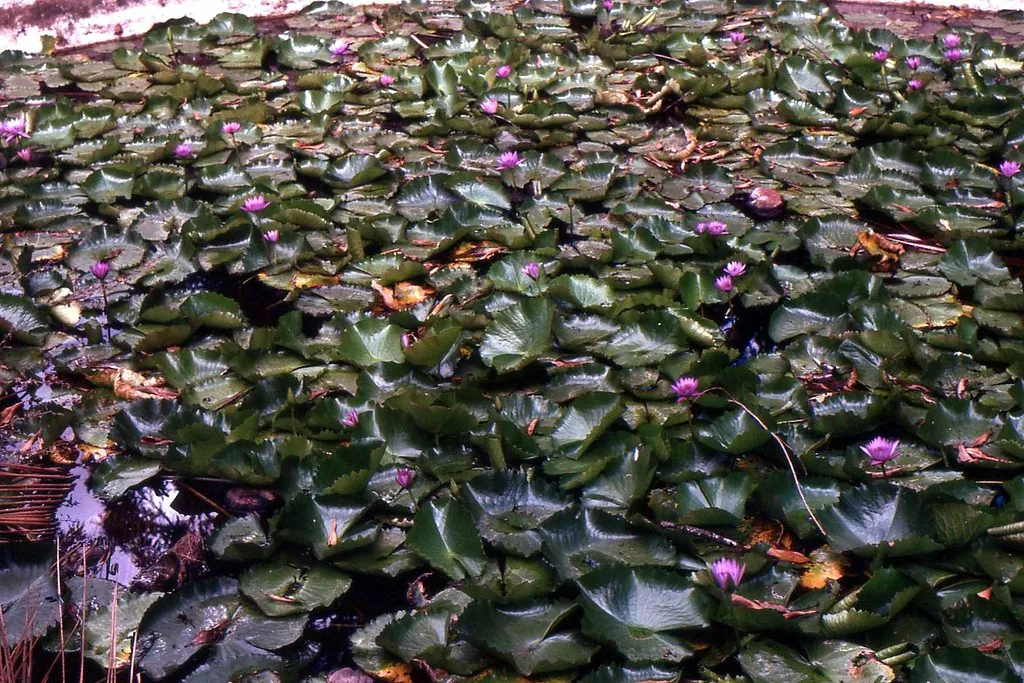
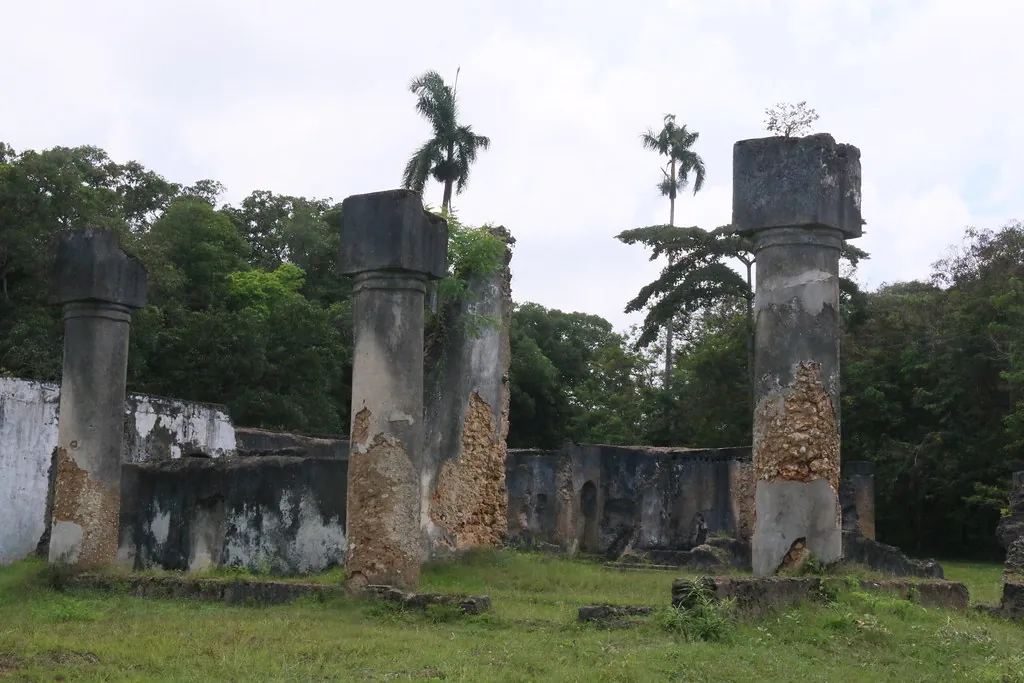
Massive coral-stone columns, Persian baths and ponds of water lilies by the sea.
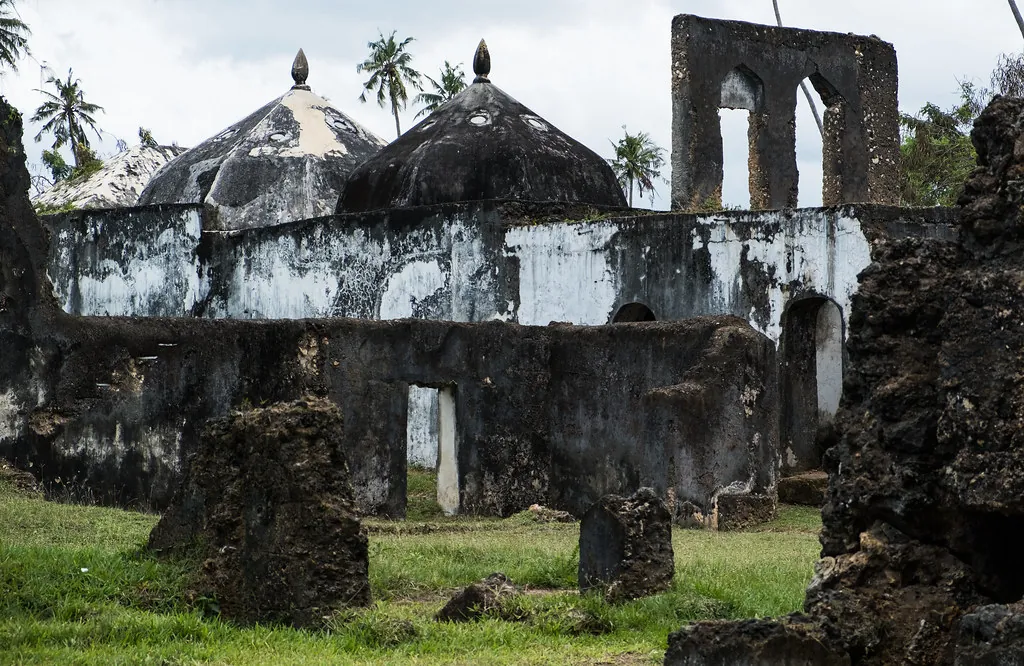
Tap any photo to see all 7.
Sultan Barghash built Maruhubi in 1882 as a country residence and harem, a few kilometres north of Stone Town on the shore. Fire destroyed it in 1899, leaving rows of huge coral-stone columns that once held up wooden verandas, arched walls and the remains of a Persian-style bath complex.
Round ponds covered in water lilies, framed by palms, sit in front of the ruins, which open onto the Zanzibar Channel.
Why it's in this guide
Romantic, quiet ruins with a strong sense of the sultans' Zanzibar — and far fewer visitors than Stone Town.
When to go
Late afternoon for warm light on the columns and lily ponds and less heat; early morning works too.
How to visit
By taxi or tuk-tuk, about 10–15 minutes from Stone Town, or as a stop on a palace-ruins or spice tour. There's a small entry fee, and a guide is worth having — there's almost no signage.
Photography tips
Line up the columns for depth, and use the lily ponds in the foreground to frame the ruins.
Worth knowing
- Little maintenance and little shade — bring water, and mosquito repellent near the ponds.
- Don't climb on the ruins.
- Opening hours aren't well documented; go in daylight.
8. Mangapwani · North-west coast
Mangapwani caves and beach
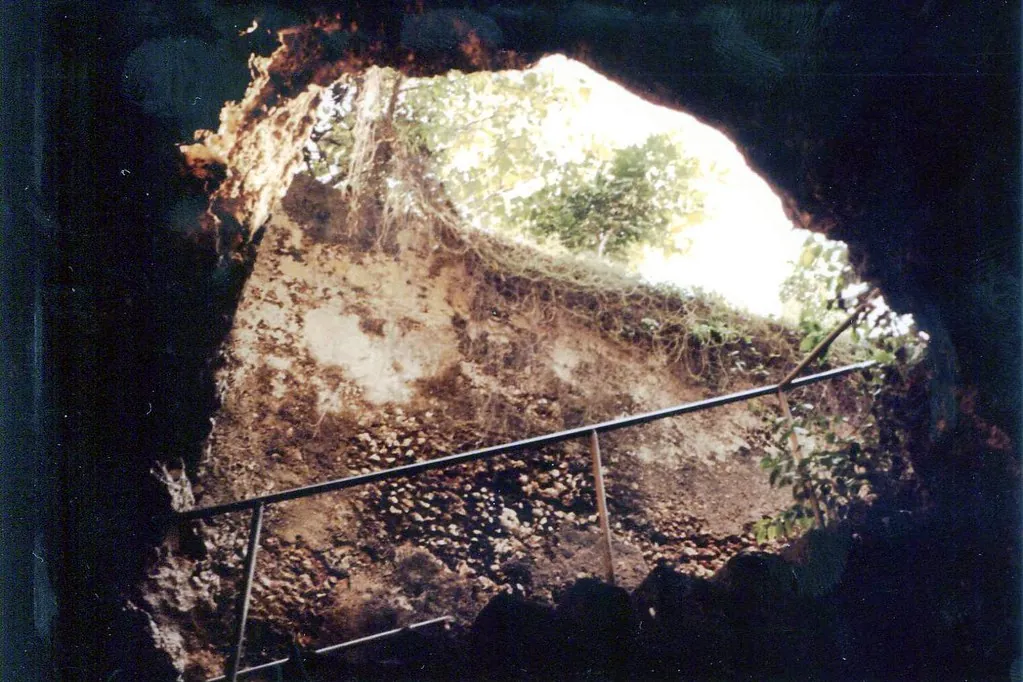
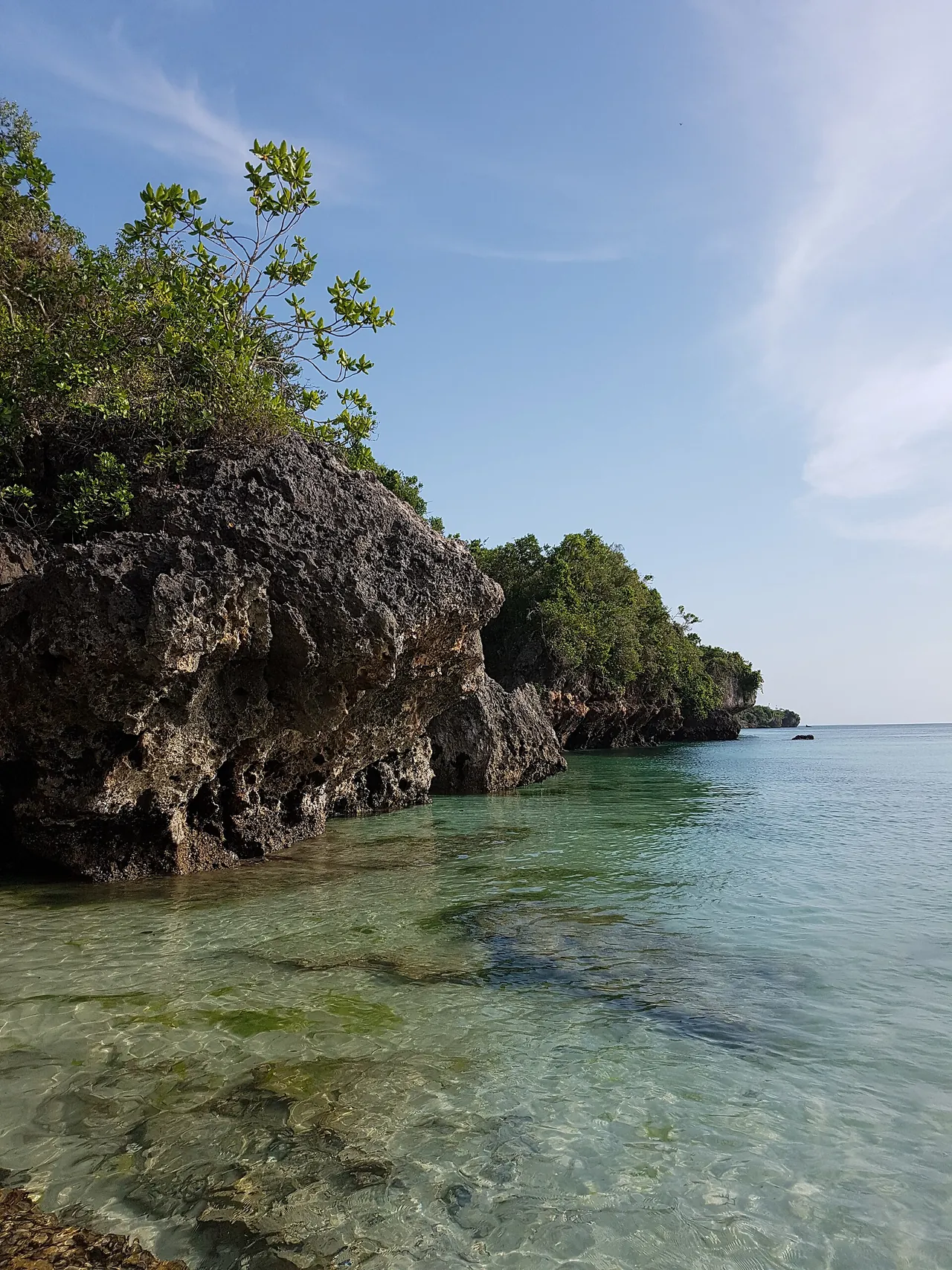
A coral cavern lit from above, a slave-trade memorial and a quiet west-facing beach.
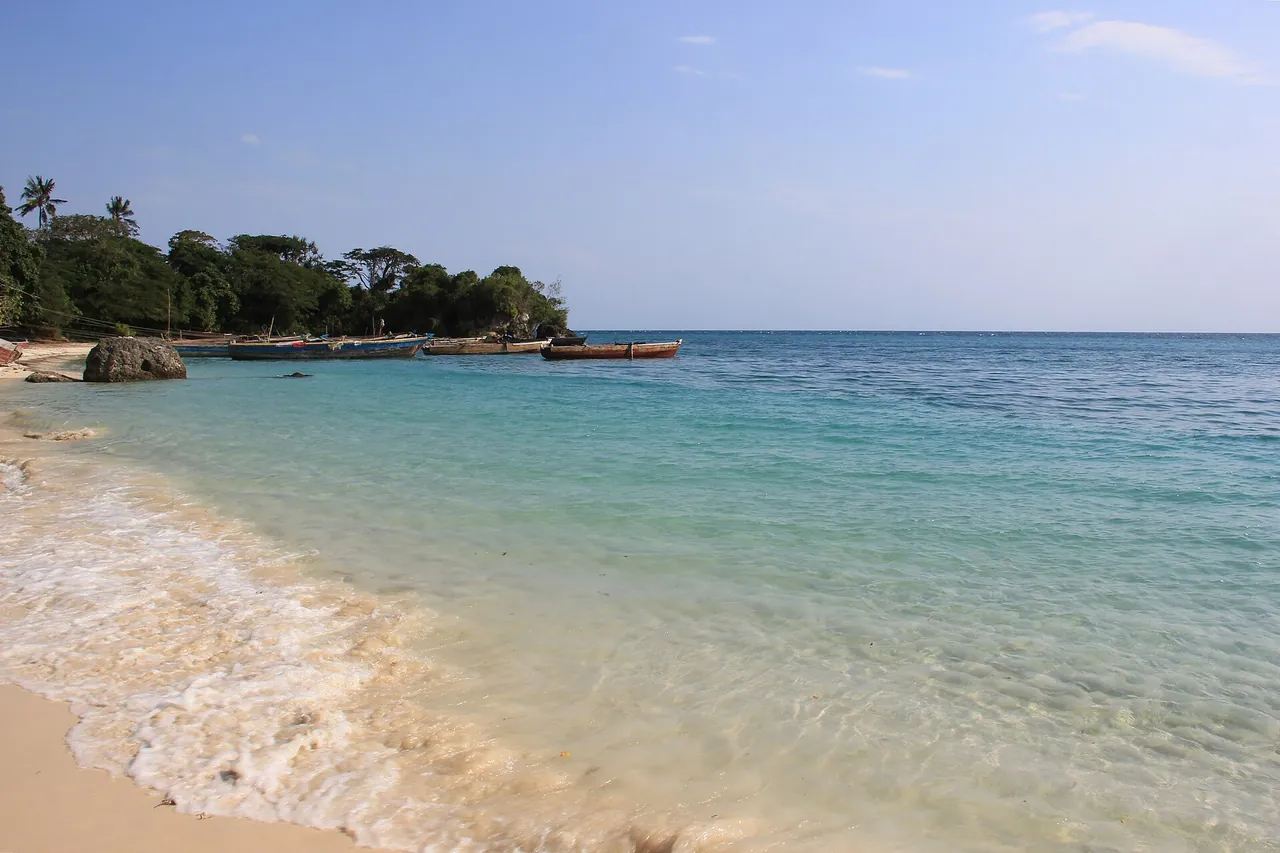
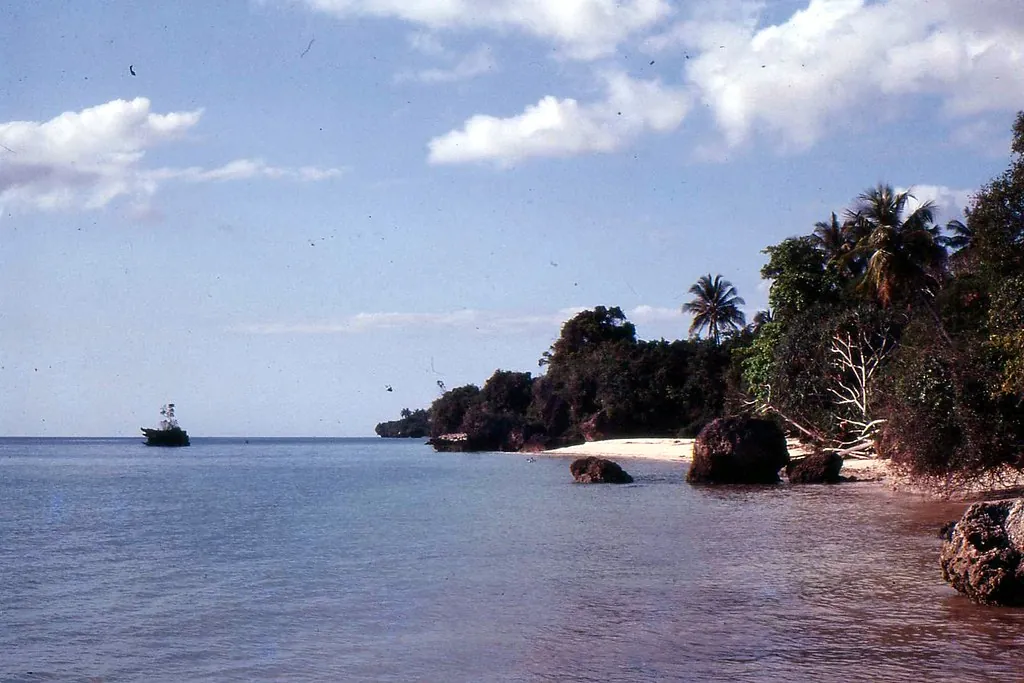
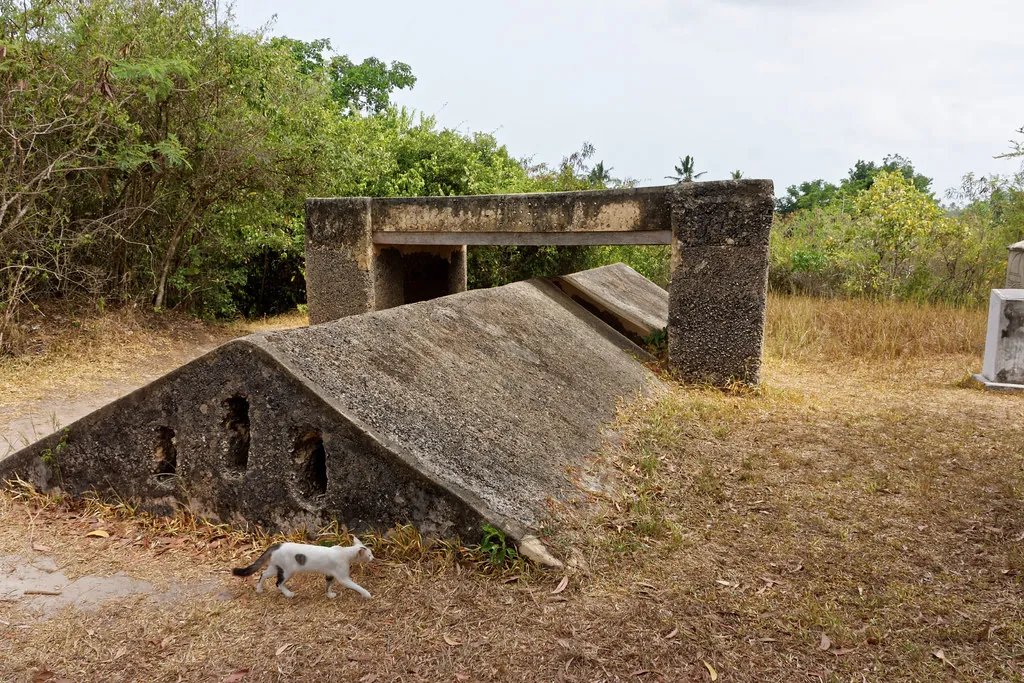
Tap any photo to see all 6.
Mangapwani, a village about 25 km north of Stone Town, has two separate sites close together. The Coral Cavern is a large natural cave: steps lead down through a collapsed roof, light falls onto ferns and stone, and a freshwater pool lies at the lowest point.
The nearby Slave Chamber is a man-made cell cut into the coral rock around 1880, after the slave trade was abolished, where enslaved people were held illegally before being shipped. It is a memorial, not a photo stop. The quiet beach nearby has undercut coral rocks, dhows and west-facing sunsets.
Why it's in this guide
Shafts of light in the cavern and a peaceful sunset beach — alongside one of the island's most important places of remembrance.
When to go
Late morning to midday, when light falls straight into the cavern; late afternoon for the beach and sunset.
How to visit
By road from Stone Town, about 40–50 minutes, ending on a dirt track — by taxi, hired car or tour, often with a spice farm. Entry fees are charged at the sites, and local guides are available. Bring a torch for the cavern.
Photography tips
In the cavern, expose for the light from the roof opening and let the rest fall dark; a phone's night mode helps. Keep the camera away in the Slave Chamber unless your guide says otherwise, and never photograph other visitors there without asking.
Worth knowing
- Treat the Slave Chamber with respect: keep your voice low.
- The cavern is dark, damp and uneven — wear proper shoes; not for anyone with mobility problems.
- Opening hours aren't well documented, and the village is rural: dress modestly.
9. Nungwi · Northern tip
Nungwi's dhow yard and lighthouse
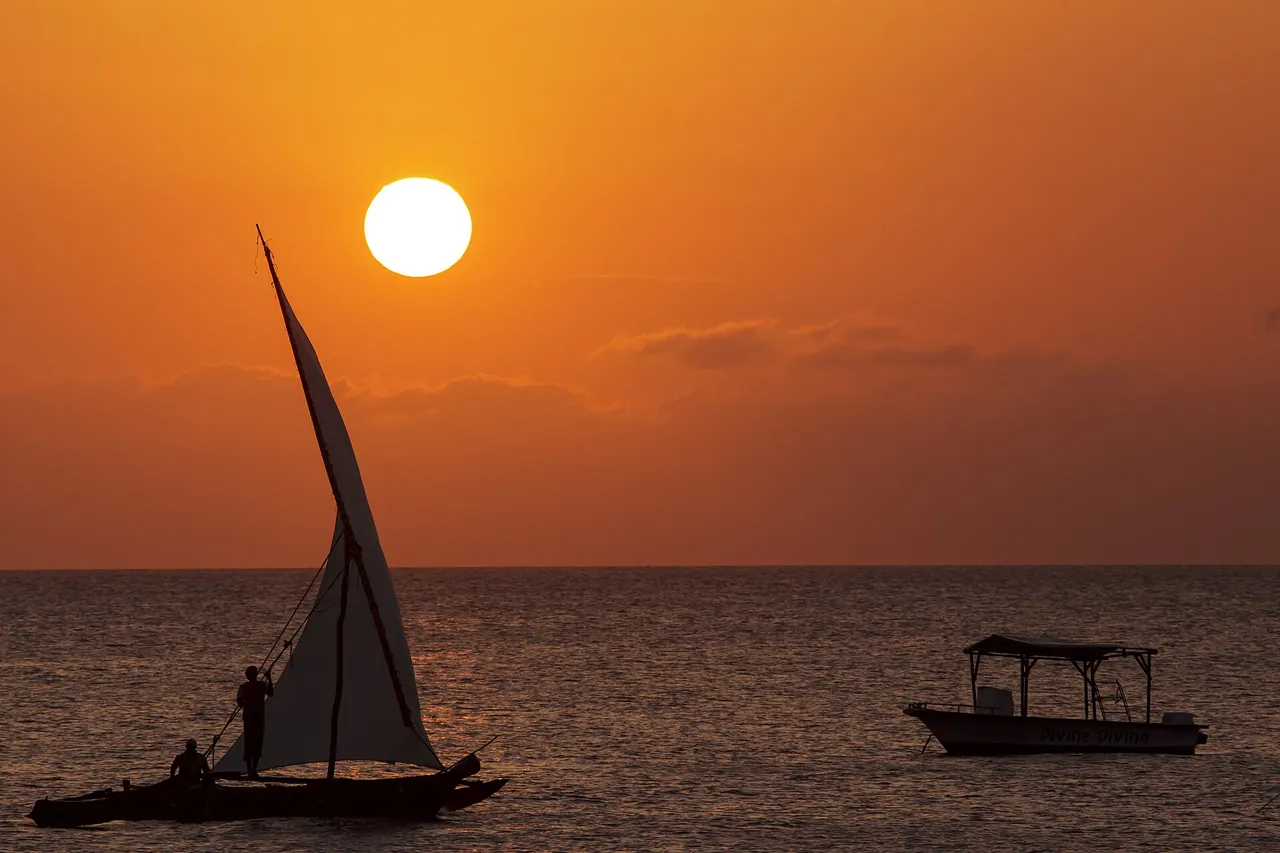
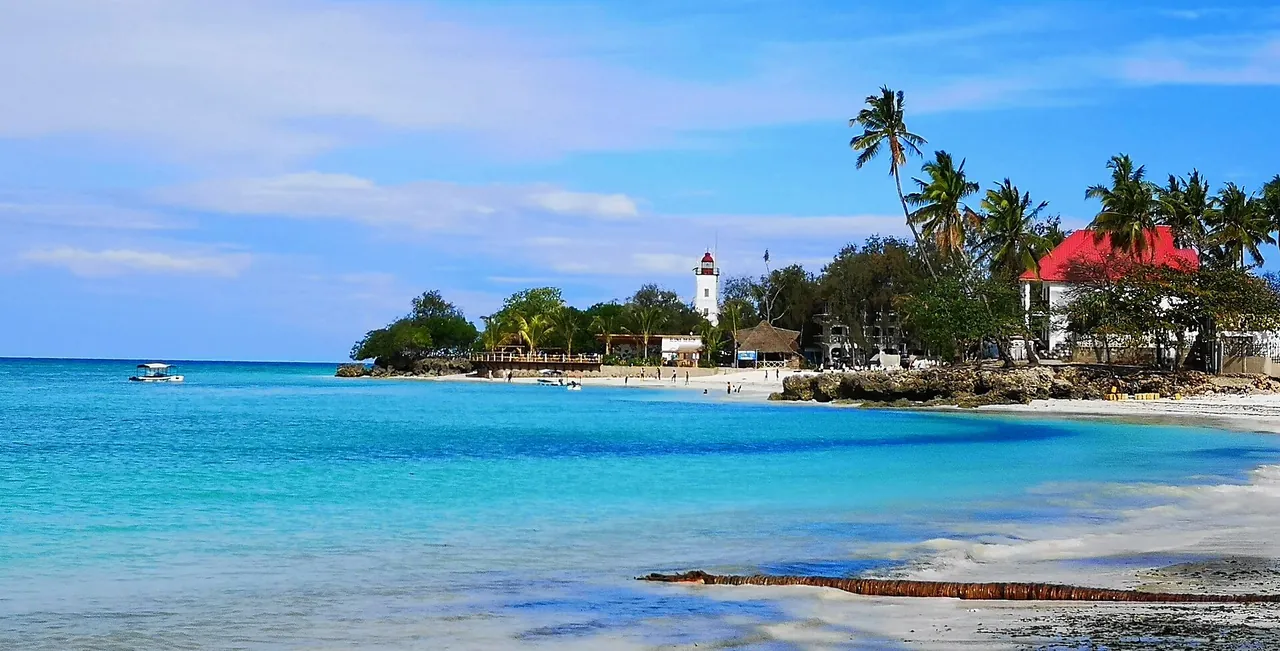
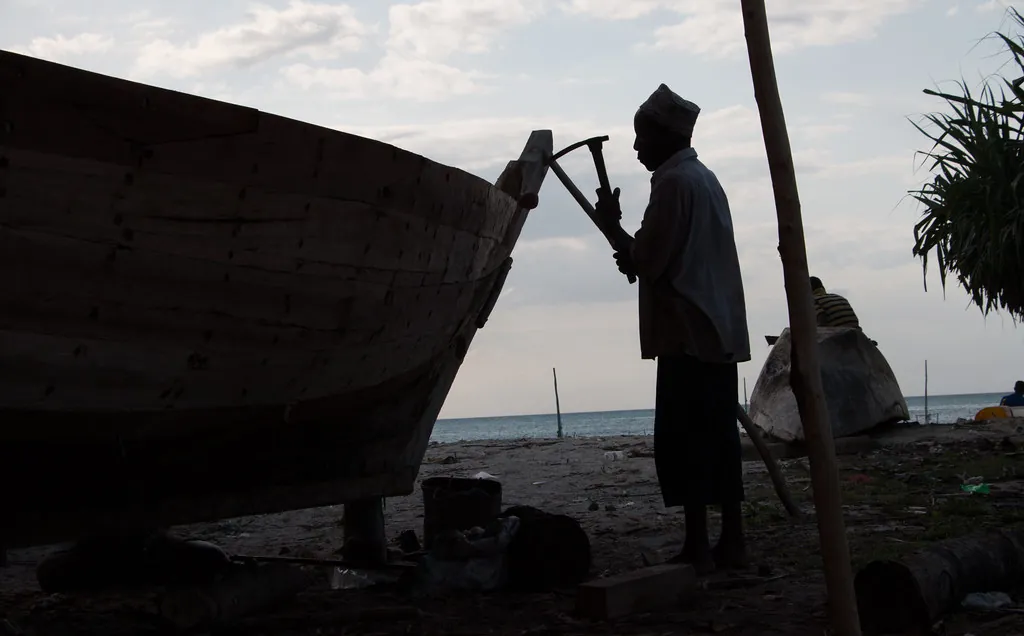
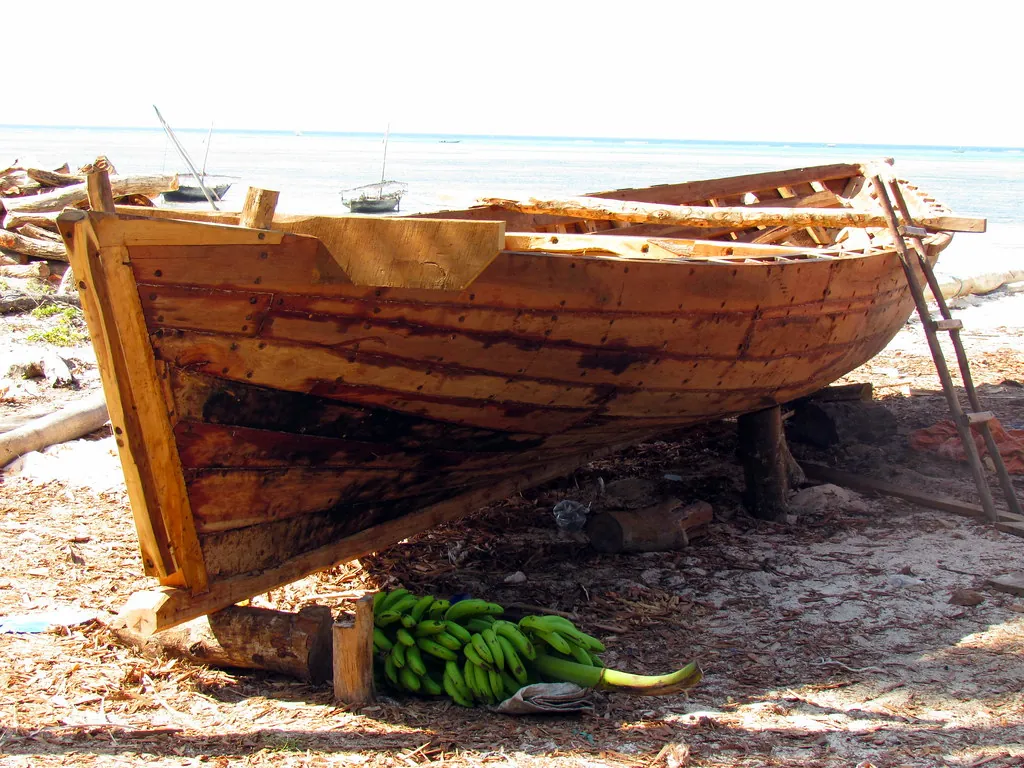
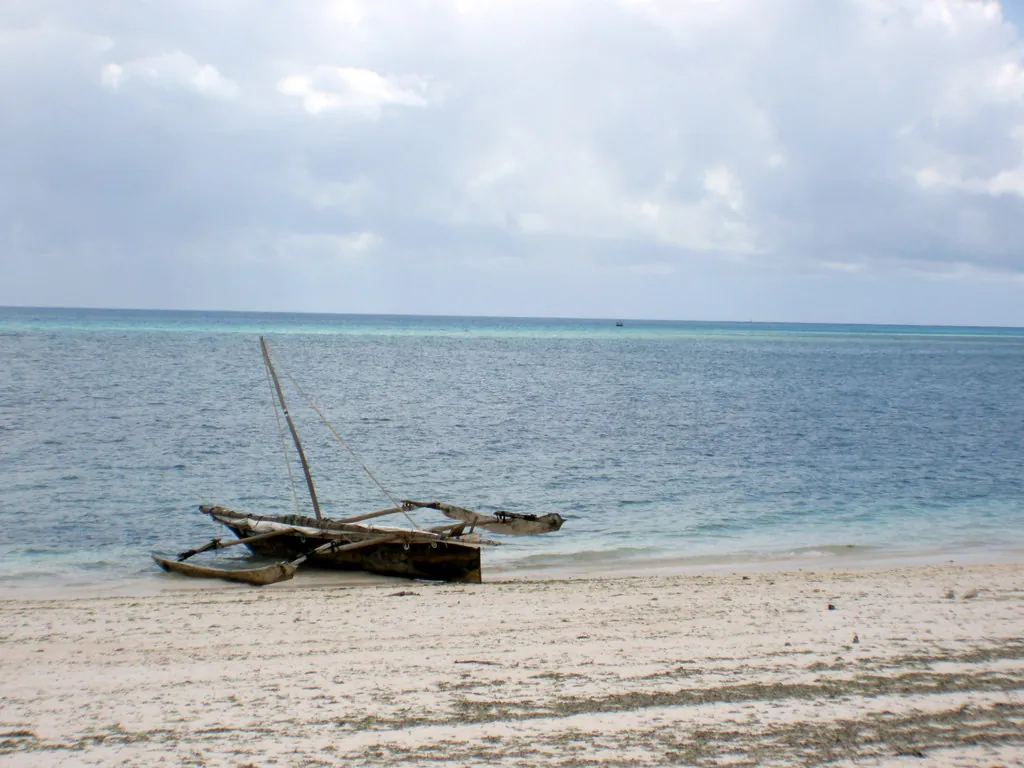
Wooden dhows built by hand on the sand, a lighthouse on the point and sunsets full of sails.
Tap any photo to see all 8.
Nungwi, at the island's northern tip, has long been a fishing village and a centre of dhow building. On the beach, wooden hulls are still shaped by hand on props before being launched into the sea.
At the very tip stands Ras Nungwi lighthouse, a white stone tower beside the Mnarani turtle pond, a natural tidal lagoon where green and hawksbill turtles are kept. The west side of the point faces open water, and at dusk the sails of the sunset dhow cruises cross the sun.
Why it's in this guide
Craft, colour and some of the island's best sunsets in one place — and easy swimming most of the day.
When to go
Mornings for the dhow yard, when work is most active and the fish market busiest; late afternoon into sunset for the beach and boats. The drier months, roughly June to October and late December to February, are the most reliable — and the busiest.
Tide: The swing is smaller than on the east coast and the water stays swimmable most of the day, but on some days the range is over two metres: at low tide boats sit on the sand and rock pools appear.
How to visit
Walk the beach to the dhow yard and the lighthouse viewpoint. Guides can introduce you to a boatyard. The turtle pond charges foreign visitors an entry ticket. Sunset dhow cruises are sold by hotels and on the beach.
Photography tips
The boatyard is a workplace: keep clear of the work and ask before photographing the builders. For sunset, shoot from the west side of the point with a sail in the frame.
Worth knowing
- Nungwi is the island's busiest beach area — expect bars, sellers and boat touts on the main stretch.
- The turtles live in an enclosed lagoon; watch rather than handle or feed them.
- The lighthouse belongs to the port authority — we found nothing saying visitors may go inside, so treat it as a view.
- Cover shoulders and knees away from the beach.
10. Kendwa · North-west coast
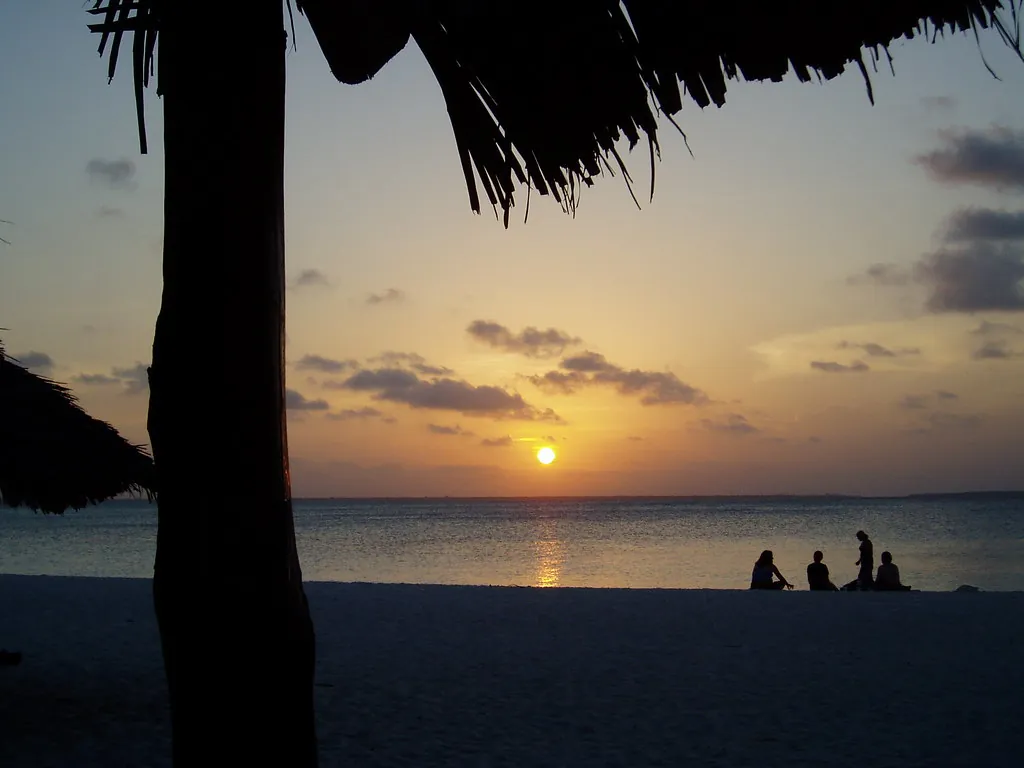
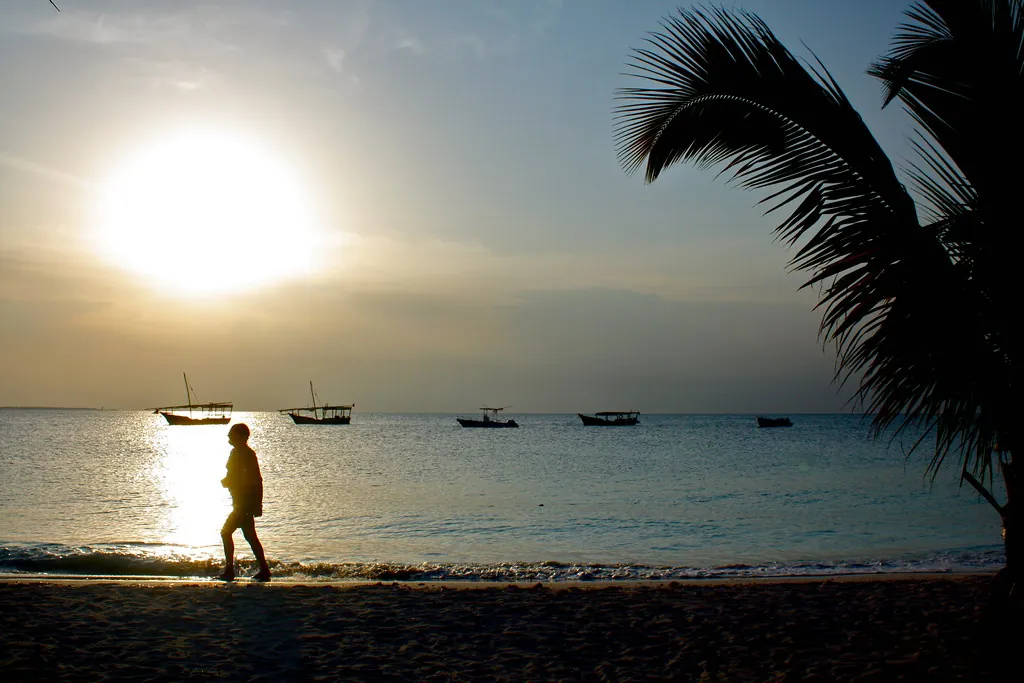
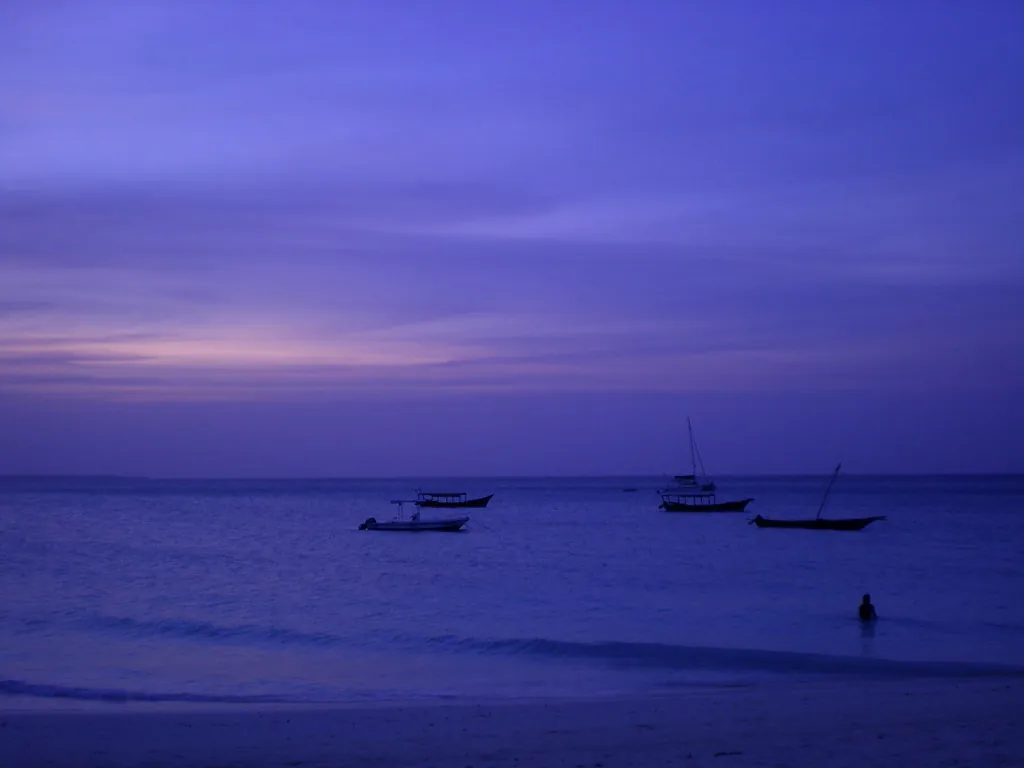
Kendwa beach at sunset
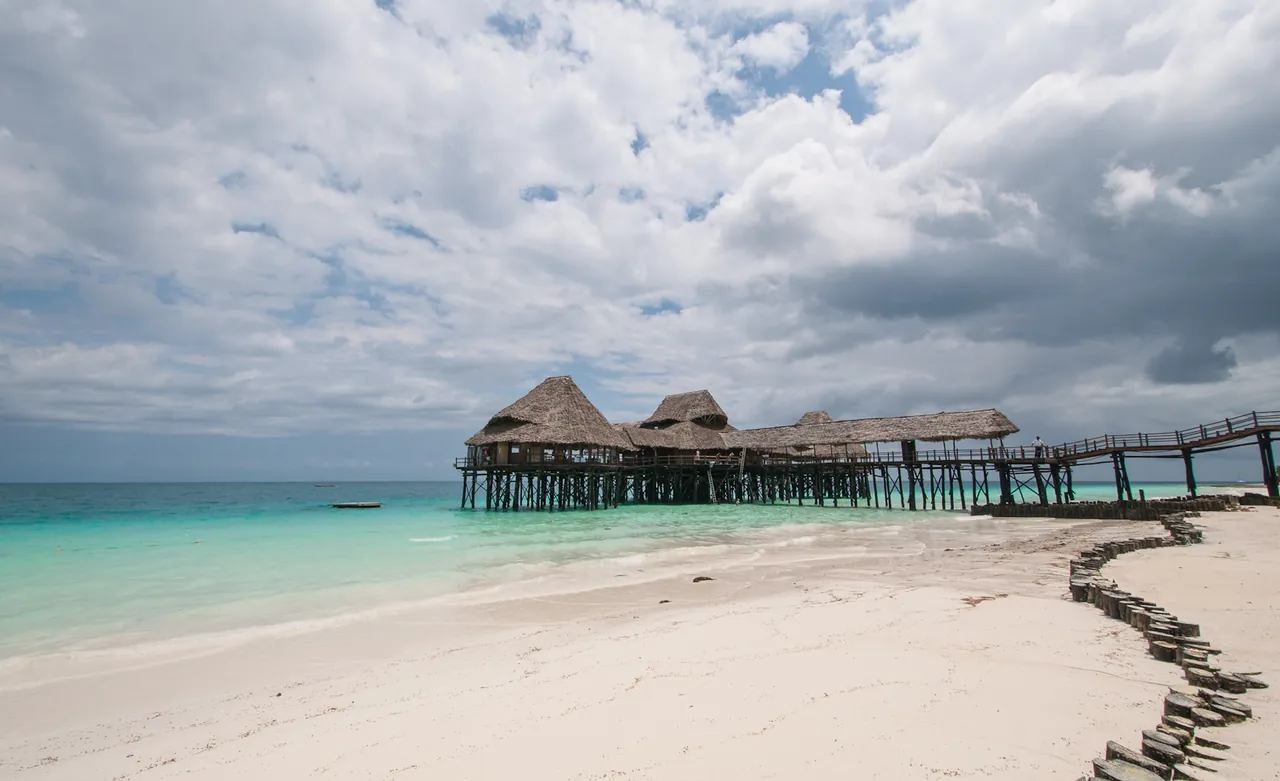
A long, wide, white beach where the sun sets straight into the sea.
Tap any photo to see all 8.
Just south-west of Nungwi, Kendwa is a long, wide sweep of very white sand with clear turquoise water and boats at anchor. It faces west, so the sun goes down directly over the sea.
The water deepens quickly here, so unlike the east coast it's swimmable at practically any state of the tide.
Why it's in this guide
The classic Zanzibar sunset beach — and a sea you can swim in whenever you like.
When to go
Late afternoon to sunset, then the blue hour afterwards. The drier months are the most reliable.
How to visit
Walk onto the beach from Kendwa village, or along the shore from Nungwi when the tide allows. It's a public beach lined with bars and hotels.
Photography tips
Moored boats make strong silhouettes at sunset; wade in for a low angle across the water. Stay for the deep blues after the sun has gone.
Worth knowing
- The monthly Full Moon party at Kendwa Rocks makes the beach loud and crowded that night (non-guests pay to enter).
- Expect beach sellers and boat-trip sellers.
- Beachwear is fine on the sand; cover up in the village.
11. Off Matemwe · North-east coast
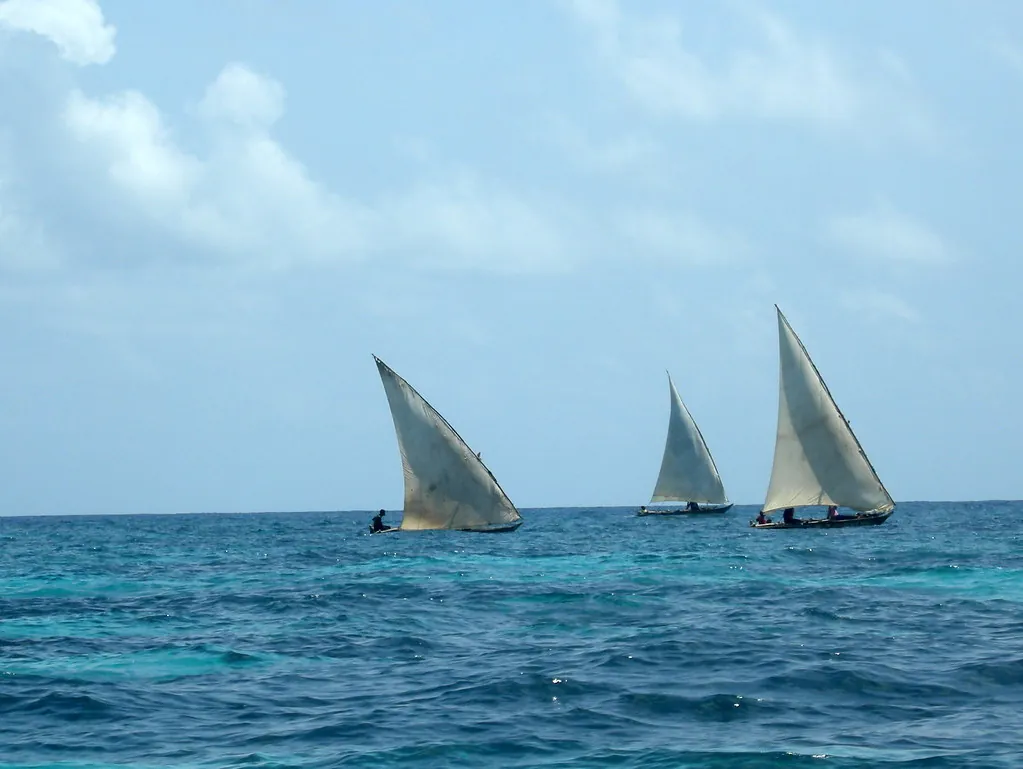
Mnemba Atoll
A ring of reef and turquoise shallows around a private island — the island's best-known snorkelling.
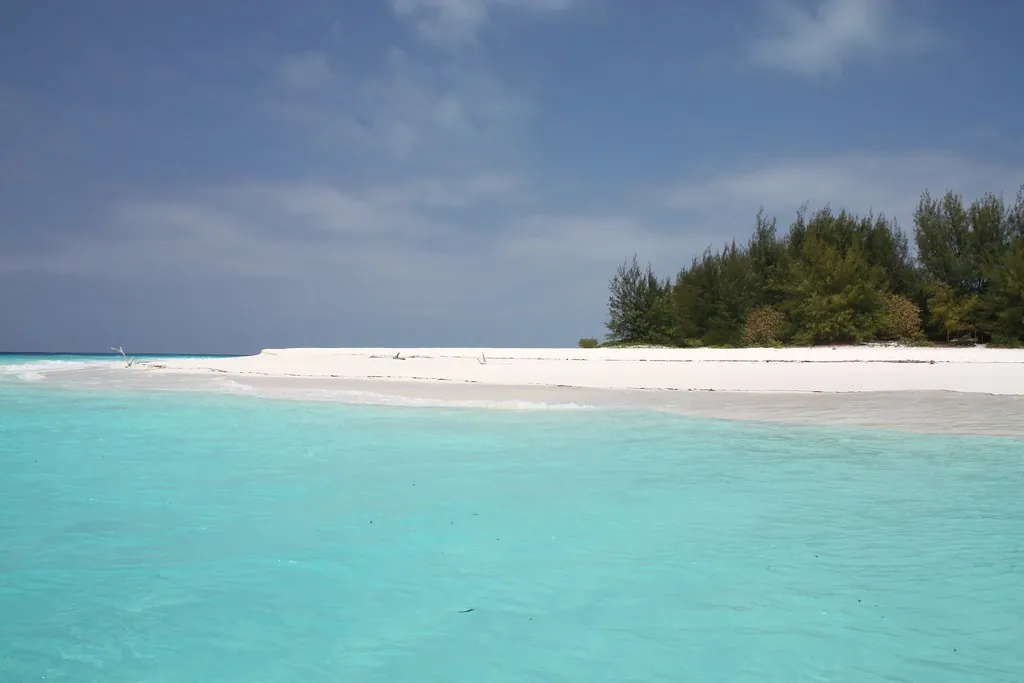
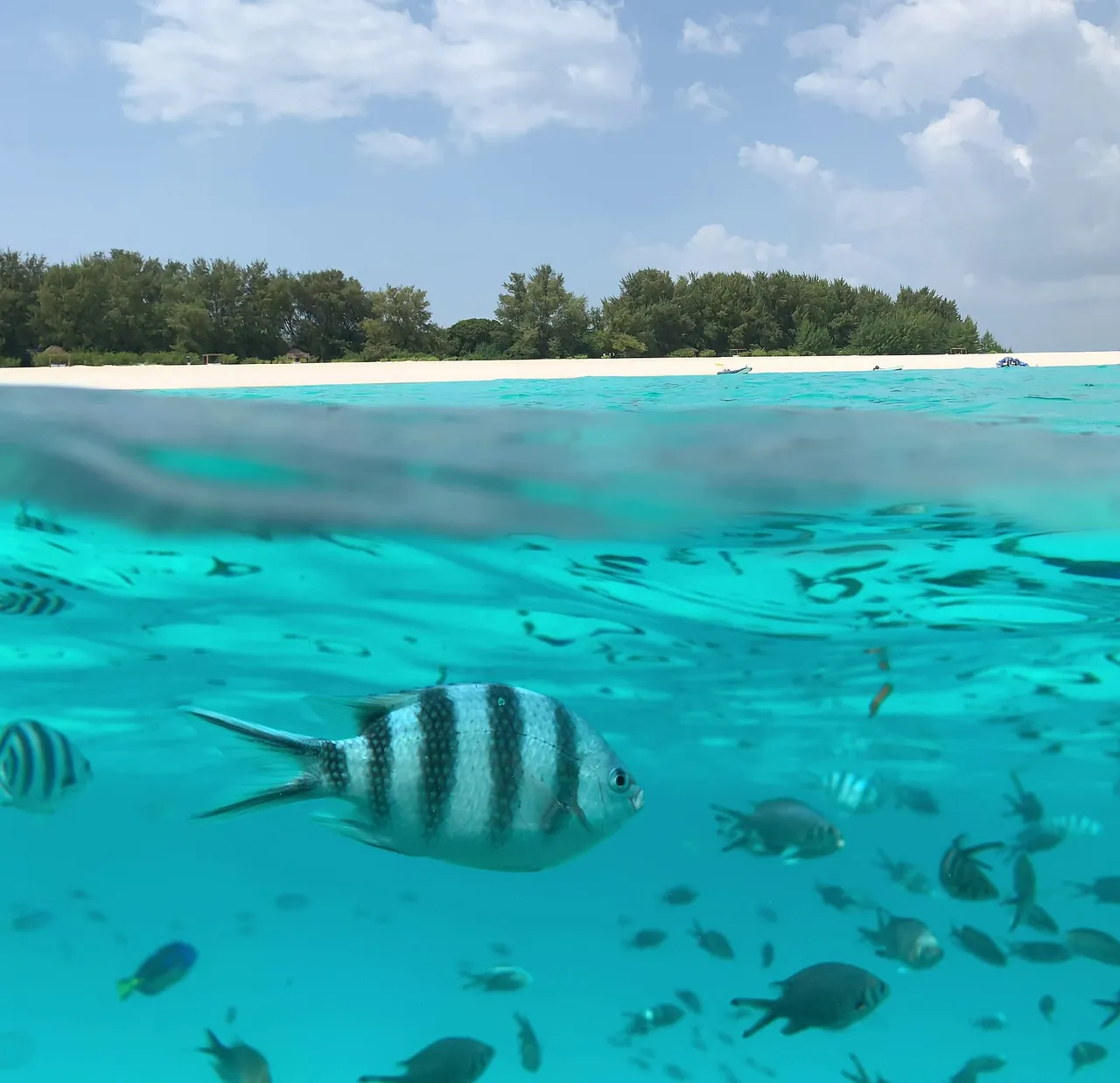
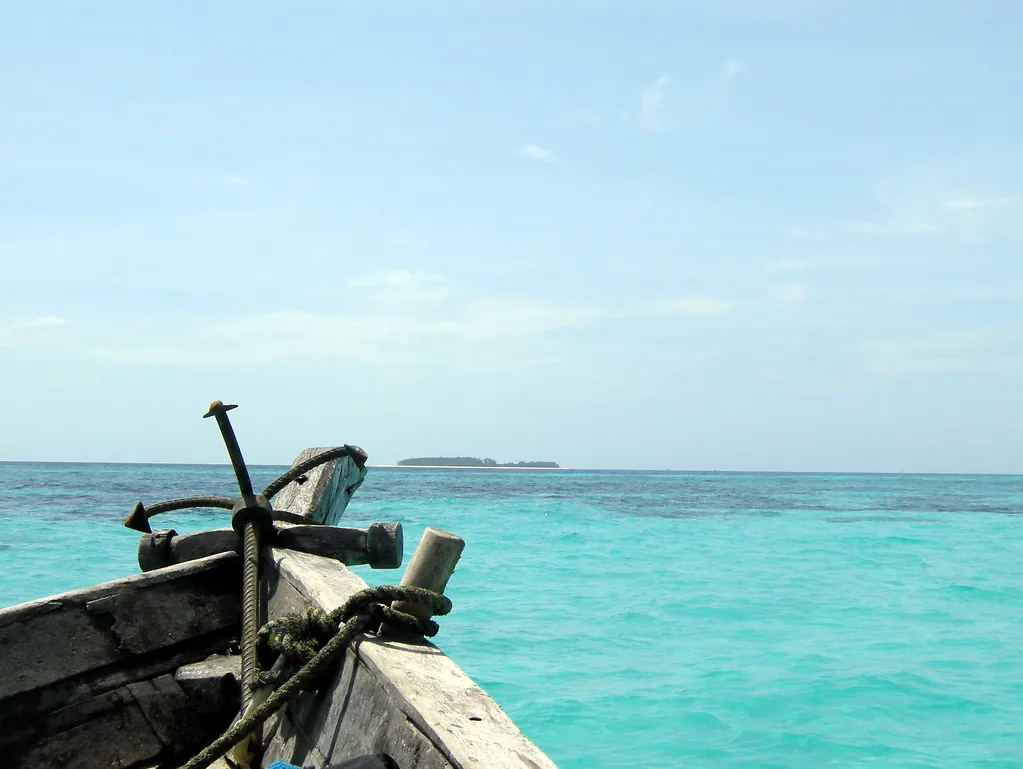
Tap any photo to see all 8.
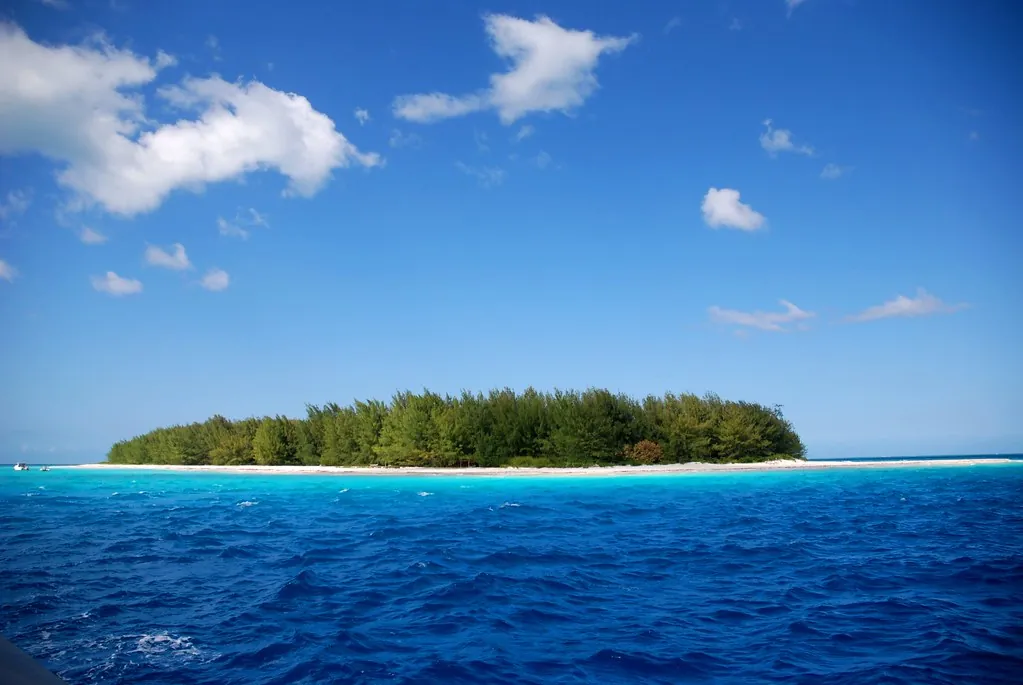
Mnemba is a small, private, wooded island about 3 km off the north-east coast, inside an oval reef some 7 km long. The reef around it is a marine conservation area, and it's the reef — not the island — that day visitors come for.
Turquoise shallows over white sand give way to coral, turtles and clouds of reef fish, and bottlenose dolphins are often, but not always, seen in the deeper water.
Why it's in this guide
Colours that look unreal from the boat, and some of the clearest snorkelling on Zanzibar.
When to go
Morning trips are the norm and the sea is usually calmer. The crossing can be choppy in the windier months; calm seas are most frequent around November and March.
Tide: Some trips add a sandbank stop that only appears around low tide.
How to visit
By guided boat trip only, mostly from Muyuni and Matemwe (about a 20-minute crossing), and some from Nungwi and Kendwa. There's a per-person marine conservation fee — ask whether your trip includes it.
Photography tips
Shoot from the boat with the sun behind you for the strongest colour. A cheap waterproof case is enough for the shallows; turn off flash underwater.
Worth knowing
- The island itself is private — only guests of the &Beyond lodge may land, and boats must keep out of an exclusion zone around it.
- Dolphins are wild: choose an operator that doesn't chase, encircle or feed them, and don't expect a sighting every time.
- No-take area: don't touch or stand on coral, and use reef-safe sun cream. Take seasickness tablets if you need them.
12. Matemwe · North-east coast
Matemwe at sunrise
A palm-backed beach facing the sunrise, with Mnemba on the horizon.
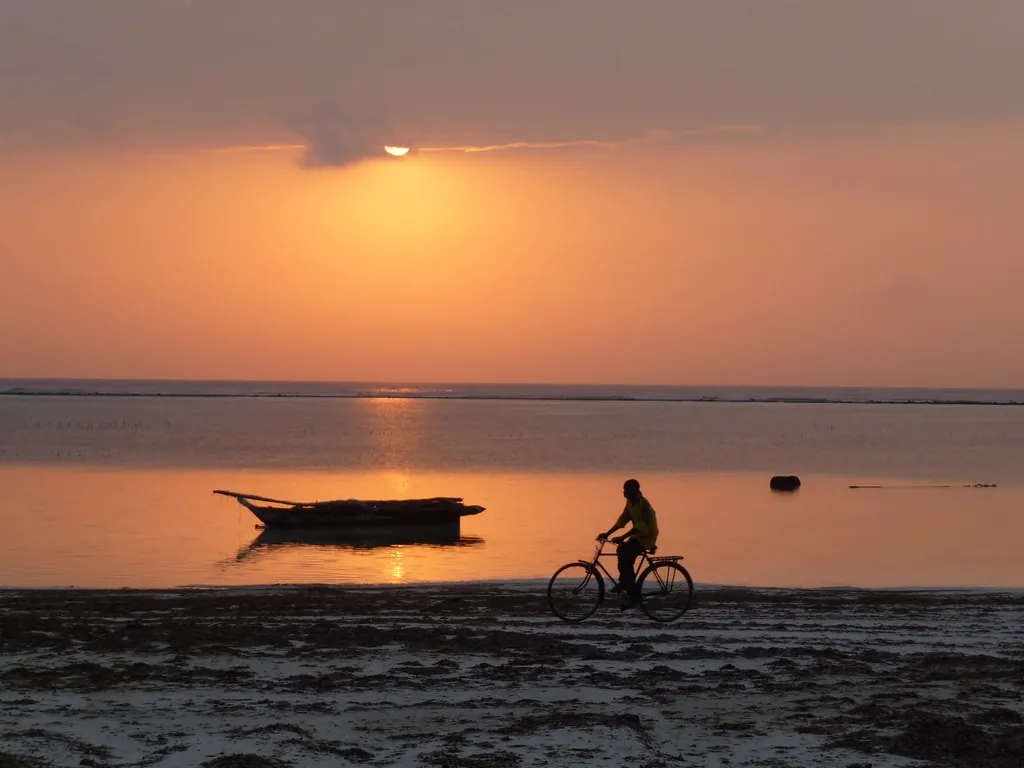
Tap any photo to see all 7.
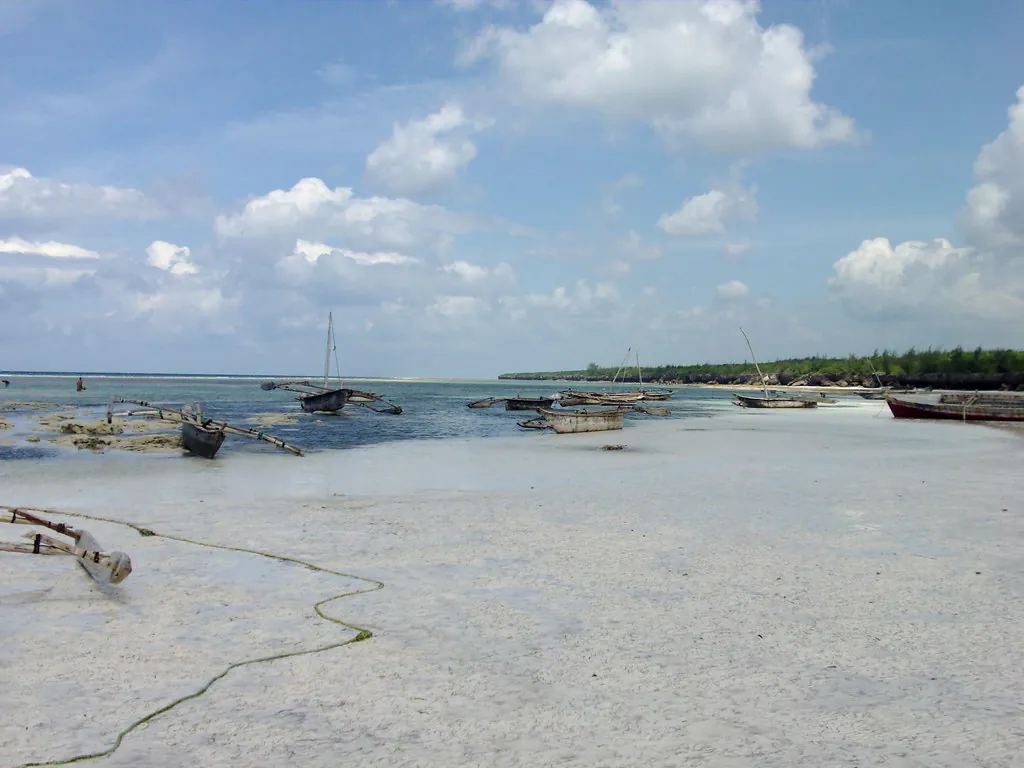
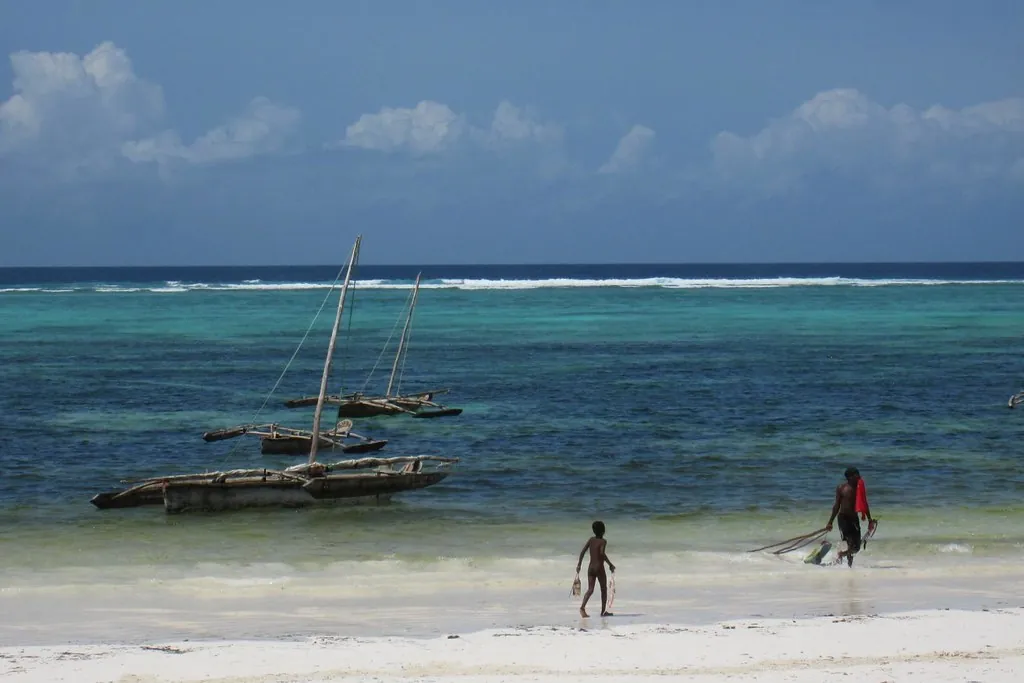
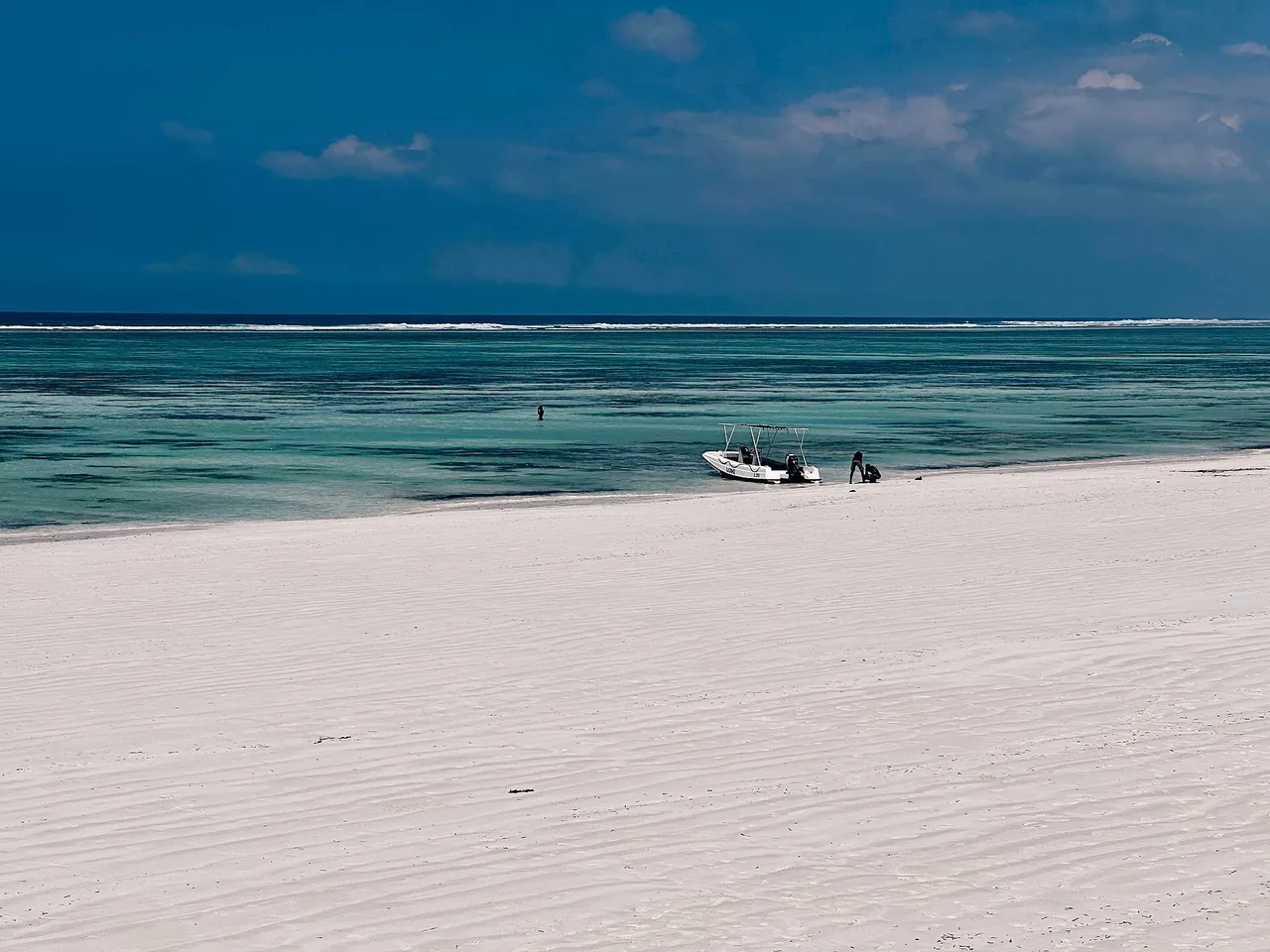
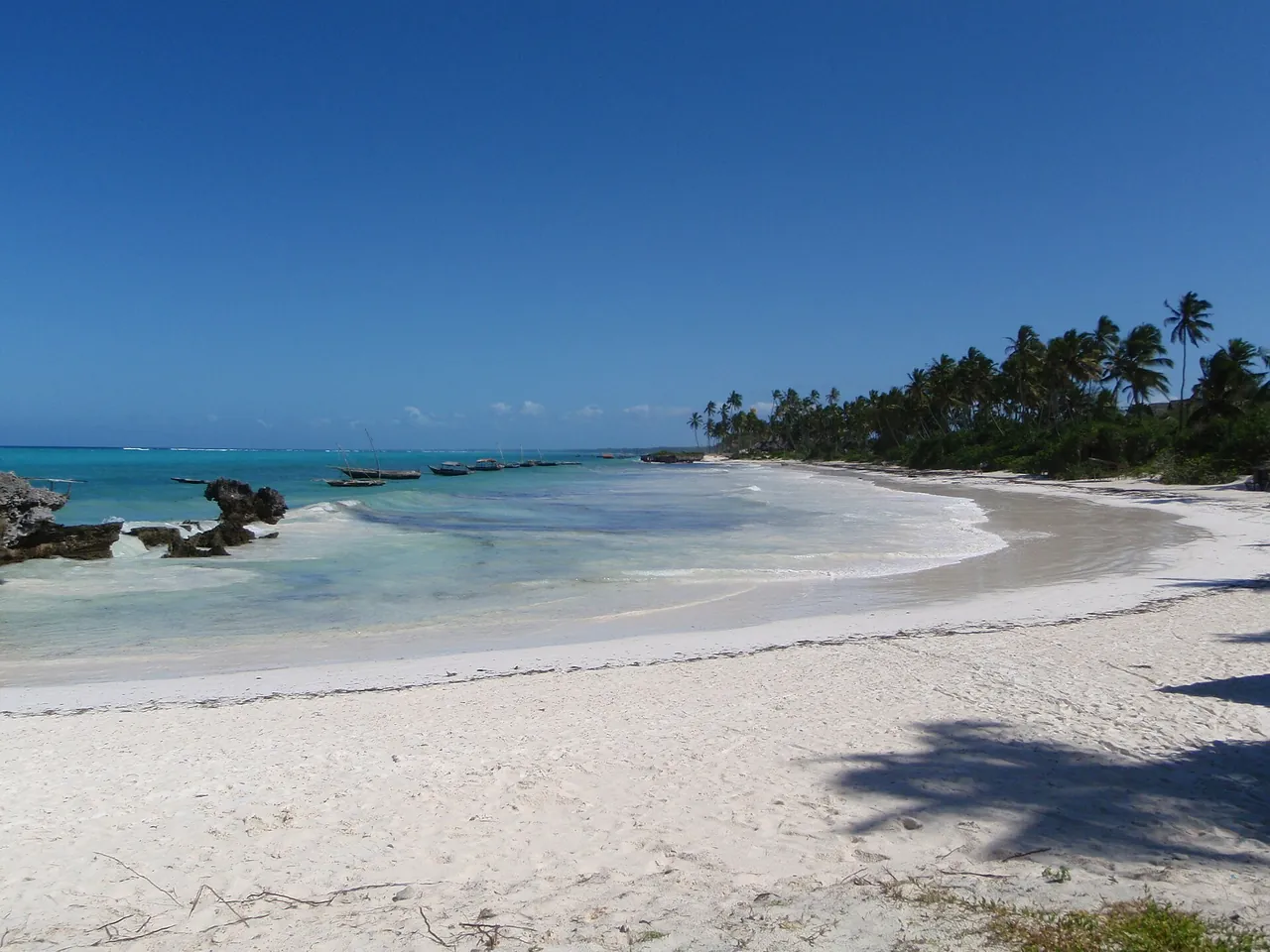
Matemwe is a fishing and seaweed-farming village on the north-east coast, opposite Mnemba. Its long, very white beach is backed by palms and faces east over a wide lagoon and reef.
Outrigger canoes (ngalawa) and dhows rest on the sand, and the lagoon runs through every shade of turquoise as the tide moves.
Why it's in this guide
Wide, quiet and luminous at dawn — one of the island's loveliest sunrise beaches.
When to go
Sunrise, when the light comes up over the reef.
Tide: At low tide the sea retreats a long way, exposing reef flats, rock pools and seaweed farms — good for walking and photographs, not swimming. Swim at high tide.
How to visit
Walk onto the beach from the village or the hotels. Mnemba trips leave from here and from neighbouring Muyuni, and guided low-tide reef walks and village visits are offered locally.
Photography tips
Use the canoes on the sand as foreground against the sunrise. Ask before photographing anyone, especially the women at the seaweed farms.
Worth knowing
- A working, conservative village: dress modestly off the beach and don't walk through the seaweed plots.
- Seaweed can wash up on east-coast beaches at times, especially in the north-east monsoon.
- Low tide limits swimming.
13. Pongwe · East coast
Pongwe and its island
A secluded palm-fringed bay with a tiny tree-topped island in the turquoise.
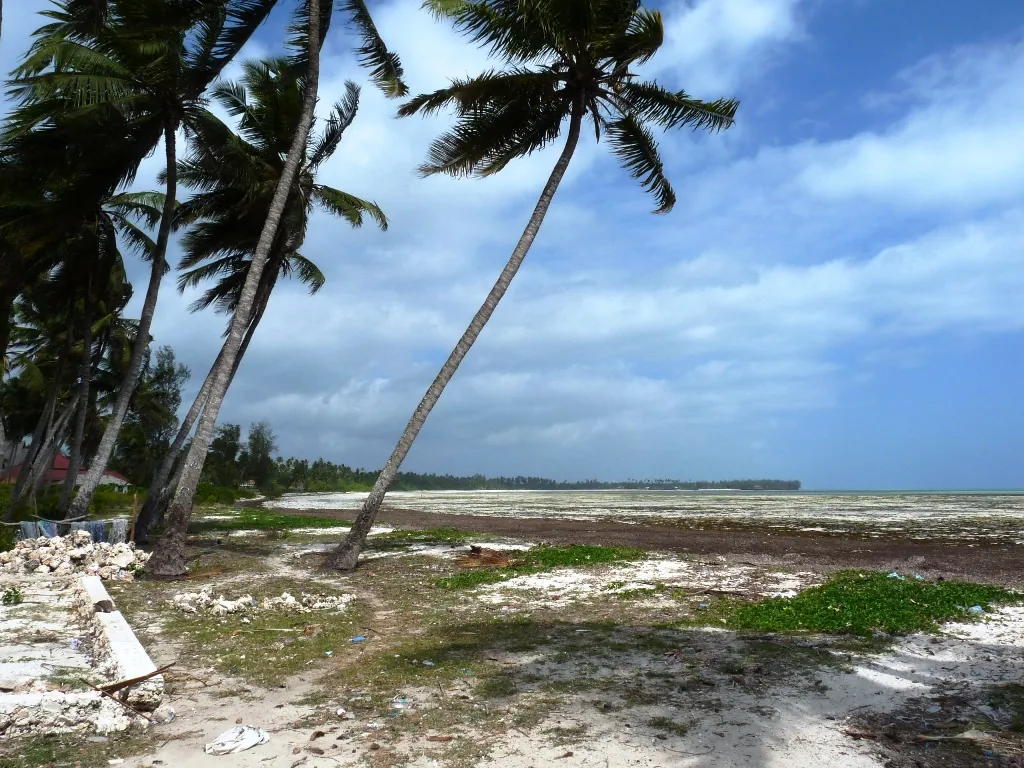
Tap any photo to see all 10.
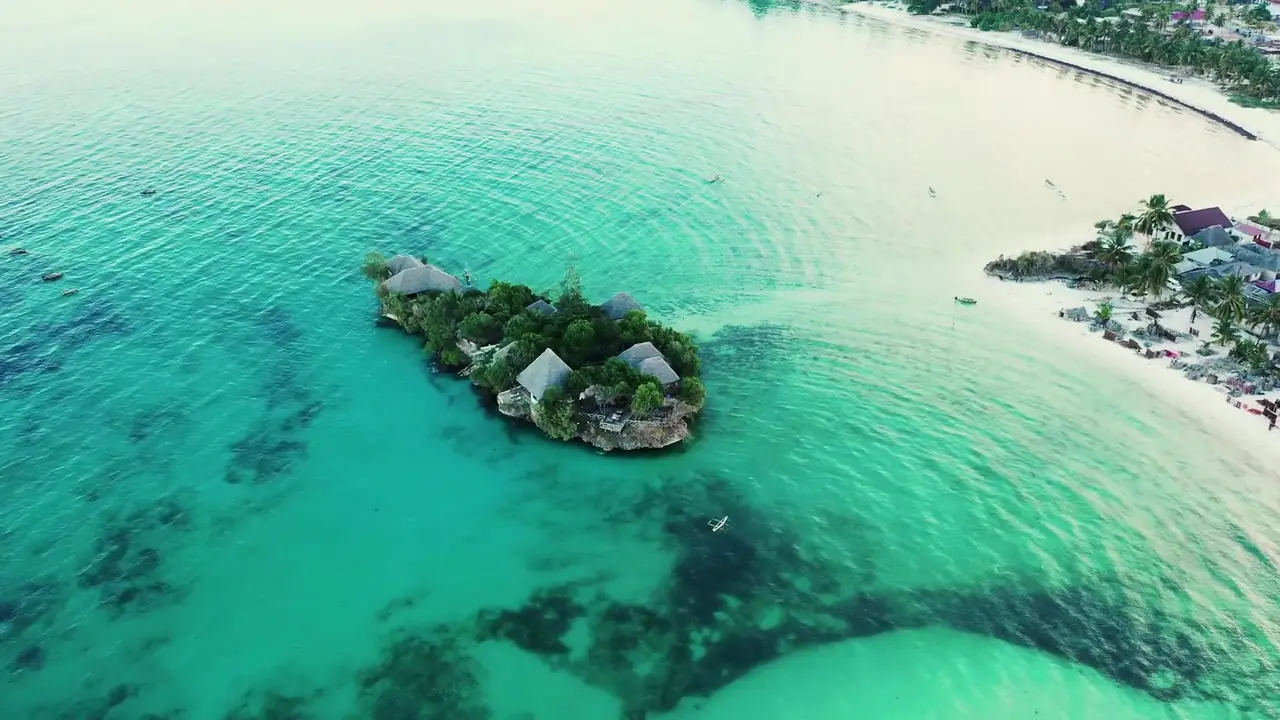
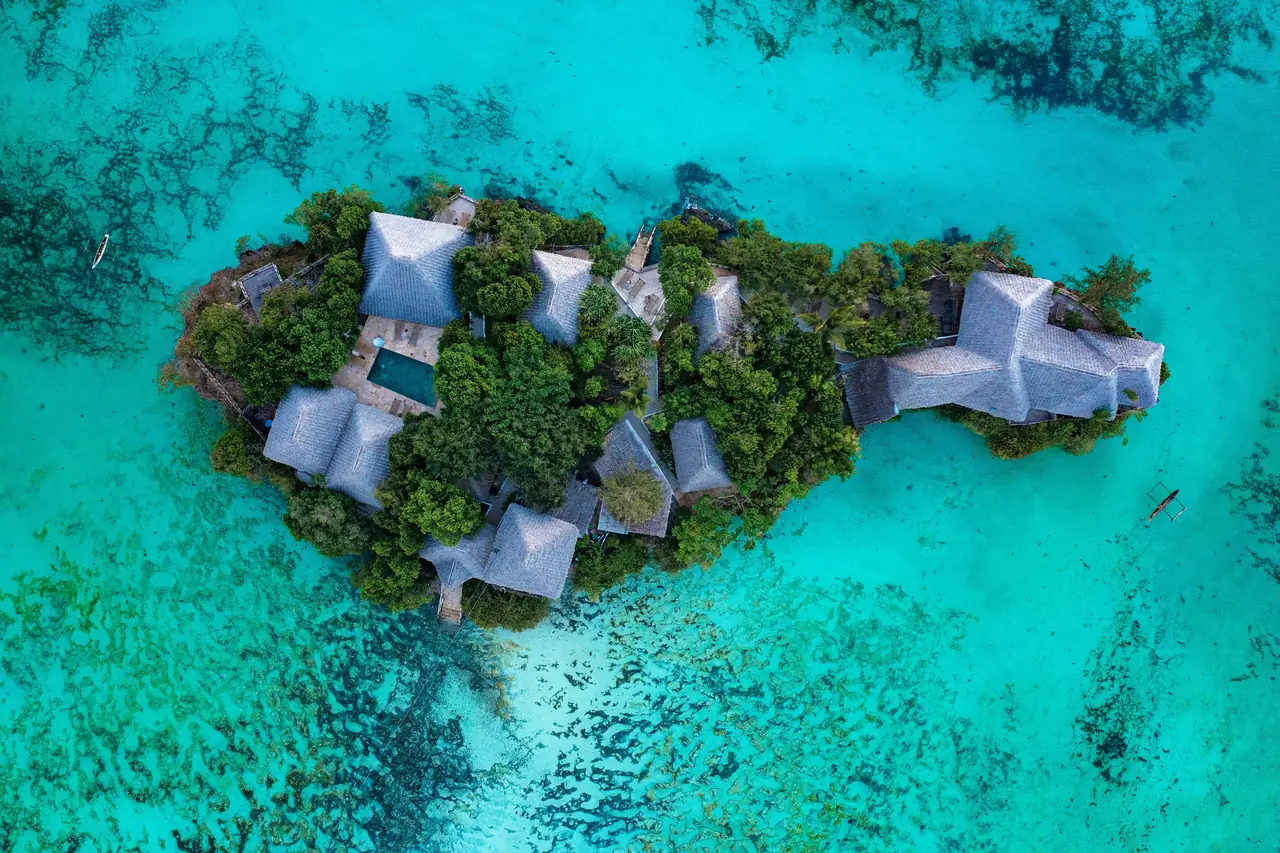
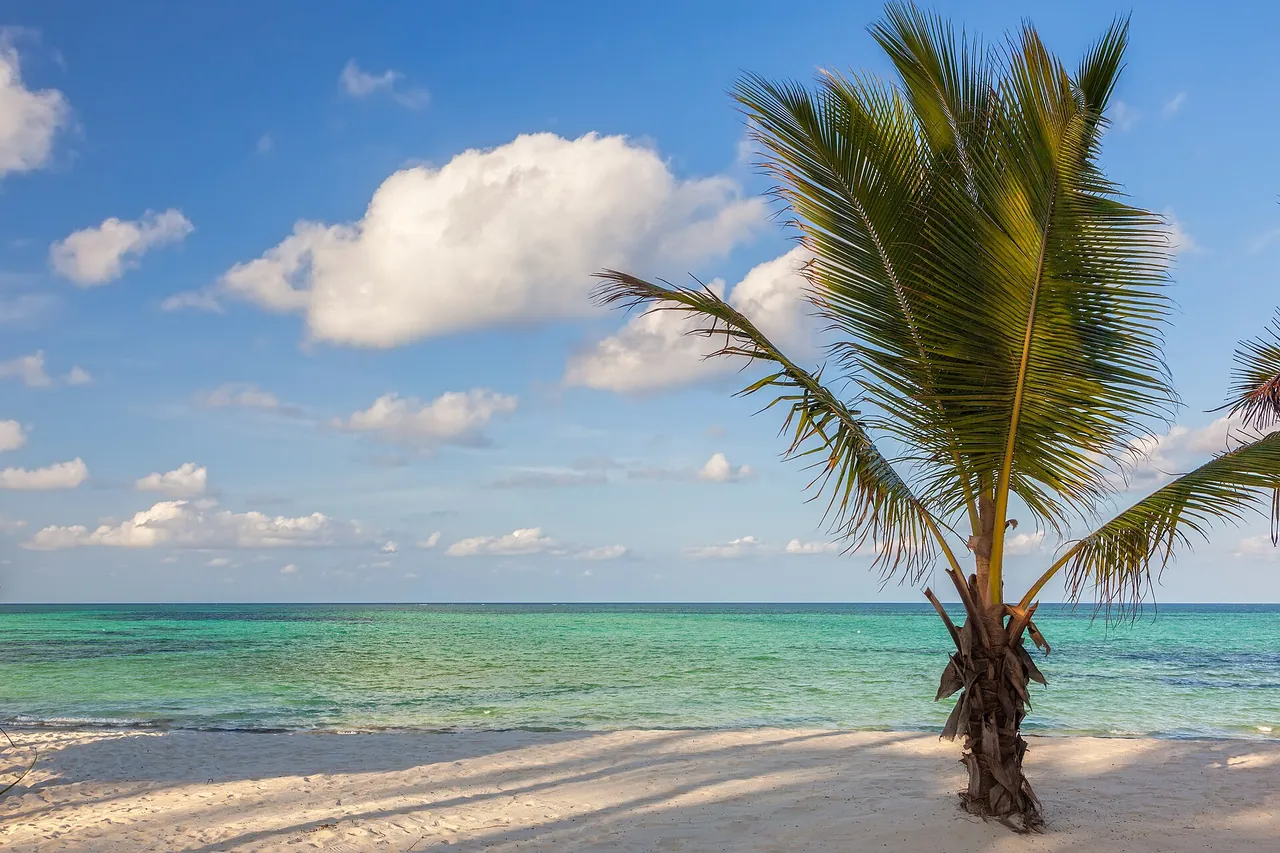
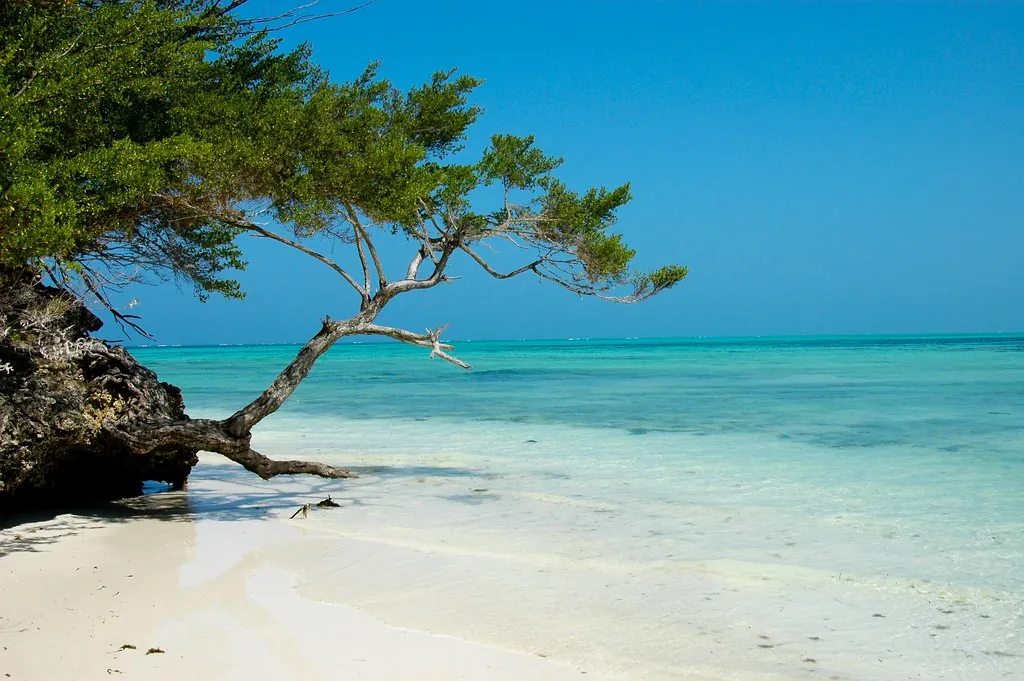
Pongwe is a small village on the east coast, between Kiwengwa and Uroa. Its secluded, palm-fringed beach looks over clear turquoise water dotted with coral outcrops topped with trees.
The best known of them is a tiny coral islet in the bay, home to a private six-villa lodge, The Island Pongwe — reached across the sand at low tide or by a short boat crossing at high tide.
Why it's in this guide
The 'little island in a turquoise bay' view that people imagine when they think of Zanzibar.
When to go
Sunrise — the beach faces east.
Tide: High tide gives the island-in-turquoise view and the best swimming; at low tide the sea retreats a long way (around 500 m to swimmable water), uncovering reef and seaweed farms.
How to visit
Walk onto the public beach from the village. The islet is a private lodge — admire it from the beach unless the lodge confirms you may visit.
Photography tips
Shoot the islet from the beach at mid-to-high tide on a bright morning; a slightly longer lens makes it fill the frame.
Worth knowing
- Don't walk onto the private islet uninvited at low tide.
- The coral underfoot is sharp — wear reef shoes.
- Dress modestly in the village and ask before photographing people.
14. Jozani · Centre-south
Jozani Chwaka Bay National Park
Zanzibar's only national park, and the island's own red colobus monkeys.

Tap any photo to see all 7.
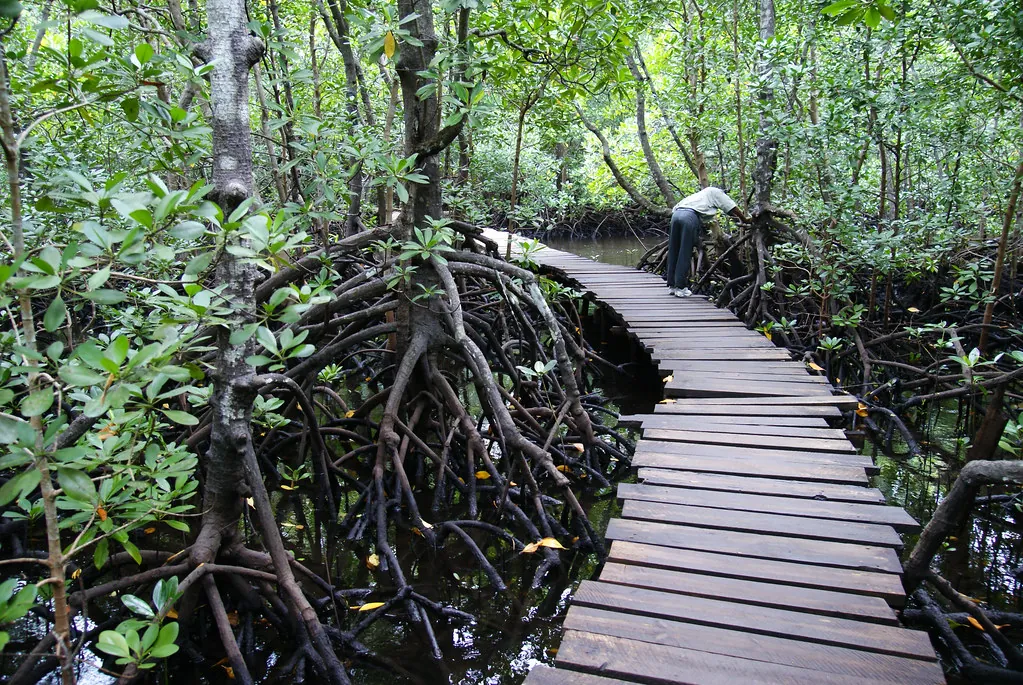
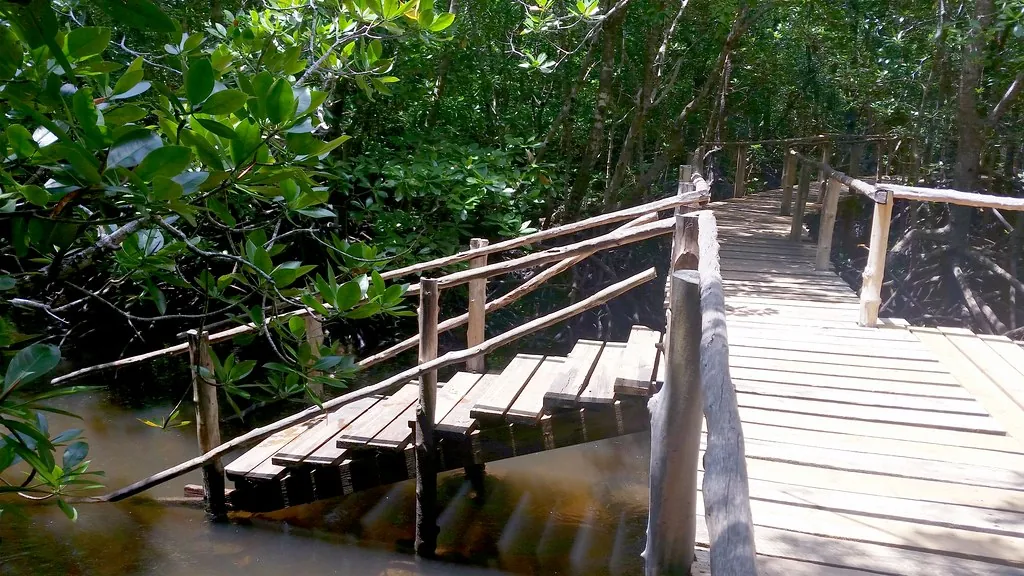
Jozani protects the island's last large patch of groundwater forest and the mangroves of Chwaka Bay. Tall trees and fan palms shade the forest trail, and a wooden boardwalk loops over the stilt roots of the mangrove swamp.
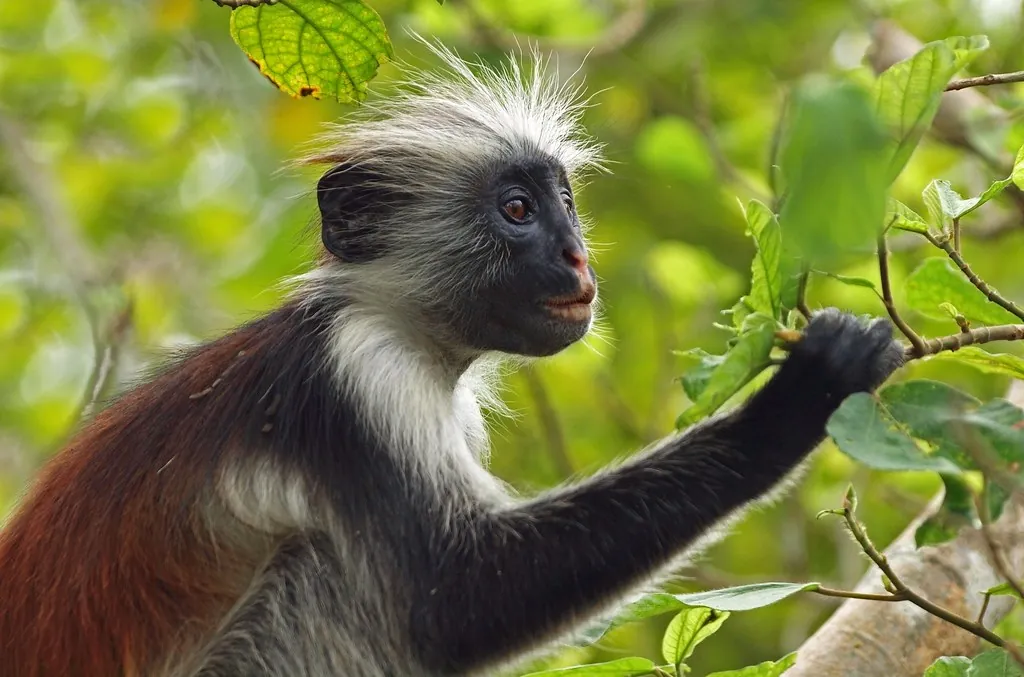
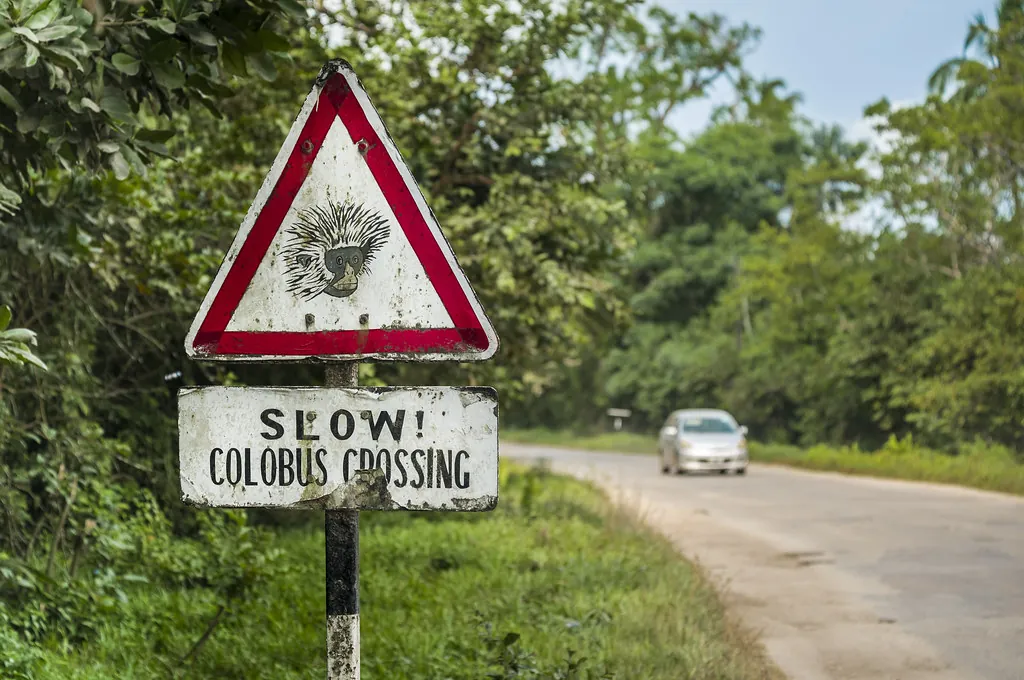
The stars are the Zanzibar red colobus — an endangered monkey found only on Zanzibar, with a pale tufted crown and a red-brown back. A large share of the whole population lives around Jozani, often close to the trail and the road.
Why it's in this guide
Green, shaded and quiet after the glare of the beaches, with one of the few chances anywhere to see a monkey that lives nowhere else on Earth.
When to go
Mornings are cooler and generally recommended for seeing the monkeys active. The forest walk takes about 45 minutes; the mangrove boardwalk is a separate short loop nearby.
How to visit
Buy an entry ticket at the gate, about 35 km south-east of Stone Town on the road to Paje. Visits are led by the park's own guides. Most people come on a day tour, often combined with the east coast, but a taxi works too.
Photography tips
Leave the flash off and use a fast shutter in the dim forest; the monkeys move quickly. Under the trees, a slightly raised exposure keeps their pale crowns from turning grey.
Worth knowing
- Never touch or feed the colobus. Park staff ask visitors to stay at least 3 metres away: a human illness could devastate this small population.
- Colobus cross the main road by the park — drive slowly.
- We couldn't find an official park website; ask at the gate for the current rules.
15. Michamvi · South-east coast (Chwaka Bay side)
Michamvi Kae
The east coast's sunset beach, looking west across the glassy waters of Chwaka Bay.
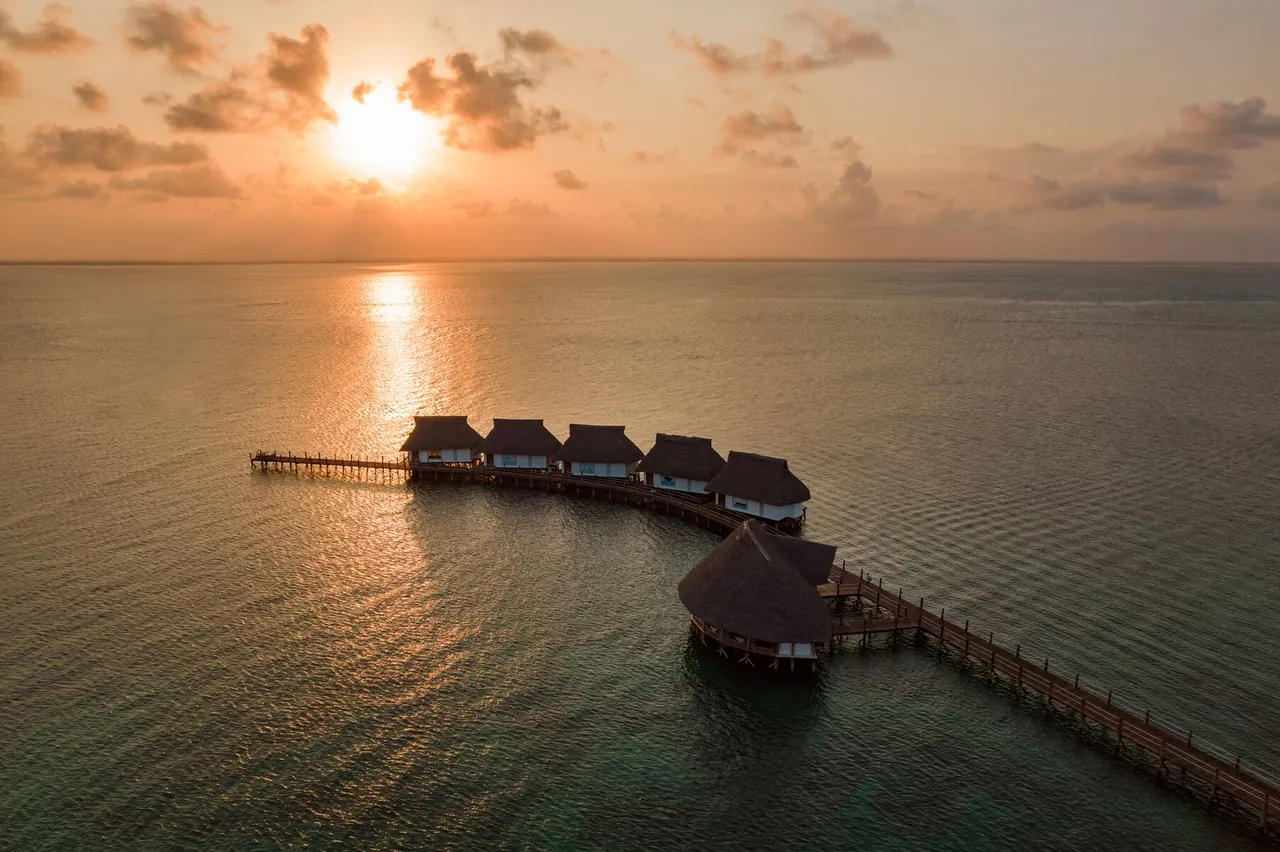
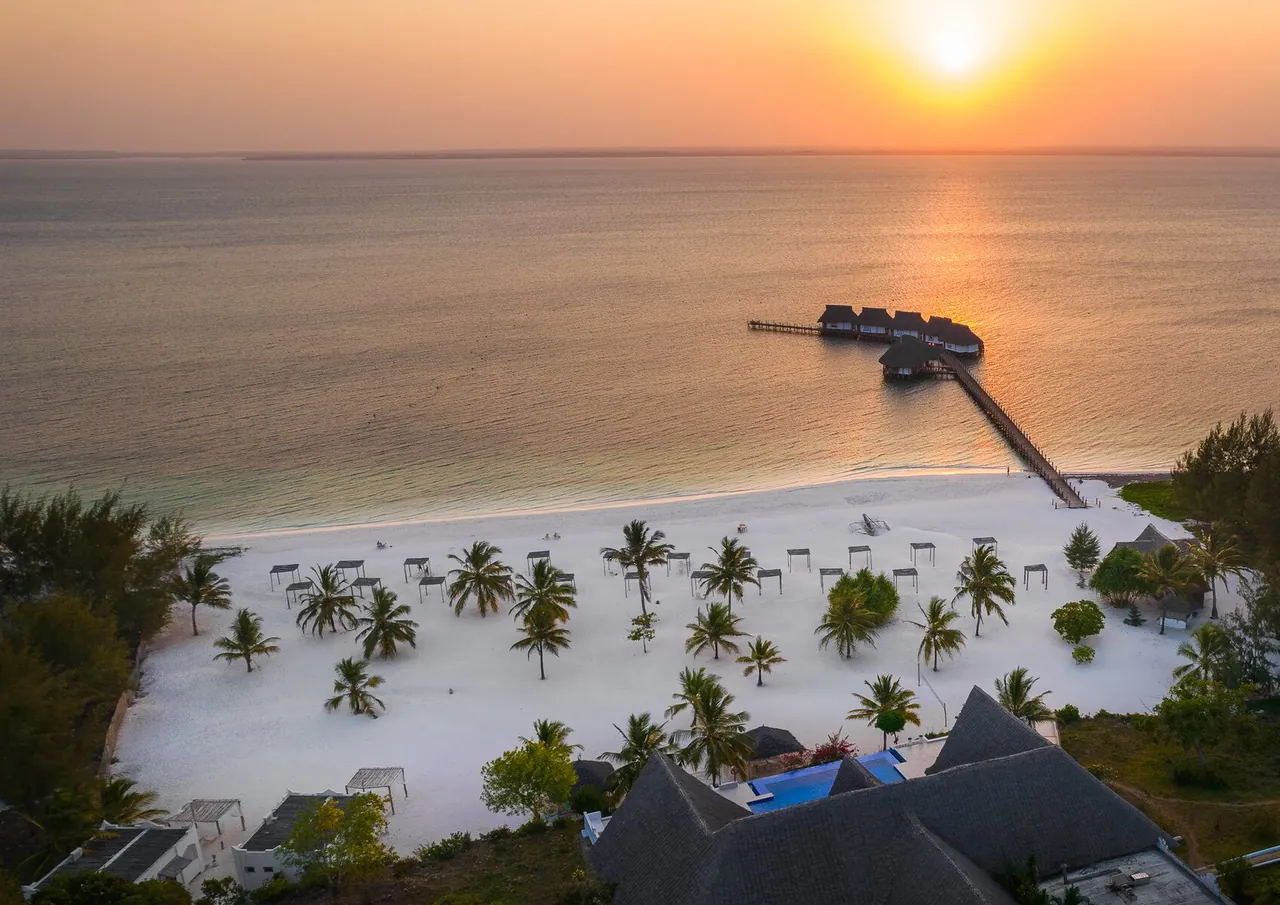
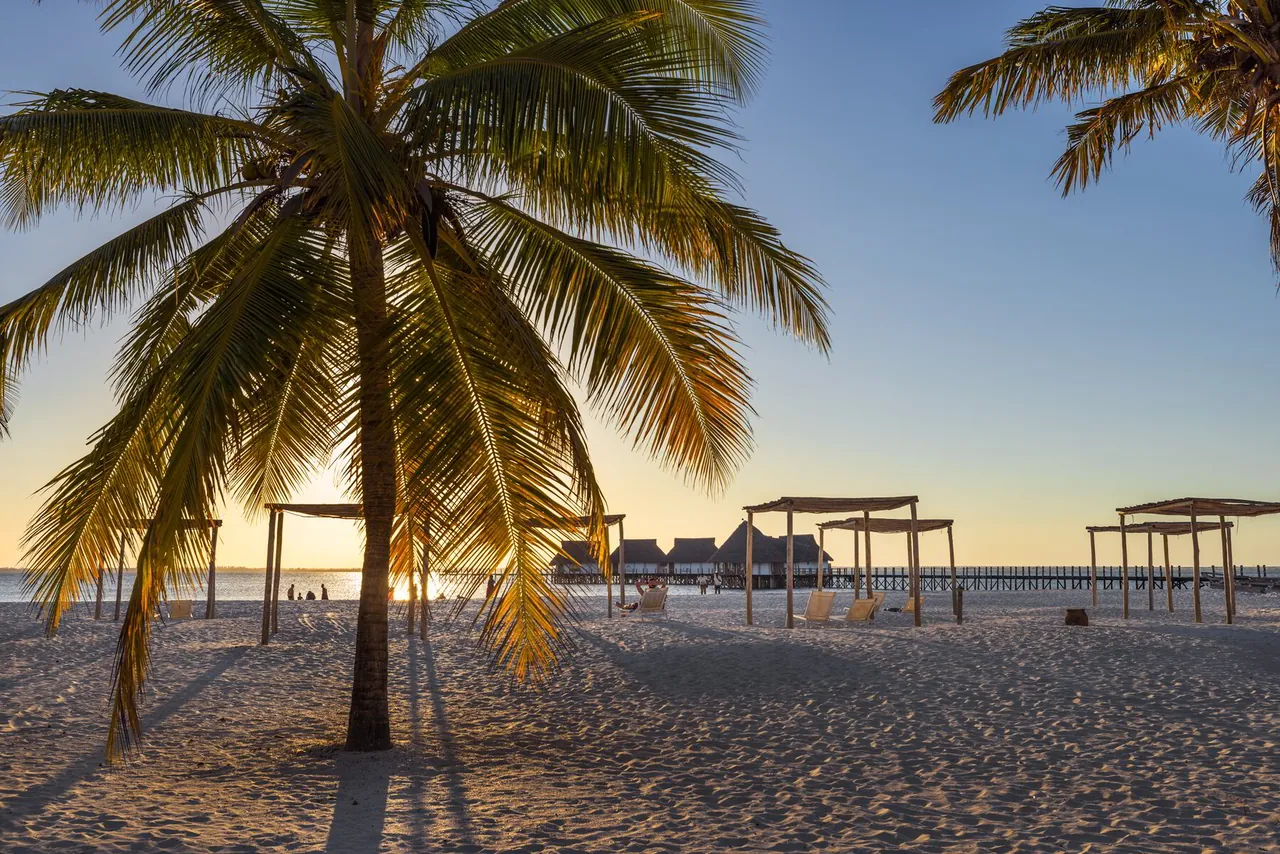
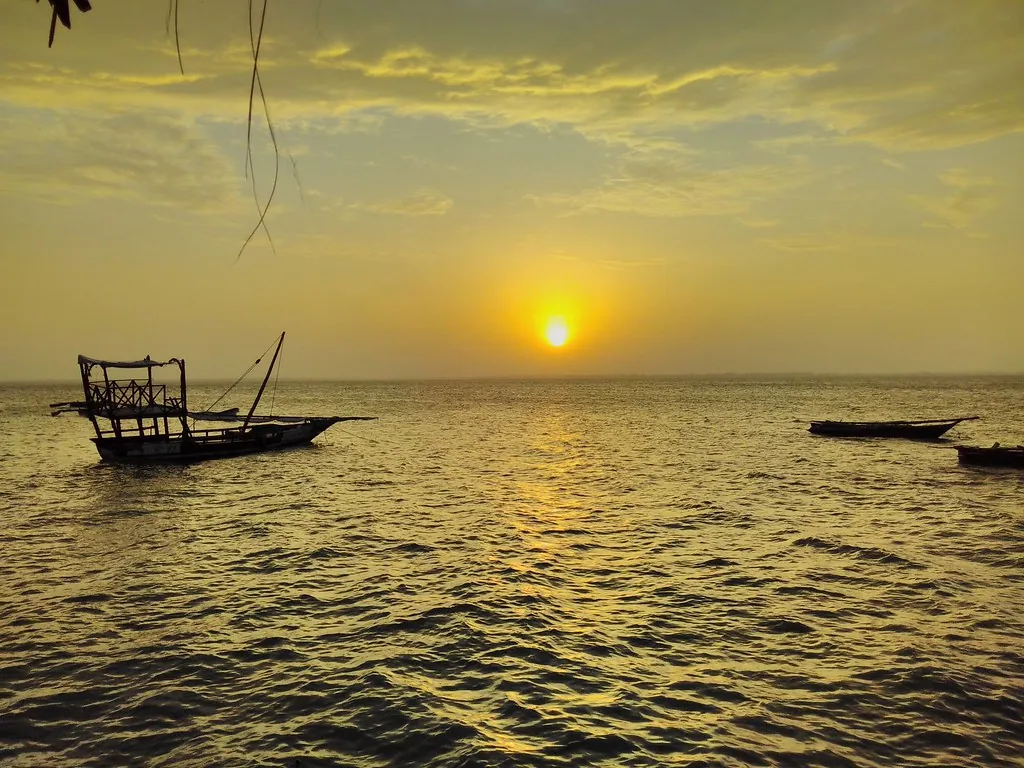
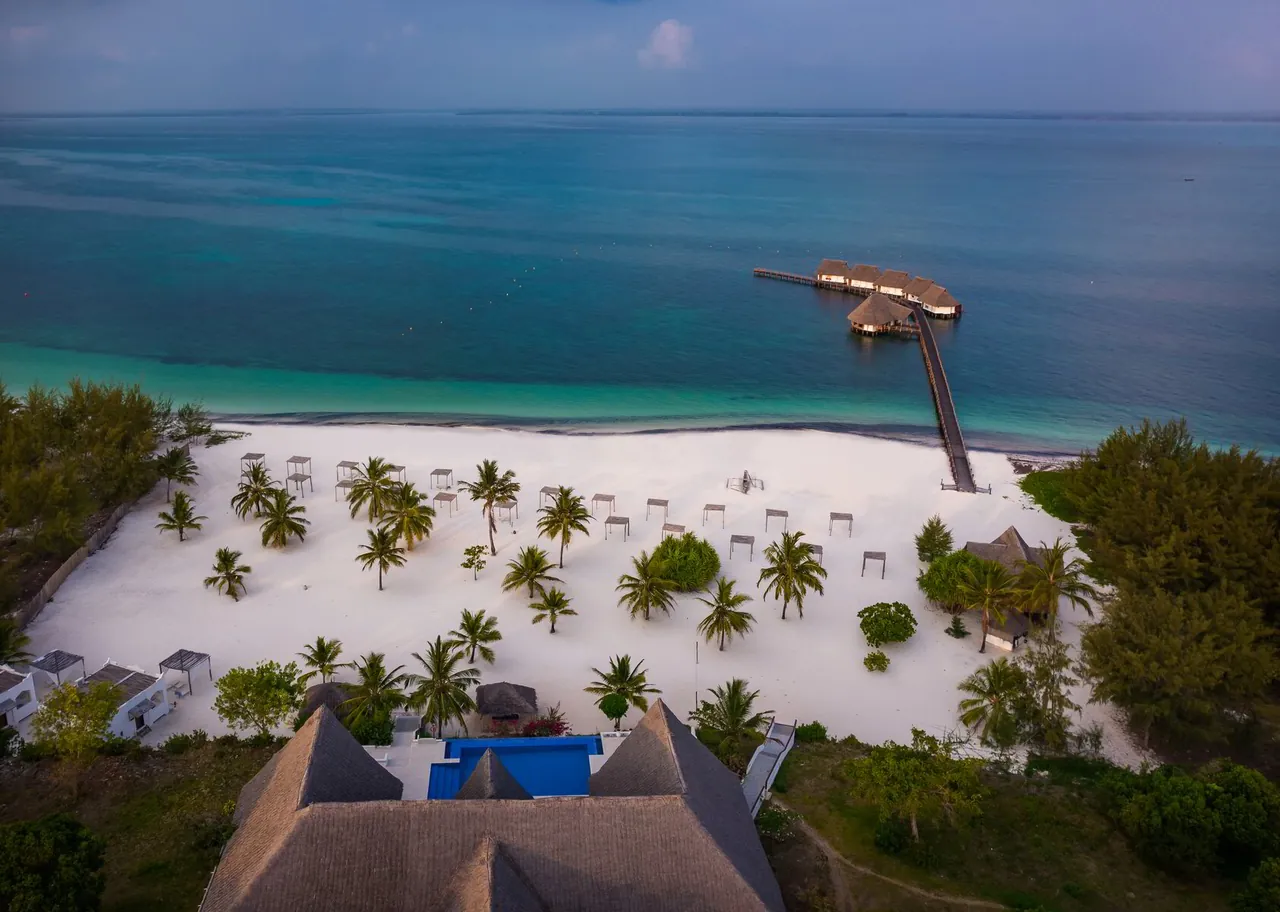
Kae is the beach of Michamvi village, on the bay side of the Michamvi peninsula. It's a long ribbon of sand facing west across Chwaka Bay — one of very few places on the east coast where you can watch the sun set over water.
The bay is calm and glassy, with dhows and fishing boats in silhouette as the light goes, and beach bars on the sand hold sunset sessions.
Why it's in this guide
If you're staying on the east coast, this is where to see the sun go down over the sea.
When to go
The hour before sunset through dusk. The beach is quiet during the day.
Tide: At low tide the bay is very shallow — knee-deep for wading. Swim and snorkel at high tide.
How to visit
By road to Michamvi, then a rough, rocky track for the last stretch. Beach bars and several small hotels are close by.
Photography tips
Look for a dhow or fishing boat to put against the sunset; the calm water often gives reflections.
Worth knowing
- Busy and loud at sunset on party nights; quiet the rest of the day.
- The track is rough after rain.
- Not the same place as The Rock, which is on the other side of the peninsula at Pingwe.
- Dress modestly in the village and ask before photographing people.
16. Michamvi Pingwe · South-east coast
The Rock
A restaurant on a coral rock in the lagoon — on foot at low tide, by boat at high.
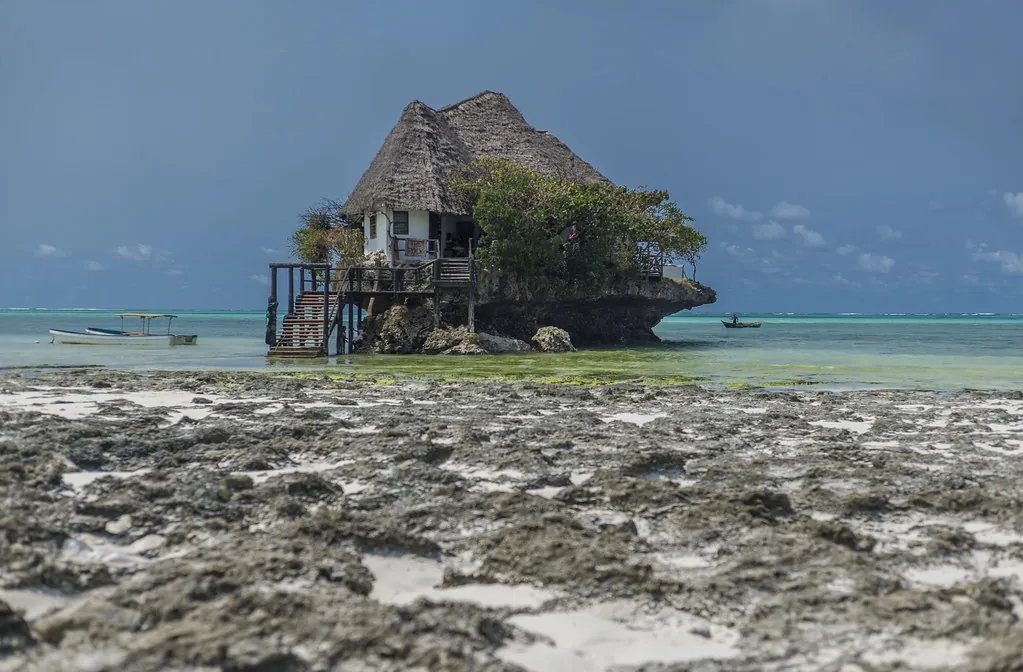
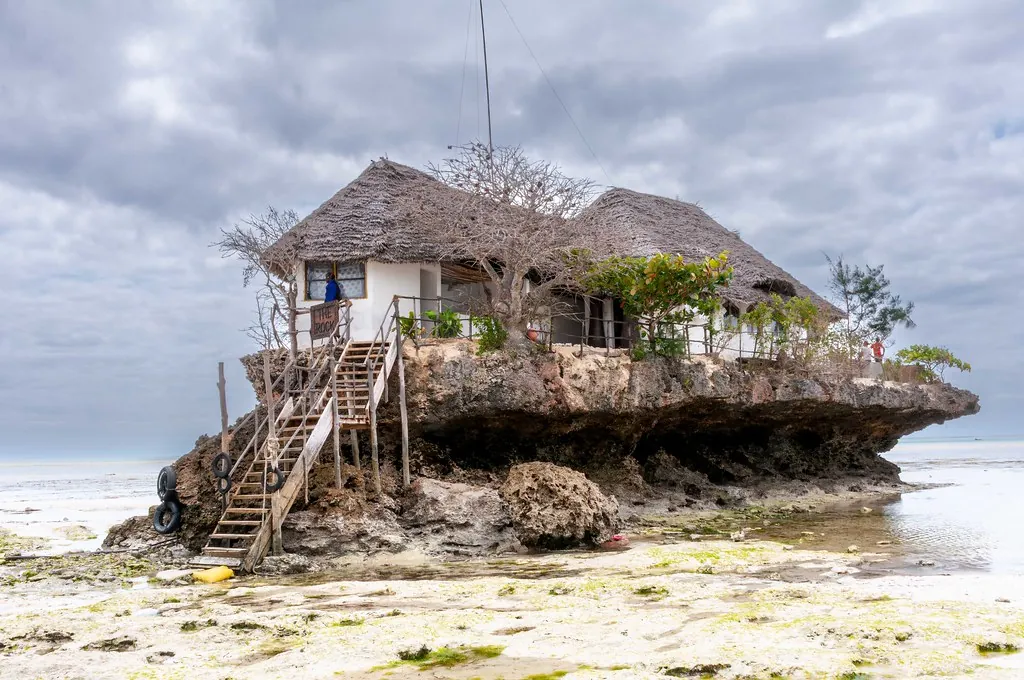
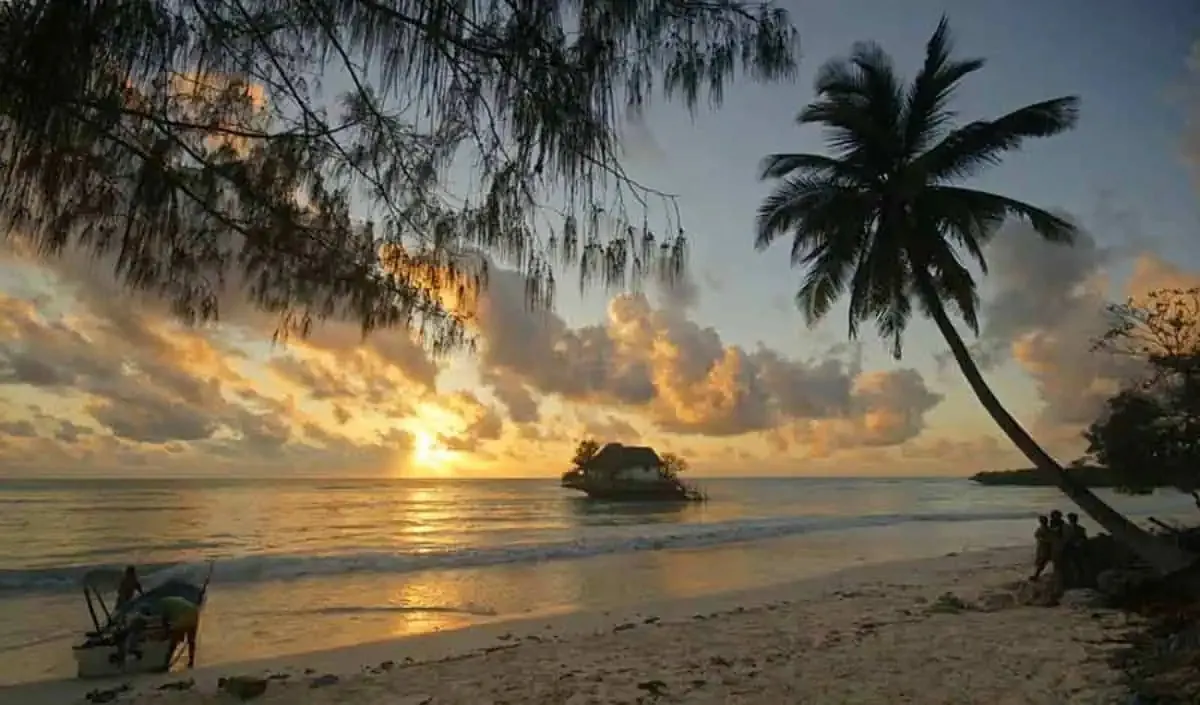
Tap any photo to see all 8.
A single thatched house sits on a coral outcrop just off Pingwe beach. At high tide it seems to float in the lagoon; at low tide it stands on the bare reef flat with its wooden staircase to the sand. Opened in 2011, it serves Zanzibari ingredients cooked the Italian way.
It is probably the most photographed building on the island — and still a striking sight in person, ringed by turquoise water.
Why it's in this guide
Few places look more like a postcard: one small house, one rock, and the whole lagoon around it.
When to go
The beach faces east, so morning light is best for photographing the rock from the shore. To eat there you choose one of the restaurant's set sittings during the day; check its website for the current times.
Tide: At low tide you can walk out across the reef flat; at high tide the rock is an island and the restaurant runs a short boat shuttle. On the biggest tides or in rough sea, landings can be delayed by up to about 20 minutes. Pick a sitting that matches the tide you want to see.
How to visit
Reservations are required and are made online through the restaurant's website, with a non-refundable deposit taken off the bill. Each table has a two-hour slot, arriving more than 30 minutes late risks losing it, and they don't take bookings just for drinks. You can photograph the rock from the public beach without eating there.
Photography tips
Shoot from the beach either side of the rock to frame it against open water; at low tide, a low angle across the wet reef flat picks up reflections. Arrive before the lunchtime crowds for a clear view.
Worth knowing
- Very popular — expect other people photographing from the beach, and book well ahead in peak months.
- Expensive by Zanzibar standards.
- The restaurant asks guests to use licensed, insured transport operators.
17. Paje · South-east coast
Paje lagoon
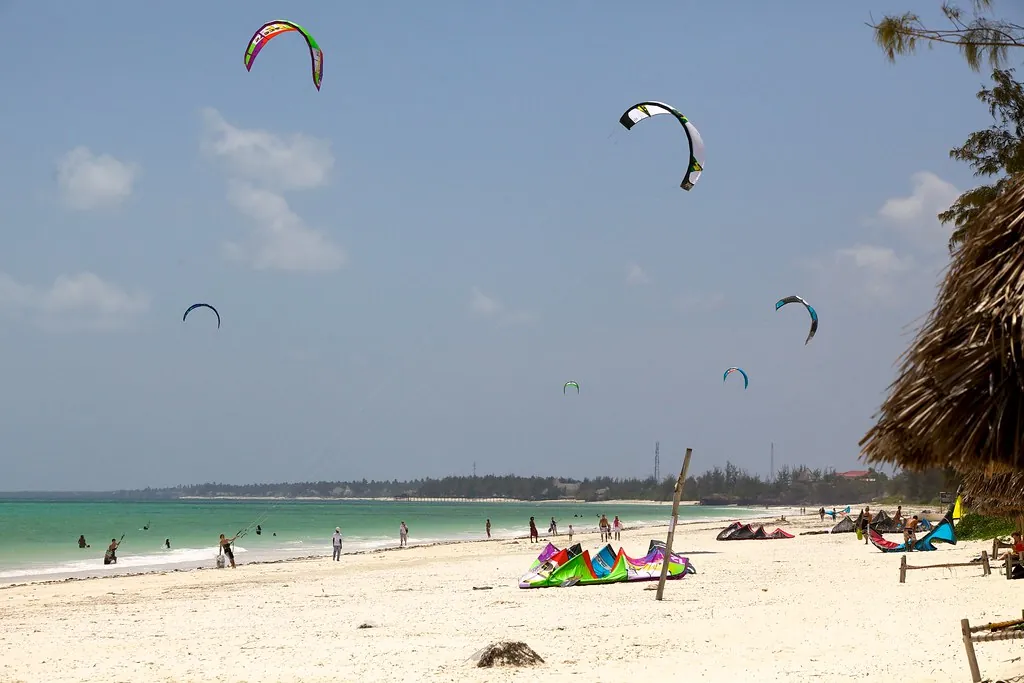
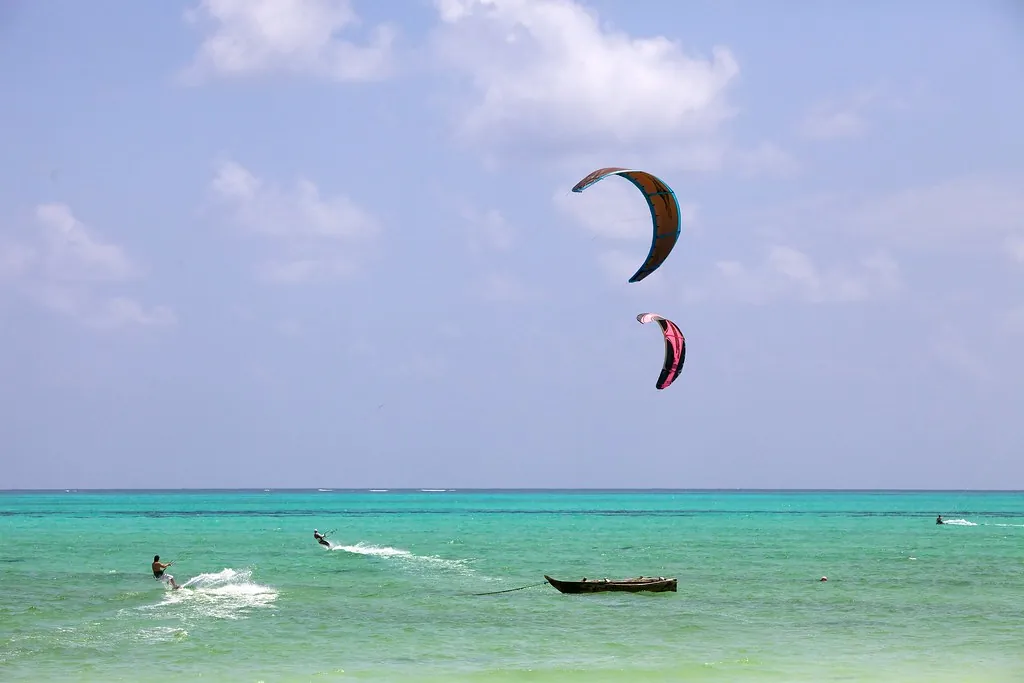
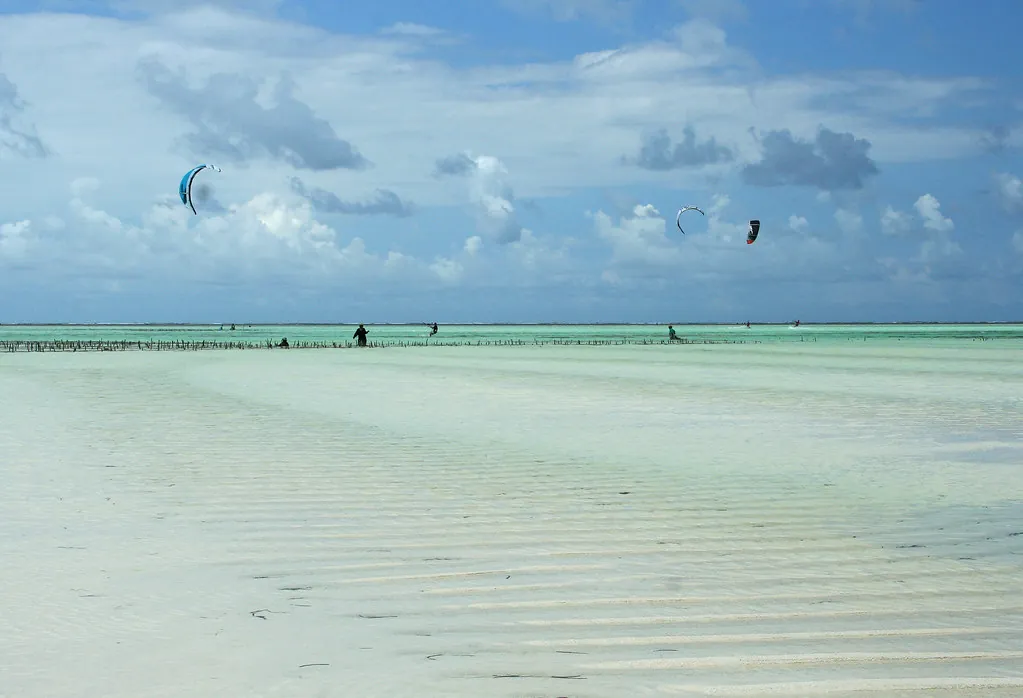
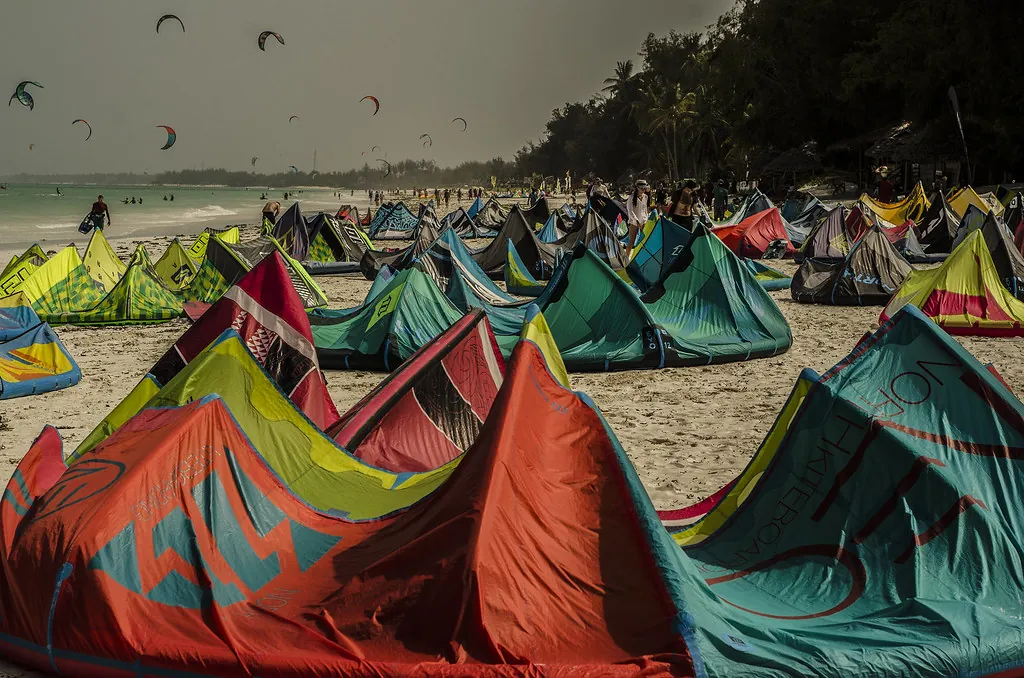
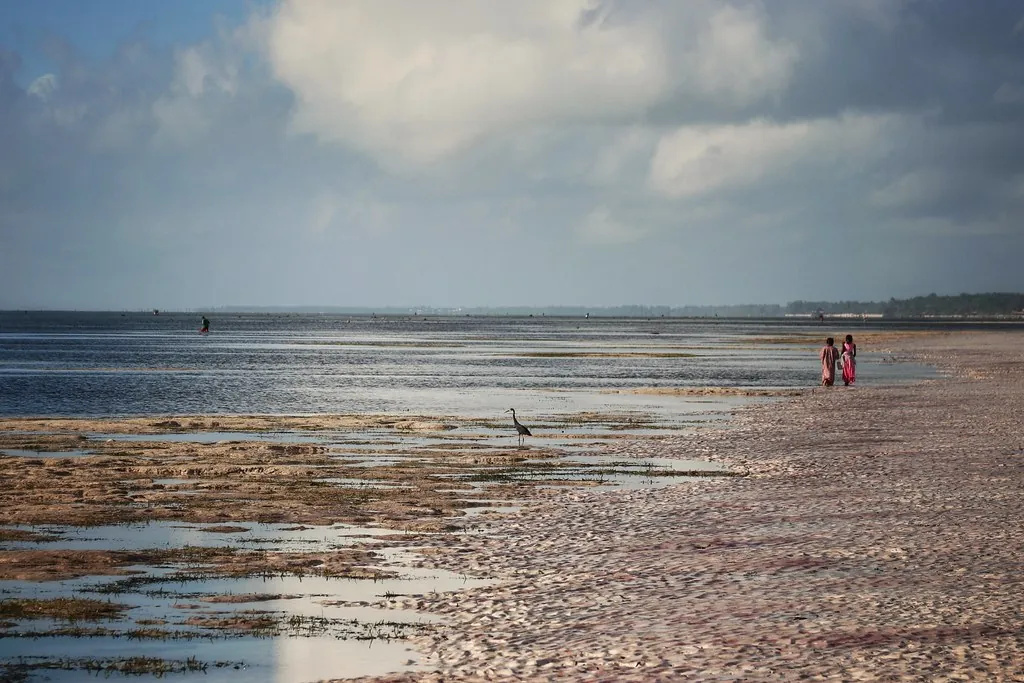
White sand, a pale turquoise lagoon and, in season, a sky full of kites.
Tap any photo to see all 7.
Paje sits where the road from Stone Town splits north and south along the east coast. An offshore reef shelters a long, shallow lagoon with a sandy bottom, so the water stays calm and impossibly pale.
In the wind seasons the lagoon fills with dozens of kitesurf sails. The rest of the time you'll see outrigger canoes (ngalawa) and the stakes of seaweed farms in the shallows.
Why it's in this guide
One of the island's most dazzling beaches, and the kites make it unlike anywhere else on Zanzibar.
When to go
Sunrise over the sea — the beach faces east. The kitesurfing seasons are roughly mid-December to February or March and May or June to October; dates vary from year to year, and in the southern-season months the wind usually builds after lunch.
Tide: At low tide the lagoon drains to ankle depth and you can walk far out over sand ripples; at high tide parts of the beach disappear. The colours are strongest with the water in. If you walk out to the reef, watch the incoming tide.
How to visit
The beach is public and free. Kite schools line the beach if you want a lesson. Paje is about an hour from Stone Town by road; dala-dalas also run there.
Photography tips
For the kites, shoot along the beach in the afternoon when the wind is up. For colour, wait for a mid-to-high tide on a sunny morning and slightly underexpose to keep the turquoise rich.
Worth knowing
- Wear reef shoes on the flats — there are sea urchins.
- Keep out of the seaweed plots, and ask before photographing anyone, especially the farmers.
- Beach sellers offer trips; compare before you book.
18. Jambiani · South-east coast
Jambiani at low tide
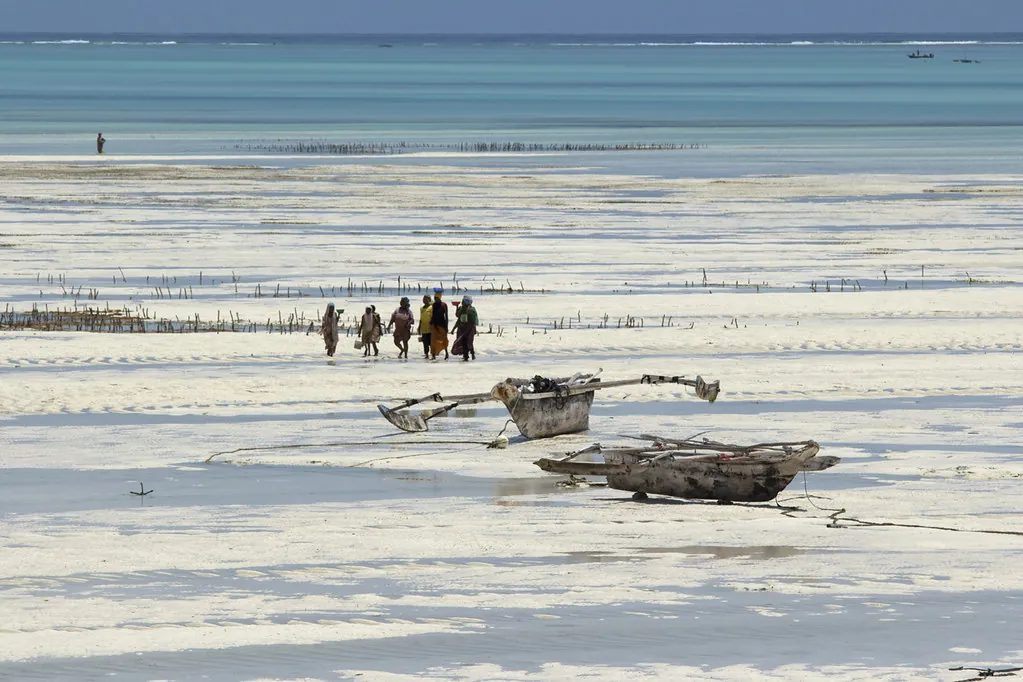
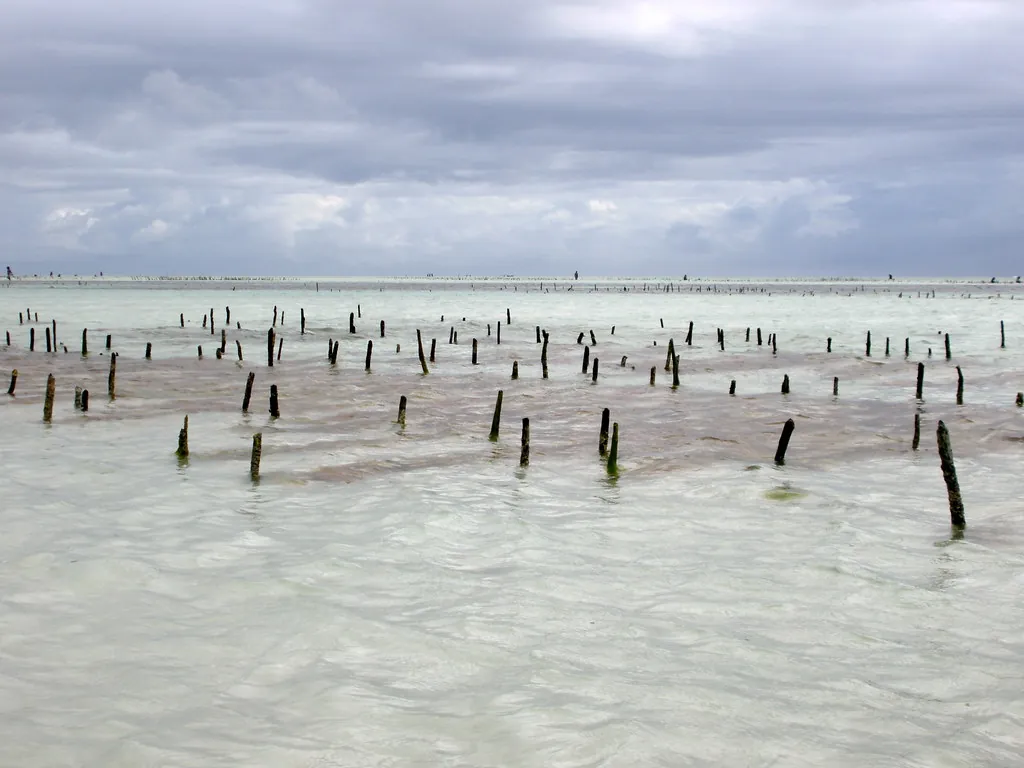
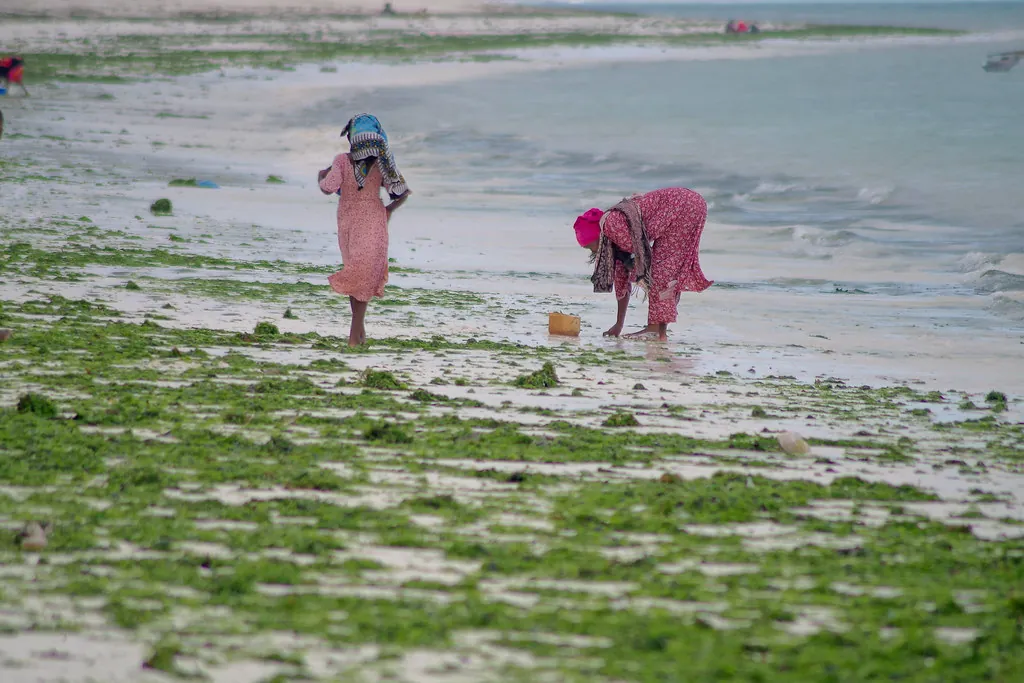
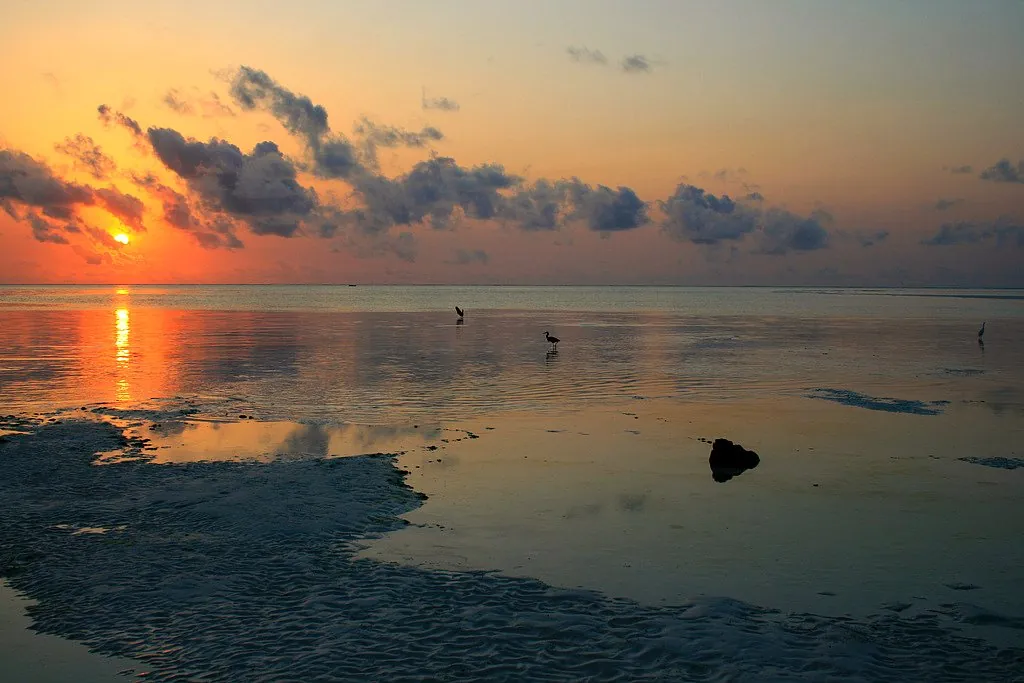
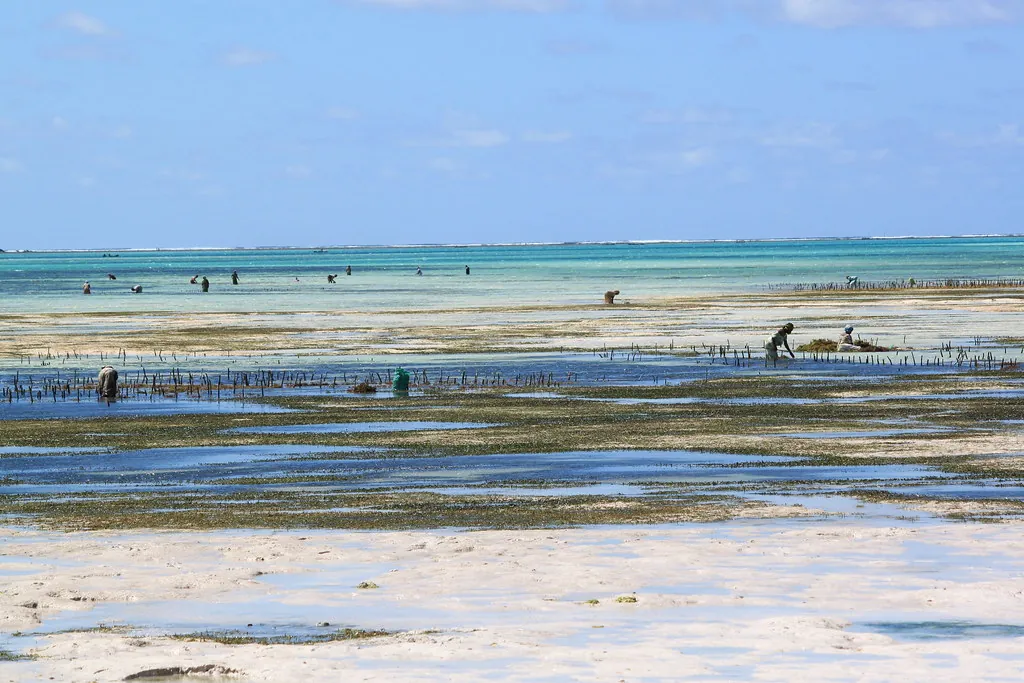
Seaweed farms, outrigger canoes and a reef flat that stretches to the horizon.
Tap any photo to see all 6.
Jambiani is a string of villages running for more than six kilometres down the south-east coast. When the tide goes out, a vast reef flat appears, criss-crossed by the wooden stakes of seaweed farms.
Women in bright kangas wade out to tend and harvest the seaweed — Zanzibar's seaweed farmers are overwhelmingly women. Warming seas have made it far harder to grow, and the number of farmers here has fallen sharply; some have switched to farming sponges.
Why it's in this guide
A working seascape as much as a beach: colour, light and daily village life on a scale you won't see in the resort areas.
When to go
Sunrise over the reef flat, or a late-afternoon low tide for soft side light.
Tide: The farming and the reef-flat walks happen at low tide, when the plots are exposed or knee-deep. Check a tide table, and watch for the water coming back when you're far out.
How to visit
Walk the beach and reef flat freely. A guided village or seaweed-farm walk with a local guide is the most respectful way to see the farms up close and ask the farmers' permission to photograph.
Photography tips
Long lenses let you show the scale of the farms without intruding. Never photograph the farmers without asking; they are working, not posing.
Worth knowing
- Never walk through or trample the seaweed plots.
- Dress modestly off the beach — Jambiani is a conservative village.
- Wear reef shoes on the flats.
19. Jambiani · South-east coast
Kuza Cave
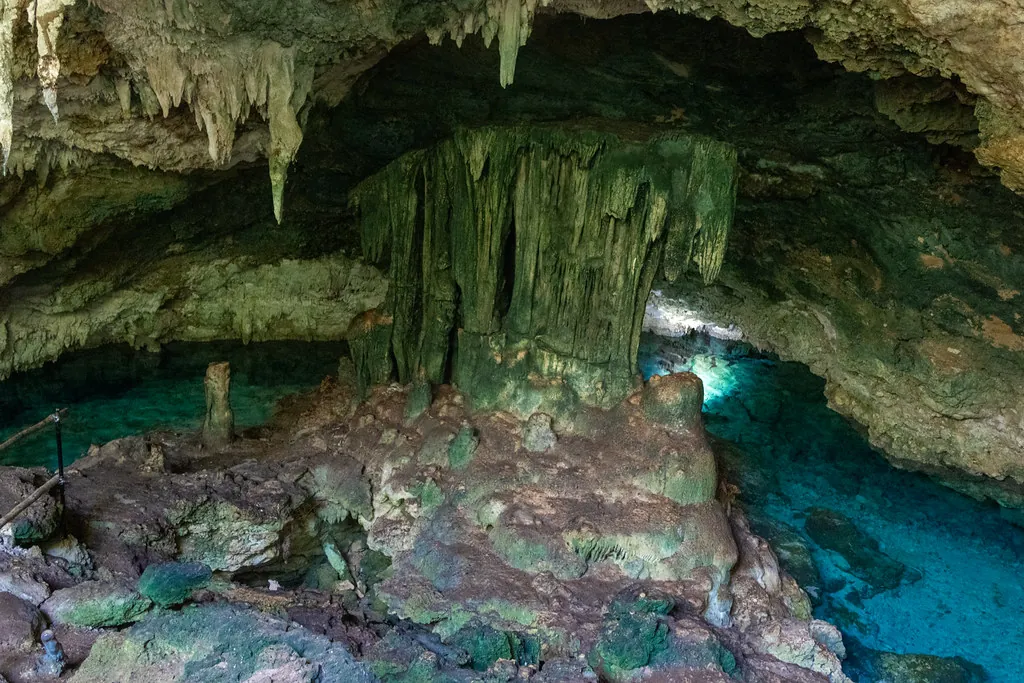
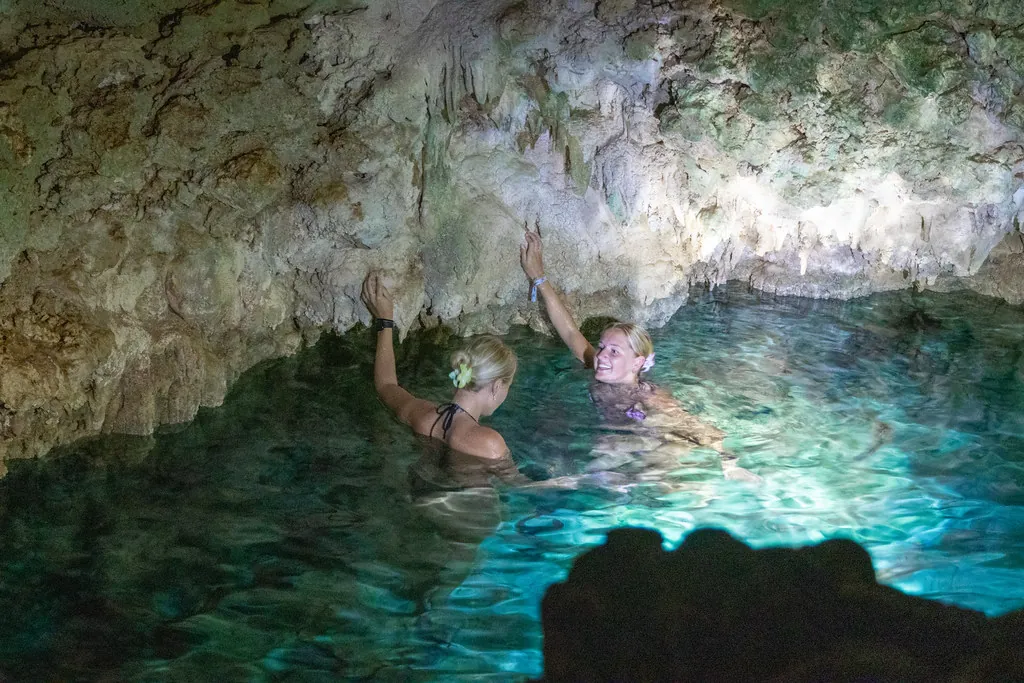
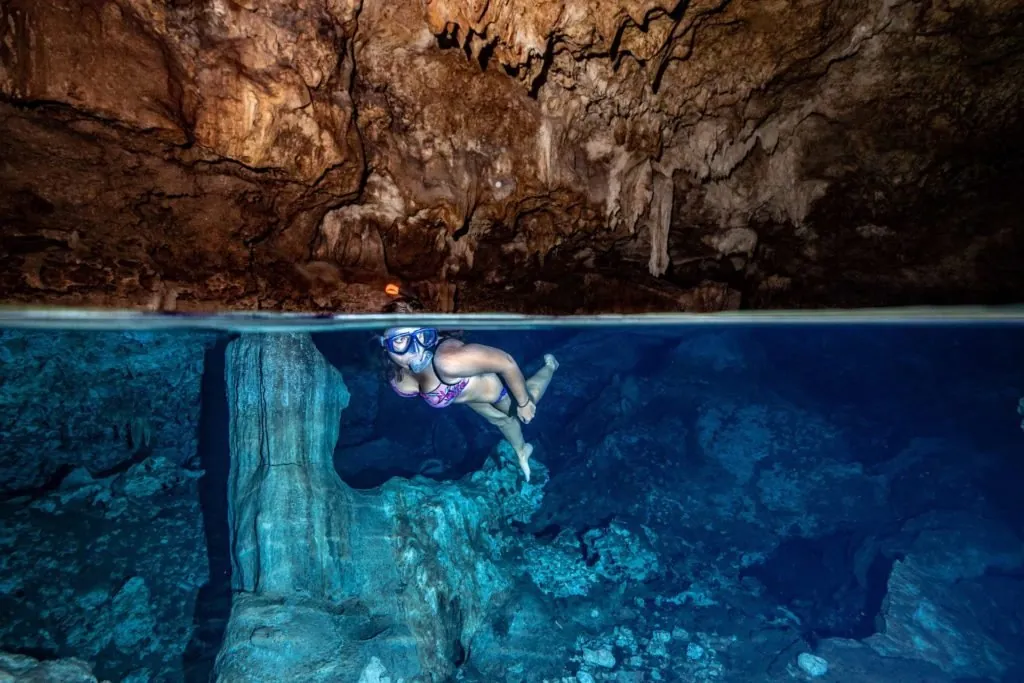
A limestone cave with a clear, glowing freshwater pool to swim in.
Tap any photo to see all 6.
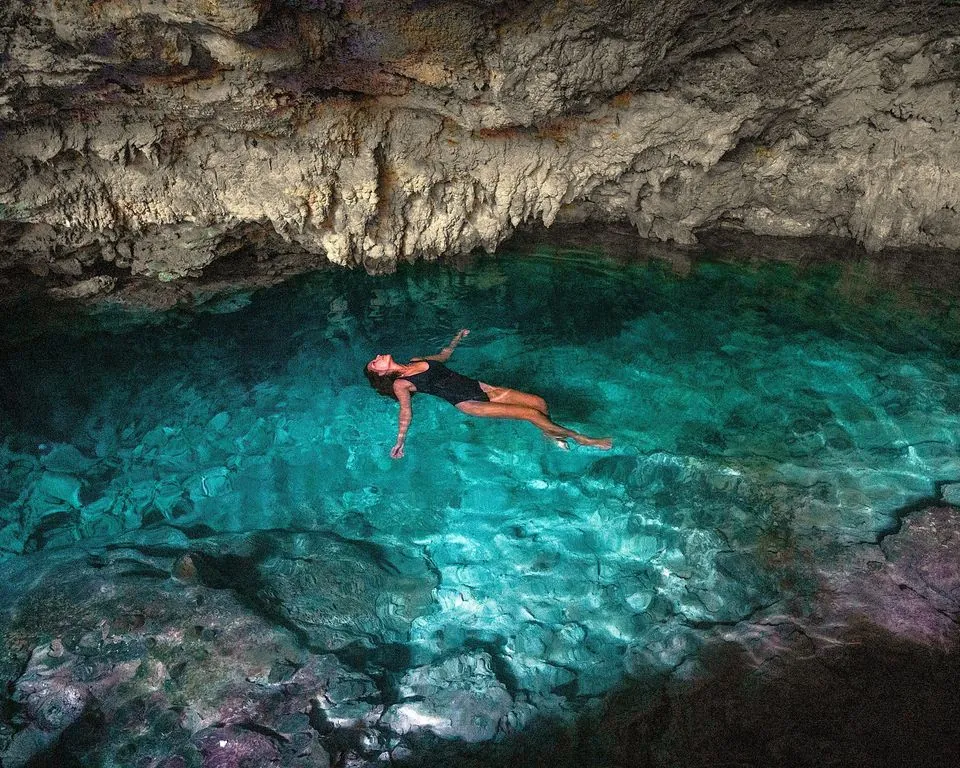
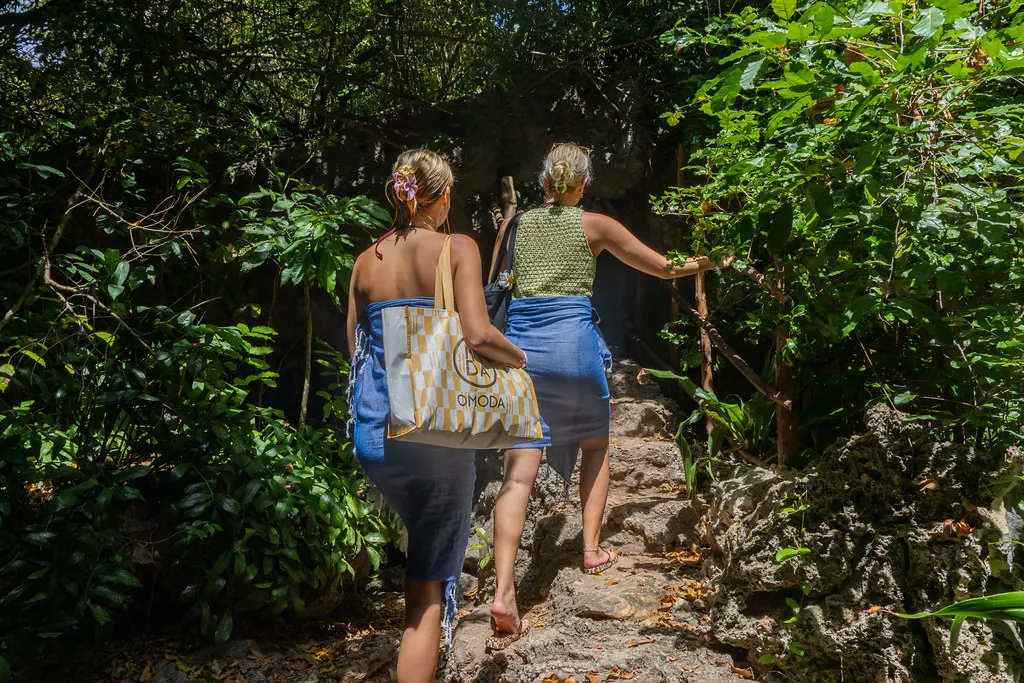
A short walk through a patch of forest on the inland side of Jambiani leads to steps down into a coral-rag cave. Stalactites and rock columns hang over a pool of very clear blue water, lit by daylight from the opening.
It is run as the Kuza Cave Culture Centre with the traditional owners, for whom the cave is sacred, and it also offers cooking, drumming and craft sessions.
Why it's in this guide
A completely different Zanzibar from the beaches — cool, quiet and luminous — and a perfect plan for when the east-coast tide is out.
When to go
Open daily from 08:30 to 18:30, according to its own site. Early or late in the day is likely to be quieter.
How to visit
No booking is needed for a swim (workshops and dinners do need booking). There's an entry fee, and a maximum of 20 people in the cave at once, so you may wait at busy times. Bring a swimsuit, a towel and water shoes, which can also be hired there.
Photography tips
Expose for the glowing water and let the cave walls fall into shadow; a phone's night mode helps. Ask before photographing other swimmers.
Worth knowing
- The pool is up to about 3 metres deep — not for non-swimmers, and children need close supervision.
- Not wheelchair accessible: the path is uneven, with rocks and steps.
- A sacred site — behave respectfully.
20. Mtende · Far south-east coast
Mtende beach
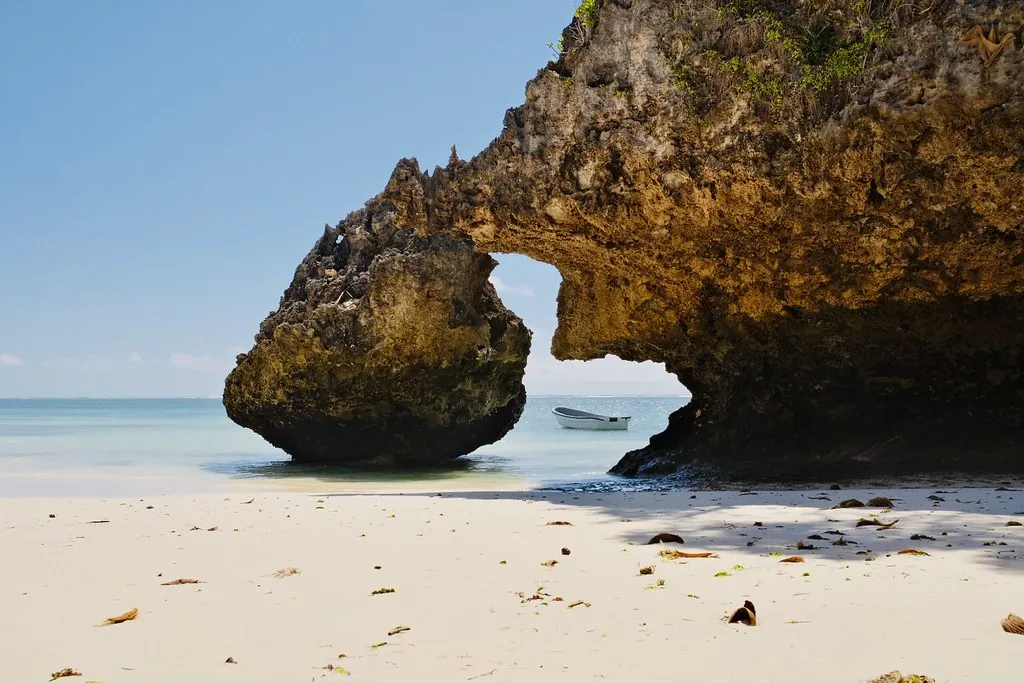
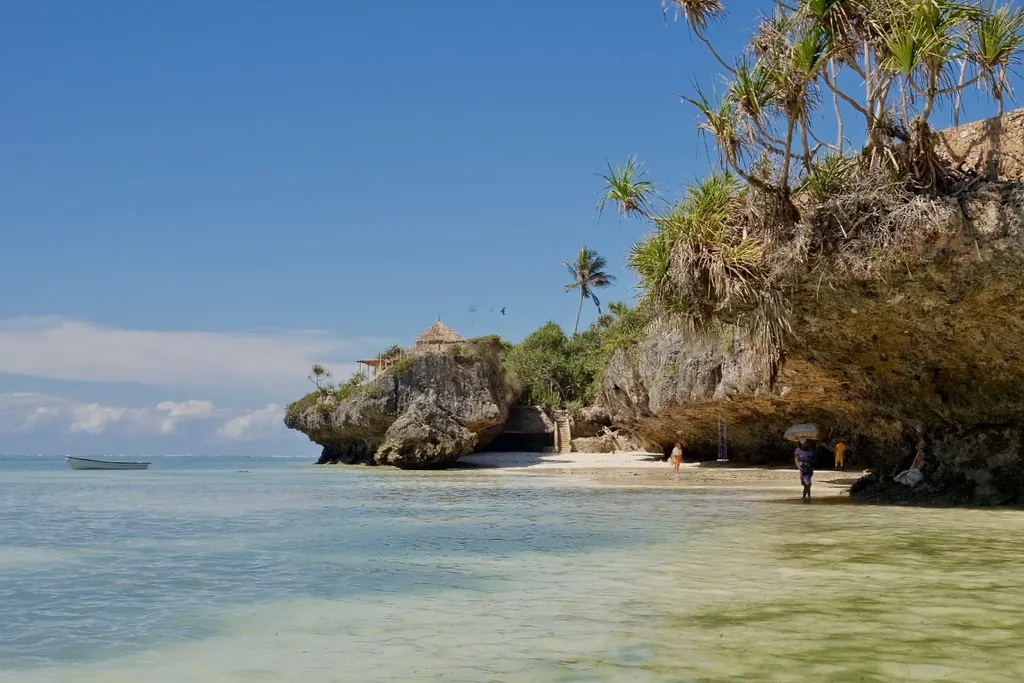
A hidden cove of white sand framed by undercut coral cliffs.
Tap any photo to see all 7.
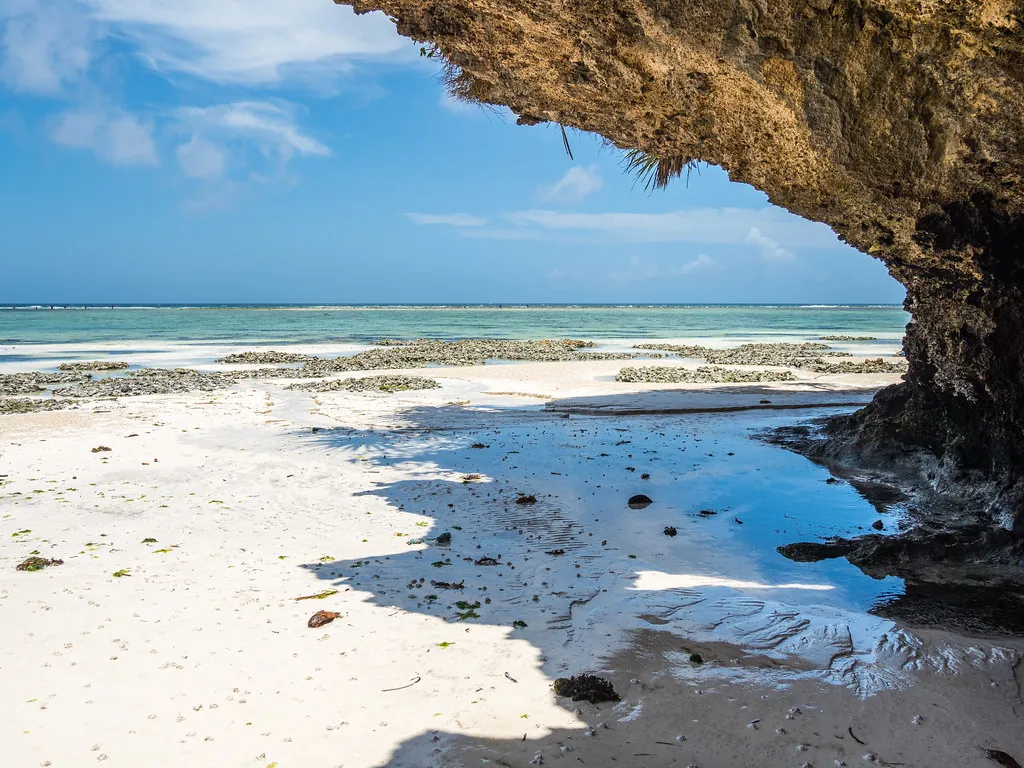
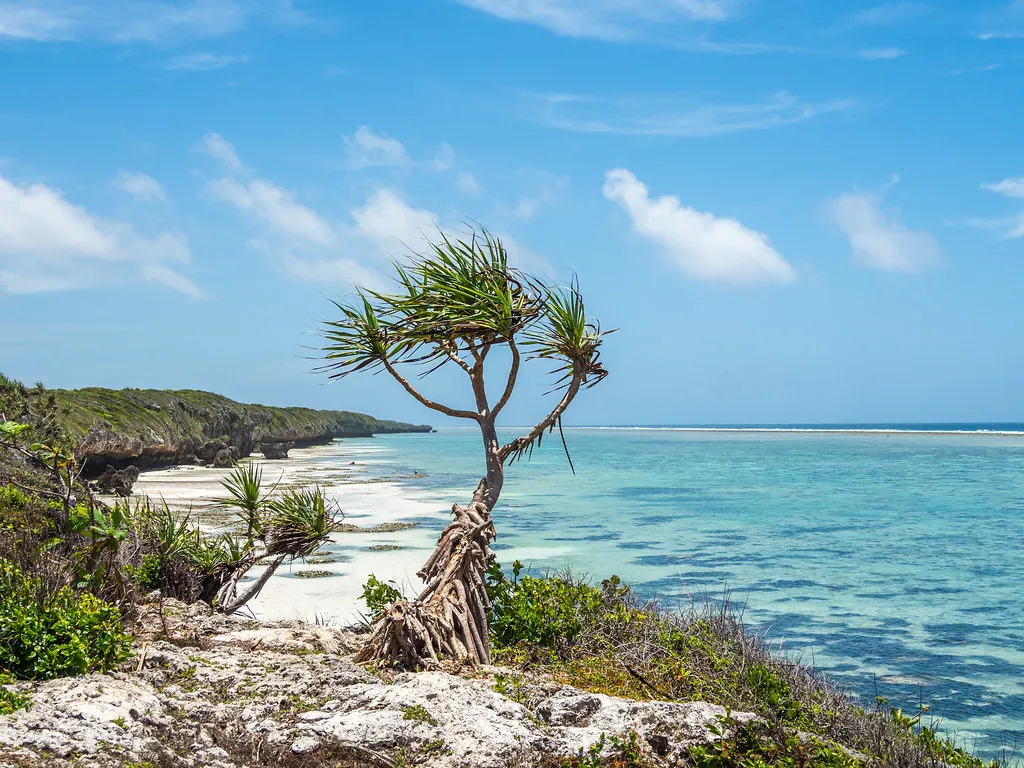
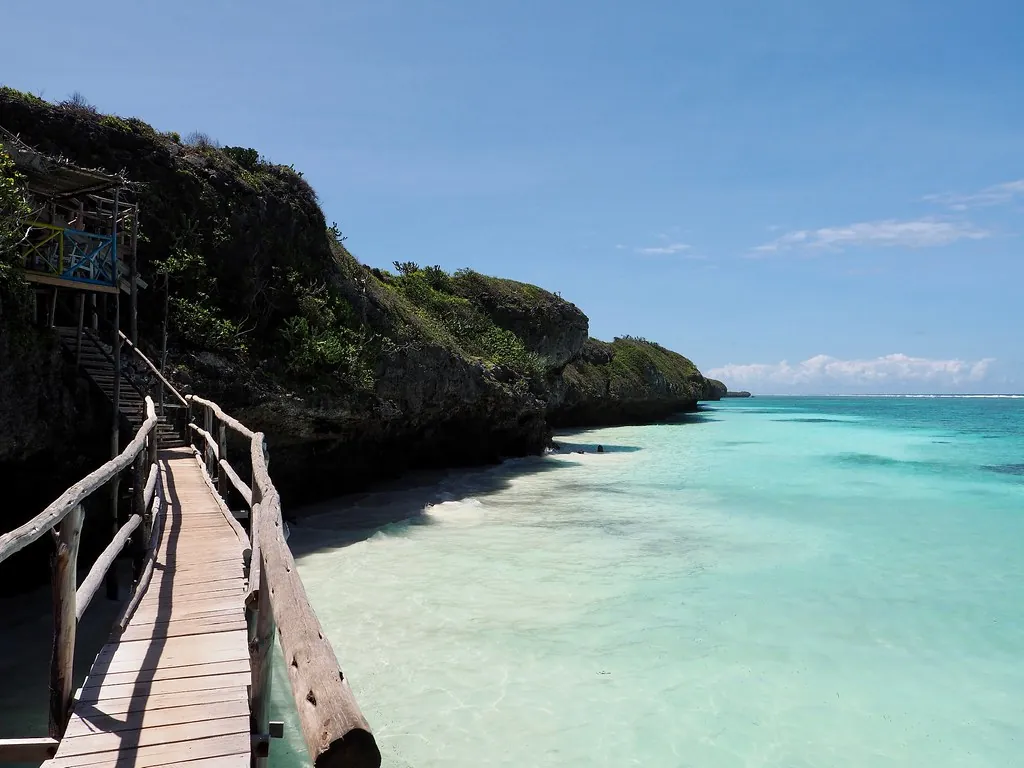
Near the island's southern tip, below the fishing village of Mtende, a small cove of white sand sits between two outcrops of coral rock. The cliffs are undercut by the sea, with a natural arch and pandanus growing on top, and the water shades from emerald to turquoise.
At low tide, tide pools full of small fish and crabs appear among the rocks.
Why it's in this guide
Small, secluded and dramatic — the kind of cove that looks private even though it isn't.
When to go
Mornings are quiet. The cove faces south-east, so sunrise and morning light suit it best.
Tide: It matters a lot: at low tide you can walk the whole beach and explore the pools; at high tide the water reaches the stairs and the sand almost disappears. High tide is better for swimming, low tide for exploring.
How to visit
By car, taxi or scooter; the last stretch of road is unpaved. There are many steps down from the parking area, and villagers collect a small entry fee. It's often combined with the nearby caves.
Photography tips
Frame the cove from the top of the steps, then go low among the rocks for the arch and the tide pools.
Worth knowing
- Phone signal is poor and it's barely signposted — download offline maps and agree a pick-up time with your driver.
- Lots of steps, so not accessible.
- A working fishing village: dress modestly off the beach and ask before photographing people.
21. Fumba and Kizimkazi · South-west coast
Menai Bay and Kwale Island
Dhows, sandbanks, a hidden mangrove lagoon and a fallen giant baobab.
Tap any photo to see all 8.
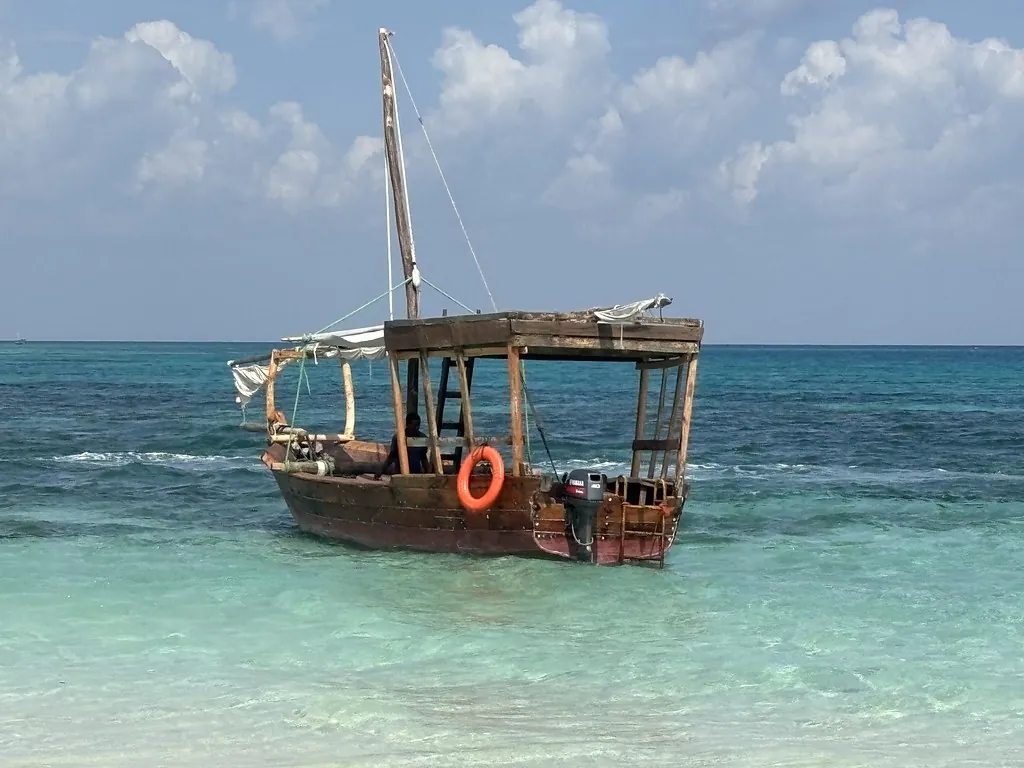
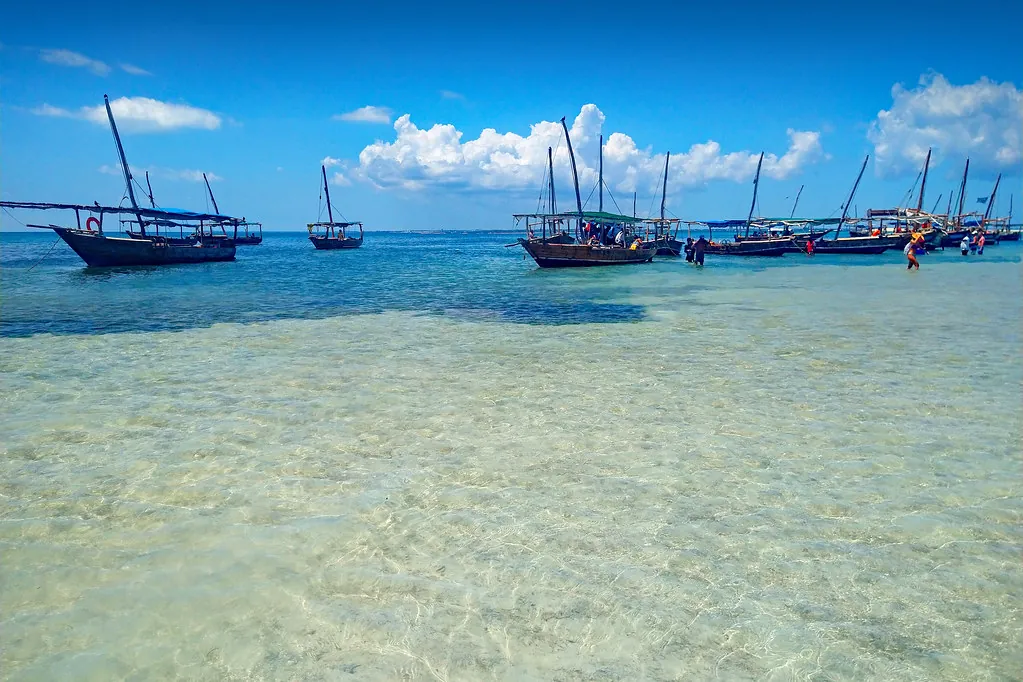
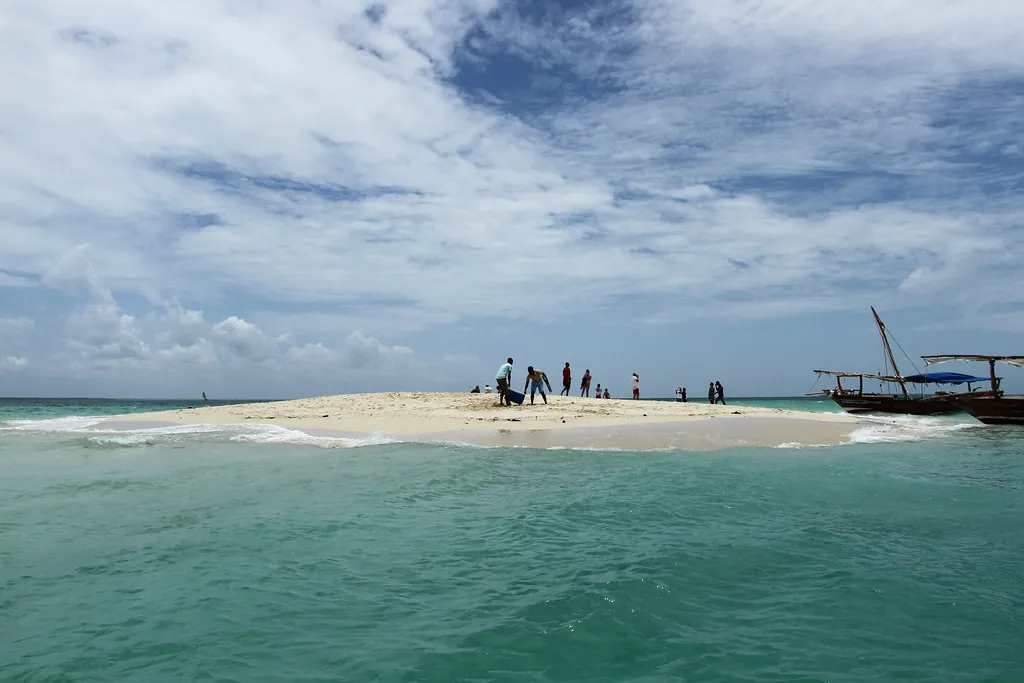
Menai Bay is Zanzibar's largest marine conservation area, a sheltered sweep of shallow water off the south-west coast. Day trips by dhow sail its turquoise channels to sandbanks that come and go with the tide, snorkelling spots and Kwale Island.
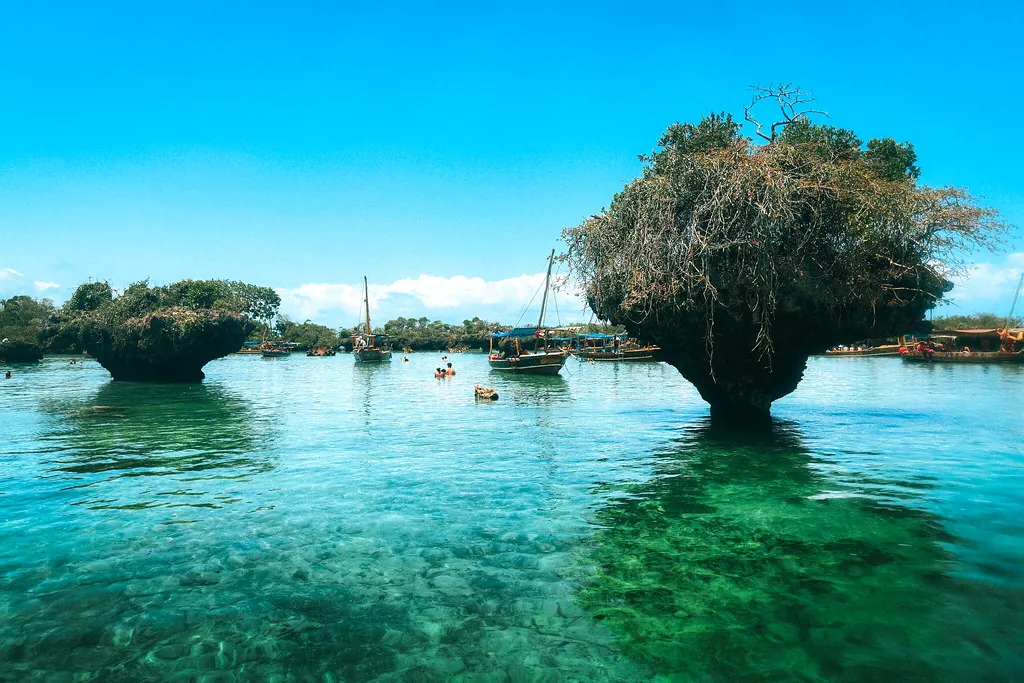
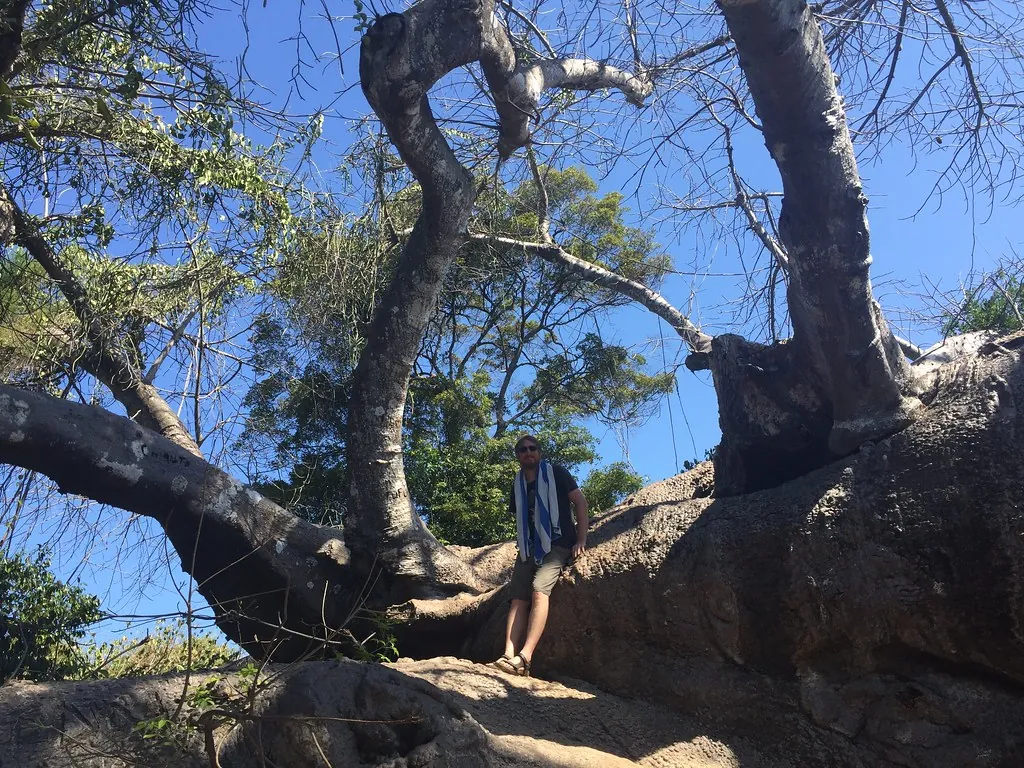
Kwale has a natural lagoon ringed by mangroves, with mushroom-shaped coral islets standing in clear water, and a giant baobab that fell long ago and keeps on growing on its side. Bottlenose dolphins live in the bay all year, especially off Kizimkazi.
Why it's in this guide
A whole day of postcard scenes — sails, sandbanks and clear water — in one trip.
When to go
Day trips usually start in the morning; dolphin trips from Kizimkazi go early, when the sea is calmer. Sandbank stops are timed around low tide.
Tide: The sandbanks appear around low tide, so operators plan the day around the tide table.
How to visit
Dhow day trips leave from Fumba; the original Safari Blue has run them since 1995 and warns that others copy its name. Many operators offer similar trips. Dolphin trips leave from Kizimkazi.
Photography tips
Shoot the dhows from the sandbank as they sail in, and the Kwale lagoon from its edge at the clearest, calmest moment of the day. A polarising filter cuts the glare on the water.
Worth knowing
- Dolphins: research off south Zanzibar found that tour boats disrupt the dolphins' resting, feeding and socialising. Watch from the boat rather than swimming with them, and choose an operator that keeps its distance and never chases or boxes in a pod — or skip the dolphin trip.
- Kwale and the sandbanks get busy around midday when many boats arrive.
- Use reef-safe sun cream and don't stand on coral.
Before you go
A.Work with the tides
Zanzibar has two high and two low tides a day, and on the east coast the difference is dramatic: at low tide, especially around full and new moon, the sea can retreat hundreds of metres from Matemwe, Pongwe, Michamvi, Paje and Jambiani.
That shapes everything in this guide. The Rock is reached on foot at low tide and by boat at high tide; sandbanks like Nakupenda appear as the tide drops; east-coast lagoons are at their most turquoise when the water is in; seaweed farms and reef-flat walks need it out. The best times shift by roughly 50 minutes a day, so check a tide table for your dates rather than relying on someone else's timings.
B.Light and timing
Zanzibar sits close to the equator, so sunrise and sunset come at much the same time all year — roughly half past six — and the soft light doesn't last long. Midday sun is high and harsh; the hour after sunrise and the hour before sunset are when the island looks its best.
The west coast (Stone Town, Kendwa and west-facing Nungwi) faces the sunset. The east coast faces the sunrise; for a sunset over water there, look for spots on the west side of the Michamvi peninsula.
C.Seasons and weather
The long rains usually fall from around March to May and the short rains around November; the drier, breezier months from June to October and the hot season from December to February are the most popular. Skies are often clearest on dry-season mornings.
The trade winds that bring the kitesurfers to Paje also bring seaweed onto some east-coast beaches at certain times of year. It's natural and comes and goes; a recent review or a message to your hotel will tell you what to expect.
D.Photographing people, respectfully
Zanzibar is a mainly Muslim island and many people, especially women, would rather not be photographed. Always ask first, accept a no with a smile, and never photograph children without a parent's consent. The seaweed farmers, fishermen and dhow builders are at work — ask, and keep your distance if they're busy.
Away from the beach resorts, cover shoulders and knees, particularly in Stone Town and the villages, and be more careful still during Ramadan.
E.Drones
Flying a drone in Tanzania, including Zanzibar, requires permission from the civil aviation authority, and drones flown without it can be confiscated at the airport or on the spot. Don't fly over people, government buildings or the airport, and respect private islands and conservation areas that ban them.
If an aerial shot matters, apply well before you travel or book a local operator who already holds a permit.
F.Getting around
Most places in this guide are an hour or so by road from Stone Town; Nungwi and Kendwa in the north and the south-east coast are the furthest. Hotel drivers and taxis are the easiest way to reach them — agree the fare before you set off — and many hotels can arrange tours.
Boat trips (Prison Island, Nakupenda, Mnemba, Menai Bay) are offered everywhere. Choose an operator with life jackets and a recent good record, and don't feel pressured by beach sellers: compare a couple of options, and book through your hotel or a recommended guide if in doubt.
G.Leave it as you found it
Don't stand on or touch coral, don't feed or touch wildlife — including the red colobus monkeys in Jozani and the turtles at Nungwi — and give dolphins space rather than chasing them by boat. Take your rubbish home, and use reef-safe sun cream.
Picturesque days out
A few ways to string the places together. Check the tide table first: on the east coast, the tide decides the order of the day.
A day in and around Stone Town
Old-town lanes in the morning light, a boat to the sandbank and the tortoises, and sunset on a rooftop.
Early morning
Stone Town's alleys and carved doorsWalk the lanes with a guide while they're quiet and the light is soft.
Late morning, at low tide
Nakupenda sandbankTime the boat for low tide, when the sandbank is at its biggest.
Early afternoon
Prison Island (Changuu)Often combined with Nakupenda on the same boat.
Sunset
Stone Town's rooftops at sunsetSundowners above the roofs, then down to Forodhani for the night market.
A south-east coast day
The lagoon at its most colourful, a swim in a cave while the tide is out, and lunch on the rock.
Morning
Jozani Chwaka Bay National ParkRed colobus and the mangrove boardwalk, on the road from Stone Town.
Lunch sitting
The RockBook a sitting that matches the tide you want to see.
At low tide
Kuza CaveWhen the sea is out, swim in the cave instead.
Late afternoon
Paje lagoonKites on the lagoon when the wind is up.
A north coast day
Snorkelling at Mnemba, the dhow yard at Nungwi and a sunset at Kendwa.
Morning
Mnemba AtollBoat from Muyuni or Matemwe while the sea is calm.
Afternoon
Nungwi's dhow yard and lighthouseThe dhow builders, the lighthouse and the turtle lagoon.
Sunset
Kendwa beach at sunsetSwim at any tide, and stay for the blue hour.
A day at sea in the south-west
Dhows, sandbanks, a mangrove lagoon and the fallen baobab of Kwale Island.
All day
Menai Bay and Kwale IslandDhow trips from Fumba; choose an operator that keeps its distance from the dolphins.
Another day
Mtende beachPair the far south's hidden cove with Kuza Cave or Jambiani.
Found somewhere beautiful?
Some of Zanzibar's loveliest corners aren't on any list — a quiet stretch of beach at sunrise, a rooftop with a view, a village lane in the late light.
Tell us about your favourite spot, share a tip on the best time to be there, or ask the community before you go.
Comments on this guide
Log in and join the community to add a comment.

How this guide is made
This guide is written by the Mzungu Zanzibar editors. No place or business paid to be included. Practical details — where each place is, how to visit, tide and timing advice — were checked against at least two current sources on the date shown; anything we could not confirm is listed with that place. Prices and fees are never given because they change. The descriptions are not first-hand accounts: they draw on the sources listed with each place.
This guide has 150 photographs. They come from photographers on Wikimedia Commons and Flickr and from venues' own websites, each credited beneath the picture and linked to where it came from. They're shared here to celebrate these places. If one is yours and you'd like it removed or credited differently, we'll gladly do it — contact us. 4 captions begin “UNVERIFIED”: the photo is relevant, but we couldn't confirm it shows the exact spot.
